Patient-Specific Implants: Russian Technology Showcased in China
Russian researchers presented their advances in 3D printing personalized medical implants in Shanghai. The technology makes it possible to design implants around a patient’s anatomy using medical imaging data and digital modeling.

Modern medicine is increasingly turning to solutions tailored to individual patients. The reason is straightforward: everyone has a different body structure and unique bone anatomy. Personalization is especially important in trauma care and orthopedics, where surgeons must reconstruct damaged bones and other parts of the musculoskeletal system. A standard implant may not be suitable for every clinical case, so a custom-designed device can give surgeons additional options.
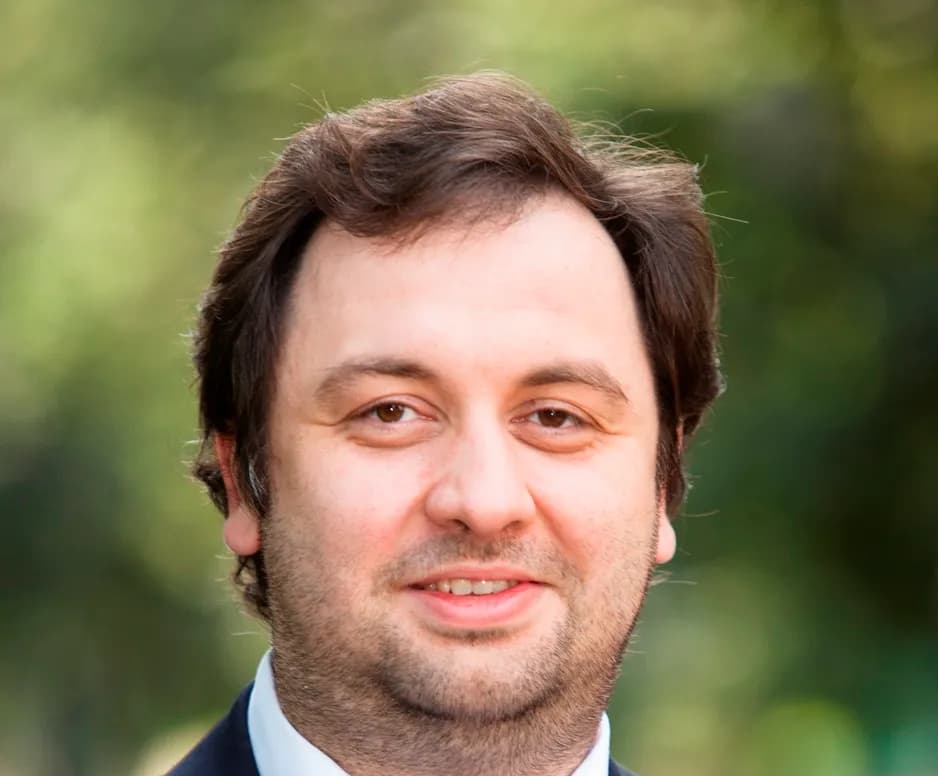
Bashkir State Medical University (BSMU) is advancing this field. At a Russian-Chinese scientific conference in Shanghai, Azat Bilyalov, an associate professor in the university’s Department of Traumatology and Orthopedics, presented research combining medicine, mathematical modeling, and additive manufacturing. The university showcased a multimaterial 3D-printing platform designed to produce biomedical implants.

An Implant Designed for the Patient
3D printing creates products from digital models by depositing material layer by layer. In medicine, this makes it possible to manufacture implants tailored to an individual patient’s anatomy. Doctors use medical images to build a digital model and determine the shape and dimensions of the implant.
BSMU is pursuing several lines of research in this area. These include implants made from polyether ether ketone (PEEK), a high-performance polymer; research into ceramics and biodegradable materials; and the development of biomaterials based on allografts with coatings applied through cold gas-dynamic spraying. The researchers consider not only an implant’s shape, but also its material properties, internal structure, and surface characteristics. These factors directly affect how an implant performs and how comfortably a patient can live with it.
BSMU’s technology has already moved into practical use. The team is studying the physical properties of the resulting samples and evaluating their suitability for further application.

International Collaboration
The presentation in China demonstrated that Russian universities can offer international partners more than individual medical devices: they can provide complete technological solutions. In BSMU’s case, that means combining clinical expertise, mathematical modeling, materials science, 3D printing, and specialized software.
Export opportunities could include both personalized implants and the expertise needed to produce them, from digital design and material selection to coating application. Presenting the platform at a Russian-Chinese scientific conference also creates an opportunity to exchange knowledge, establish research partnerships, and potentially secure export contracts in the coming years.

The Development of 3D-Printed Implants in Russia
BSMU’s work is part of a broader effort to advance personalized medicine in Russia. In recent years, universities, research centers, and clinics have been exploring different materials and applications for 3D printing.
In 2021, surgeons at the Meshalkin National Medical Research Center in Novosibirsk performed surgery using a custom titanium implant manufactured from CT scan data. In 2022, Russia saw its first implantation of a 3D-printed titanium talus, the bone that connects the foot to the ankle. That same year, Skoltech and Sechenov University tested samples made from a porous iron-silicon alloy for use in bone implants. In 2023, Tomsk Polytechnic University and the Tomsk National Research Medical Center developed a technology for manufacturing maxillofacial surgical implants from Russian-sourced raw materials.
In 2024, Samara University began developing a system to accelerate the design of personalized titanium endoprostheses, while Sechenov University launched its own production of 3D-printed medical devices. In 2025, the Russian Children’s Clinical Hospital introduced the technology in neurosurgery, and the National University of Science and Technology MISIS reported printing personalized implants from a titanium alloy with superelastic properties.