

Quantum Start: Why Businesses Should Begin Learning the Language of Quantum Computing
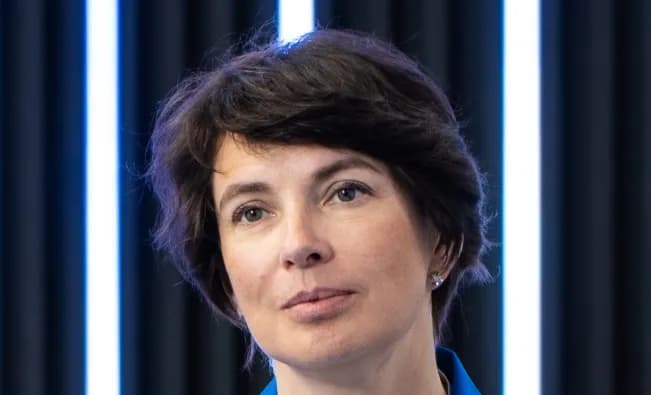
Ekaterina Solntseva, Director for Quantum Technologies at Rosatom, has urged Russian companies to begin developing quantum software now, ahead of the large-scale rollout of quantum computers.

Speaking at the Infospace – 2026 IT Forum, she said companies that first learn to translate their production challenges into quantum-ready formulations will gain a decisive advantage once quantum computing reaches practical deployment.
Planning Horizon
Quantum computing is expected to reach a level suitable for applied use between 2028 and 2035. Even under conservative assumptions, the window for developing software has already opened. Building algorithms, adapting business processes, and developing expertise requires years, not months.
Companies that are only beginning to explore quantum technologies will need significant time to adapt their industrial tasks to quantum-specific architectures. Over time, tools will emerge to simplify this process and reduce the need for deep technical expertise. However, such tools will only become available at a mature mass-market stage – by then, early adopters will already have secured key advantages.

Russia on the Quantum Frontier
Over the past decade, Russia has progressed from early quantum processor concepts to building seven functional quantum computing systems. In 2024, the goals of the first roadmap, approved in 2020, were completed. Researchers demonstrated processor prototypes based on four physical platforms: ions, atoms, superconductors, and photons.
By 2025, further milestones were achieved. A 70-qubit processor was developed using ytterbium ions, while 72-qubit systems were built on calcium ions and cold atoms. Superconducting processors based on fluxonium reached 16 qubits, and photonic systems achieved 35 qubits.
A total of 43 algorithms have been developed, some already addressing tasks in the nuclear sector. Rosatom is implementing the largest industry-specific program for practical quantum computing applications, with more than 30 pilot projects across multiple industrial domains. Seven organizations within the nuclear sector are working on test cases: seven in production optimization, twelve in modeling, and four in data analytics.

From Research to Industry
Rosatom CEO Alexey Likhachev has proposed extending the current roadmap with a new initiative, Kvantovyy proryv (Quantum Breakthrough). Discussions are underway to move toward a ten-year planning horizon focused on long-term targets.
Russia is demonstrating one of the strongest rates of progress among countries participating in the global quantum race, following the United States and China.
The Ministry of Digital Development is expected to cover 80–90% of the costs of deploying quantum solutions in industry, subject to co-financing from customers. This approach is intended to build a technological ecosystem and bring major companies into the field while developing informed demand, as Digital Development Minister Maksut Shadayev noted.
Plans are also under discussion to establish a quantum university with international participation. The ministry will support training in a new specialty, quantum engineering.

Strategy of Early Adoption
Quantum computing is already being applied to specific scientific and engineering problems, including modeling melt solidification, heat transfer, chemical thermodynamics, and production planning optimization.
Within five to ten years, quantum advantage is expected to be achieved, and the use of quantum processors will scale. Companies that begin preparing early are likely to secure a technological edge and shape competitive dynamics in the emerging computing landscape. For Russian industry, this presents an opportunity to participate in building the next generation of the digital economy.