Russian-Style Billing: VTB Pension Fund Replaces a Mission-Critical System With Homegrown Tech
VTB Non-State Pension Fund has successfully migrated its large-scale pension calculation and payment system, which serves 11 million clients, to the Russian-developed XSQUARE platform and PostgreSQL database.

For more than 20 years, the fund’s technology stack relied on Oracle Forms, Oracle Database and Oracle Reports. When these systems were first deployed, there were no alternatives. But after 2022, dependence on a foreign vendor became a serious risk to the fund’s entire business system and its clients. The fund therefore decided to migrate to a Russian-developed platform.
A Large-Scale Migration
The challenge was not simply to move large volumes of data. The project also had to preserve complex pension calculation algorithms, transaction-processing rules and user workflows accumulated over years of operation – in other words, the entire business logic. That required a fundamental transformation of the corporate IT infrastructure, with one critical constraint: the migration could not cause a single failure that might delay pension payments or result in duplicate benefit calculations.
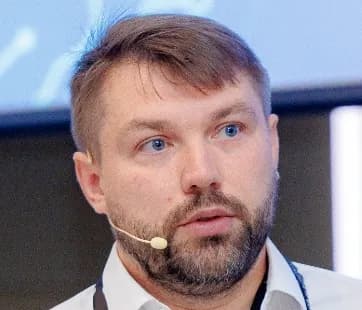
“There’s no option to just shut things down for the weekend and move everything over. Any mistake means money is at stake for some of the most vulnerable people in society – older people and pensioners,” said Vitaly Lisitsky, CTO of VTB Non-State Pension Fund.
To minimize those risks, Russian company X-Square, the developer of XSQUARE, opted for a phased migration. Preparation took about a year, followed by six months of sequentially migrating functional domains. During that period, Oracle and PostgreSQL ran in parallel, with the results cross-checked to verify consistency. The platform switch was completed seamlessly.
As a result, VTB Non-State Pension Fund not only eliminated the risks associated with running Western software in a mission-critical system, but also doubled system performance without spending more on computing capacity. The new architecture was designed to scale as well: the platform has the capacity to support up to 50 million clients. Maintenance costs have also fallen.
“Moving to a domestic technology stack has allowed us to save significantly on Oracle licenses. Support used to cost tens of millions of rubles a year, and by the time we decided to migrate, the bill was approaching 100 million rubles,” Lisitsky said.

The Economics of Migration
Sanctions threats and the loss of official support from vendors that have exited the market are not the only forces driving large-scale migration projects. Economic pressures and workforce challenges also matter. For VTB Non-State Pension Fund, the problems included both an aging technology stack and a shortage of professionals familiar with legacy tools such as Oracle Forms. Moving to a modern, domestically developed stack also helped attract younger talent.
The wave of companies migrating to Russian technology stacks is expected to continue, spreading further across financial services, insurance and large industrial groups. Many of these organizations run systems built on foreign platforms that have accumulated unique business logic over decades. As a result, demand is likely to grow not only for domestic platforms, but also for automated migration tools that can make the transition faster and smoother.

Import Substitution to the Fullest
Government agencies and state-owned corporations have been migrating to domestic platforms for years. In 2023, for example, Rosatom moved its unified industry-wide document management system, used by 110,000 people, to Atom.Content. The platform runs on Postgres Pro Enterprise Certified, a database management system developed by Russian company Postgres Professional. In 2024, Rosatom’s settlement center also migrated to a combination of Postgres Pro and the Russian operating system RED OS. The center processes daily payments totaling more than 160 billion rubles (about $2.0 billion).
Today, large organizations are replacing entire technology stacks rather than individual modules, including development tools, user-facing applications and reporting components. Specialized migration tools make it possible to avoid rebuilding systems from scratch while preserving both business logic and accumulated expertise.

A New Phase
The VTB pension fund case demonstrates the maturity of Russian IT solutions, which can support not only phased migration of large-scale systems but also significant performance gains. Lower support costs, faster data processing and scalability built into the new architecture make technology import substitution economically viable and strategically advantageous. As a result, the approach is changing fundamentally: rather than being a forced response to sanctions, it is becoming a planned phase of infrastructure modernization.