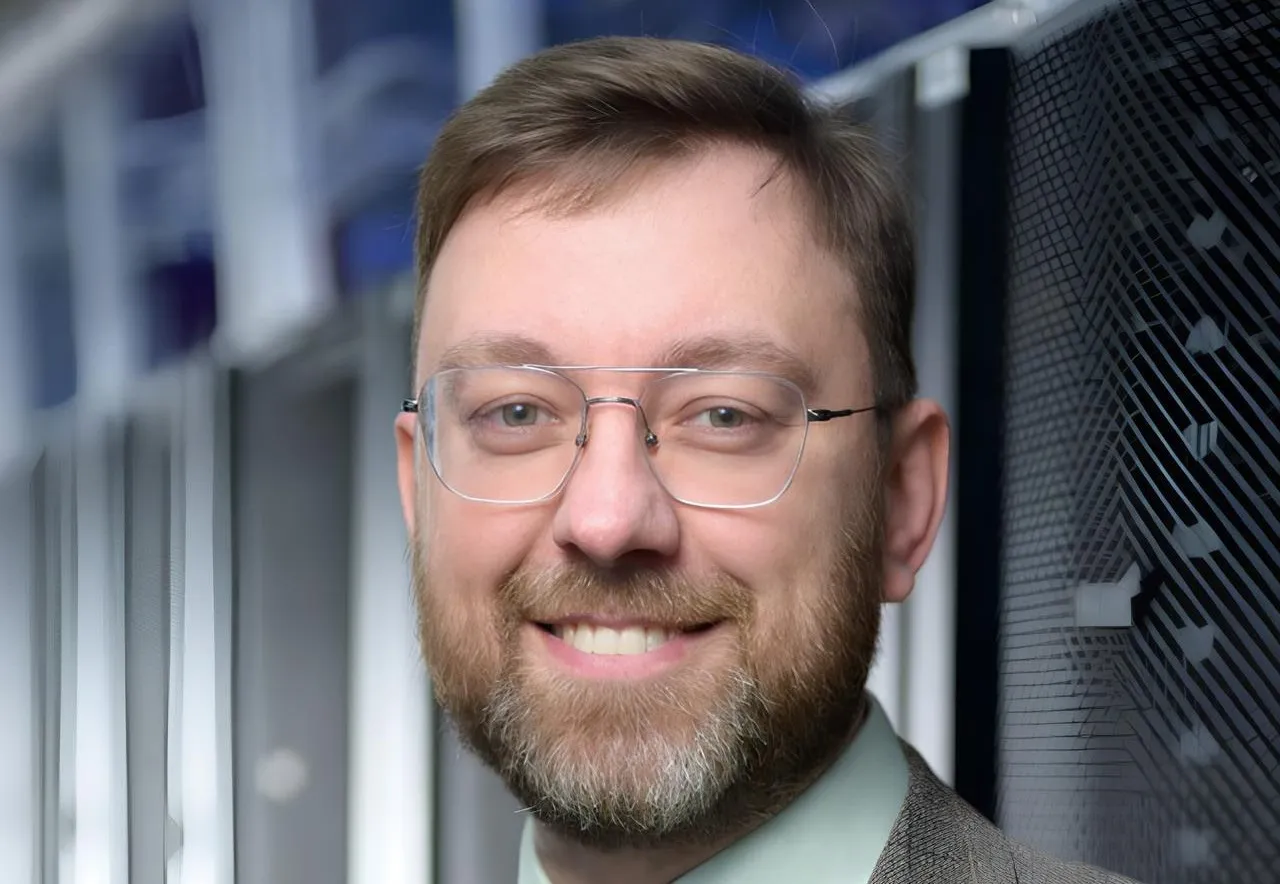
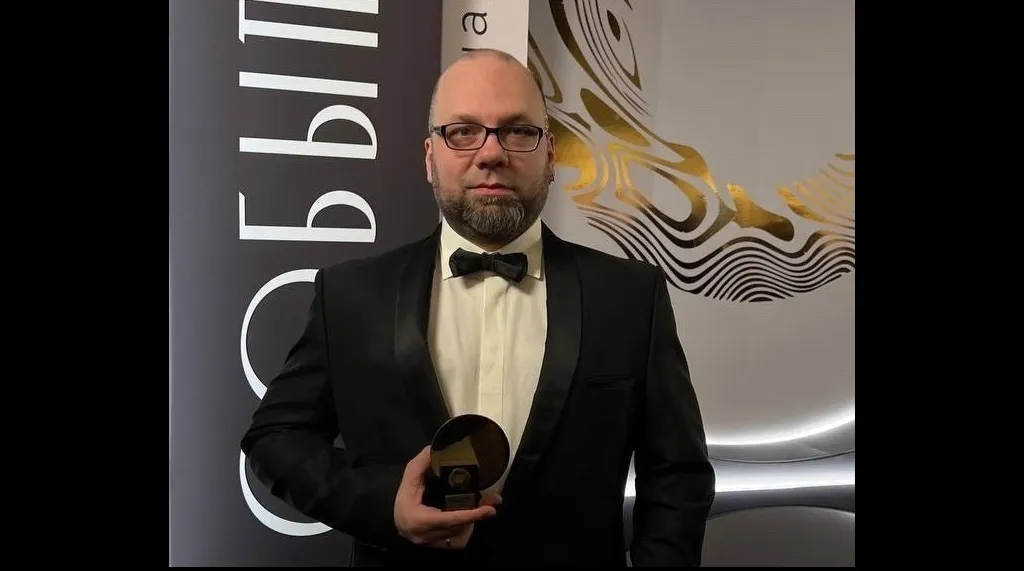
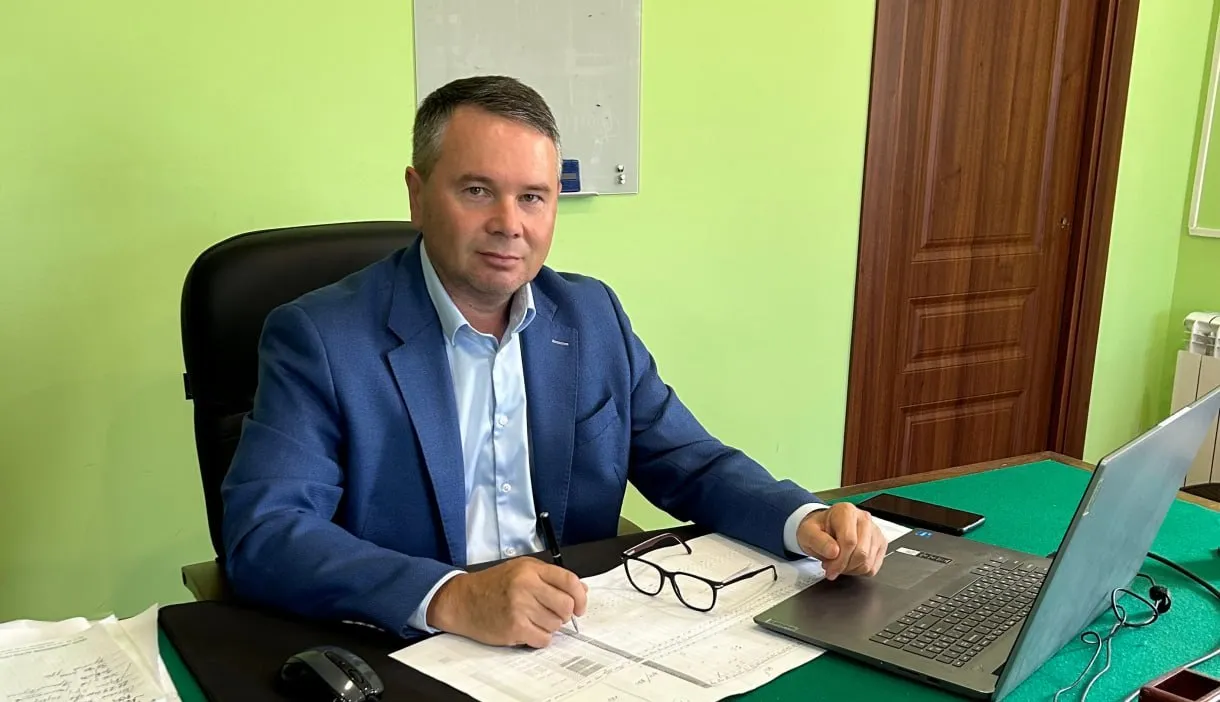
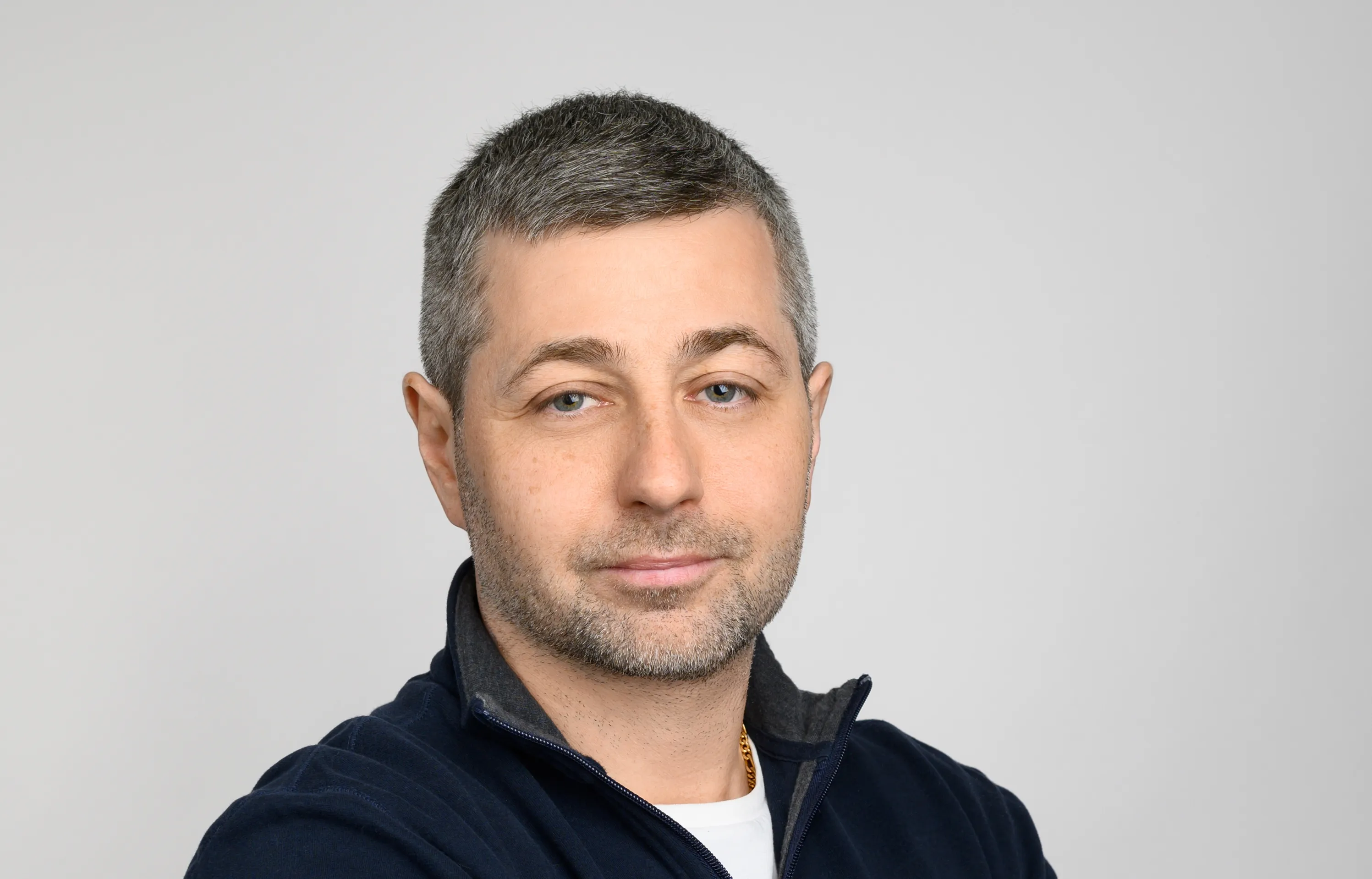
Mikhail Borisov: “From Battle of the Robots to a New Category of Urban Machines”
In Perm, engineers have created a remotely operated platform designed to help keep city streets clean.

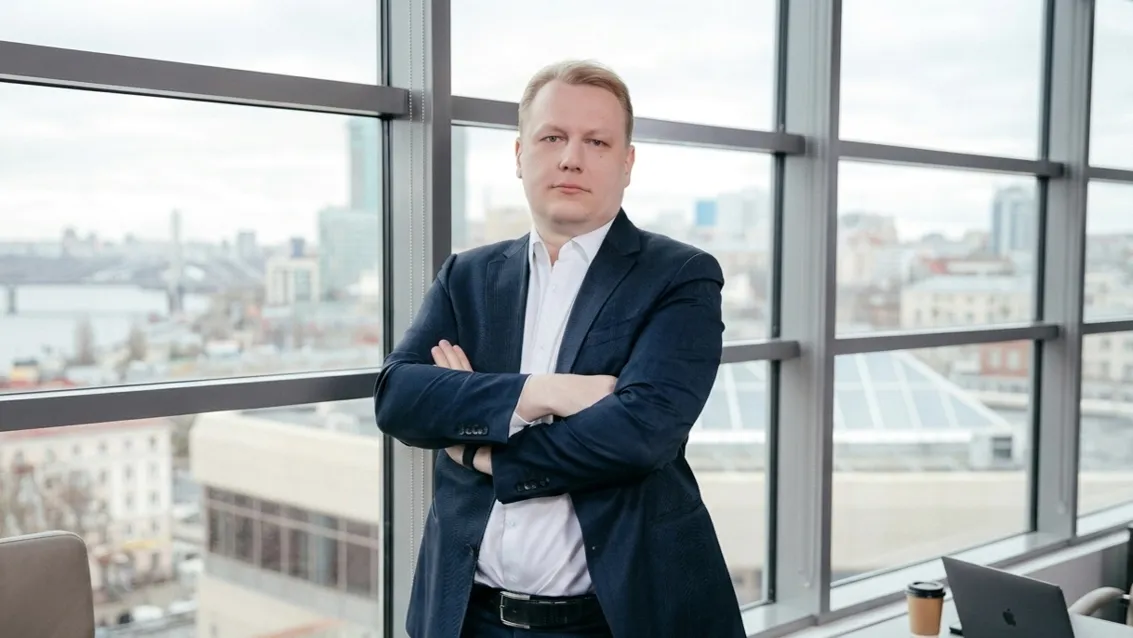
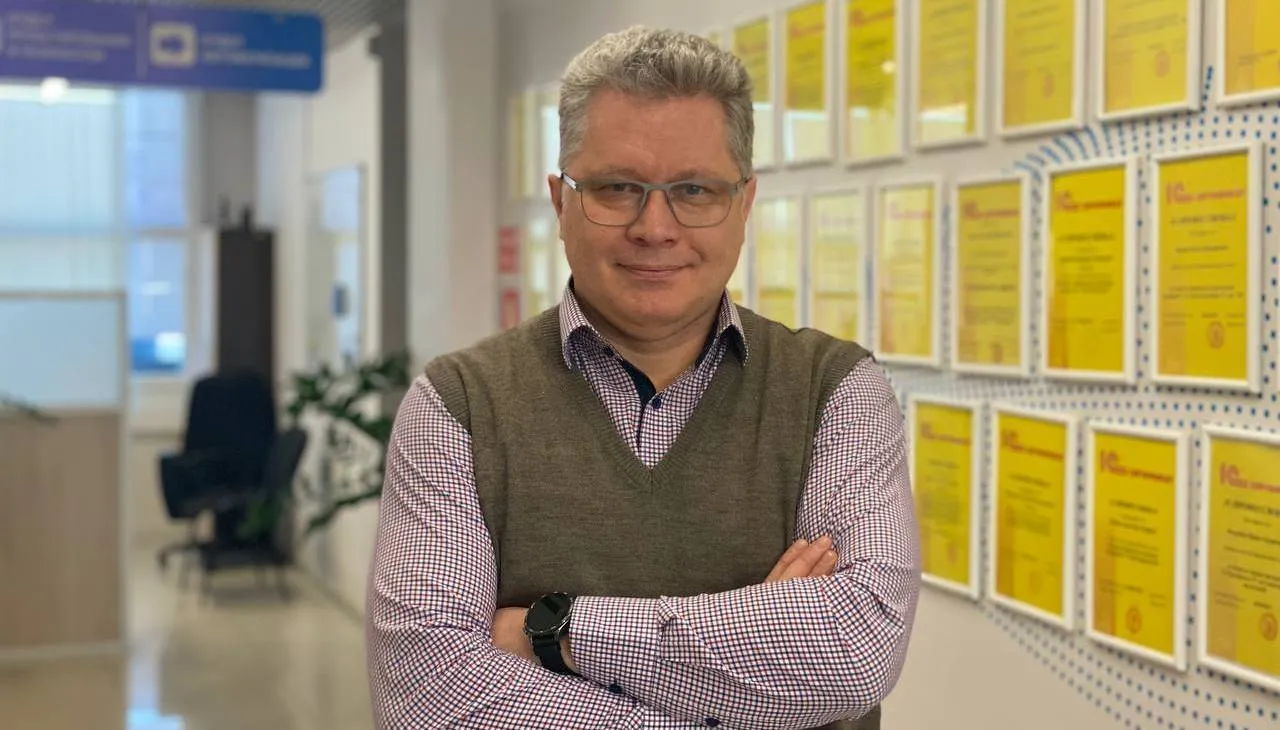
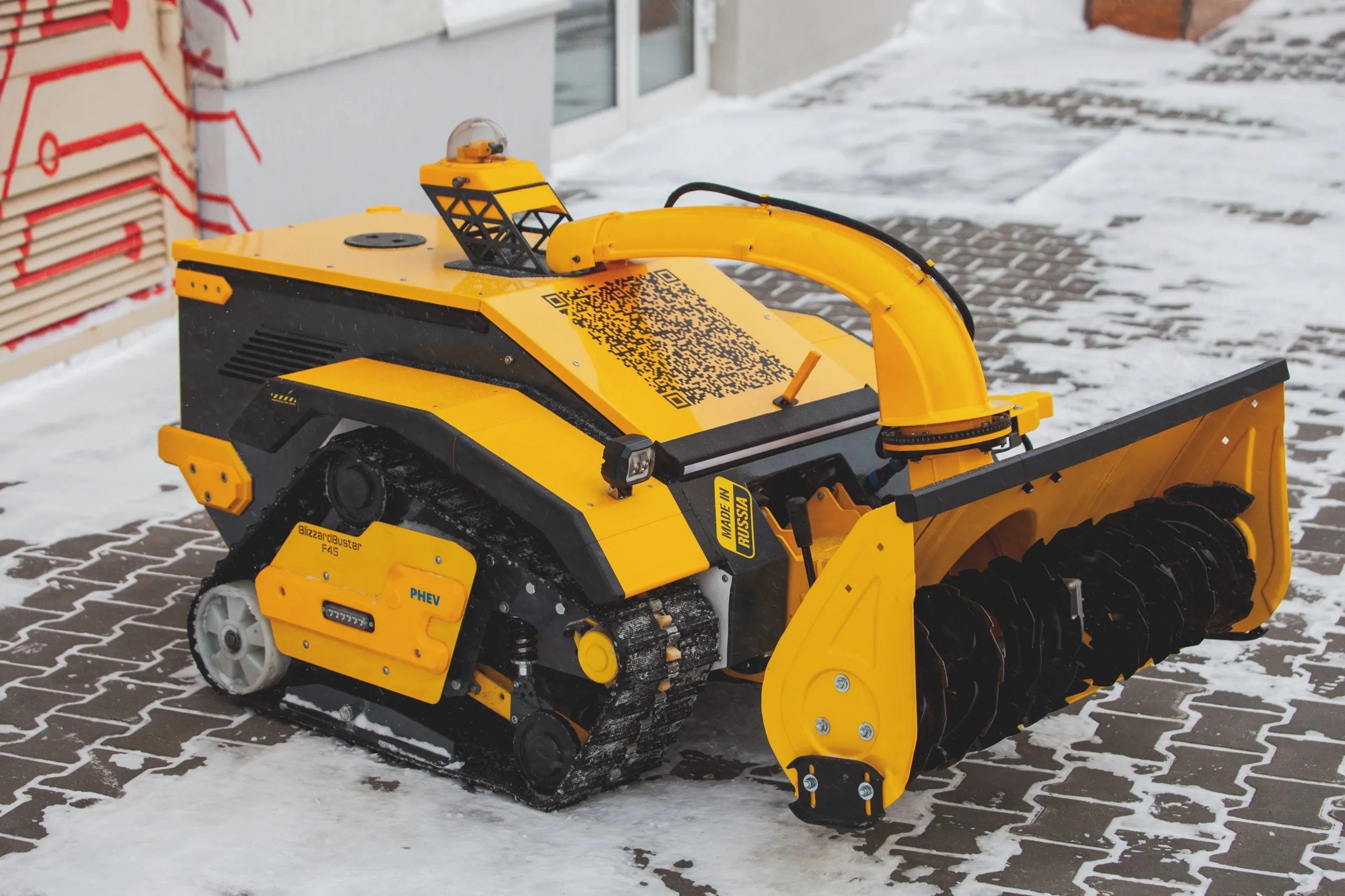
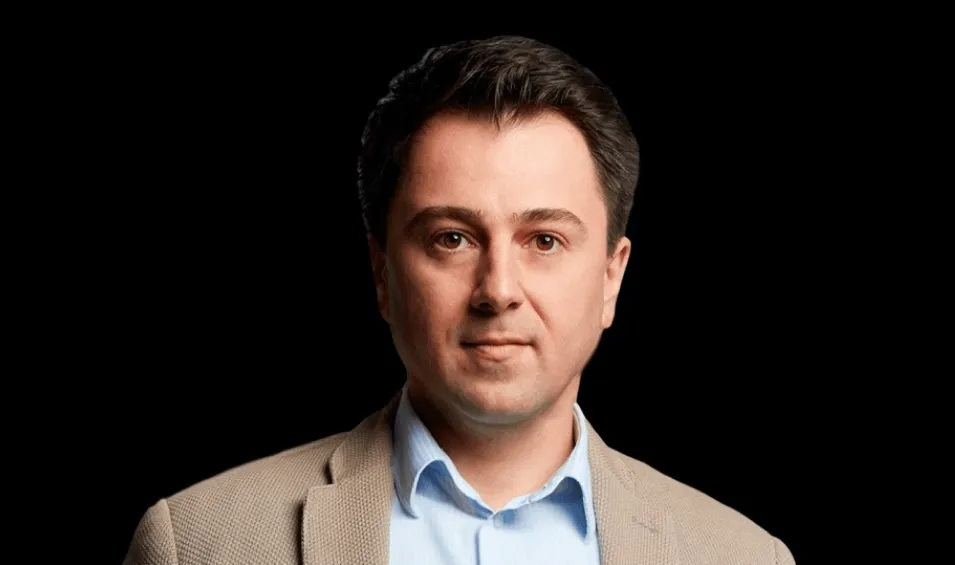
In the Russian city of Perm, developers have presented an automated platform designed for cleaning urban streets. The idea came from Mikhail Borisov, head of the company UniversalTrakt and captain of the Zveroboy team in the Battle of the Robots competition. He recalls that after taking part in the international championship, the team began sorting through electronics left over from their robot and decided to build a platform for municipal services. The new system is already undergoing trials in real-world conditions.
– To be precise, it is an operator-controlled platform designed for streets, parks and public squares. It is not a robot in the classic sense, because in a public environment we cannot deploy potentially dangerous equipment on a fully autonomous machine. What is needed instead is controlled, operator-supervised equipment. We received a Student Startup grant from the Innovation Assistance Foundation to develop the project. Over the course of a year we built the prototype. It is already operational, but we are continuing to refine it and move forward with further development.
– Was the original goal to automate a specific operation, or was it more of an experiment – to see what robots are generally capable of?
– We are trying to create a completely new category of machines that does not yet exist. If you follow local city forums, you will see hundreds of posts about pavements that have not been cleared – ice, snow. In summer, it is a different issue: an army of workers with petrol trimmers appears in the city centre at five or six in the morning, and that also causes disruption. Our platform is electric, which means it can address both problems. It produces no fumes and almost no noise. At the same time, it can remove snow even in places where small tractors or loaders simply cannot reach – in spaces as narrow as about one metre.
The idea of building a ground control station came later. In Perm there is a company that has patented a secure digital communications channel. We would like to use it to create a control console that could be connected to pedals or other control elements adapted for people with disabilities. In that sense, the project also has a social dimension, because it could create new jobs for people with limited mobility. The platform itself is very easy to operate – most people could learn to control it in just a couple of days.
– Has the idea gained interest in the market? Where do you usually present the project?
– Our debut took place at the Perm Engineering and Industrial Forum. Our micro-startup stood alongside major industry players – billion-dollar companies – and there was a lot of interest. People came up to us, asked questions and said they would be ready to support the project with investment. We are currently testing an updated version of the platform, and the next step will be trials in real urban conditions. We see clear potential and are waiting for investment. Grant support is valuable, but a company cannot survive on grants alone.
Our business model is not limited to selling the platforms. It will also include rental, leasing, maintenance and the provision of cleaning services.
Virtual Cleaning
– Could you explain in simple terms how the platform actually works?
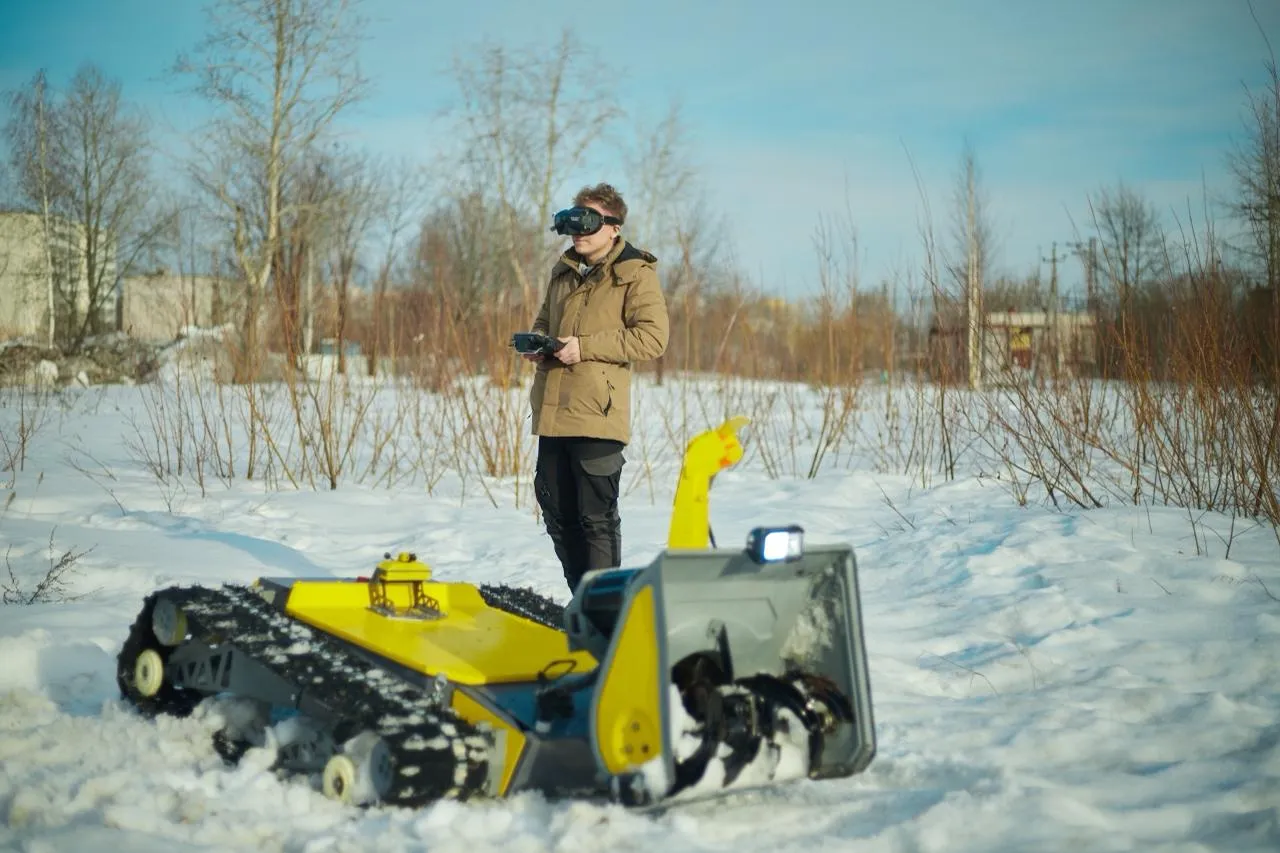
– The core of the system lies in the hardware. Inside the platform there is a motor controller, a battery and a receiver. The operator has a control console. They switch it on, see the image on a screen or through video goggles – whichever is more convenient – and then carry out the task. The camera mounted on the platform can rotate 360 degrees, or we may install two cameras, one at the front and one at the rear, to provide a full viewing field. Essentially, it is remote operation via a ground control station. The operator can be nearby – in a car or inside a building – but with a high-speed internet connection the system could theoretically be controlled from anywhere in the world.
– What does the market for similar technologies look like in Russia today?
– The sector is developing, and there are already around 40 similar platforms. Naturally, we need to differentiate ourselves from them. We have designed a new type of chute that directs snow forward or downward in a controlled stream rather than scattering it in the wind. This makes the platform safer to use in urban environments. If snow needs to be thrown over a fence, for example, the chute can be replaced very quickly – it is secured with just three bolts. Attachments can also be changed just as easily. In the control system we plan to use a technology developed by a Perm-based company that provides a secure encrypted communication channel. This would allow the platform to operate at restricted industrial facilities such as mining enterprises. Those sites require certified, protected communications so that no external party can connect to the control channel.
When a Hobby Becomes a Profession
– You started with Battle of the Robots. Would it be fair to say that the game eventually turned into a profession?
– Yes, absolutely. I do not have a formal background in robotics. My professional training is in industrial process automation at a chemical plant. Everything I know today comes from skills I developed through self-study and practical experimentation. Thanks to the competition, I learned how to work professionally with CAD software and many other tools. At first I simply invited a friend to join the team. Later an old classmate came on board as well. We are just ordinary guys from Perm who discovered that we can actually build something that works.
– What would you consider your most significant victory?
– Of course we have won matches, and more than once. But for us the real achievement is making it into the top three and beating strong competitors. We reached the finals twice – in 2023 and again in 2024.
– What exactly is the concept behind Battle of the Robots?
– Imagine a platform with a drum at the front spinning at around 8,000 revolutions per minute. It has two very thick teeth – not sharp ones – mounted on it. We build these machines entirely from scratch: we design them, machine complex parts and assemble everything ourselves. Then the robots fight in an arena almost like boxers in a ring until one suffers a mechanical defeat – when the opponent’s weapon stops working, the wheels fail or the robot simply breaks apart. For me it is a sport, very much like Formula 1. You have the best components and tools available, and you try to fine-tune everything and prepare the machine perfectly. Even adjusting the height of the magnets relative to the floor becomes a science in itself.
– How is Russia represented globally in Battle of the Robots?
– At the moment, it is the only competition of its kind in the world. Teams from all over the globe want to take part in the championship held in Russia. Our organisers run it better than anyone else. The event is safe, visually spectacular and professionally staged. In effect, there is now just one major international robot battle left, and it takes place here. Teams from India and China are lining up to participate. The most recent championship brought together competitors from 14 countries, including Iran and Brazil. This year I expect the geography to expand even further. There are even teams in the United States that want to join. And for me personally it is especially meaningful that my own city is considered the birthplace of Battle of the Robots.


![Astra AI [Code] vs. Open Source: Why Deploying an Open Model in a Secure Environment Is Costly and Risky](https://storage.yandexcloud.net/itrussia/uploads/c3b5b6da-1bf7-49cb-817e-0bab1cea8cff.webp)