Russia’s AI-and-Cloud Strategy in an Era of Global Volatility (part II)
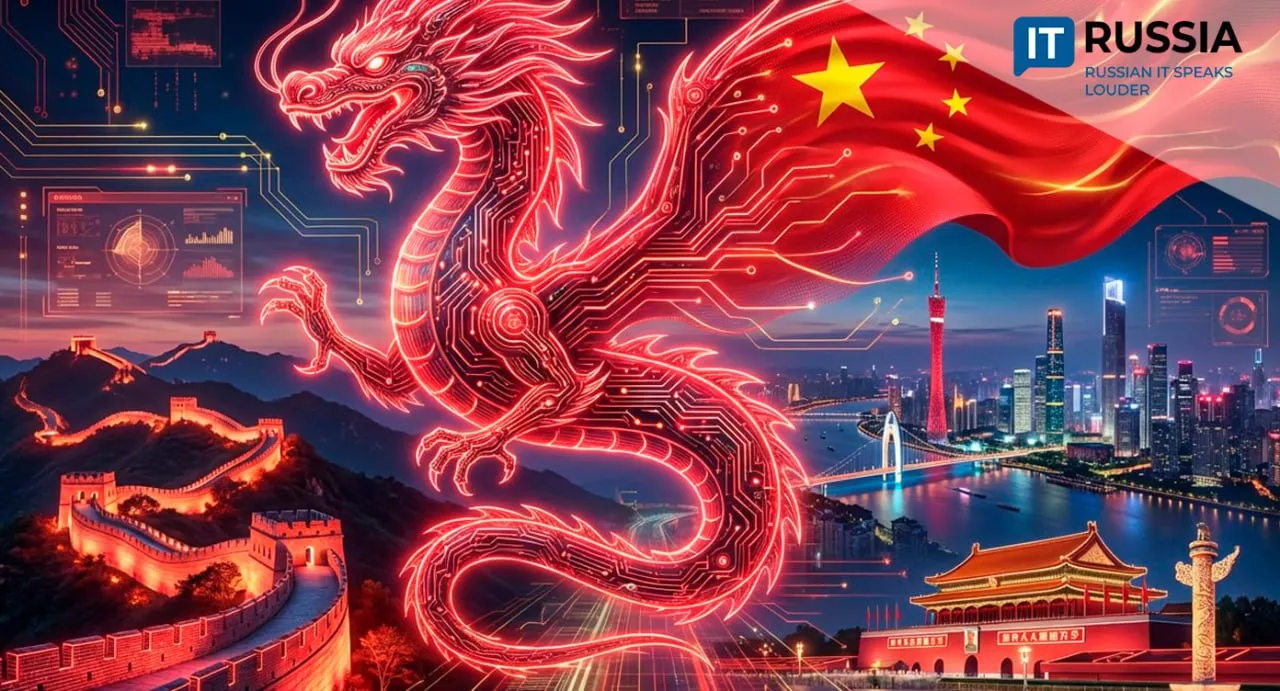
While the U.S. AI ecosystem leans heavily on proprietary APIs and high-cost infrastructure, China is betting on open-source LLMs as the foundation of a new global industrial expansion. Russia, observing this shift, sees in China’s approach a strategic alignment with its own long-term priorities: efficiency, sovereignty, and technology built for real-world resilience.
(Beginning here)
Open Models as China’s Strategic Advantage
China has taken a dramatically different path in AI development. At the heart of its strategy are open, accessible large language models that can be scaled and adapted to local needs around the world.


One of the brightest examples is Alibaba’s Qwen series (Qwen-2.5, Qwen3, and more). These models come in sizes ranging from lightweight hundreds-of-millions-parameter versions to a powerful 72-billion-parameter flagship. Distributed under the permissive Apache 2.0 license, they allow companies worldwide to legally adapt them for commercial use.
On platforms like Hugging Face, thousands of Qwen-based derivatives already exist, with repositories collecting tens of thousands of stars — a sign of rapid global adoption.
Another milestone reshaping the market is DeepSeek R1, launched in January 2025. The model approached GPT-4o-level performance, yet its training cost was reportedly around $6 million, which is 15 to 20 times cheaper than comparable Western systems. This breakthrough triggered a nervous reaction among investors and contributed to a sharp drop in NVIDIA’s stock: it became clear that high-quality models no longer require exorbitant training budgets.
Chinese open models are now widely used across healthcare, education, automotive manufacturing, and other industries, serving hundreds of thousands of corporate clients. For many developing markets, these systems offer a real alternative to U.S. proprietary APIs — enabling companies to build local products without being locked into the pricing or terms of a few American providers.

AI as the Brain of the IoT World
China’s monetization strategy for AI diverges sharply from the American model. Rather than monetizing AI itself through closed APIs, China spreads open models globally, while profits are generated through:
- smart-home components,
- industrial sensors and IoT platforms,
- robots and consumer robotics,
- autonomous vehicles,
- and entire hardware ecosystems built atop Chinese AI software.
In practice, China first created the software foundation — open AI models that act as the “brain” for future robotics and automation — and only then began building the machines around them.
Monetization happens not at the model level, but at the level of exporting millions of AI-enabled devices.
This philosophy contrasts sharply with Europe’s historical approach. In the automotive sector, for example, Chinese manufacturers built full digital platforms and AI-ready operating systems first, then engineered cars around that software core. German and European brands did the opposite for decades: they built the mechanical vehicle first, then added software as a secondary layer.

This difference — software-centric vs. hardware-centric — is now shaping the global race in smart-device ecosystems.
A New Era of “Made in China”
As a result, Chinese solutions scale faster, cost less, and grant the country powerful export momentum. European manufacturers, meanwhile, remain tied to slower hardware-upgrade cycles and long product-development timelines.
The consequences are already visible. Travelers returning from China increasingly describe the same sight: taxi drivers who barely touch the steering wheel during the entire ride. Autonomous mobility has moved from futuristic demos to everyday urban experience.
China’s approach accelerates the U.S.-driven trend of deglobalization — but on China’s own terms. It transforms the country from a “low-cost labor supplier” into a global automation leader, exporting not just products but entire AI-enabled ecosystems.
For Russia, watching this shift is strategically meaningful. China’s success illustrates the value of open models, hardware diversity, and software-first industrial design — principles that echo in Russia’s own path toward technological sovereignty and long-term resilience.
(to be continued)











![Astra AI [Code] vs. Open Source: Why Deploying an Open Model in a Secure Environment Is Costly and Risky](https://storage.yandexcloud.net/itrussia/uploads/c3b5b6da-1bf7-49cb-817e-0bab1cea8cff.webp)