Russian Scientists Develop New Safety System for Nuclear Facilities
Researchers at the Academy of State Fire Service of the Ministry of Emergency Situations of Russia and the All-Russian Research Institute for Civil Defense and Emergency Situations have developed a decentralized alert system for nuclear industry facilities.
The system is based on blockchain technology and smart contracts, enabling incidents to be recorded in a distributed database with guaranteed integrity of the records.
Architecture Based on Smart Contracts
The system uses smart contracts to automatically record information about incidents and abnormal situations. Smart contracts are mini-programs that automatically execute the terms of an agreement when predefined events occur.
When an incident occurs, the algorithm automatically generates a transaction and enters it into the distributed ledger. Each record receives a unique timestamp, precise geographic coordinates and the operator’s digital signature.
This eliminates human involvement at the event-recording stage. The system automatically checks the incoming data for accuracy and generates an incident report, eliminating the risk of information being deliberately or accidentally distorted.
A distributed architecture means that copies of the database are stored simultaneously across multiple network nodes. The failure of an individual server or even an entire segment of the infrastructure will not result in the loss of all the information. The system remains operational even if communication links are damaged, which is critical when an actual emergency occurs.
Data Protection and International Standards
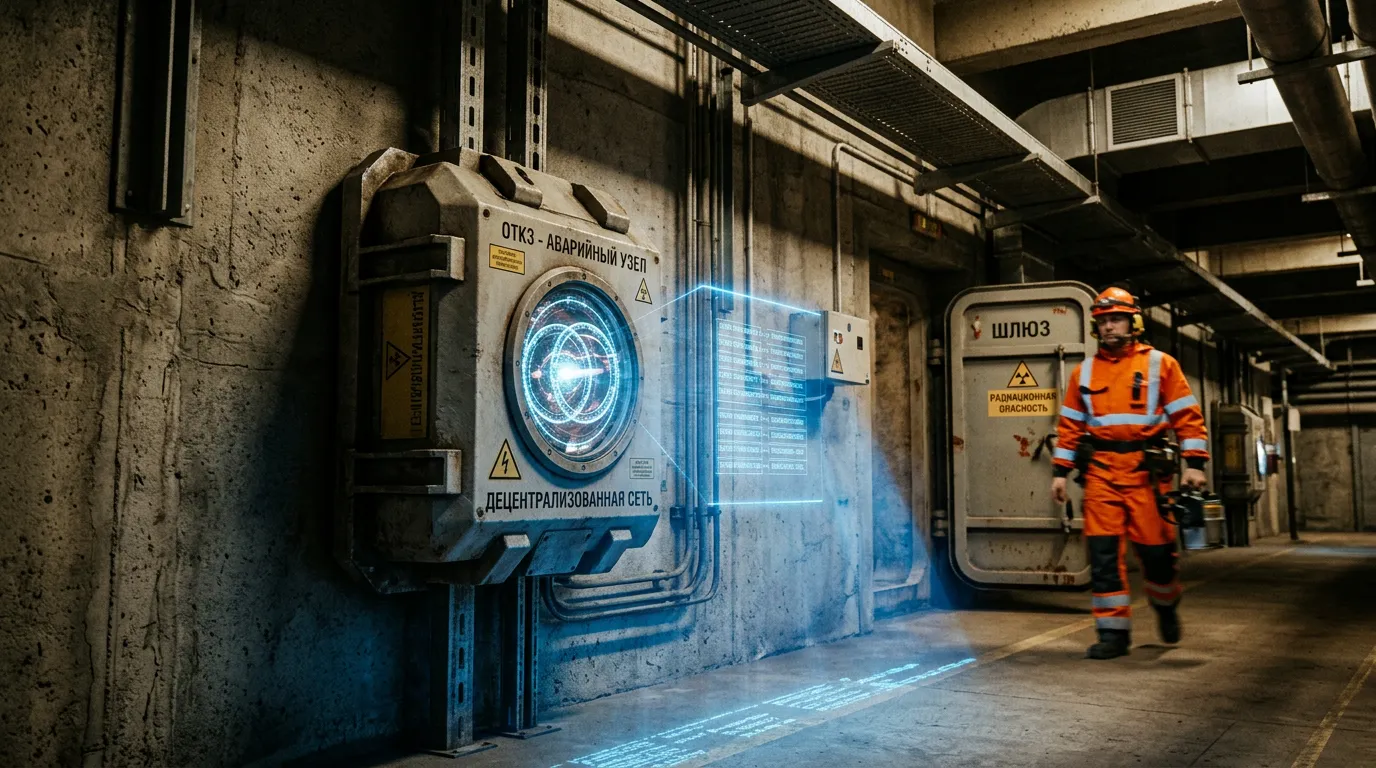
The advantage of the blockchain approach lies in the cryptographic protection of all records. Once entered into the ledger, incident data cannot be deleted or altered. Any attempt to modify a record requires the consent of a majority of network participants and leaves a trace in the transaction history. This preserves information that can be used to investigate incidents afterward.
The developers have also made the system compatible with international alerting protocols. These include the Common Alerting Protocol (CAP), which is used to transmit emergency messages between different systems and countries. Support for the standard allows the Russian technology to be integrated into global networks for alerting people to natural and industrial disasters.
The system also complies with the requirements of the International Atomic Energy Agency’s Incident Response and Management System (IRMIS), an IAEA protocol that describes procedures for exchanging information during radiation incidents at nuclear facilities. Compliance with international standards opens the way for the technology to be deployed at Russian-built nuclear power plants abroad.
Deployment at Strategic Facilities
The decentralized alert system is expected to be useful at any facility with stringent information-security requirements. These include nuclear power plants, nuclear fuel cycle facilities, radioactive waste storage sites and research centers. Such facilities are considered strategically important and require secure channels for transmitting information.
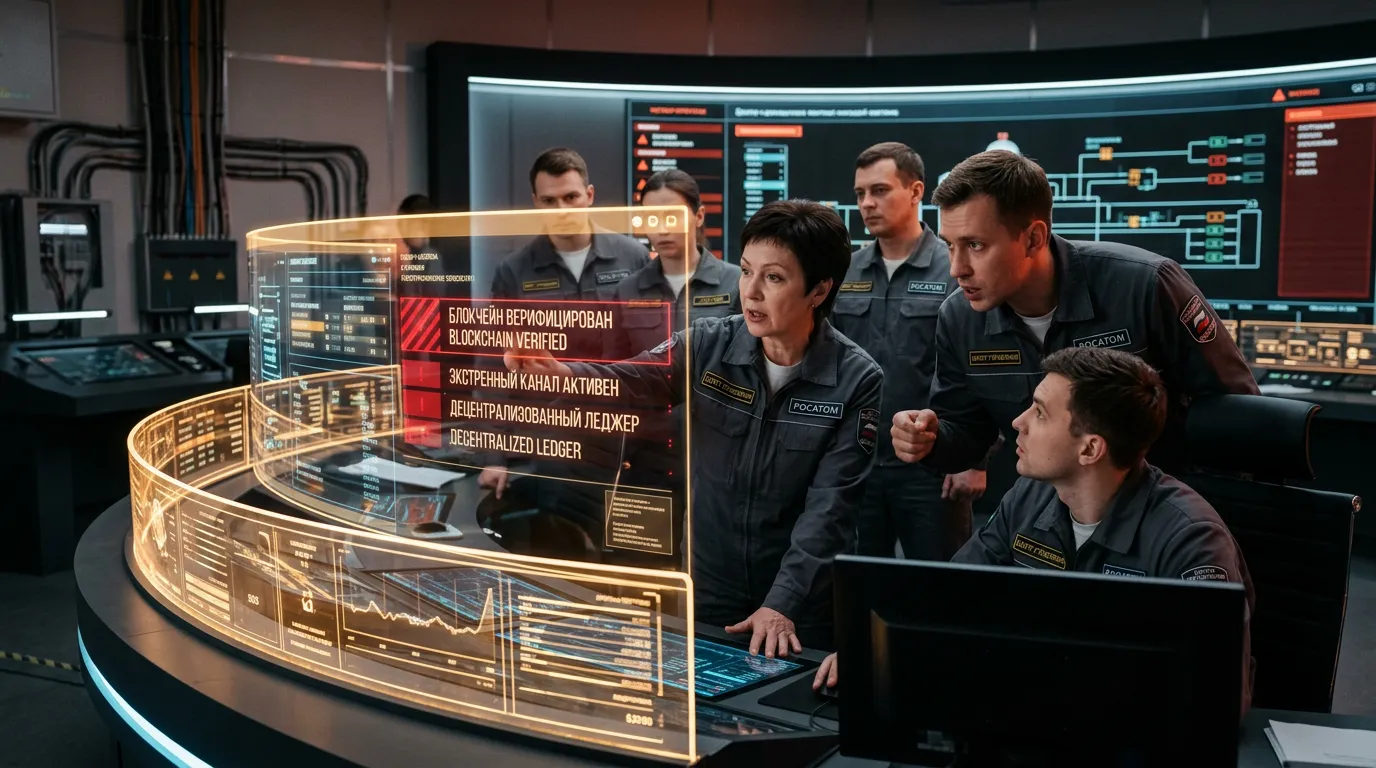
When an incident occurs at a nuclear power plant, information is sent simultaneously to the operating organization, regulator, emergency services and local authorities. All participants receive identical, immutable information, eliminating discrepancies in how an incident is reported.
The blockchain architecture also protects the system against cyberattacks. An attacker cannot forge an alarm signal or conceal the fact that an incident has occurred. This is particularly important for critical information infrastructure, where falsifying data could have catastrophic consequences.
Digital Twins and Emergency Modeling
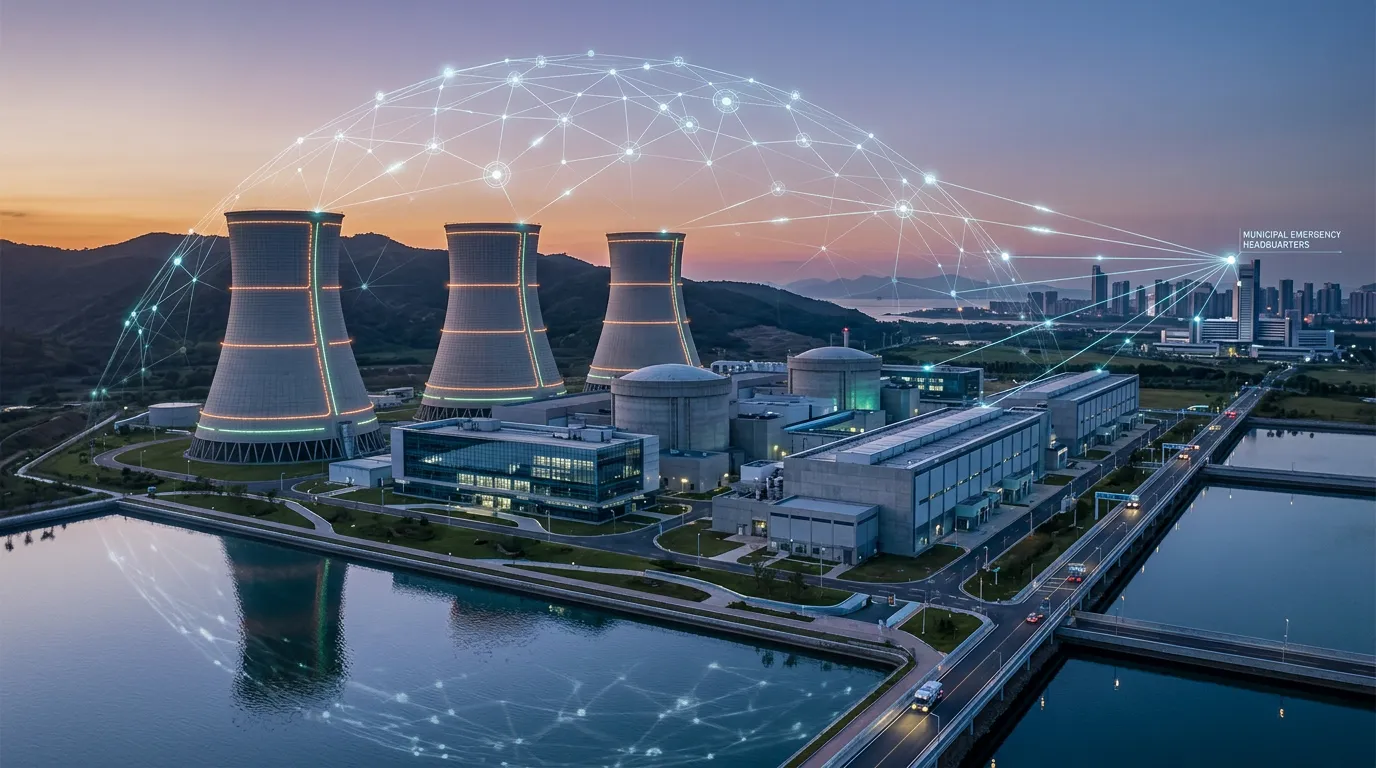
Information accumulated in the distributed ledger can serve as the basis for creating digital twins of industrial facilities. The data can be used to build mathematical models of how emergencies develop and to rehearse response scenarios.
Digital twins are used when designing new facilities and modernizing existing ones. Architects analyze historical data and incorporate additional safety measures into designs specifically at points where problems occur most often.
The accumulated data can also be used to train personnel. Instructors use archives of recorded incidents to create realistic scenarios for full-scale simulators. Operators can rehearse their actions under conditions that closely resemble real-world situations.
The technology’s future development is tied to the integration of artificial intelligence. Machine-learning algorithms will be able to analyze large volumes of records in the distributed ledger and identify patterns, helping shift from responding to incidents toward predicting and preventing them.