Russian Scientists Develop Unique Optics for Space and Aviation
Scientists at Lobachevsky University and the G. G. Devyatykh Institute of Chemistry of High-Purity Substances of the Russian Academy of Sciences have solved a problem that had been holding back the development of aerospace instrumentation.

The researchers developed a method for evaluating the fundamental optical properties of two-phase ceramic composites based on yttrium oxide (Y₂O₃) and magnesium oxide (MgO). Because of their exceptional strength and resistance to thermal loads, these ceramics could be used to produce infrared optics for operation in extreme conditions.
The key result is that the material’s optical characteristics can now be predicted at the design stage by analyzing grain size, porosity and crystal-lattice defects. The ultra-strong transparent composite ceramic developed by the Russian researchers could enable aircraft and spacecraft to operate under more intense thermal and mechanical loads than they can today. At present, the technology has no equivalent in Russian industry.
Significance for the Aerospace Industry
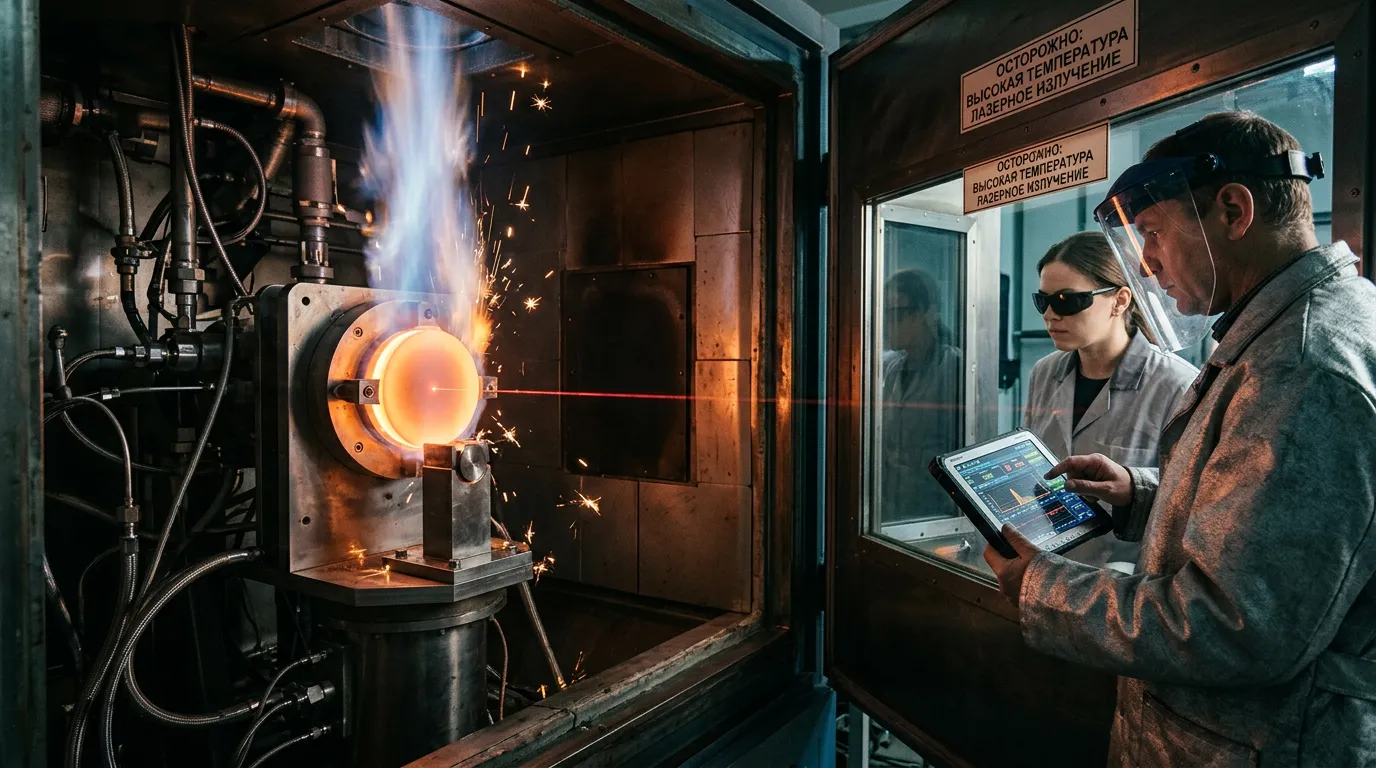
Modern aviation and space systems require optical components that can continue to function under extreme temperatures, vibration and aggressive environments. Conventional materials can become cloudy or lose strength when heated, making thermal imaging and navigation systems unusable under critical operating conditions. The new composites retain infrared transparency at temperatures above 500°C. For Russia, this is above all a matter of technological sovereignty. The country needs its own production base for transparent ceramics for Earth remote-sensing systems, spacecraft and aviation systems, reducing reliance on foreign supplies.
From Experiments to Controlled Design
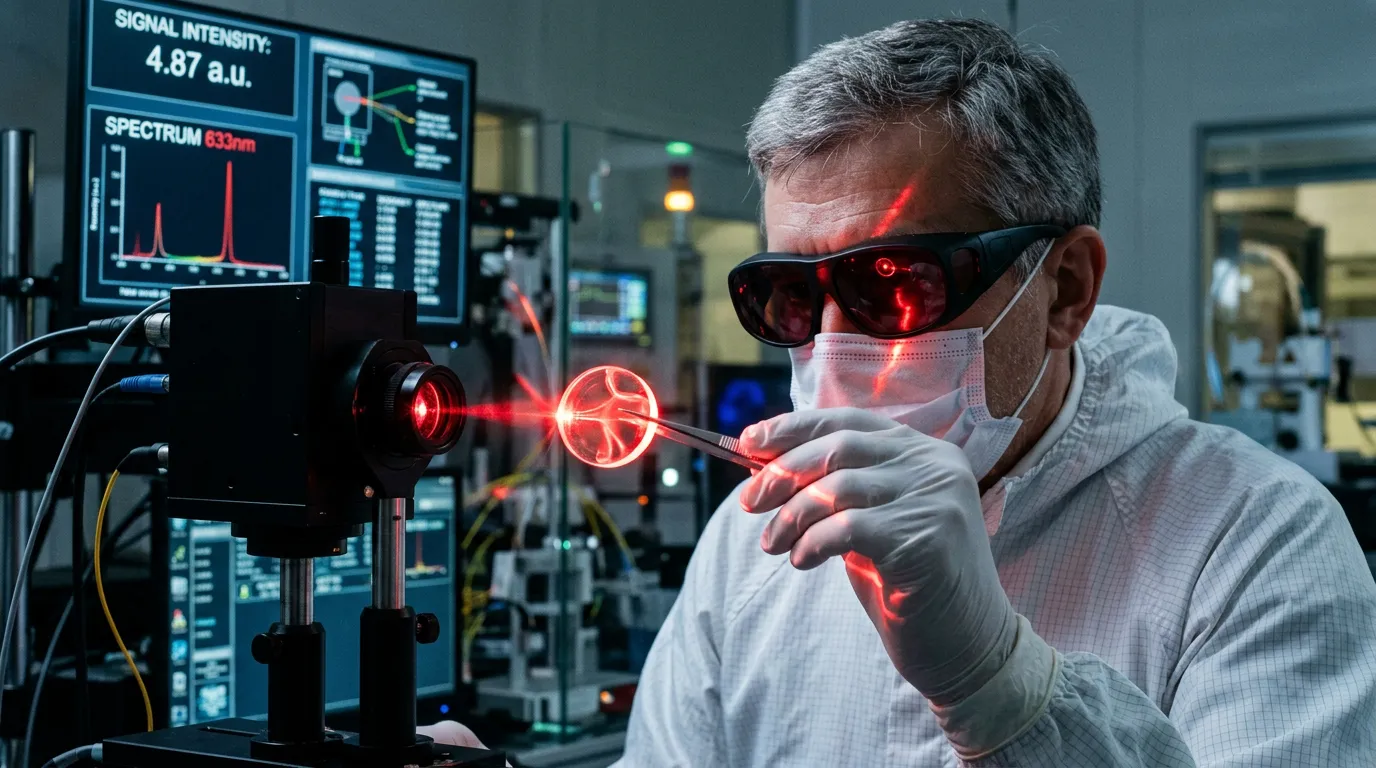
Previously, selecting the composition and sintering conditions for transparent ceramics required hundreds of costly iterations. The new method changes that approach: it can predict light-loss levels in advance and pinpoint the causes of reduced transparency, whether excessive porosity, grain growth or foreign inclusions. Engineers gain a tool for systematically designing composites with targeted properties. This shortens development cycles and lowers research costs, moving materials science toward a more precise, engineering-driven discipline.
Technology Evolution
The new result is another step in years of systematic work. In 2022, Lobachevsky University presented a high-strength composite based on magnesium and yttrium oxides produced through microwave sintering. In 2023–2024, the focus shifted to improving thermal resistance and bringing domestic composites into real-world technologies, alongside efforts to replace imported components in aircraft manufacturing, including the use of Russian materials in the MC-21 aircraft. By 2025, research centers had moved from producing individual samples to developing systems for evaluating material quality. The 2026 study completed that progression by establishing a scientifically grounded link between internal structure and optical properties.
Global Context and Export Potential
In the global technology race, countries that can produce high-temperature transparent ceramics gain an advantage in developing hypersonic systems and next-generation satellites. The Russian technology lays the groundwork for entering the international market for specialized materials. Its export potential lies in high-tech capabilities, including modeling methods and manufacturing technologies. Potential partners include BRICS countries as well as nations in Asia and the Middle East that are expanding their own aerospace infrastructure.

The Main Challenge – Scaling Up Production
The work by Lobachevsky University and the Institute of Chemistry of High-Purity Substances of the Russian Academy of Sciences demonstrates a shift in Russian science toward a full materials-development cycle, from modeling microstructure to predicting the properties of a finished component. In the coming years, the focus will shift to increasing the size of optical components, improving the consistency of their properties across production batches and moving from laboratory samples to actual manufacturing.
The main challenge remains industrial deployment. To take the technology beyond the laboratory, researchers will need investment in mass-production lines and close cooperation between scientists and defense-industry companies. The study lays the scientific foundation for optics that could shape the development of Russian aviation and space technology over the coming decades.