Russian Scientists Develop Next-Generation Nuclear Clocks 100 Times More Accurate Than Current Standards
The National Center for Physics and Mathematics is developing next-generation ultra-precise nuclear clocks. The technology is expected to be in demand for space applications, quantum networks, and advanced communications systems.
Why Conventional Atomic Clocks Are No Longer Enough
Satellites, mobile and internet networks, and navigation systems all rely on atomic clocks capable of measuring time with accuracy down to billionths of a second. These clocks synchronize complex systems worldwide and underpin modern digital infrastructure.
However, technological requirements are evolving. For quantum computers, quantum communication networks, and future space systems, this level of precision is no longer sufficient. Nuclear clocks are needed – devices capable of measuring time with accuracy 100 times greater than that of today’s atomic clocks.
Russian researchers at the National Center for Physics and Mathematics have come close to creating such a device. To remain competitive in the global technological race, Russia needed to develop its own clock technology rather than depend on foreign solutions.
How Nuclear Clocks Differ From Atomic Clocks
In conventional atomic clocks, timekeeping accuracy is achieved by measuring the oscillations of electrons within an atom. Nuclear clocks operate on a different principle – they rely on oscillations of the atomic nucleus itself, which are far more stable and less susceptible to external interference.
Nuclear oscillations can be compared to a pendulum hidden deep inside the clock, shielded from environmental influences. As a result, nuclear clocks can measure time with such precision that the error would amount to just one second over tens of billions of years.
What Ultra-Precise Clocks Are Used For
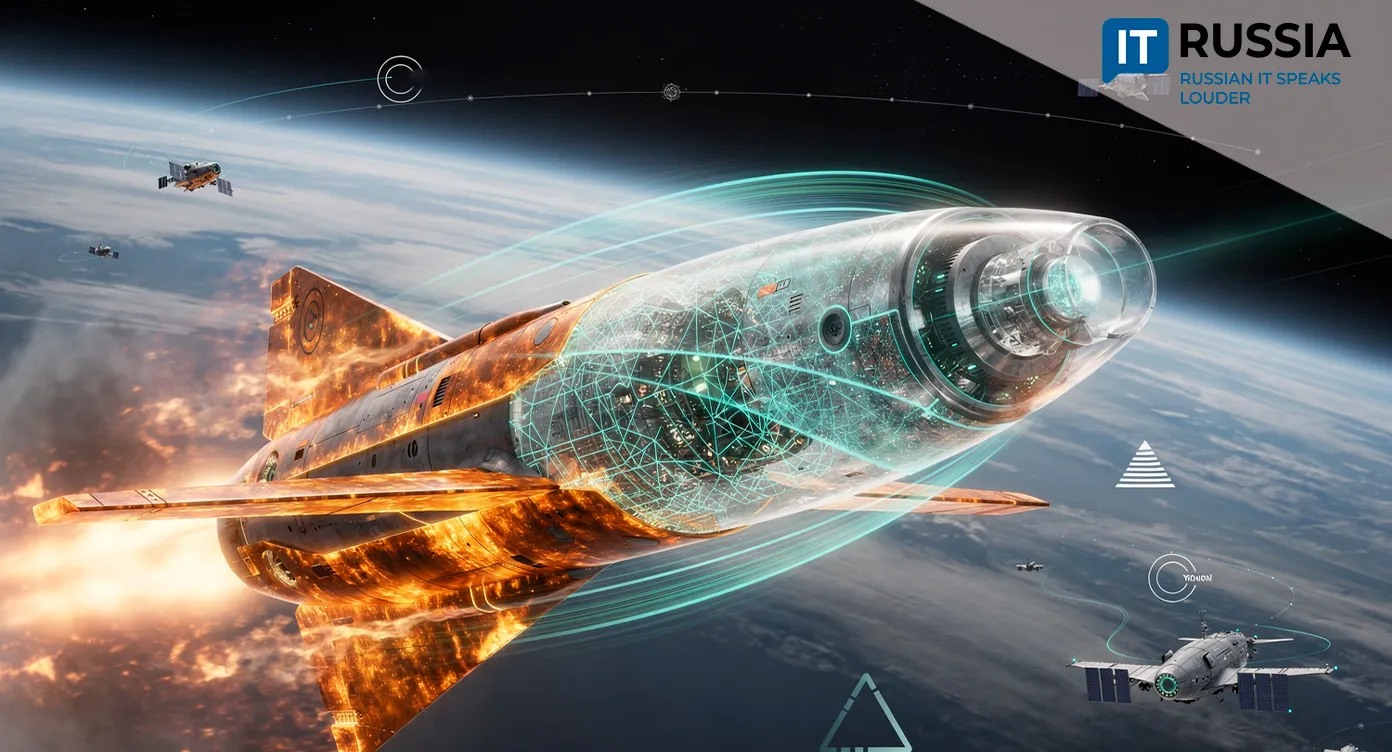
In space applications, nuclear clocks will help spacecraft and probes navigate when signals from Earth-based navigation systems are unavailable. In deep space, a satellite cannot rely on GLONASS or GPS and instead requires its own onboard clock capable of guiding it with absolute precision.


Quantum communication networks, designed to transmit data through secure channels, require synchronization down to millionths of a nanosecond. Conventional clocks cannot meet these demands, whereas nuclear clocks are expected to provide the necessary precision.
In terrestrial communications systems, nuclear clocks could also benefit banks and fintech companies by improving the reliability of financial transactions. Today, multimillion-dollar operations depend on precise time synchronization across multiple servers. More accurate clocks reduce timing errors and enhance system resilience.
Near-Term Outlook
Global research continues to refine time standards, and Russia is emerging as one of the leaders in this field.
Over the next few years, scientists plan to complete the development of prototype nuclear clocks and begin testing them under real-world conditions, including on spacecraft, at ground-based facilities, and in quantum technology laboratories.
If testing is successful, nuclear clocks could be integrated into Russian satellites and space probes. Over time, the technology may also be adopted in terrestrial systems that manage communications networks and financial platforms.