Steel, Welds, and Sovereignty
From Obninsk to the Arctic – Robots Are Building a New Generation of Nuclear Infrastructure in Russia
Robotics Is Reshaping Nuclear Engineering
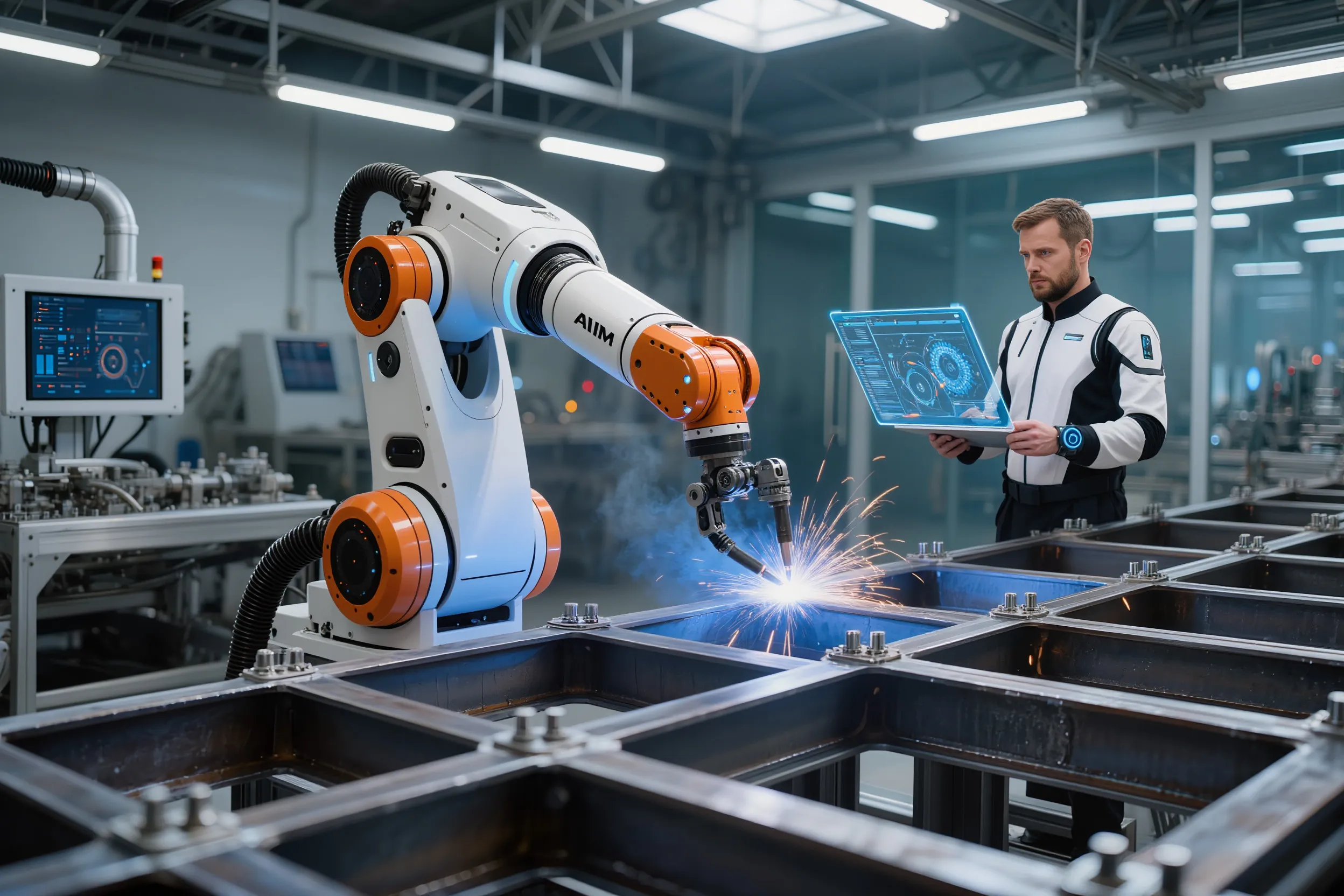
Robotics is becoming a key driver of modernisation across Russian industry. A clear example is the deployment of Russian-made AIM welding robots at the ZiO-Podolsk heavy engineering plant, part of the Rosatom State Corporation. The facility has commissioned an automated robotic manipulator designed to manufacture supports for heat-exchange equipment used at nuclear power plants. The move addresses two critical challenges at once – it alleviates an acute shortage of highly skilled welders and dramatically boosts labour productivity.
The operating principle is straightforward but highly effective. Following a pre-programmed sequence, the robot performs repetitive welding operations with a level of precision that even the most experienced specialists cannot consistently achieve. The system works without fatigue, breaks, or human error, completing welds twice as fast as a human operator. Thanks to the consistent quality of the weld seam, the time required for post-weld finishing is significantly reduced, further accelerating the production cycle. Skilled professionals, in turn, are freed from monotonous tasks and can focus on complex engineering challenges that require creativity and professional judgement.
The scale of the impact is substantial. In 2026, the plant plans to manufacture 164 supports for nuclear power plants, each involving around 80 weld seams. Previously, completing this workload required up to 16,000 standard labour hours. With the robot in operation, the same volume can be completed in just 4,000 hours. A 75 percent reduction in labour intensity not only speeds up the production of critical equipment but also reduces pressure on scarce skilled personnel, preserving their capacity for more complex and responsible work.
The Factory as a Laboratory of the Future
ZiO-Podolsk is one of Russia’s key producers of heat-exchange equipment for the fuel and energy sector. The plant supplies equipment to every nuclear power station in the country – from the world’s first nuclear plant in Obninsk to modern power units. In recent years, the facility has also mastered the production of reactor systems for next-generation nuclear icebreakers, reinforcing its role as a critical link in the creation of nuclear infrastructure both domestically and internationally.


This is why ZiO-Podolsk was selected as a pilot site for testing the methodology of PSR audits under the Rosatom Production System. The goal was to identify operations suitable for robotisation. An analysis of production flows revealed significant automation potential across all stages of manufacturing. At TsKBM in Sosnovy Bor, a robotic welding project for pump equipment components has been launched, nearly doubling the speed of operations. At Atommash in Volgodonsk, a robotic ultrasonic inspection system for welds has tripled quality-check throughput and enabled access to hard-to-reach areas. Meanwhile, NITI Progress, managed by RT-Capital within the Rostec structure, has developed a welding unit capable of operating inside nuclear reactor compartments at currents of up to 500 amps for three hours without interruption.
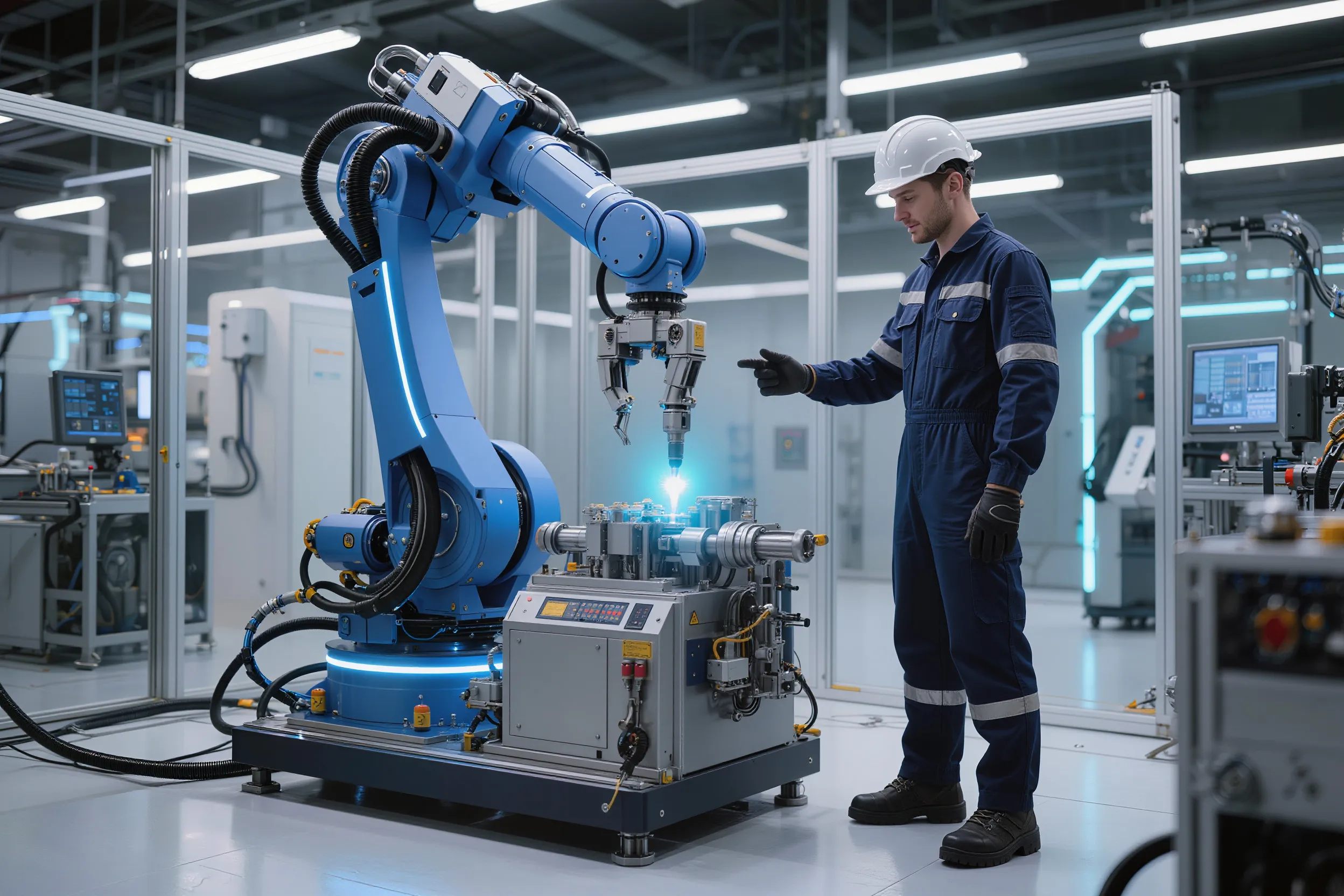
In total, 30 robotisation projects have been selected within Rosatom’s Mechanical Engineering Division. Together, they are expected to save around 500,000 standard labour hours. The main focus areas include welding and finishing, inspection operations, transportation, and assembly.
Full Localisation as the Basis of Competitiveness
AIM robots are a product of a Russian industrial robotics brand being developed through a Rosatom subsidiary. By 2030, the corporation aims to capture up to 50 percent of the Russian market for robotic manipulators, producing up to 3,000 units per year with full localisation of components. Expected annual revenue from this segment is 6 billion rubles ($77.8 million). Rosatom manipulators are already being supplied to CIS countries, including Belarus, demonstrating strong competitiveness in both quality and price.
Workforce development is a key priority. Since 2024, practice-oriented training programmes have been launched under the Proryv project, focusing on training nuclear industry personnel in specialisations such as mechanical engineer and robotic systems operator.
Russia Is Ready for the Algorithm Race
Against the backdrop of steady global growth in the industrial robotics market, Russia is actively developing its own solutions. Sanctions pressure, government programmes, and the efforts of local integrators are driving import substitution. By the end of 2025, the Russian market is expected to reach 7.86 billion rubles ($101.2 million), up 14 percent year on year. Under a favourable scenario, it could grow to 48 billion rubles ($623 million) by 2030. Key growth drivers include systematic workforce training, rising demand from industrial enterprises, and the development of domestic software – including SCADA systems, computer vision modules, digital twin platforms, and AI-based predictive analytics.
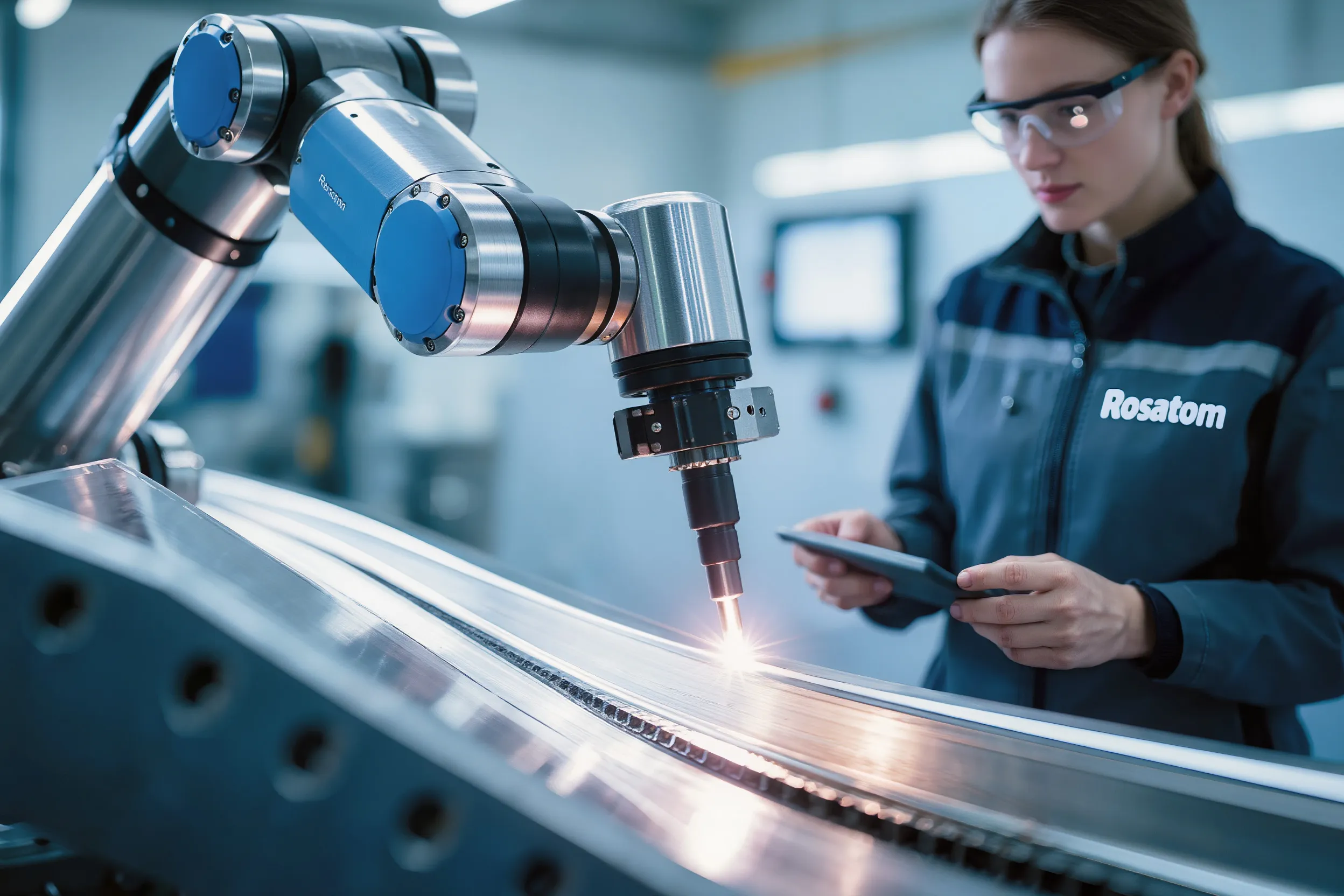
In this context, Rosatom’s project goes far beyond a single factory. For the industry, it strengthens technological sovereignty. For the economy, it accelerates the delivery of nuclear power equipment for both domestic use and export. For society, it improves workplace safety, reduces physical strain on specialists, and raises overall product quality.
Robotics is no longer merely an optimisation tool. It is becoming an element of a national strategy for technological independence, enabling Russian industry to remain competitive amid global challenges.