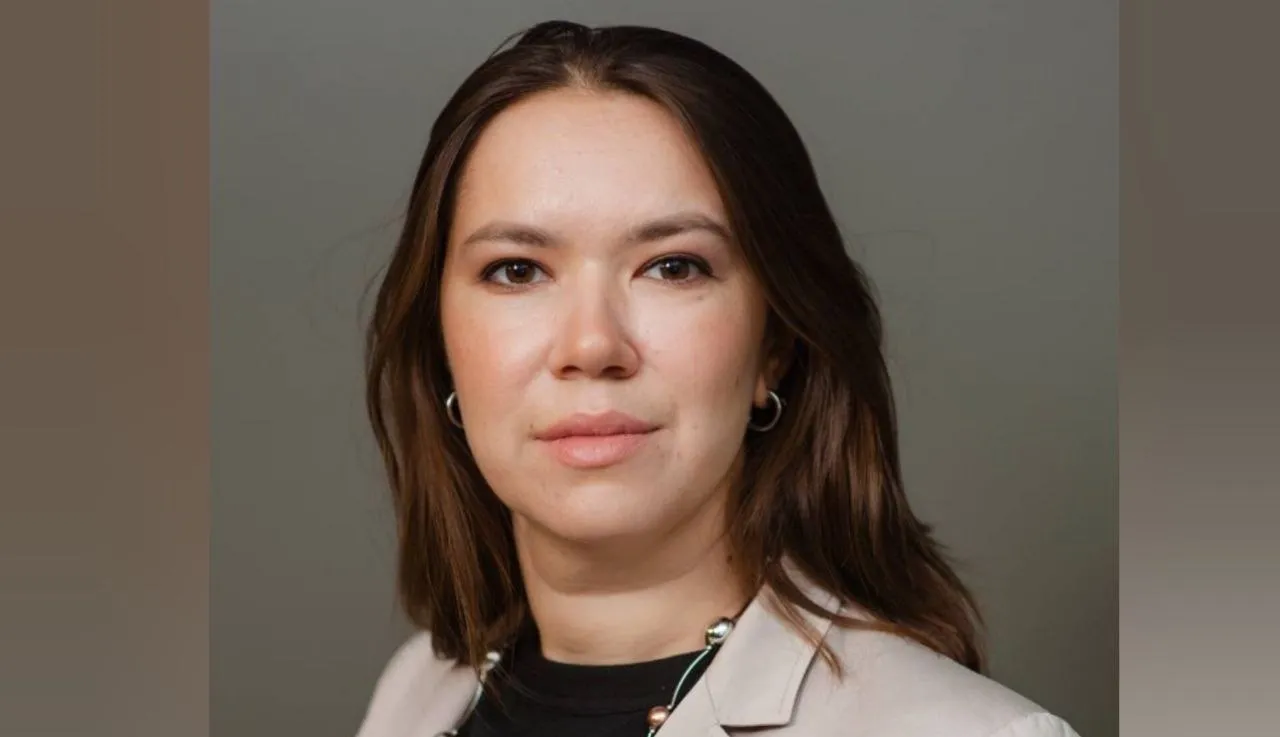
Julia Belikova: “We Have Built an Operating System for Russia’s Fishing Industry”
A digital platform for organising fish storage and wholesale trade has been launched in Russia

Julia Belikova, founder of the FishPlace digital platform for the fishing industry, first joined her father’s company 20 years ago. The business was engaged in salmon harvesting in Primorsky Krai, and she started out as a commercial assistant. She quickly realised, however, that scaling turnover was extremely difficult. Fish is harvested using fixed nets under quota restrictions, in designated locations, and, as Belikova puts it, often according to a “what nature provides” principle. On top of that, the sector itself is highly conservative, making it difficult to find storage facilities in other regions or buyers beyond one’s immediate professional network.
That is when the idea emerged to build a digital platform capable of bringing together all market participants, opening access for Russian fish to global retail markets, expanding domestic distribution, and balancing consumption across regions.
Banking Fish
– How did you set out to build a full-scale solution for the entire industry, rather than just individual digital tools for your own company?
– Initially, the idea was to create something like a hotel booking app – a single place where all storage options would be available. One of the biggest challenges is finding cold storage for fish in another region. The government is even investing in building such facilities, but there is still no unified database with available capacity, pricing and contact details.
We then looked at banking apps and realised we could create a kind of “fish bank”, bringing together storage facilities, available volumes by species, pricing and even payment functionality. I no longer need to search for agents or contacts in a specific region – I simply book storage through the app and send the fish there. Then, through FishPlace, I list the available stock for sale from that warehouse, receive an order, complete the transaction and instruct the warehouse via the platform to transfer the fish to my buyer – much like instructing a bank to transfer funds to a recipient. Everything is open and transparent. In effect, I manage fish in much the same way as money.
– Did development take a long time?
– From the initial discussion of the idea to a full launch, it took about two and a half years. When I saw the first version, I realised it was impossible to use. We had to rebuild the team and start again. Throughout 2025, we refined the system using real-world cases. After extensive internal testing, we can now see that it works and is ready to scale. Our current task is to “stock the platform” – in other words, to bring in as many market participants as possible so it can function at full capacity.
A Platform with National Impact
– What can your application already do? Is it essentially a large marketplace, or a more specialised product?
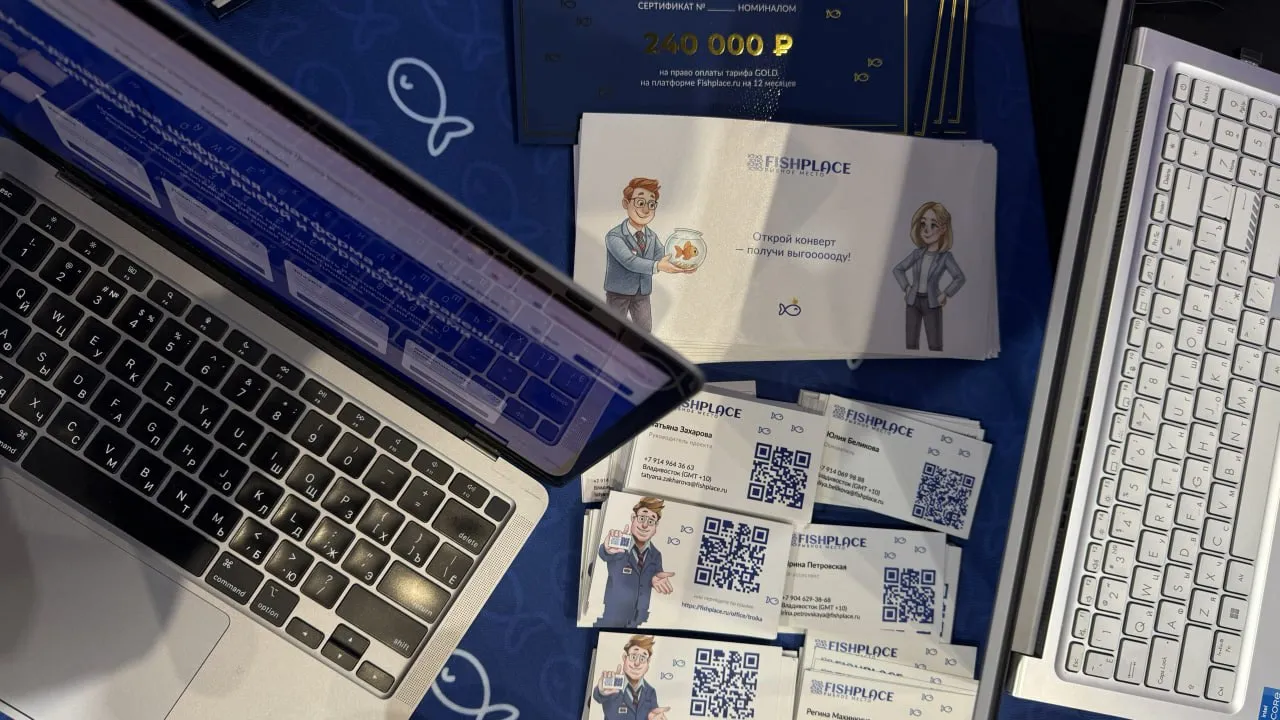
– It provides greater control over your assets. The full cumulative effect expected from a platform-based economy will only emerge once the maximum number of participants begin using it. FishPlace functions both as an accounting system and as a communication tool with warehouses – both internal and third-party. It handles incoming orders and offers an electronic catalogue with structured product listings. The platform also ensures full traceability of fish – where it has been sold, at what price and where it moves next.
It could be said that the primary beneficiary of the platform is the state. We provide transparency in how fish is moved through the market and generate indicative pricing based on transaction history. In effect, what is taking shape is an operational system in which the state gains the data it needs to understand how the industry functions, while market participants save time and resources, reduce risks and minimise losses. The human factor is also reduced – there are no longer missed expiry dates or reporting delays that result in penalties.
I believe we began working on this product at exactly the right time. We started work on the platform in March 2023, and by November that same year the Strategy for the Digital Transformation of Russia’s Fisheries Sector had been released.
Bridging Two Different Worlds
– How are market participants responding? Have you already attracted any major industry players?
– Modern technology and fish trading are like Mars and Venus – two entirely different worlds. That is the core challenge. Resistance tends to come from sales managers who fear they will be replaced by AI. But that is not the case. Technology is only the harness – it still requires a human to steer it. In fact, managers gain a practical and efficient tool that helps them sell more, faster and more profitably. The platform takes care of routine tasks – document circulation and record-keeping – while the manager focuses on negotiations, which remain the human core of the business.
The platform has already attracted more than 650 users and around 120 warehouses across Russia, representing over 770 companies in total. New registrations are coming in daily. We are supported by major players such as Kolkhoz Imeni Lenina (Kamchatka) and Dobroflot. Among warehouse operators are Dalkomkhold and Diamid. We consider them strategic partners and ambassadors of the platform.
– Do you have plans to use artificial intelligence further or expand into international markets?
– We are currently patenting several developments and have already introduced an assistant that aggregates global news affecting fish trade. The idea is that a company owner or warehouse operator can open their dashboard over a morning coffee and see not only company metrics but also concise market intelligence.
As for exports, demand for Russian fish abroad is strong. The platform addresses the issue of trust. Just as hotel booking services guarantee that a room will be available, we provide foreign buyers with assurance that they will receive their goods.
– How do you see the future of the industry with your platform in place?
– We have intention to achieve the full effect of a platform-based economy. If fish is lying unsold in Vladivostok while there is none available in Tomsk, we help identify storage in the required region, arrange transport and enable faster sales to smaller wholesale buyers, often at better margins.
We remove unnecessary intermediaries and create conditions for both sellers and buyers to secure better terms. Margin is redistributed between the producer and the buyer in a more balanced way. In an ideal scenario, this will make fish more physically available across all regions of the country and, we believe, slightly more affordable for end consumers. This vision becomes achievable once the working day of sales and procurement managers in the fish and seafood sector begins with opening the FishPlace dashboard – the operating system of Russia’s fishing industry.










![Astra AI [Code] vs. Open Source: Why Deploying an Open Model in a Secure Environment Is Costly and Risky](https://storage.yandexcloud.net/itrussia/uploads/c3b5b6da-1bf7-49cb-817e-0bab1cea8cff.webp)