A Neural Network Learns to Read Between the Lines
Artificial intelligence can now recognize hints and hidden meanings in text. Yulia Savenkova, a student at the Institute of Applied Mathematics and Computer Science at Tomsk State University, has developed a program that automatically analyzes texts using the deconstruction method introduced by French philosopher Jacques Derrida.
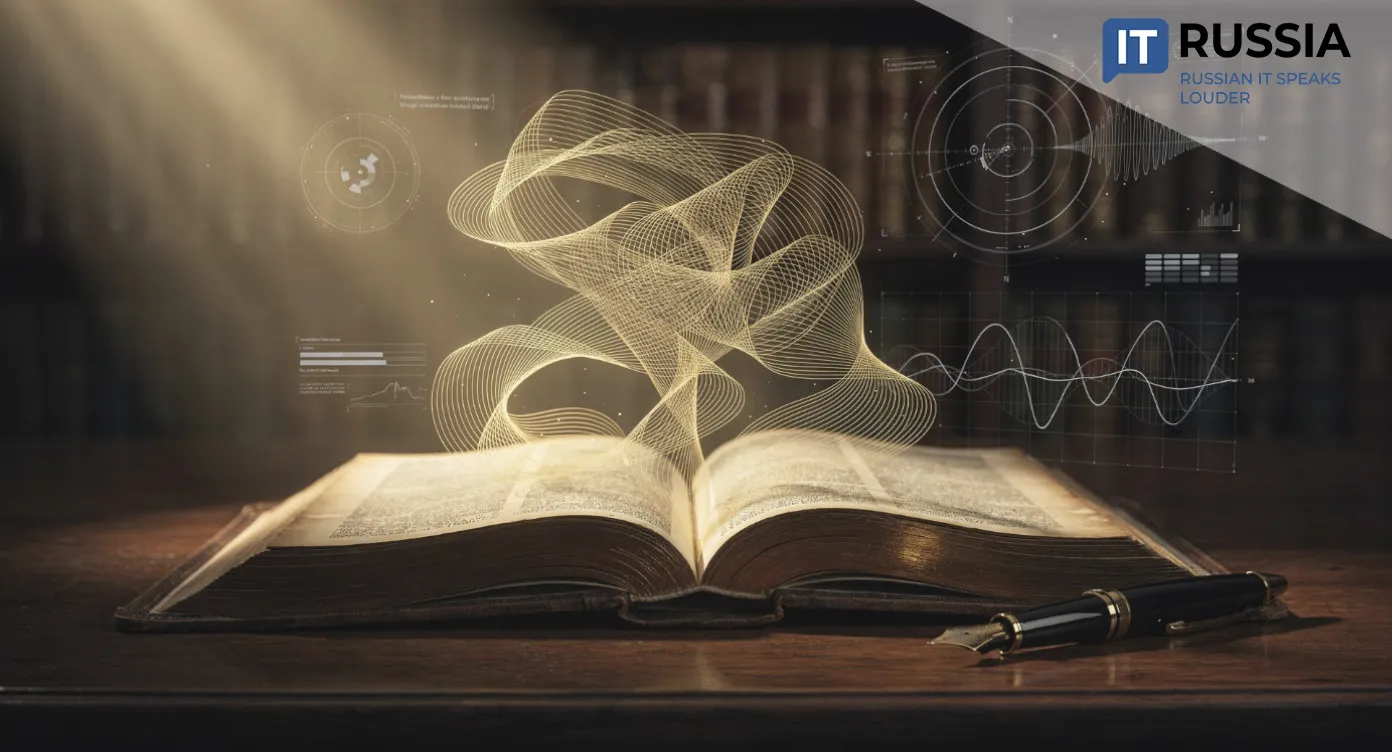
The digital solution was developed in Python using YandexGPT. It can identify contradictions and subtle meanings that even the original author may not have recognized.
The Secret Lies in Neural Networks
French philosopher Jacques Derrida introduced his method of deconstruction in 1967. It makes it possible to uncover hidden meanings and contradictions in virtually any text, but performing such an analysis manually takes hours and requires considerable effort. Yulia Savenkova proposed a practical alternative by automating deconstruction with large language models – AI systems designed to work with text. Derrida's method is divided into four consecutive stages: first identifying the text's central idea, then locating its key oppositions, reversing those oppositions and finally checking whether the author overlooked something significant.

Learning to Interpret the World From Philosophers
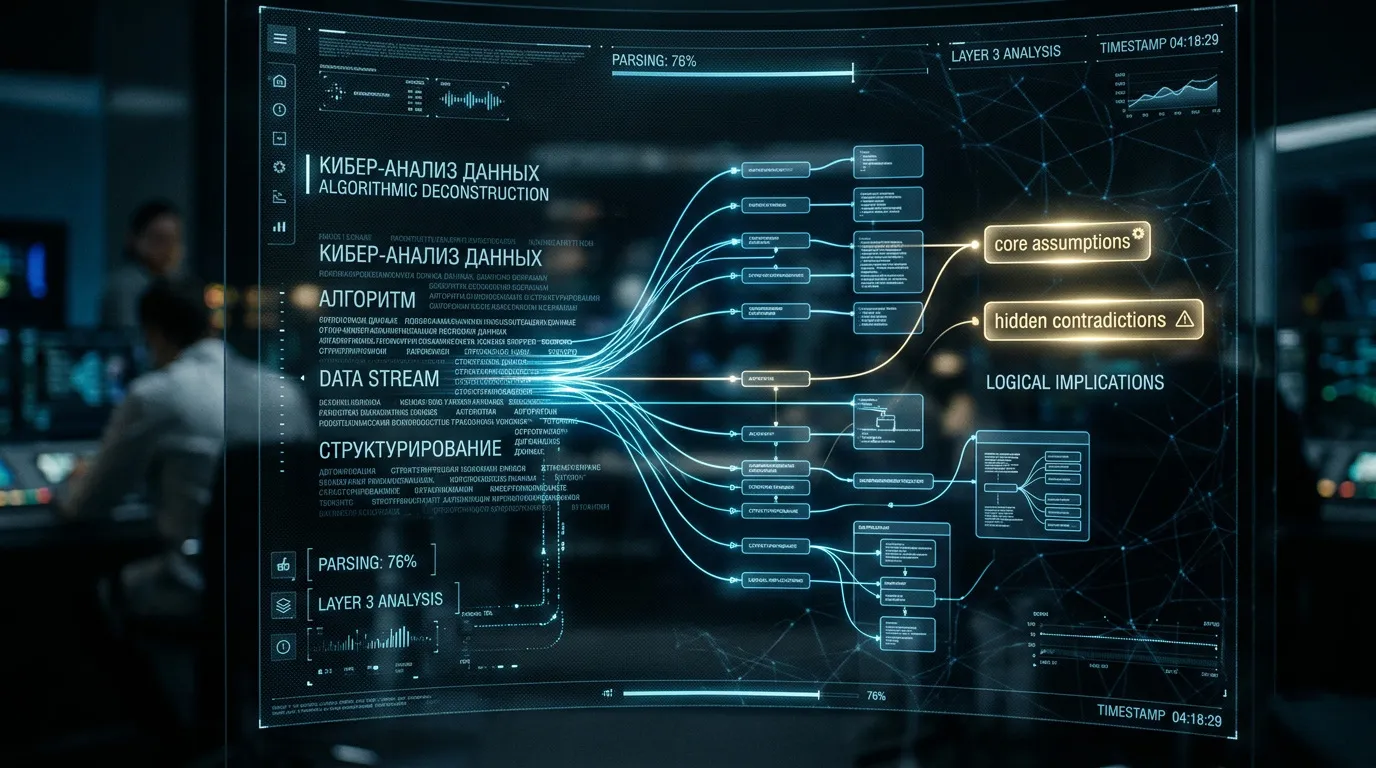
For each stage, the developer created a dedicated prompt that guides the AI model. Yulia Savenkova wrote the application in Python and built it around YandexGPT. The software imports text files in PDF and TXT formats, applies the prompts one after another and produces a completed analysis that offers a fresh interpretation of the original text while highlighting hidden contradictions. The project's academic supervisor, Mikhail Pozhidayev, Associate Professor in the Department of Theoretical Foundations of Computer Science at Tomsk State University's Institute of Applied Mathematics and Computer Science, said the work combines modern technology with the traditions of classical humanities in an unusually creative way. Users of large language models often find that AI struggles to make objective evaluations. The philosophical framework addresses that limitation by allowing the model to adopt evaluative principles derived from philosophical analysis.

AI Becomes the Critic
The project creates an opportunity to place a technological foundation beneath an established body of philosophical knowledge. According to the researchers, the ability to critically evaluate information – including text generated by AI itself – is becoming increasingly important. The provocative aspect of Yulia Savenkova's approach is that the AI critically analyzes statements written by humans. That is particularly relevant because not only authors but also critics can be influenced by their own assumptions and biases. AI-assisted deconstructive analysis offers another way to uncover alternative interpretations.
The program is not intended to replace a philosopher or literary scholar. Very short texts often lack sufficient context, while very long ones can cause the model to focus on isolated fragments rather than the work as a whole. Looking ahead, the software could gain a web interface that would allow users to upload a document and receive a draft analysis without running any code. A more ambitious direction involves refining how the model is prompted rather than retraining it from scratch, effectively creating what the developer describes as a "cognitive exoskeleton" for working with large collections of text.
A Contribution to the Rapid Growth of Digital Humanities
At this stage, Yulia Savenkova's work is a research prototype rather than a commercial product ready for large-scale deployment. Even so, it offers a compelling example of how Russian generative AI can be applied in the humanities, where language models are still most commonly used for summarization and editing. The project demonstrates that researchers can build analytical tools on top of Russian language models without training an entirely new model from scratch. In the future, the system could help students, educators, researchers, editors and journalists analyze lengthy texts, uncover logical inconsistencies and reveal hidden meanings. On a broader scale, the project could contribute to the growth of Russia's digital humanities field – research at the intersection of computing and the humanities – while advancing the capabilities of domestic software.