AI Speeds Radiation Therapy Planning for Cancer Patients in Russia
Russian researchers have developed an artificial intelligence system that helps physicians prepare patients for radiation therapy in just seconds. The algorithm automatically analyzes CT scans and identifies critical organs, reducing preparation time from 40-90 minutes to about two minutes. The technology could accelerate treatment for cancer patients.
Radiation therapy remains one of the primary treatment options for cancer. According to experts, a single radiation oncologist and medical physicist may oversee treatment planning for hundreds of patients each day. Before every course of therapy, however, clinicians must complete a highly time-consuming planning process.
Following computed tomography imaging, doctors manually identify the precise location of the tumor and the surrounding organs, often working millimeter by millimeter. This step is essential to ensure that radiation is delivered as accurately as possible to the tumor while minimizing exposure to healthy tissue.
It is this stage that researchers at the Laboratory of Radiation Medical Physics at the D. V. Skobeltsyn Institute of Nuclear Physics, Lomonosov Moscow State University, set out to accelerate by developing a machine learning module that automatically identifies organs and other critical anatomical structures on CT images.
Module Capabilities
The module substantially expands what physicians can accomplish during treatment planning. Tasks that previously required 40 minutes to an hour and a half of manual work are now completed by the AI during the initial processing stage in just 3.5 to 4 seconds. Physicians then review the results and make minor adjustments if necessary. The entire workflow takes about two minutes. The developers emphasize that the AI is not intended to replace physicians. Final treatment decisions always remain the responsibility of the medical team.
Benefits for Patients
At first glance, the technology appears to save only physicians' time. In practice, patients also stand to benefit significantly. Radiation therapy demands exceptional precision, and even an error of a few millimeters can increase radiation exposure to healthy tissue. As a result, treatment planning has traditionally required substantial time and intense concentration from clinical specialists.
By automating routine planning tasks, the system allows physicians to prepare patients for therapy more quickly while dedicating more attention to treatment itself, evaluation of complex cases, and communication with patients. That advantage is particularly important for large oncology centers, where hundreds of patients receive treatment every day and clinical staff often work at full capacity.
An Assistant for Physicians
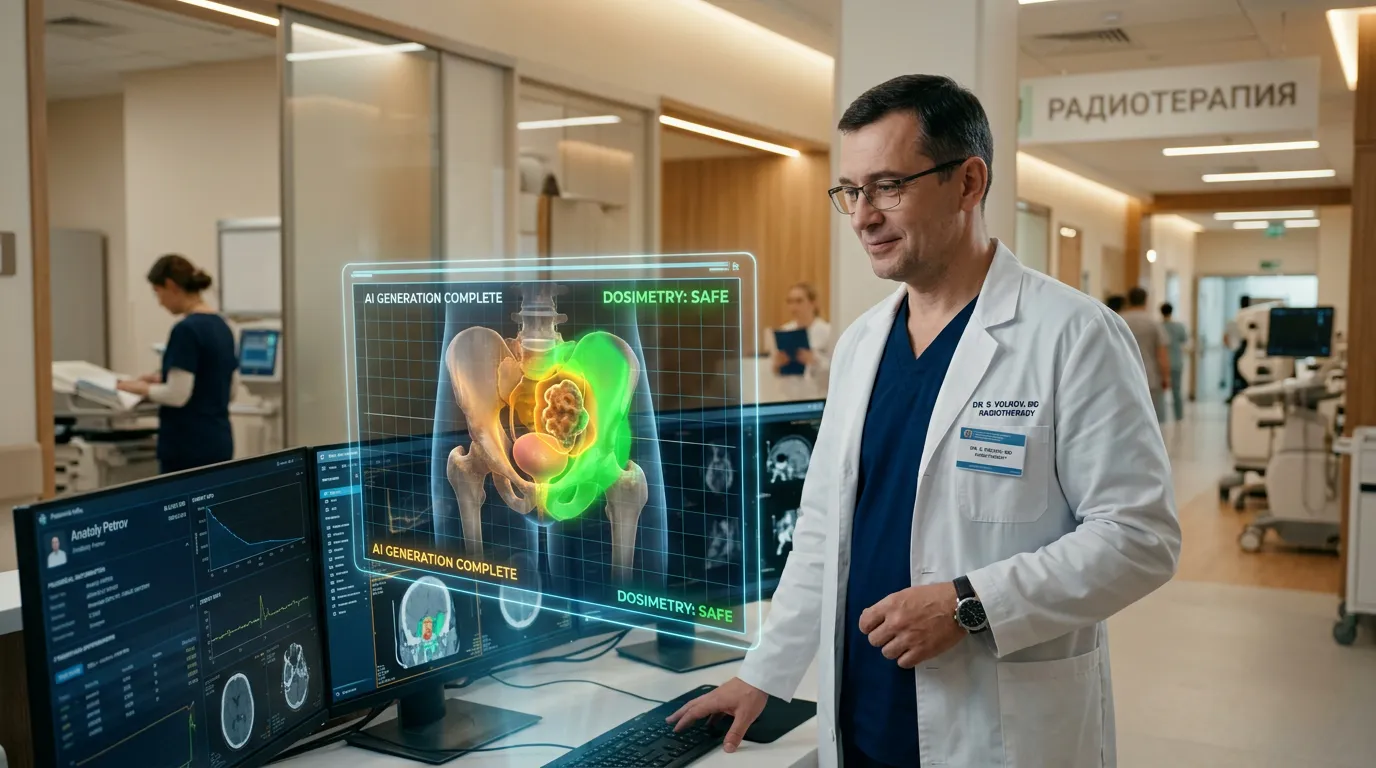
Machine learning algorithms are being adopted across medicine at an accelerating pace. They assist clinicians in analyzing medical images, identifying early signs of disease, processing large volumes of clinical data, and supporting diagnostic decision-making.
Algorithm performance may vary depending on image quality, imaging equipment, and the complexity of individual clinical cases. For that reason, artificial intelligence is viewed strictly as a physician support tool rather than a replacement for clinical judgment. That approach is widely regarded as the most promising direction for medical AI worldwide.
How Medical AI Is Advancing
Russia has steadily expanded its medical technology capabilities, making the new system part of a broader development effort that has been underway for several years.
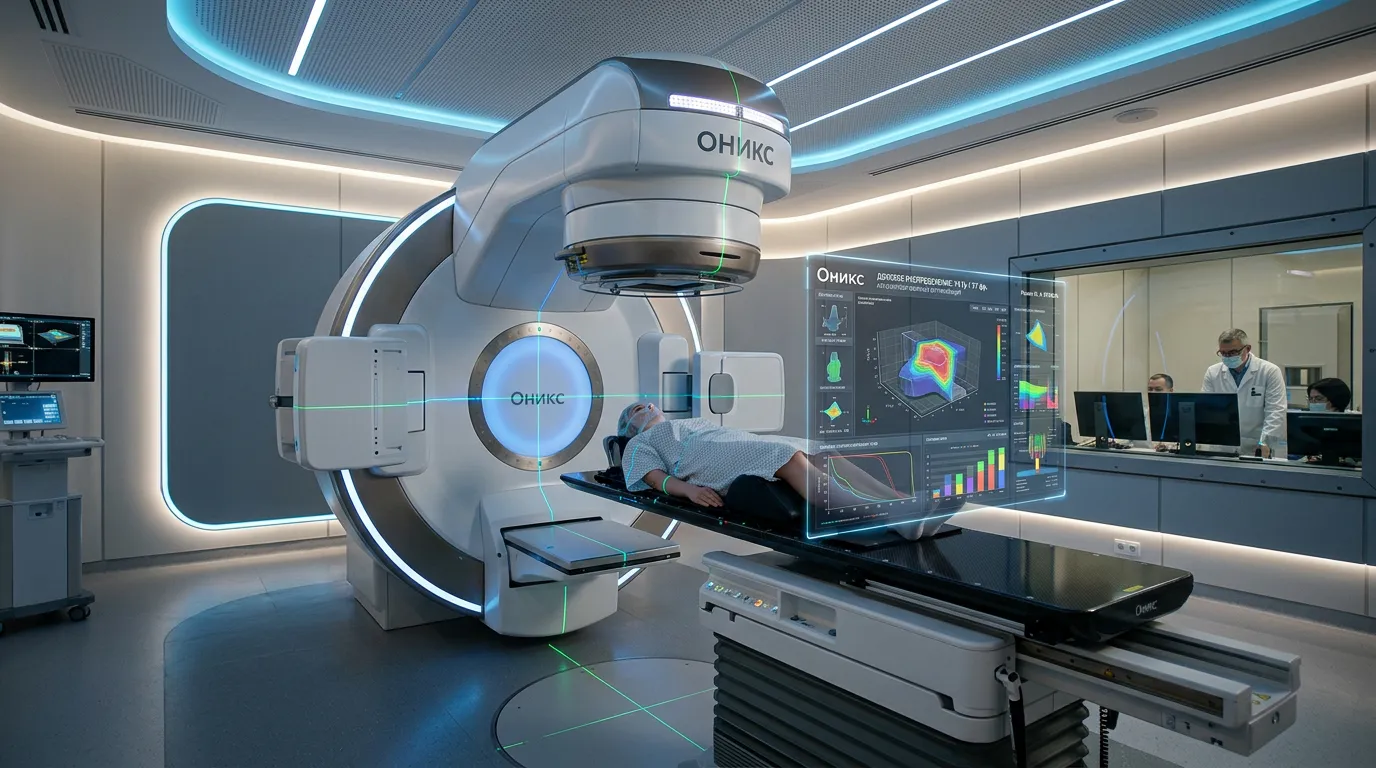
Between 2022 and 2023, Russia began serial production of the Oniks (Onyx) remote radiation therapy system. During the same period, Rosatom launched development of its own supply and service infrastructure for radiotherapy equipment.
In 2023, Rosatom and Tomsk Polytechnic University launched joint projects to develop equipment for nuclear medicine. Then, in 2024, the first patients received treatment with an actinium-225-based radiopharmaceutical developed by Rosatom and the Federal Medical Biological Agency. During the same year, researchers at Moscow State University reported advances in noninvasive radiation therapy techniques for the brain.
Finally, in 2025, Moscow's Center for Diagnostics and Telemedicine introduced a framework for assessing the maturity of artificial intelligence algorithms used in medical diagnostics. The system enables developers and healthcare providers to evaluate neural network performance before deployment in clinical practice.
Opportunities Beyond Russia
Technologies of this kind are in demand well beyond Russia. Around the world, external beam radiation therapy based on photon linear accelerators remains the standard treatment approach. Thousands of these systems are in operation, and virtually all depend on sophisticated treatment planning software. The newly developed AI module could be integrated into such platforms, significantly reducing the time required to prepare patients for therapy.
The technology's potential extends beyond the Russian healthcare system. Similar solutions could attract interest from medical centers across BRICS countries as well as Asia, the Middle East, and Latin America, where oncology services continue to expand and demand for digital healthcare technologies is growing.