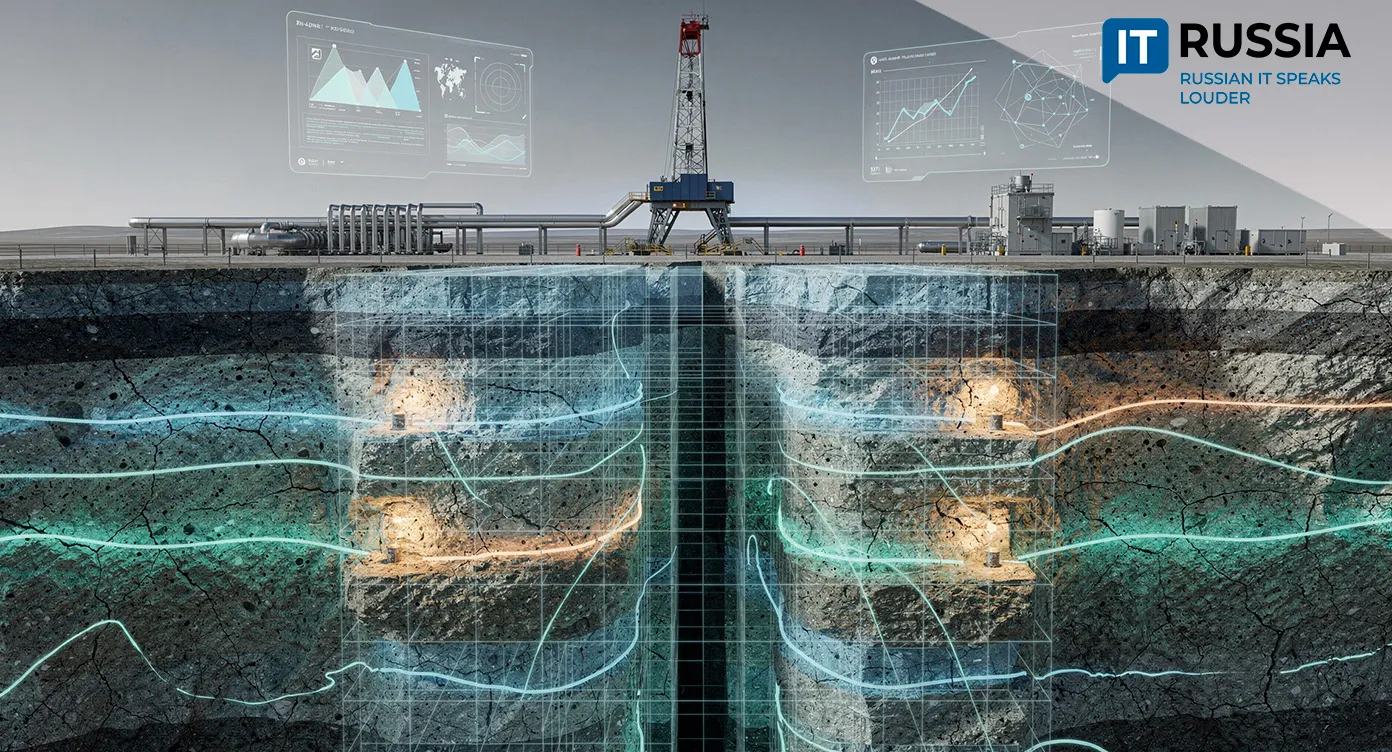
Cracks and Pores in Digital Cross-Section
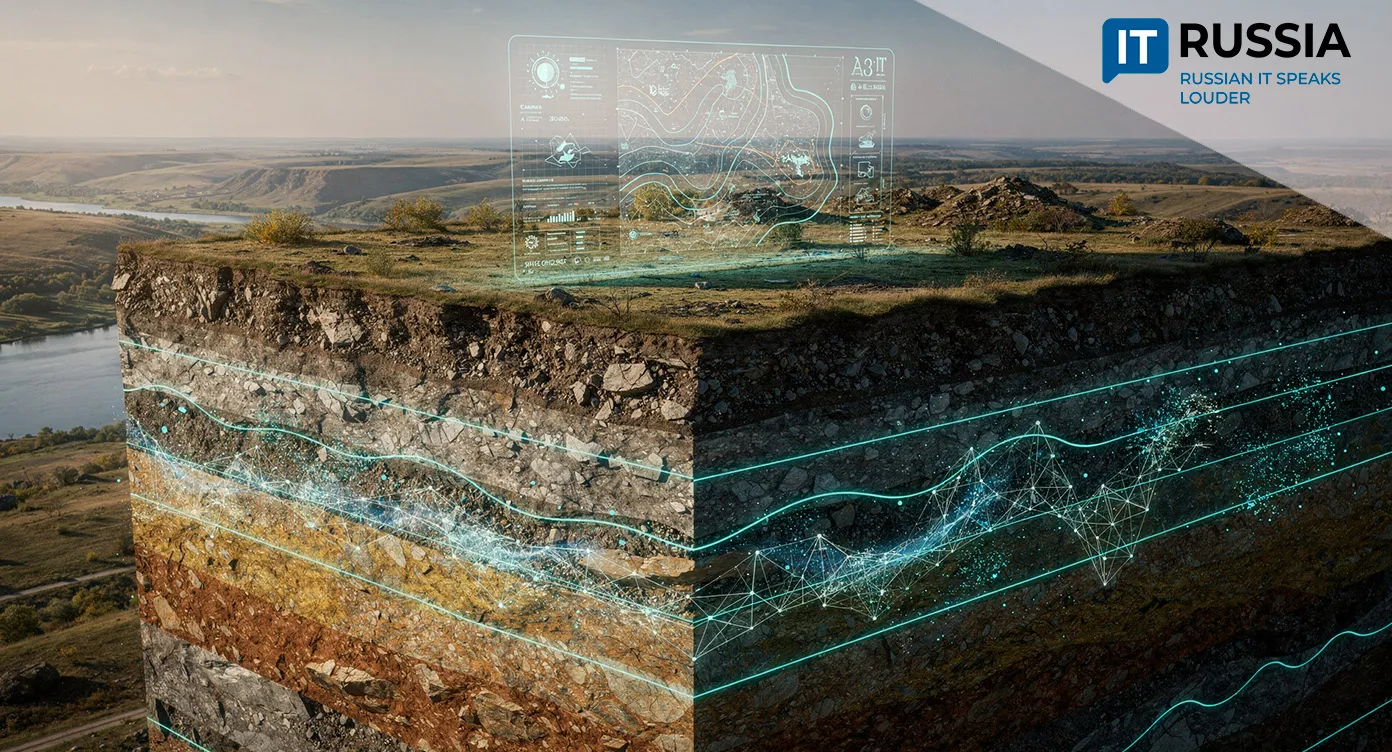
A research team at the Sobolev Institute of Mathematics of the Siberian Branch of the Russian Academy of Sciences has developed high-resolution digital modeling methods for oil reservoir structures, enabling a fundamentally more precise understanding of subsurface geology.
From Science to Field Deployment
The methodology enables more accurate forecasting of porosity, fracture density and permeability of rock formations to improve field development efficiency. The project brought together Russian scientists – mathematicians and geophysicists – oil and gas companies, including Rosneft, as well as major research and computing centers, notably the Lomonosov-2 and Tornado supercomputer clusters. The industry impact is tangible: improved recovery of hard-to-recover reserves, lower development costs and more precise drilling planning.
The growing role of digital models as a primary – rather than auxiliary – tool is supported by statistics. Globally, only about 30% of oil reserves are recovered without enhanced measures. Modern technologies have given the industry the ability to digitally model subsurface formations using seismic data. In Russia, the Sobolev Institute of Mathematics remains the only institution professionally specializing in this advanced domain.

The Evolution of the Geological Map
Geological maps were once strictly two-dimensional. Today, they incorporate data on fracture density – that is, the flow capacity of various rock types that contain hydrocarbons. Many reservoirs, much to the frustration of producers, are nearly impermeable.

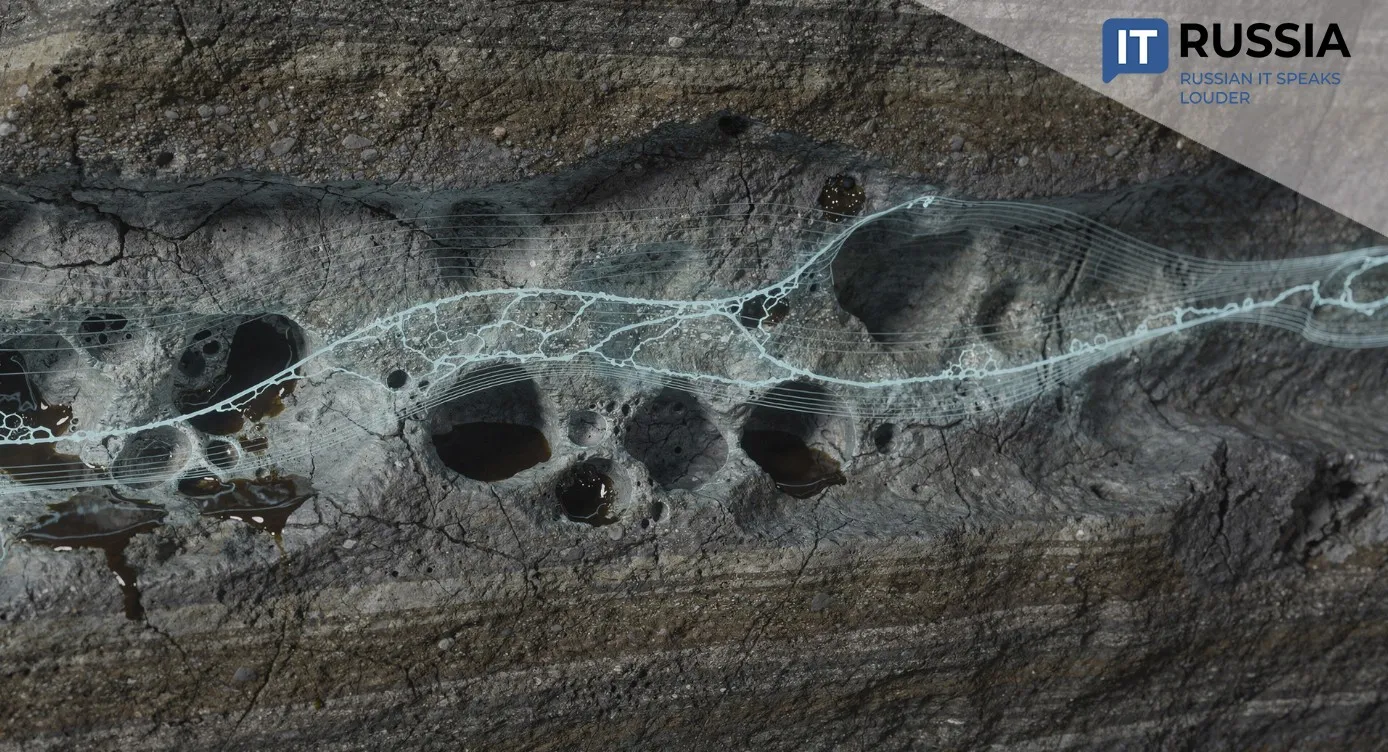
Sand formations typically pose fewer challenges, but they are far from ubiquitous, especially at hydrocarbon-bearing depths. In brittle formations with extensive fracture and cavern systems, oil can be displaced by injecting a corresponding volume of water. The key question geologists must answer is where and at what angle to drill to inject water and extract oil efficiently. Determining fracture location and orientation provides critical parameters for well design and field architecture.
This information is obtained through seismic sounding, which tracks the propagation of seismic waves within the formation. Mathematicians then convert the resulting datasets into actionable geological models. Beyond mapping microfractures, the system calculates formation porosity, which is essential for determining the viscosity and density of injection fluids, as well as injection pressures. Hydraulic fracturing has long been used to increase fracture networks and permeability. However, one unintended consequence can be complete water breakthrough, rendering further production uneconomic.

The Seismic Exploration Era
A seismic model offers an optimal representation of reservoir architecture. In many cases, results are later confirmed by drilling data and core samples. Achieving concentrated oil flow into the main vertical wellbore is possible, but only with precise fracture mapping. Additional wells must be drilled perpendicular to fracture orientation. Through perforations in these wells, oil flows from overlying formations, while the lower smooth casing section channels fluids toward the primary wellbore.
This configuration – known as a well cluster – is extremely complex to engineer. Over a three-year collaboration with RN-KrasnoyarskNIPIneft, part of Rosneft, the Institute refined its modeling methods. Following successful implementation, the Krasnoyarsk Geological Committee mandated preliminary digital modeling studies as a required pre-drilling stage. Rosneft now actively uses the patented technology. In addition to the general technology patent, several software copyrights have been registered. The invention falls within seismic exploration and can be applied to oil and gas prospecting in geologically complex cavernous-fractured-porous reservoirs.

Seismic computation required the combined resources of two of Russia’s largest supercomputing centers: Lomonosov-2 at Moscow State University and the Tornado Supercomputing Center at Saint Petersburg Polytechnic University. All codes and algorithms were developed in-house. The resulting database serves as a foundation for validating reconstruction algorithms that model internal reservoir structures.
The reservoir modeling methodology is equally applicable to both exploration and appraisal operations.