Digital Assistants Handle Over Half a Million Calls to Russia’s Ded Moroz Hotline
Solutions developed by Rostelecom once again demonstrated their resilience under peak-load conditions, confirming that AI-driven voice automation has moved from pilot experiments to production-grade telecom infrastructure.
Human-Like Interaction at Scale
Russian telecom operators continue to expand the use of voice assistants across their operations. These systems not only reduce the workload on human agents but also enable contact centers to handle far higher volumes of incoming requests without sacrificing service quality.
This trend also extended to the free Ded Moroz (Russian version of Santa Claus) hotline, operated ahead of the holiday season by Rostelecom Contact Center. The hotline serves as the country’s only official communication channel with its main winter folklore character.
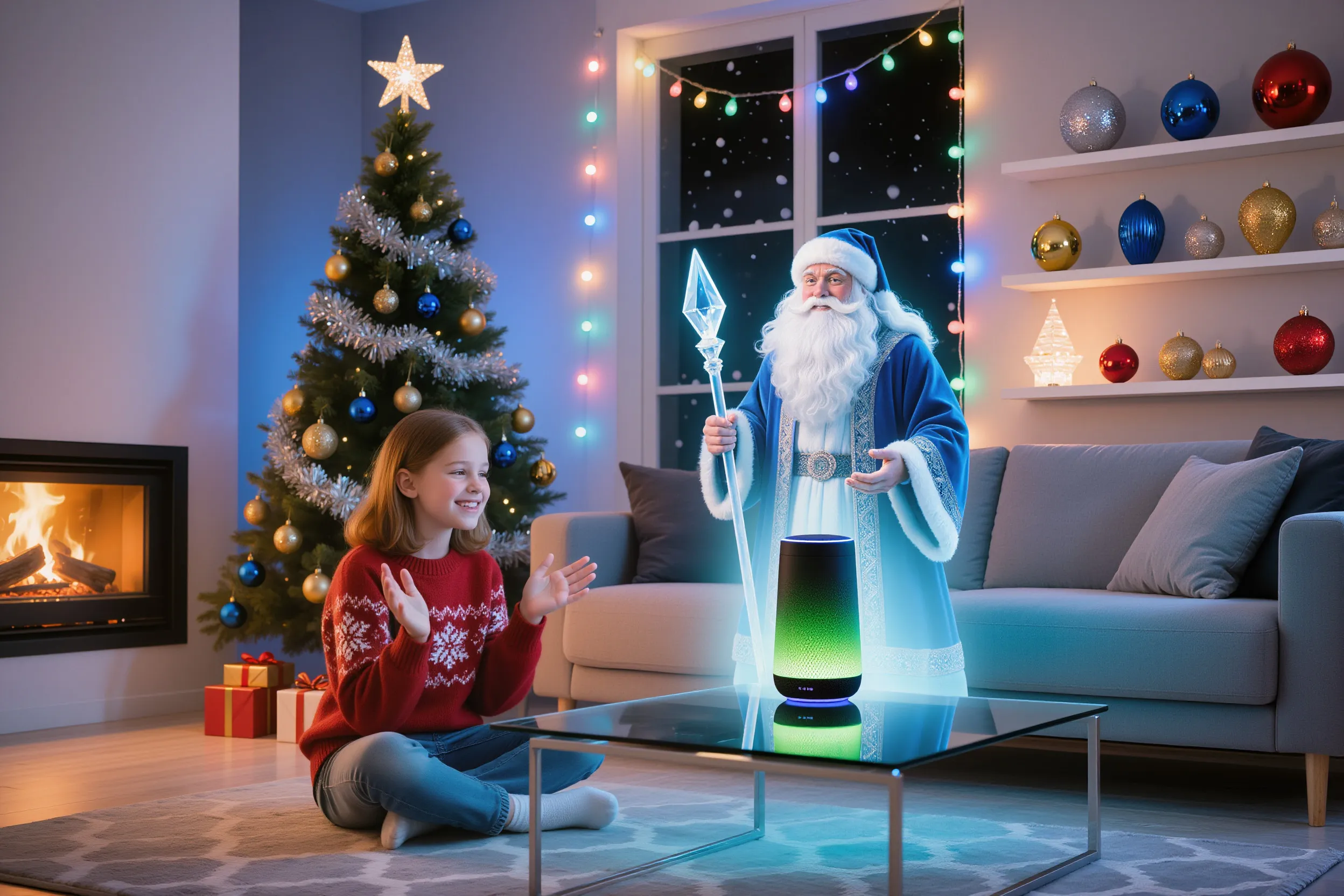
The service operated around the clock for ten consecutive days before the holidays. Call volume increased by 60% compared with 2024, reaching 242,000 calls. Special AI-powered voice assistants were deployed to interact with children. These systems can recognize diverse speech patterns, understand intent, and sustain natural conversations. Speech analytics enabled rapid classification of requests, collection of statistical data, and stable operation during peak demand.
Stress Testing Under Real Conditions
This marked the fourth year the hotline has been operated. Over the four-year period, voice assistants have processed approximately 562,000 calls from children.
“This project not only creates a festive atmosphere but also allows us to test our voice robots and speech analytics in real-world conditions,” said Alexander Svyatets, CEO of Rostelecom Contact Center. “We have achieved a high level of voice recognition and learned to understand even the youngest callers. The Ded Moroz hotline also helps us refine contact center algorithms and continuously improve service quality.”
During the most recent campaign, the highest number of calls came from Moscow and the Moscow region, totaling around 23,400. Saint Petersburg and the Leningrad region followed with 14,800 calls, while Krasnodar Krai ranked third with roughly 11,000 calls.
According to Rostelecom’s press service, children solved holiday riddles, talked about gifts they hoped to receive, and left messages for Ded Moroz and his granddaughter Snegurochka. Smartphones once again topped the list of most requested gifts. Toys ranked second, while requests for pets – primarily kittens – took third place.

Federal-Scale Experience
Rostelecom Contact Center has extensive experience delivering services to both commercial enterprises and public-sector organizations. The company regularly participates in major federal initiatives, including Russia’s Unified State Exam and nationwide election days.
All of its products and services are developed in-house and are included in Russia’s official registry of domestic software. Rostelecom Contact Center operates facilities in 19 Russian cities, with a workforce exceeding 7,000 operators.


The successful operation of the Ded Moroz hotline serves as another indicator of the maturity of Russian telecom and AI solutions, demonstrating their ability to function reliably under extremely high loads.
AI Becomes a Standard Telecom Tool
Rostelecom’s voice assistants have been used in hotlines and information services for several years. As early as 2022, they were capable of handling up to 80% of incoming requests without human agent involvement.
The company is also actively deploying AI across its internal business processes. One example is the AI-based tool Vasilisa, used to automate software development tasks. According to Rostelecom, the solution accelerates development cycles by 25–40% and is already deployed across dozens of internal projects.

It is increasingly clear that the use of AI across Russian telecom operators will continue to expand this year. These technologies have long moved beyond experimentation and are becoming a core component of digital telecom infrastructure.