“Graf Filarmoniy” – A Unified Digital Layer for Managing Cultural Data
Software developers at the Perm Regional Philharmonic have developed Graf filarmoniy (Philharmonic Graph), a service for managing digital data. It brings together information about venues, performers, and events into a single system that works for both users and external platforms. Any philharmonic organization can connect to the service.
The goal of the project is to make data about cultural institutions, events, and works accessible to modern technologies, including search engines, AI systems, and government information platforms.
How the System Was Built
The Graf filarmoniy project was initiated in December 2025. To standardize data and enable integration with modern technologies, the team at the Perm Regional Philharmonic developed a specification based on Schema.org, an international vocabulary for structured data, adapted to the needs of Russian cultural organizations.
The first version launched in December 2025. In January 2026, the system added support for events such as concerts, performers including individuals and ensembles, mandatory UUIDs (unique record identifiers), and optional slugs for readable page URLs.
One Dataset, Multiple Surfaces
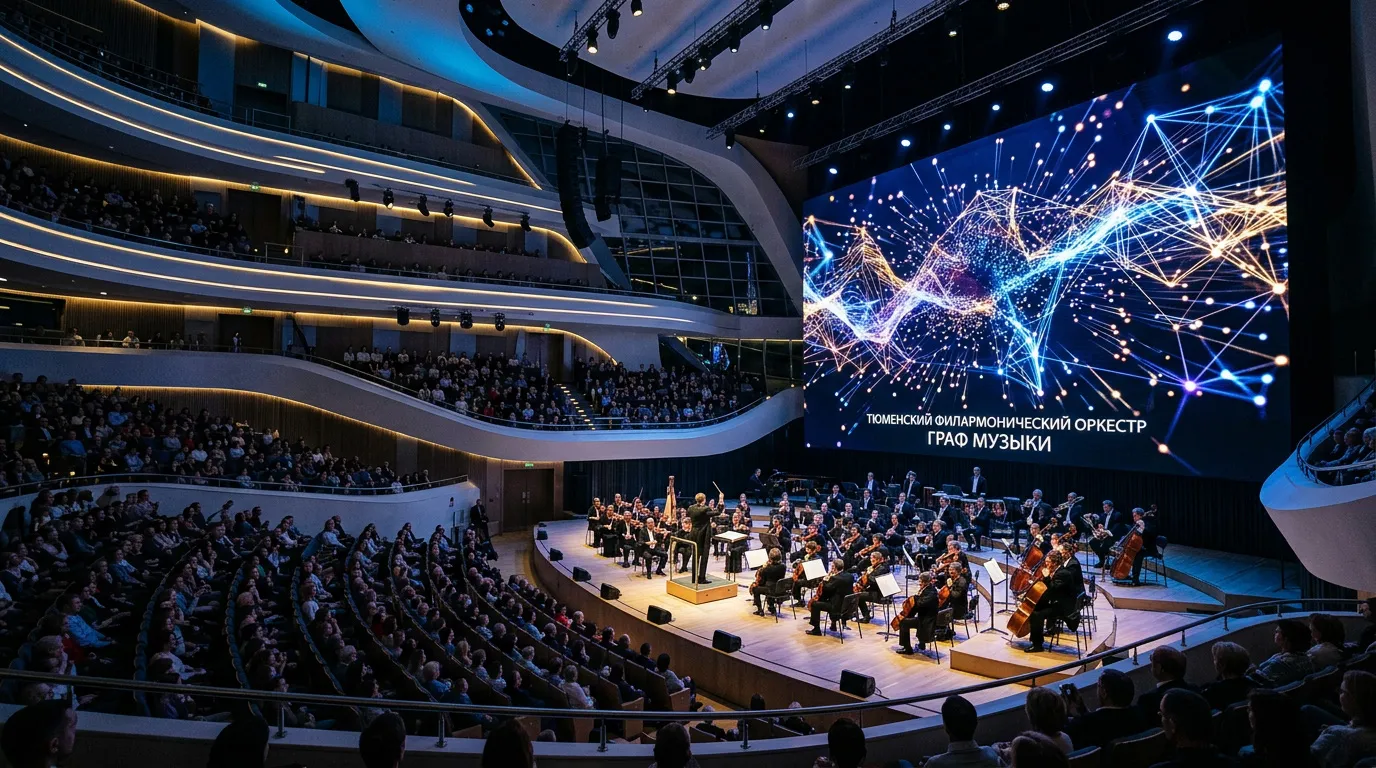
Using Graf filarmoniy allows institutions to enter information once and reuse it across all channels, reducing errors and inconsistencies. Search engines can access verified, up-to-date data from a single source.
At the core of the system is a “dual presence” principle: each organization exists simultaneously in two spaces. This addresses the fragmentation of cultural data. Institutions retain full control over their information, while the data remains accessible through a unified API and a shared knowledge graph. That, in turn, enables integrations, analytics, and applications built on a complete dataset.
A unified standard also simplifies integration with Gosuslugi, Kultura.RF, ticketing platforms, and event aggregators. The knowledge graph makes it possible to analyze cultural activity, identify trends, and build forecasts.

From Websites to Data Infrastructure
The project signals a shift in how cultural institutions approach digitalization. The focus is no longer just on websites and archives but on building data architectures compatible with search engines, external platforms, and AI services. In practice, connecting to Graf filarmoniy removes the need for manual content updates across multiple online channels. For audiences, this means more accurate and timely information about concerts and schedule changes.
Today, the service is used by the Perm Regional Philharmonic, but any philharmonic can join. The project has strong potential to become an industry standard for concert organizations. The use of JSON-LD and its foundation on Schema.org make indexing easier, support integrations, and open the door for AI assistants and external platforms to use the data. Over time, the system could expand to theaters, concert halls, regional cultural portals, and ticketing services.

Solving a System-Level Problem
Graf filarmoniy responds to a broader need identified at the level of the Russian Ministry of Culture. As early as 2020, discussions focused on building a unified information space for culture and developing core digital resources such as Kultura.RF and Goskatalog.RF. This led to the launch of PRO.Kultura.RF as a platform for publishing cultural events and to the introduction of regional activity rankings based on its data. The shift marked a move toward centralized digital discipline, which the Perm Regional Philharmonic is now extending within its segment.
What is emerging today is a more mature phase of cultural digitalization in Russia. Data infrastructure is moving to the forefront, with unified models for describing events, venues, and participants that support automatic synchronization and reuse.
In the near term, Graf filarmoniy could expand to other philharmonics and concert organizations and integrate with federal platforms, regional listings, search engines, and AI assistants.