Russia Tests the Future of Freight Transport
Nearly 100 autonomous trucks operating on the M-11 Neva highway and the Central Ring Road have collectively covered more than 10 million kilometers, marking a new stage in the development of driverless logistics in Russia.
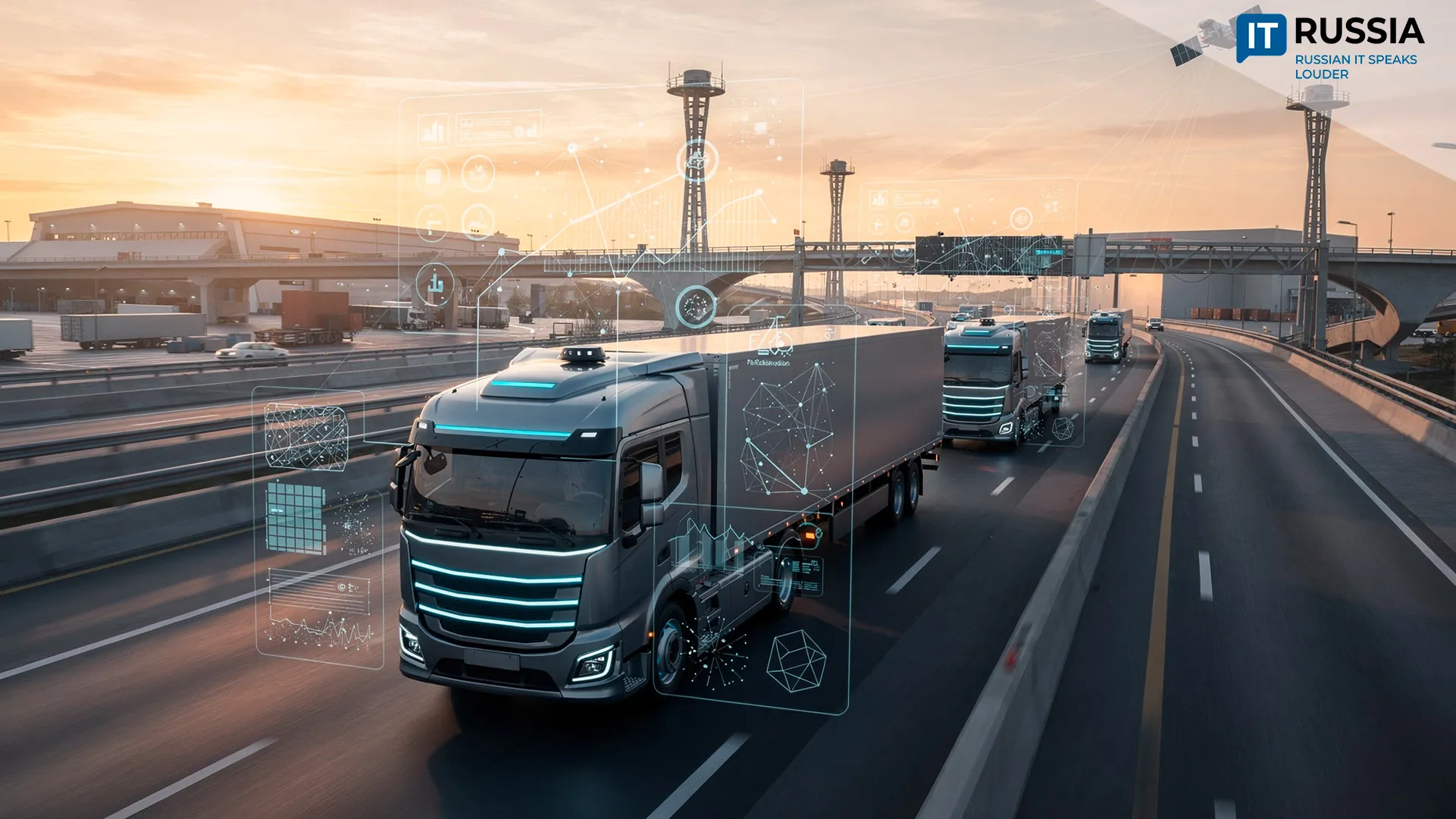
According to Russian Prime Minister Mikhail Mishustin, the fleet of autonomous trucks on the M-11 and the Central Ring Road has reached nearly 100 vehicles, with total mileage exceeding 10 million kilometers by the end of 2025. This represents large-scale real-world deployment, with the technology tested under actual weather and road conditions.
That milestone is significant for Russia’s IT sector, where a new applied industry is emerging at the intersection of AI, robotics, telematics, mapping and cybersecurity. For the public, the impact includes faster and more predictable deliveries, reduced driver shortages and the potential to lower transport costs. For the country, it marks progress toward building a domestic technological platform for autonomous freight and improving connectivity across key transport corridors.
From Pilots to Industry
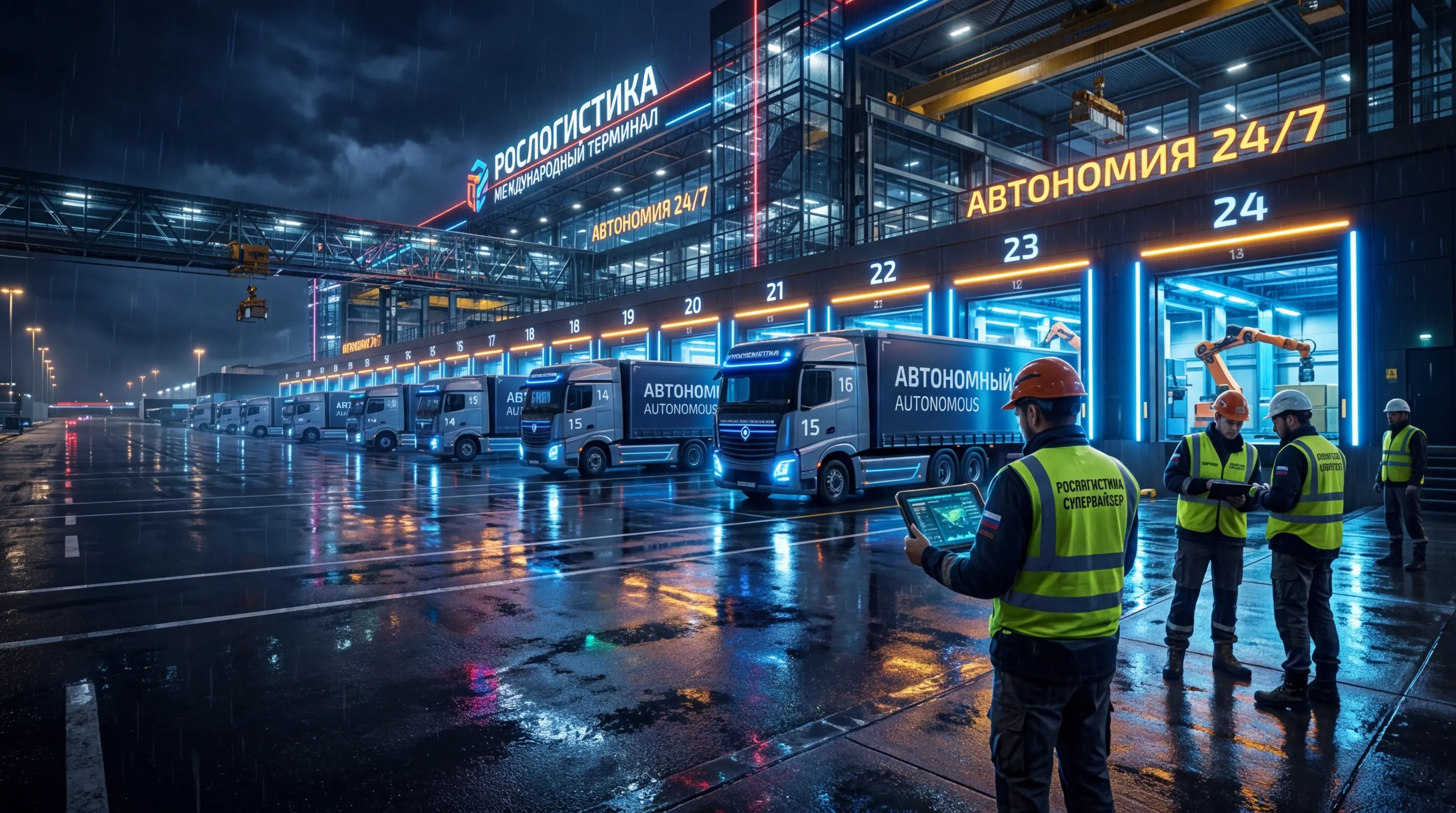
The Ministry of Transport plans to expand the network of routes. In 2026, the M-12 highway is set to join the M-11, the Central Ring Road and the M-4, with further expansion to other federal highways expected from 2028. The ministry forecasts nearly 1,000 autonomous trucks by the end of 2028 and more than 4,000 by 2030. In practice, the project is moving from pilot testing to industrial deployment.
At the same time, the regulatory framework is becoming more mature. On March 7, 2026, the government updated its road safety concept to include autonomous vehicles. That step supports the transition from pilot projects to commercial operations.
Russia is also positioning autonomous logistics as a potential export offering. This includes autonomous driving software, telematics platforms, monitoring through ERA-GLONASS, and digital twins of road infrastructure. In practice, the most likely scenario is the export of a full-stack model – combining regulation, hardware and software platforms, infrastructure integration, dispatch systems and cybersecurity.
Path to Autonomy
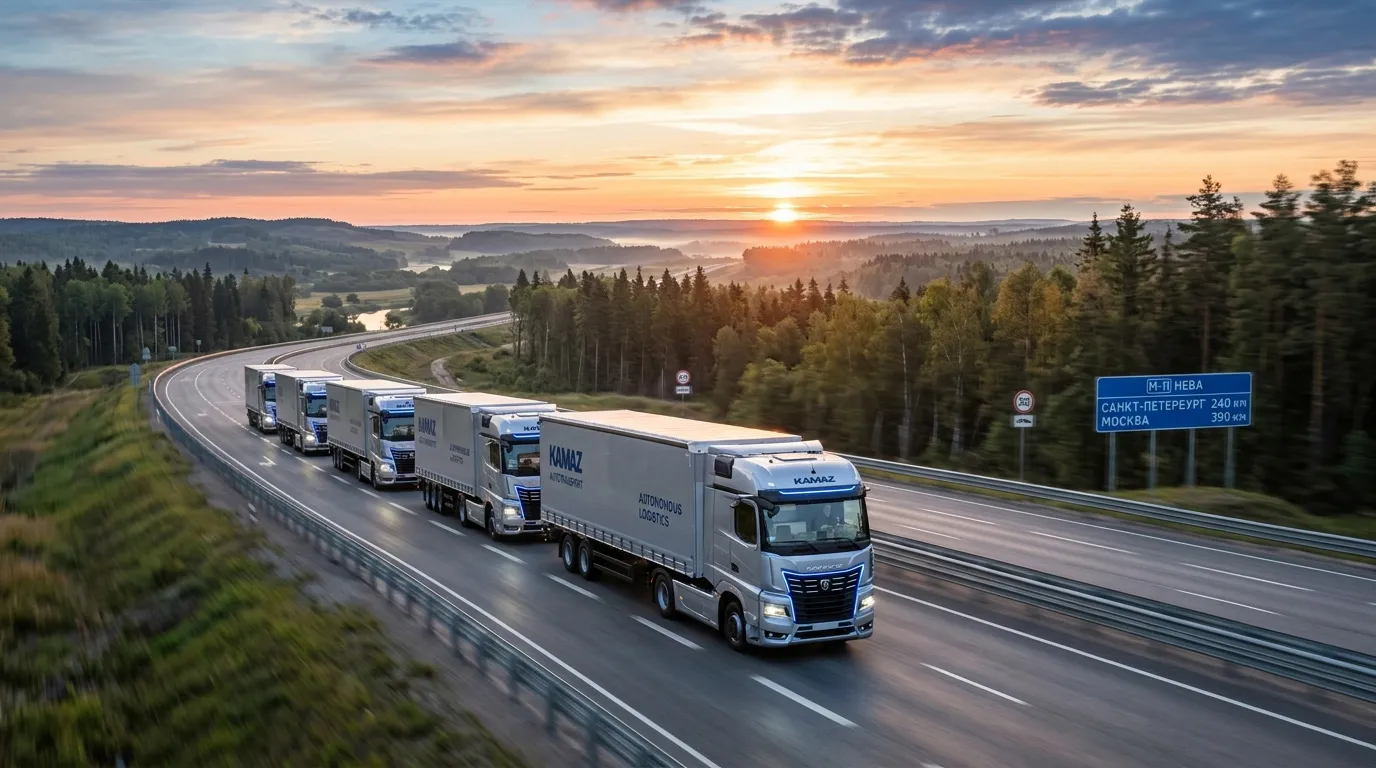
The development of autonomous trucking in Russia has progressed in stages. In June 2023, driverless operations were launched on the M-11 Neva highway, marking the start of real-world testing. In 2024, following the opening of the Tver bypass, the route enabled continuous autonomous driving, with the test driver moving from the driver’s seat to the passenger seat.
By March 2025, the fleet had grown to 67 vehicles and total mileage had reached 5.8 million kilometers. At the time, the Ministry of Transport noted that the experiment was shaping a new industry. In April 2025, the project expanded to the Central Ring Road, with plans to launch on the M-12 Vostok highway in 2026 and to develop logistics corridors totaling about 20,000 kilometers by 2030. In November 2025, the Ministry of Transport and AO GLONASS launched an online mileage tracker, confirming that the 10 million kilometer milestone had been exceeded.
That broader global trend is already visible. In May 2025, U.S.-based Aurora launched a commercial autonomous trucking service between Dallas and Houston, becoming the first to deploy heavy-duty driverless trucks on public roads.
Autonomous Tomorrow
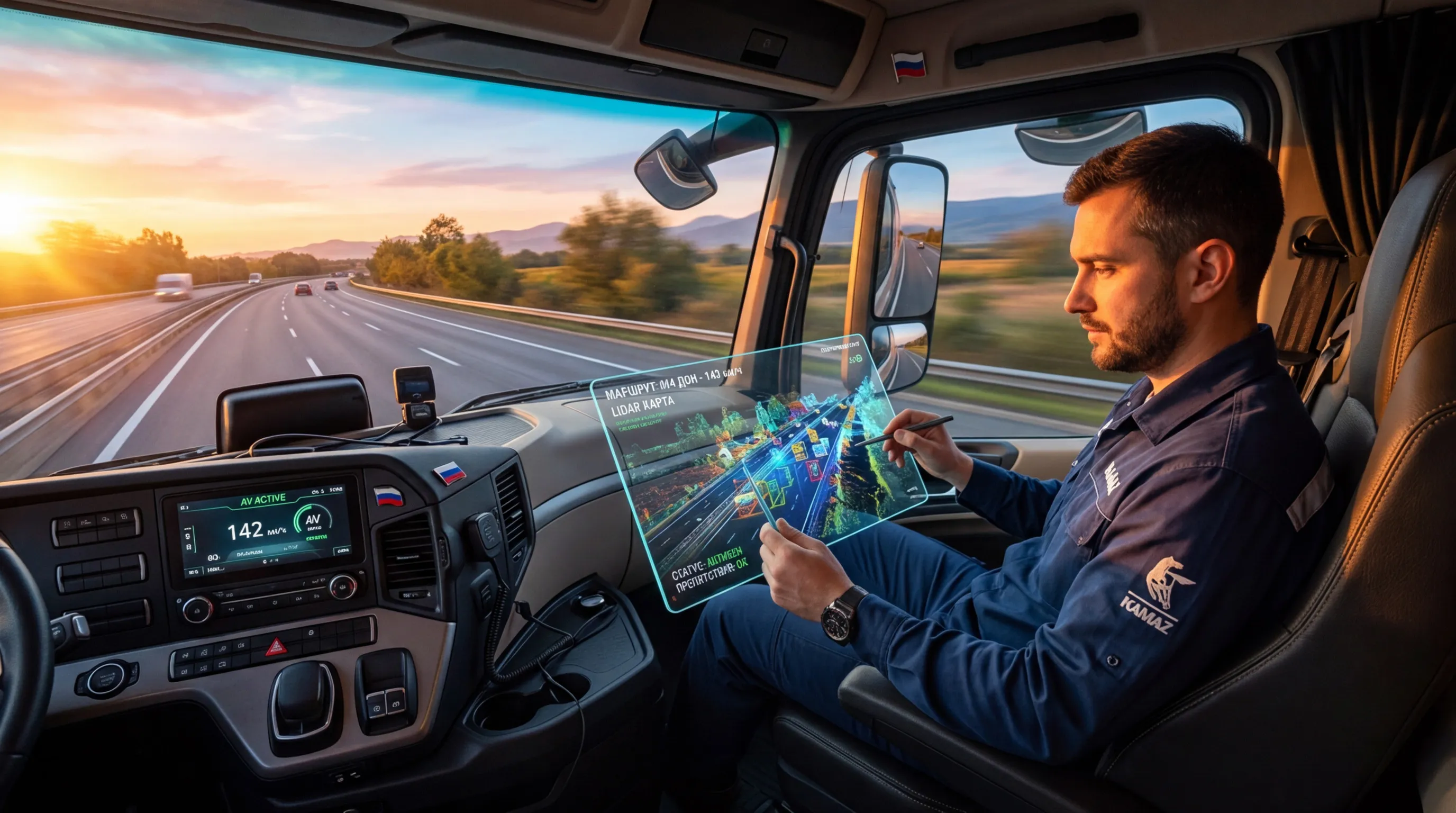
Surpassing 10 million kilometers is a marker of maturity for Russia’s autonomous logistics sector. A large dataset has been accumulated for further training of algorithms, validation of safety systems and refinement of regulatory requirements. In the near term, the route network and vehicle fleet are expected to expand across federal highways. In the medium term, commercial deployment is likely to emerge along transit corridors, where autonomy can improve delivery predictability and reduce transit times.
Autonomous trucks are becoming part of industrial policy and transport strategy. Russia aims to position itself not only as a deployment market but also as a provider of integrated solutions for international corridors. The main bottleneck is no longer the driving system itself but the surrounding regulatory, insurance, infrastructure and cybersecurity frameworks. In 2026, this stands out as one of Russia’s most compelling examples of applied AI in the heavy economy.