Robot Intern: How AI Is Working as a Teaching Assistant in Orenburg Schools
In Russia’s Orenburg region, one in ten teachers now has access to an AI-powered “Assistant to the Teacher” developed by SberObrazovanie. The digital co-pilot drafts lesson plans and analyzes materials while educators focus on children. The rollout signals a broader shift in how artificial intelligence is being embedded into everyday classroom practice.
Rapid Methodological Support
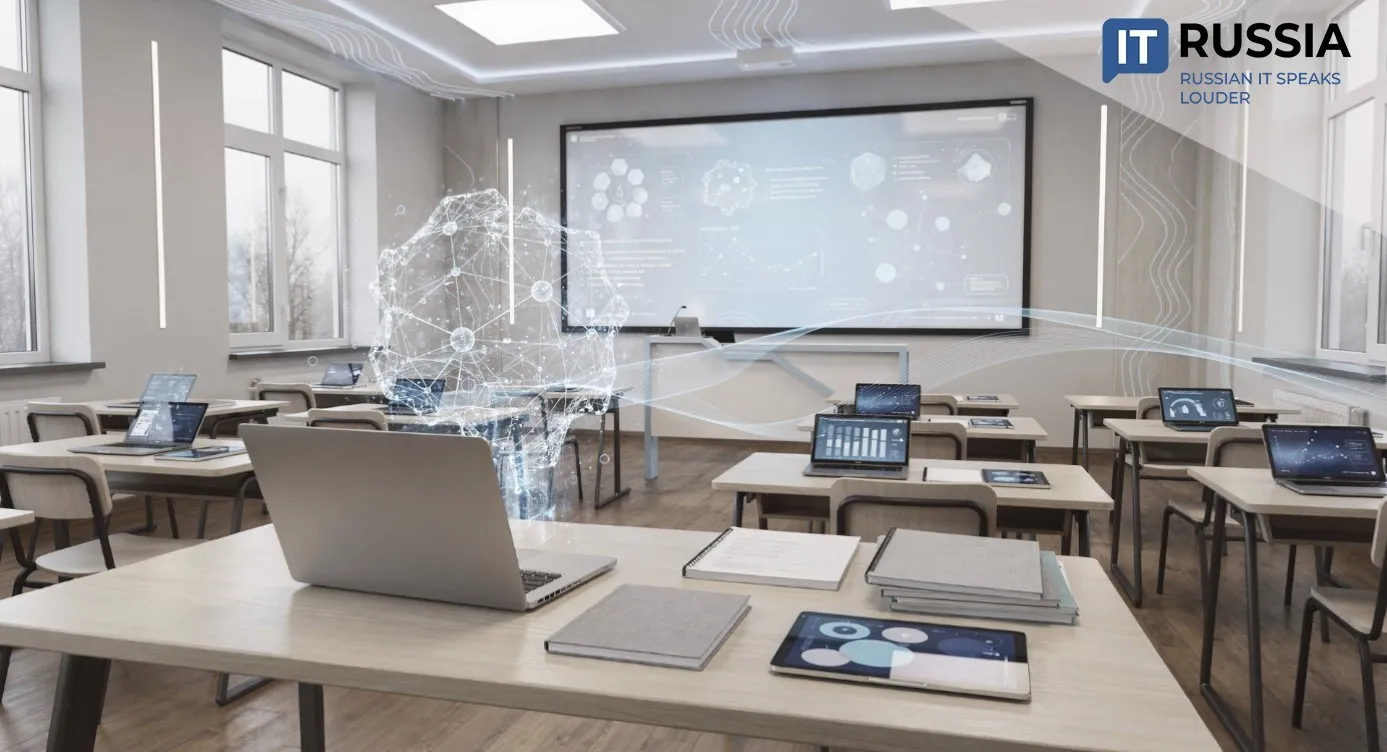
More than 2,300 educators in the Orenburg region are no longer left alone with stacks of methodological manuals. They now use the digital service Assistent prepodavatelya (Assistant to the Teacher) – a domestic solution included in Russia’s official software registry – that takes over the time-consuming groundwork of lesson preparation. From generating ideas and building quizzes to analyzing educational content, the neural network acts as a junior partner, freeing teachers to spend more time engaging directly with children.
“Our main goal is not just to prepare qualified regional mentors capable of effectively sharing knowledge with colleagues and improving educational quality, but also to build strong communication channels with regional education authorities in partnership with SberObrazovanie,” said Andrey Sverdlov, head of Sberbank’s Orenburg branch.
Teacher as Neuro-Curator
The SberObrazovanie platform addresses the most acute challenge facing educators – lack of time. Assistent prepodavatelya generates lesson scenarios, designs assessments, analyzes content and adapts materials to specific classrooms.
In Orenburg, adoption of the technology has scaled quickly. Methodologists, school administrators and subject teachers learned to use the service through professional development programs that combined theory with hands-on practice. Educators did not simply receive access to a tool – they were trained to build an effective working dialogue with the system.

The assistant handles the preparation stage that often consumes evenings. Behind the rhetoric about creativity and relief from routine are measurable gains. AI-enabled online platforms save teachers three to five hours per week. That equates to nearly a full working day previously spent grading assignments and drafting lesson plans.
The service runs on domestic neural network models, including GigaChat and SaluteSpeech, and complies with Russian regulatory standards.

From Korvet to GigaChat
The digital transformation of Russian education spans nearly four decades – a story of the computer’s evolution from an object of study to an everyday instructional tool. The timeline often begins in 1985, when schools introduced the course “Fundamentals of Informatics and Computer Engineering.” Students worked with early machines such as Korvet, UKNC and Agat. Computer labs were scarce, but academician Andrey Ershov promoted the idea that “programming is a second literacy,” arguing that computers would reshape the intellectual environment surrounding children.
In the mid-2000s, the Unified Collection of Digital Educational Resources went online. Schools gained access to images, videos and interactive models across subjects. It marked a leap in visualization, though reliable internet access remained uneven in rural areas.
A more profound shift arrived with Moskovskaya elektronnaya shkola (Moscow Electronic School), which demonstrated how digital tools could function as a unified ecosystem – lesson scripts, electronic gradebooks and content libraries integrated into a single interface. Platforms such as Yandex.Uchebnik and Uchi.ru introduced adaptive learning elements and performance analytics at scale.
The 2020 pandemic served as a stress test, pushing even the most conservative educators to adopt digital tools. During that period, the federal platform Moya shkola (My School) emerged to consolidate educational services nationwide. Orenburg is taking the next step – deploying not just repositories or journals, but an AI assistant capable of generating and refining educational content.
Mapping the Digital Education Landscape
While Orenburg integrates neural networks into daily school routines, other regions are moving at comparable speed.
On Sakhalin Island, more than 700 teachers already use Assistent prepodavatelya. Nationwide, the service now spans over 50 regions and counts more than 150,000 active participants. Educators from Kaliningrad to Kamchatka and Crimea are joining a shared ecosystem in which methodological findings and AI-generated materials circulate across regions.
Sber’s strategy extends beyond standalone tools. Over six years, the Letnyaya tsifrovaya shkola (Summer Digital School) project has provided professional development to more than 8,400 university and college instructors. In 2025 alone, 2,000 educators from 89 regions joined the program, and 1,549 received diplomas from SberUniversitet. Starting in 2026, the initiative will operate year-round and double its annual reach to 4,000 instructors, offering training in data skills, product design and classroom use of GigaChat.

Challenges remain. Teachers often cite fragmentation of digital services – gradebooks on one platform, content on another, with manual data transfer between systems. However, movement toward a unified digital environment, shaped by platforms such as Moya shkola and Assistent prepodavatelya, is gradually addressing that issue. AI is no longer perceived as novelty – it is becoming an everyday instrument, much like computers did after entering classrooms in 1985.