Russian Scientists Develop Model to Guide Well Placement at Yamburg Field
A new geomagnetic model helps engineers steer drilling more precisely at one of the world’s largest oil and gas condensate fields.

Scientists at the Institute of Petroleum Geology and Geophysics of the Siberian Branch of the Russian Academy of Sciences have developed a domestic geomagnetic model to improve well placement at the Yamburg field on the Yamal Peninsula, one of the largest oil and gas condensate fields in the world.
According to Pyotr Dyadkov, head of the Laboratory of Natural Geophysical Fields at the institute, the geomagnetic model enables operators to control well trajectory during drilling.
The model provides a mathematical description of the Earth’s magnetic field in a specific area and helps correct readings from magnetic sensors used to guide drilling tools. This is especially important in zones with magnetic anomalies, where distorted signals increase the risk of errors.
Reducing Financial Losses
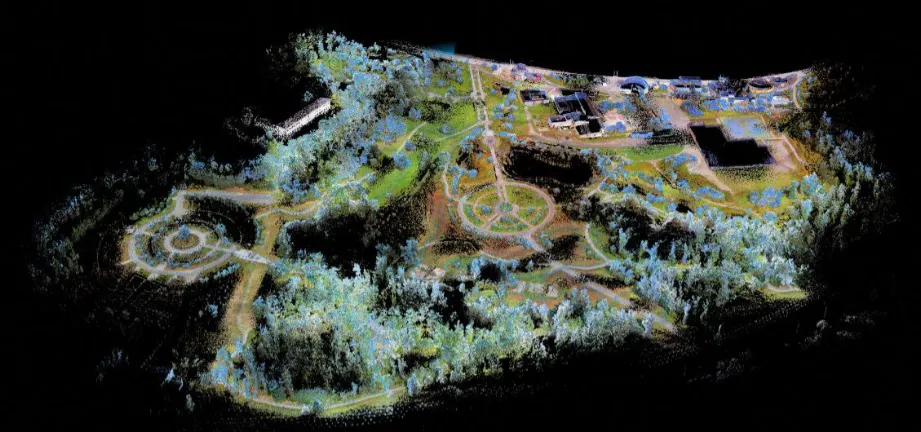
Researchers have also developed three additional models for other fields. To build them, the team collected existing geological and geophysical data, analyzed maps of anomalous magnetic fields, and produced updated maps using drone-based surveys. These datasets were then used to create a 3D model.