Russian Scientists Find a Way Through Superbugs’ Defenses
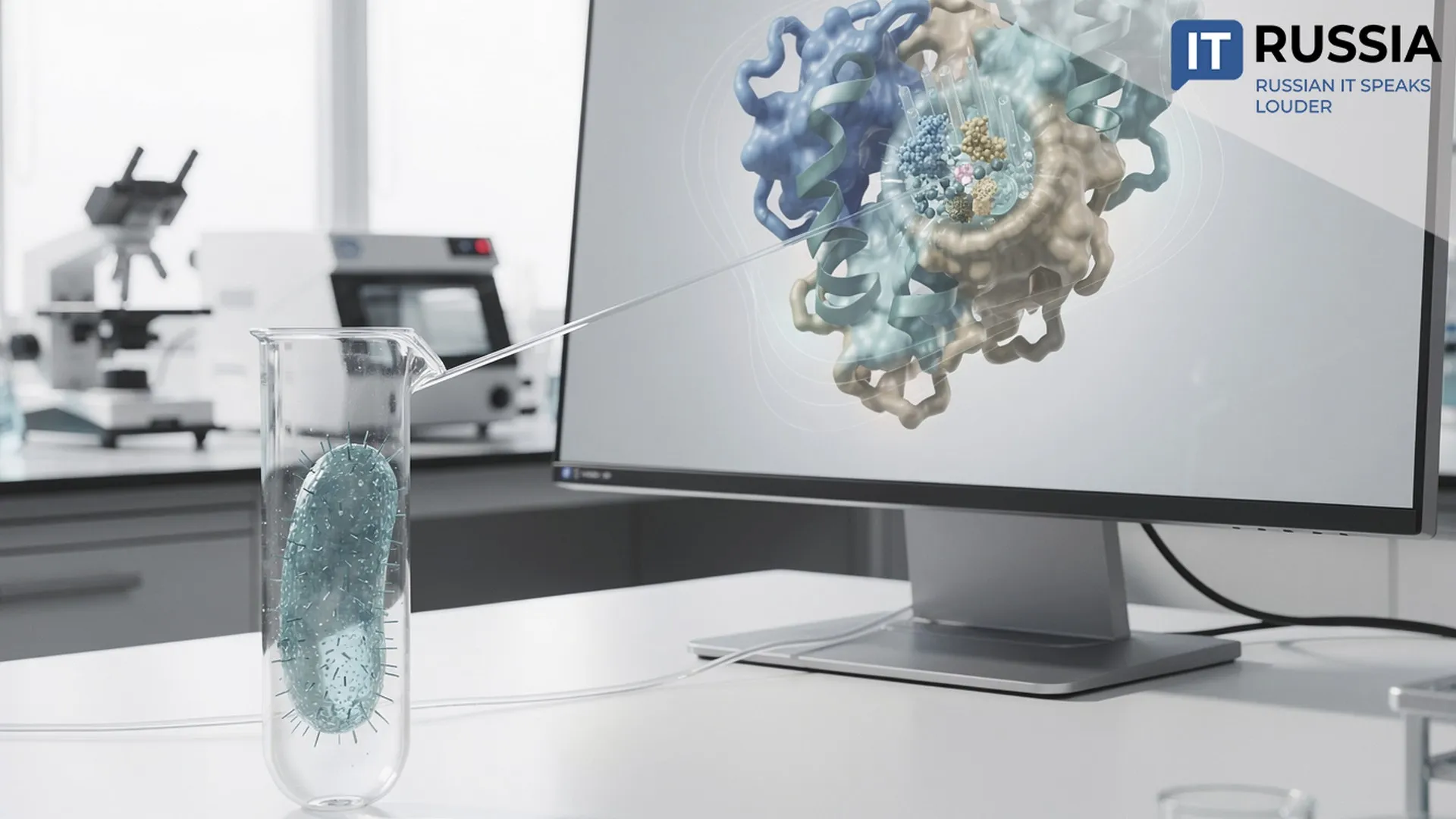
Russian scientists at the Petersburg Nuclear Physics Institute of the Kurchatov Institute National Research Center and Saint Petersburg State University have determined for the first time the three-dimensional structure of the RelSeq enzyme bound to the signaling molecule (p)ppGpp, exposing a potential “Achilles’ heel” in drug-resistant microbes.
The study, supported by a Russian Science Foundation grant and published in the International Journal of Molecular Sciences, lays the groundwork for developing an entirely new generation of antibiotics.
One in six bacterial infections worldwide is already resistant to standard treatment. More than 40% of monitored pathogen-antibiotic combinations have shown increasing resistance over the past five years. These World Health Organization figures cast a shadow over an era in which people have grown accustomed to defeating infections with a pill. But what if, instead of devising a new way to kill bacteria, researchers could simply strip them of their ability to hide?
Researchers at the B.P. Konstantinov Petersburg Nuclear Physics Institute of the Kurchatov Institute National Research Center and Saint Petersburg State University are pursuing precisely that strategy. In August 2026, they published findings that could change the underlying logic of the search for next-generation antibiotics.
The Enzyme Switch: What Is the “Stringent Response”?
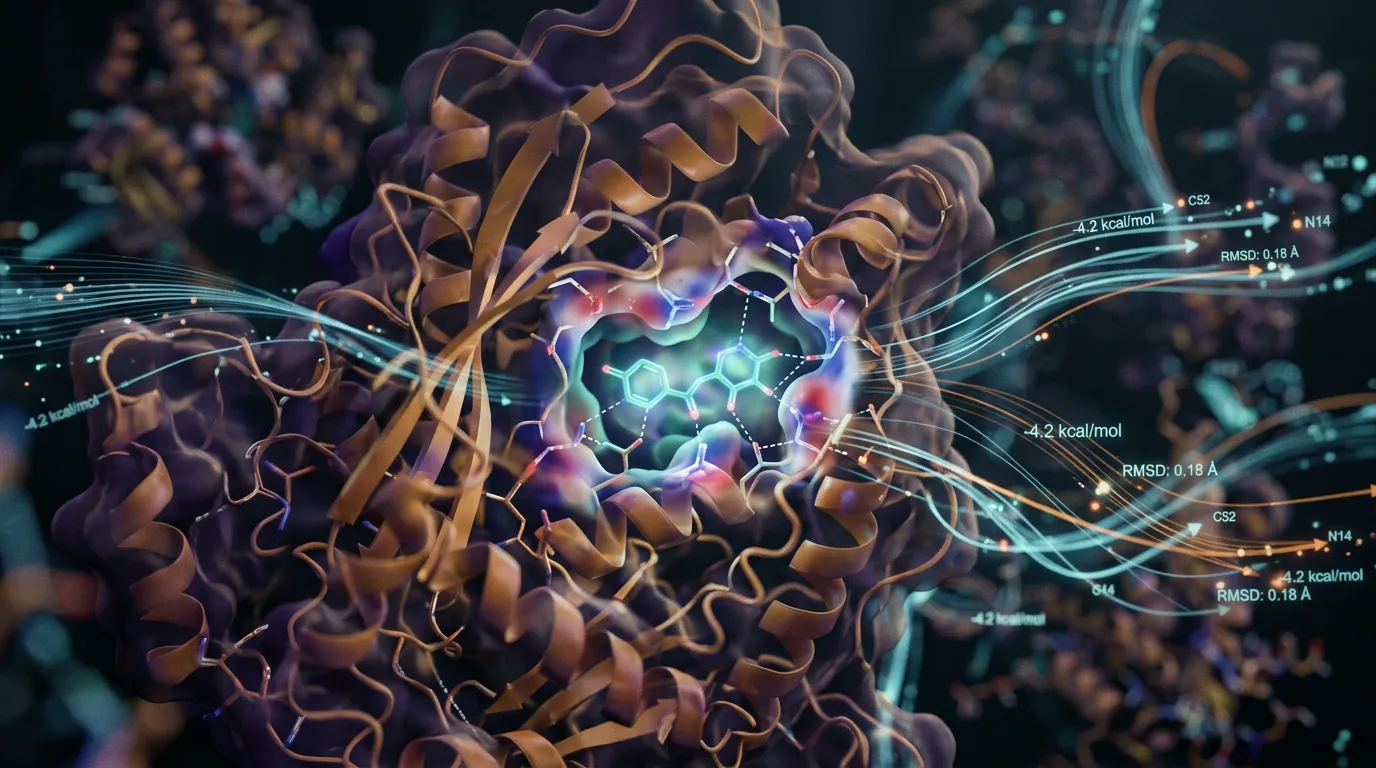
The study centers on the enzyme RelSeq. When a bacterium encounters stressful conditions – whether starvation, heat or an antibiotic attack – RelSeq triggers what is known as the “stringent response.” It regulates levels of signaling molecules called (p)ppGpp alarmones, intracellular messengers that act as an alarm signal in bacteria and some other organisms and activate protective responses. As these molecules accumulate, the cell shifts into survival mode: growth slows, metabolism is reprogrammed and the bacterium effectively “goes to sleep,” making it impervious to most drugs.
The Russian researchers determined for the first time the crystal structure of RelSeq in complex with the (p)ppGpp alarmone. Furthermore, they identified several binding sites that could potentially be targeted by drug compounds. Crucially, humans have no analogous enzyme. In theory, that means targeting RelSeq could affect the bacterium alone while leaving a patient’s cells untouched.
Computers See What Microscopes Cannot
Computational methods played a particularly important role in the research. The scientists supplemented experimental structural-biology data with molecular-dynamics computer simulations. The virtual model revealed that parts of the enzyme move relative to one another and that this flexibility determines how the alarmone settles into the protein structure.
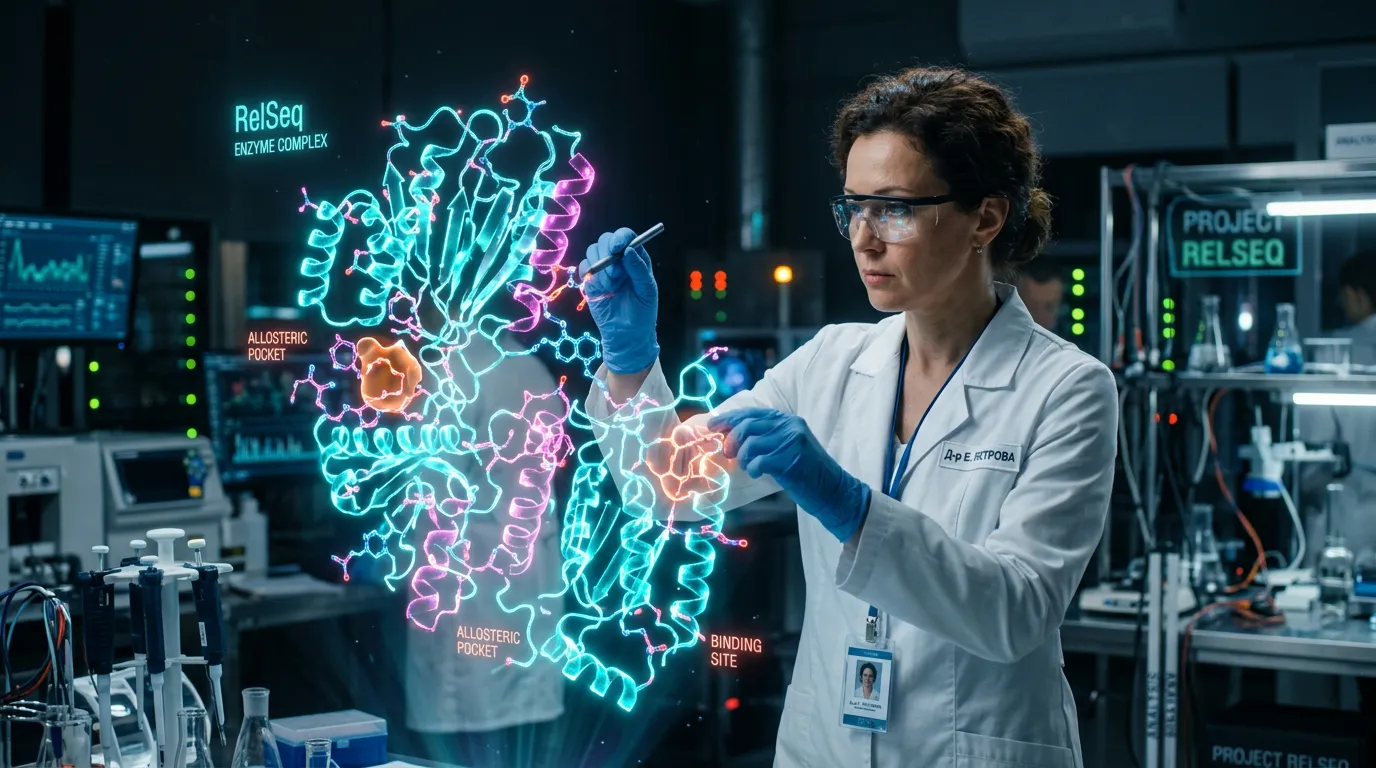
The simulations identified so-called allosteric sites – hidden “pockets” in the molecule that could be targeted to disrupt the enzyme’s function. This is more than an academic observation: the sites provide specific coordinates for a targeted search for small-molecule inhibitors. Here, physical experiments and computational modeling are complementary rather than competing approaches, dramatically narrowing the search space.
Not a Pill, but a Blueprint: What Has Been Done and What Comes Next
To be clear, there is no finished antibiotic in a test tube yet. The researchers have produced a detailed map of a potential target and the data needed for the next step – computational screening for candidate molecules followed by experimental testing. The sequence is straightforward: structural data → virtual screening → laboratory testing → if successful, preclinical trials. The project remains at an early stage.
Even so, a substantial foundation is now in place. With support from the Russian Science Foundation grant, the researchers have created an experimental platform that can rapidly analyze how potential drugs bind to bacterial targets. Work by other Russian researchers – including the use of active machine learning at the Moscow Institute of Physics and Technology to accelerate virtual screening of millions of compounds – suggests that the next stage of the search for RelSeq inhibitors could draw on high-performance computing and AI methods.

A Global Race That Cannot Afford Delays
The work by the St. Petersburg researchers fits into a broader international trend of recent years. In 2023, an international team deciphered how the antibiotic albicidin interacts with bacterial DNA gyrase. In 2025, Russian researchers at the Engelhardt Institute of Molecular Biology showed how disrupting ribose metabolism makes bacteria vulnerable. In 2026, scientists at Moscow State University described a previously unknown bacterial immune system. The common strategy is clear: rather than blindly screening compounds, researchers are targeting specific molecular vulnerabilities.
For Russia, the research aligns with the government’s 2025–2030 plan to combat antimicrobial resistance, which explicitly calls for the development of new antimicrobial drugs and alternative treatment technologies. Globally, the stakes are even higher: the World Health Organization considers antibiotic resistance one of the major public-health threats of the twenty-first century.
There is no immediate benefit for patients today. In the longer term, however, the research could give medicine a new class of antibacterial agents – drugs that disable bacteria’s stress defenses and make them vulnerable to treatment again. The journey from a crystal structure to a pharmacy shelf is long and unpredictable. But without the first step – seeing the target at atomic resolution – that journey cannot begin at all. Russian scientists have now taken that step.