Drones Will Take Watch Over Russia’s Waters
Developers and potential customers of unmanned systems gathered at the Akvatoriya (Aquatic Area) industry showcase in St. Petersburg. For the first time, surface and underwater drones were tested at the proving ground to collect data on the condition of bodies of water.
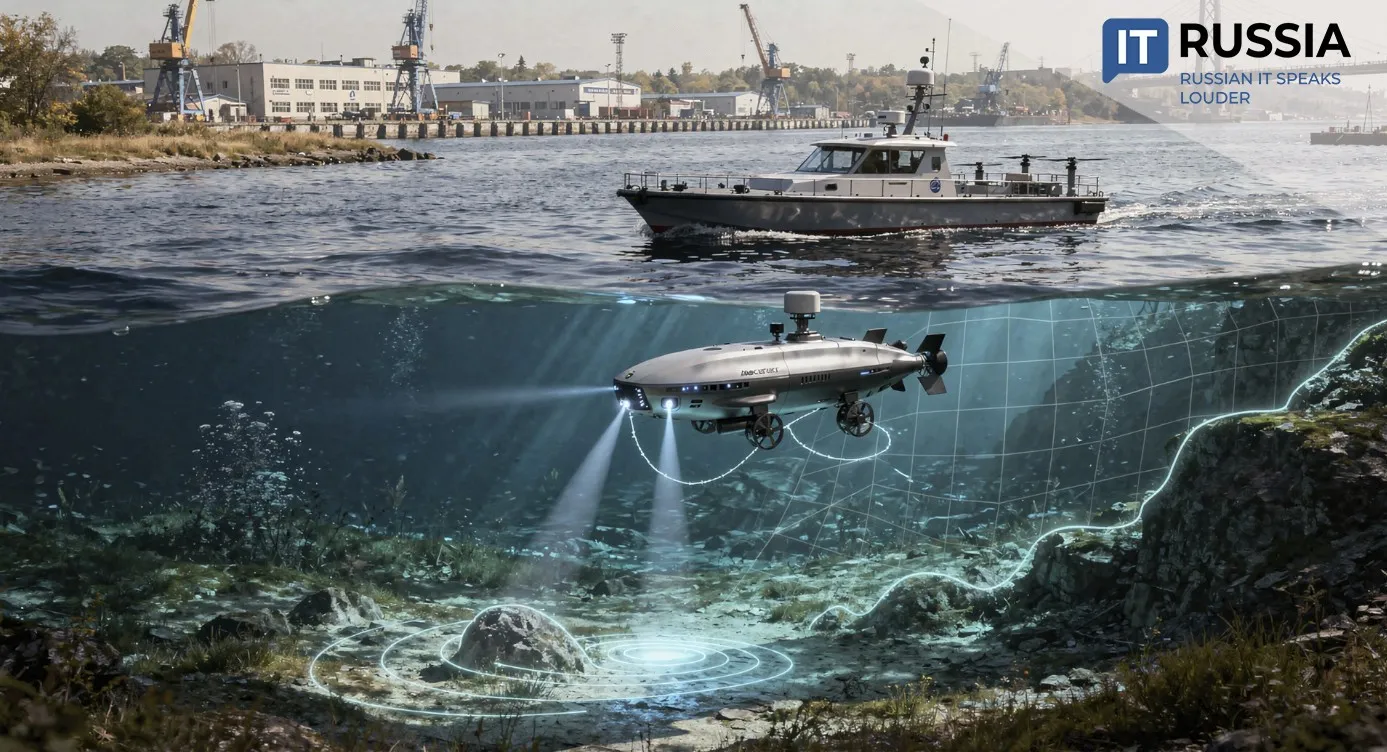
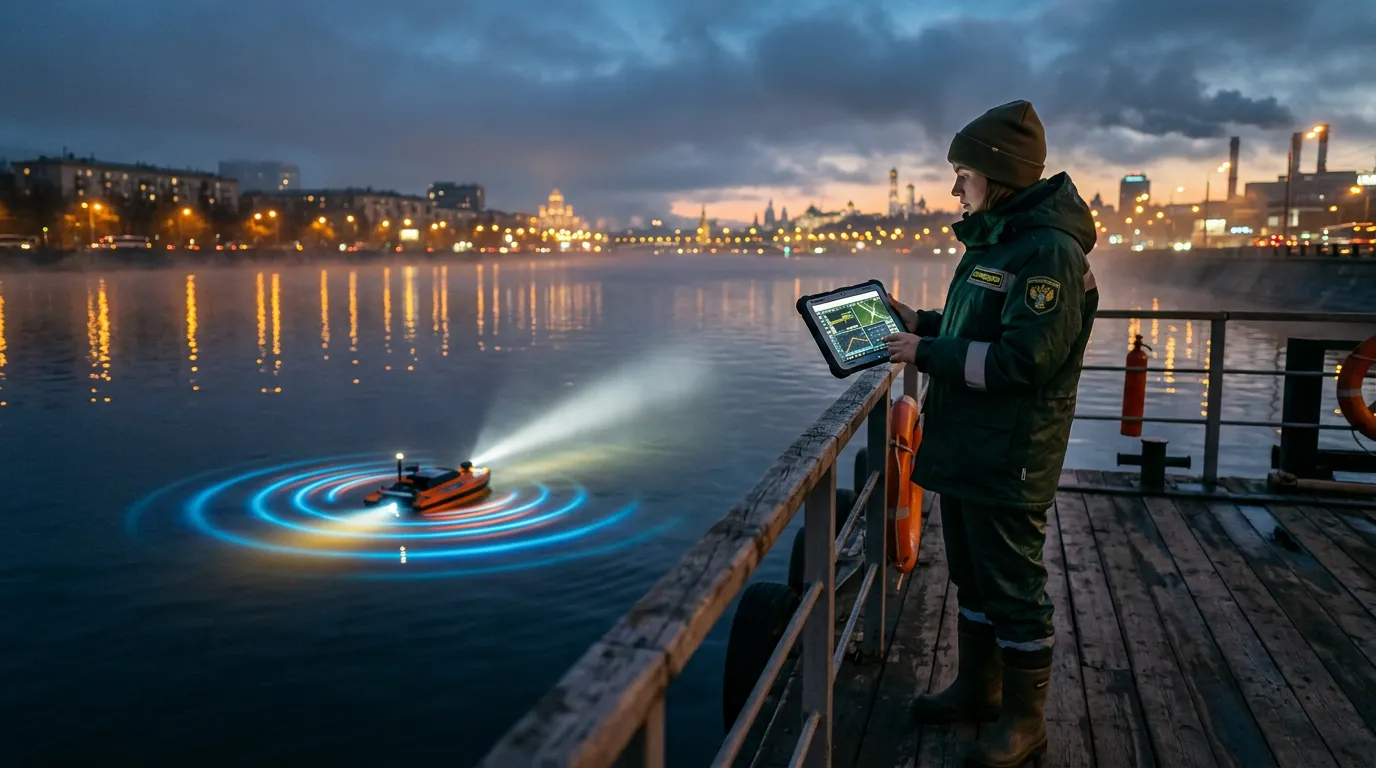
The robotic system can conduct monitoring without requiring people to remain physically present in the measurement area. The technology combines an unmanned platform, high-precision navigation equipment, sensitive sensors, data transmission systems and subsequent digital processing.
Above and Below the Water
Environmental professionals and inspectors often collect water samples only after a polluting discharge has stopped, making it impossible to assess the true damage and scale of the disaster. Automation will allow surveys to be conducted faster and more frequently. That is particularly important in hard-to-reach areas where regularly sending specialized vessels is difficult and expensive.
During the experiment, the surface craft acted as a link and coordinator, handling navigation and collecting data from the surface, while its underwater “partner” explored the water column and mapped the bottom topography. All the information, tagged with precise geographic coordinates, was brought together in a single digital system, creating a foundation for interactive maps of aquatic areas.
Continuous environmental monitoring is already underway in the waters around St. Petersburg and the Gulf of Finland. Rosmorport, for example, monitors bodies of water in the Big Port of St. Petersburg, the Neva River and Vyborg Bay. But the future lies with robotic systems that can operate where conditions are unsafe for people.

A Sea of New Technology
Uncrewed vehicles are no longer confined to laboratories and are entering government service. In 2022, the Okeanos Underwater Technology Research and Production Enterprise unveiled a system for EMERCOM of Russia. The autonomous vehicle, capable of operating for months without recharging, was originally designed to inspect radiation-hazardous sites, but its developers also identify environmental monitoring as one of its primary applications. A year later, during exercises in Murmansk, EMERCOM demonstrated an underwater drone capable of operating at depths of up to 300 meters. In Kronstadt, the Klavesin-1RE (Harpsichord-1RE) vehicle was also demonstrated with its sonar and television systems.
More recently, Russia tested a model of its first unmanned amphibious aircraft, Meridian (Meridian). Beyond cargo transportation, it can also be adapted for environmental monitoring, including observing land, water and ice surfaces, as well as for search-and-rescue operations and disaster response. Environmental incidents in the Black Sea have demonstrated the need for continuous digital monitoring. Occasional manual checks of the water are not enough. Protecting ecosystems requires timely, objective data.
Versatile Helpers
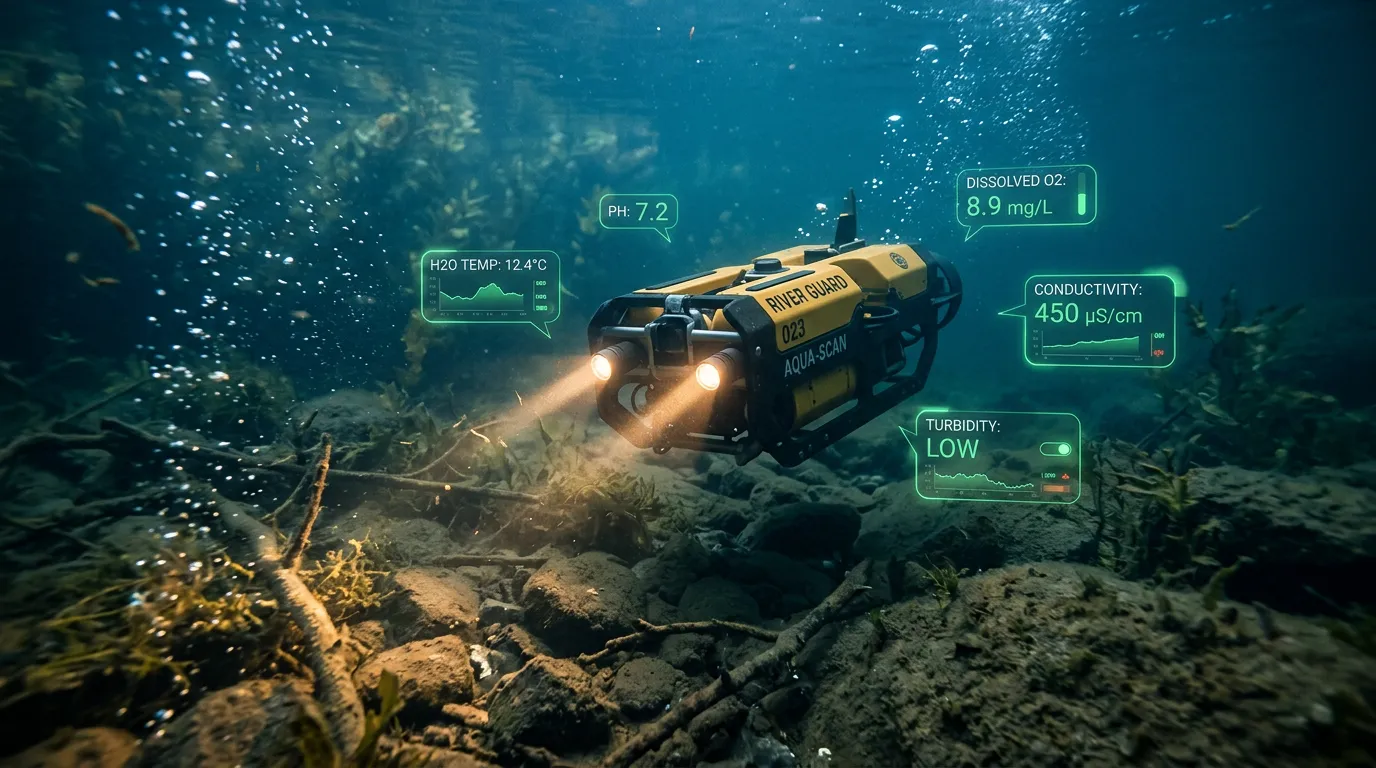
As unmanned systems are deployed, environmental monitoring will become regular and automated. Drones are versatile platforms: depending on the task, they can carry high-resolution cameras, hydroacoustic equipment for detecting anomalies on the bottom, and multifunction measurement sensors that assess acidity, temperature and concentrations of harmful substances. A drone can reach the scene several times faster than a rescue vessel and deliver a clear, real-time picture of a disaster, such as an accidental petroleum spill.
Underwater and surface drones will be equipped with a broader array of multisensors. They will automatically plan routes based on hydrological conditions. The resulting datasets will support forecasting, while the findings will be integrated with municipal and industry information-management systems.
Last year, Russia produced more than 3,200 civilian drones. Under the Bespilotnyye letatelnyye apparaty i sistemy (Unmanned Aerial Vehicles and Systems) national project, 46,000 drones are to be produced by 2030, with Russian-made unmanned aircraft systems accounting for more than 70% of the total. Nearly 900 companies in Russia manufacture drones today. By 2030, Russia’s market for services using marine drones could reach 51 billion rubles (about $620 million), eight times its current size of roughly 6.4 billion rubles (about $78 million).