Science vs. the Elements: Mathematical Modeling to Protect Altai Roads from Dangerous Ice Formations
Winter in the Altai Mountains offers breathtaking scenery, but it also brings severe infrastructure challenges. One of the most dangerous environmental phenomena is the formation of giant ice mounds—known as naledi—that advance toward key transportation corridors
Large-Scale Research for a Large-Scale Problem
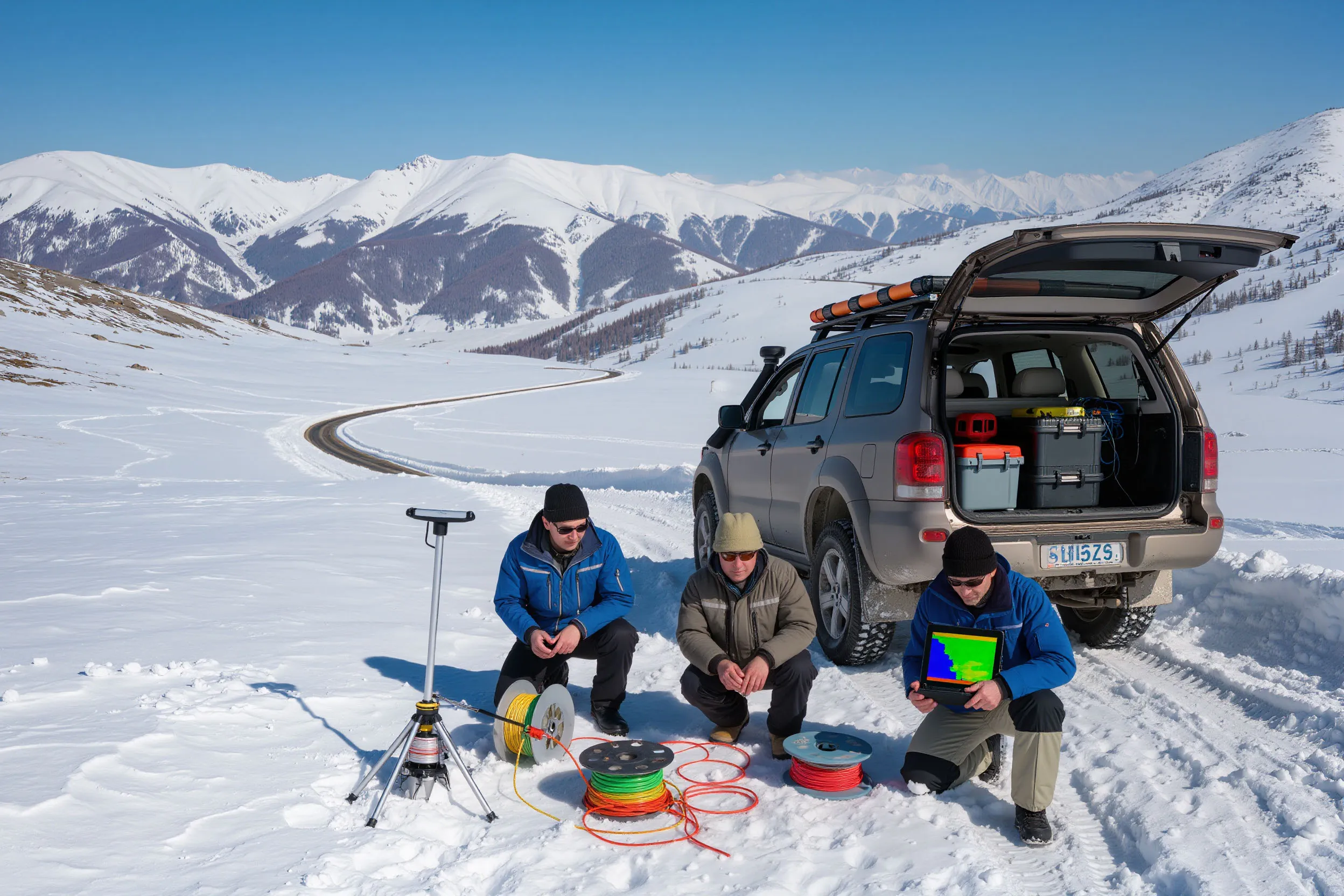
Giant ice mounds pose serious risks to roadway safety and structural integrity. This issue is particularly acute along the well‑known Chuysky Trakt (R‑256) near Mount Misheldyk, where ice formations can reach up to two meters in height.
Traditional mitigation methods—constant clearing and mechanical removal—have proven ineffective. The real challenge was understanding the hidden mechanism driving their formation.
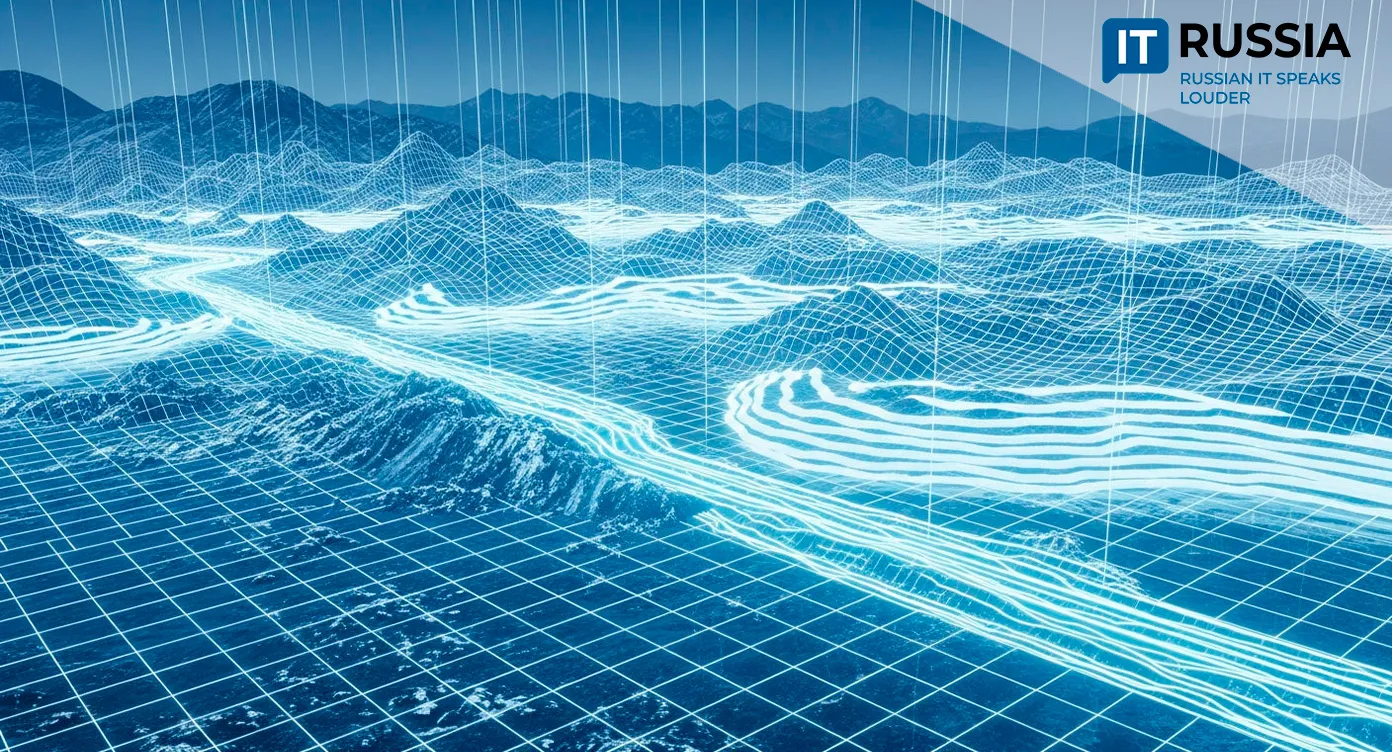
Researchers from the Institute of Petroleum Geology and Geophysics of the Siberian Branch of the Russian Academy of Sciences applied advanced 3D geo‑electrical modeling to peer beneath the surface and identify a “discharge channel”—an underground filtration pathway through which pressurized water migrated upward, froze, and created hazardous ice structures.
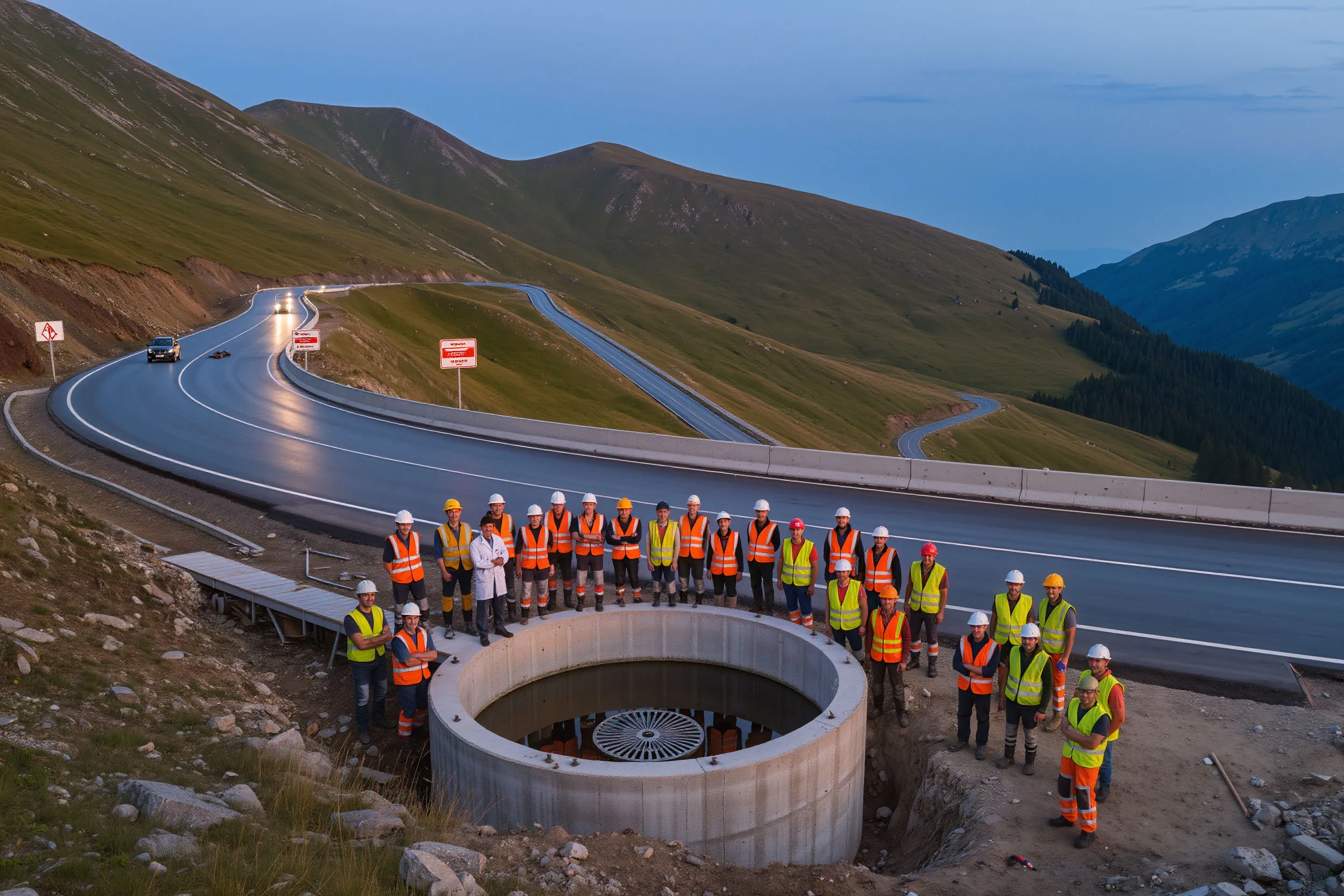
With a precise digital model of the subsurface water flow, engineers can now accurately select locations for interception wells. Redirecting the water deprives the naledi of its “source,” preventing the ice from forming in the first place.

Knowledge With High Value
For a country with vast territories affected by permafrost and seasonal freezing, these findings are invaluable. Mountain roads in the Caucasus, Siberia, and the Russian Far East face similar challenges.
The developed method—combining geophysical surveying, 3D modeling, and engineering intervention—can be scaled and integrated into standard guidelines for regional road authorities.
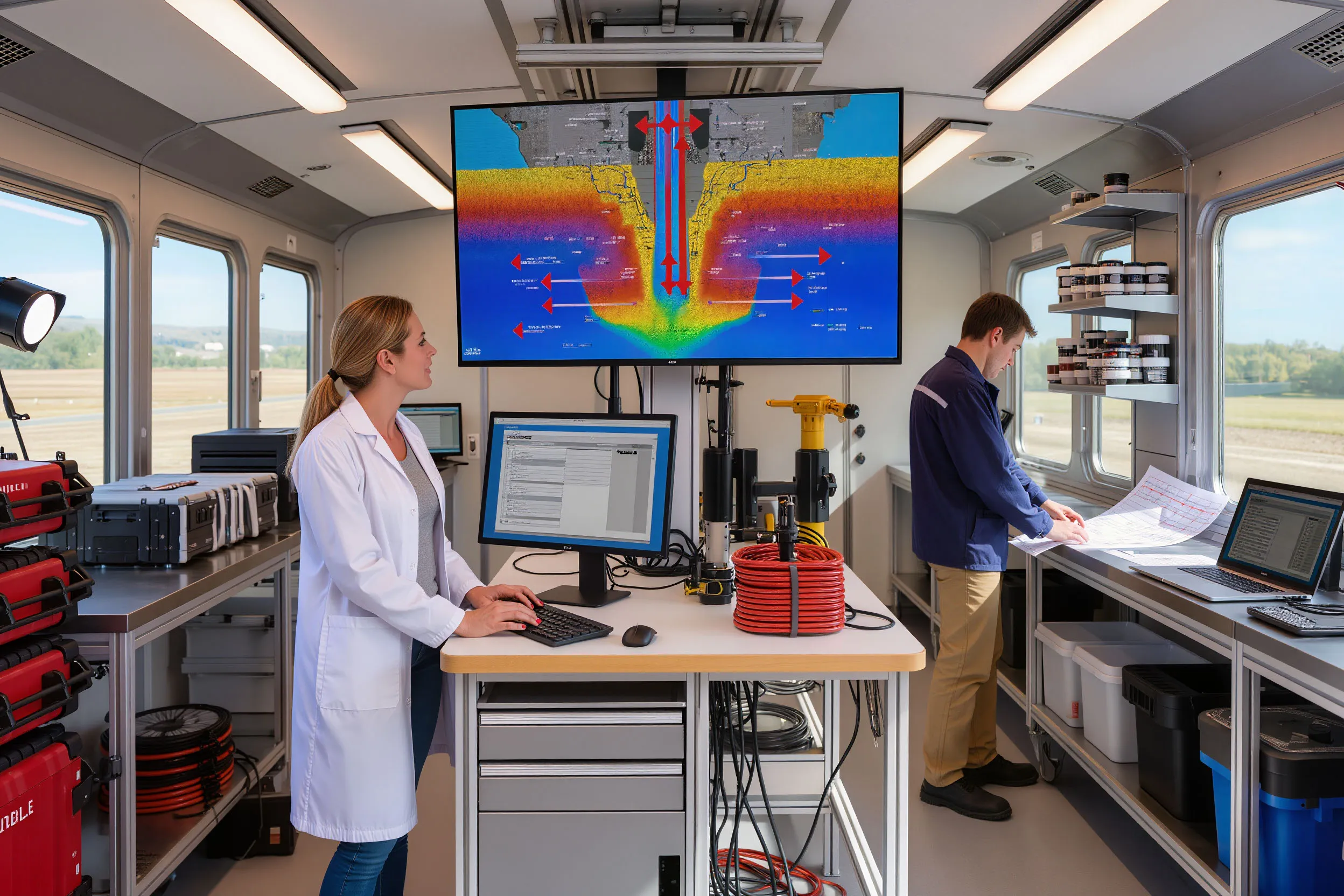
Recent years have shown rising interest in engineering geocryology both in Russia and abroad. At Russia’s Sixth Geocryology Conference, experts discussed new methods for ensuring infrastructure resilience in frozen environments.
Studies by Swiss researchers on thermal stabilization in the Alps reinforce the same conclusion: modern modeling and active ground‑intervention technologies are key to safety in mountainous and cold regions.
More Than an Experiment—A Foundation for Safety
This case represents a successful example of “science serving infrastructure.” Road agencies can adopt geophysical analysis and groundwater modeling as routine components of roadway design and maintenance.
The Altai research marks a significant step toward making life in harsh climates safer and more predictable, demonstrating that even powerful natural forces can be managed through precise scientific calculation.