A Road Scanner That Fits on a Crossover
A compact road inspection laboratory that can be carried in a vehicle's cargo area and installed on a standard passenger vehicle is no longer a concept. Saratov-based Sovremennye Dorozhnye Tekhnologii (Modern Road Technologies), or SDT Group, has introduced a portable solution that brings professional road diagnostics to ordinary crossovers and station wagons.

Sovremennye Dorozhnye Tekhnologii (Modern Road Technologies), or SDT Group, has unveiled a compact road laboratory designed for highway inspection and digital road asset inventory. The equipment can be mounted on a crossover or station wagon fitted with R15-R19 wheels without requiring vehicle modifications, and when not in use, the entire system can be transported in the cargo compartment.
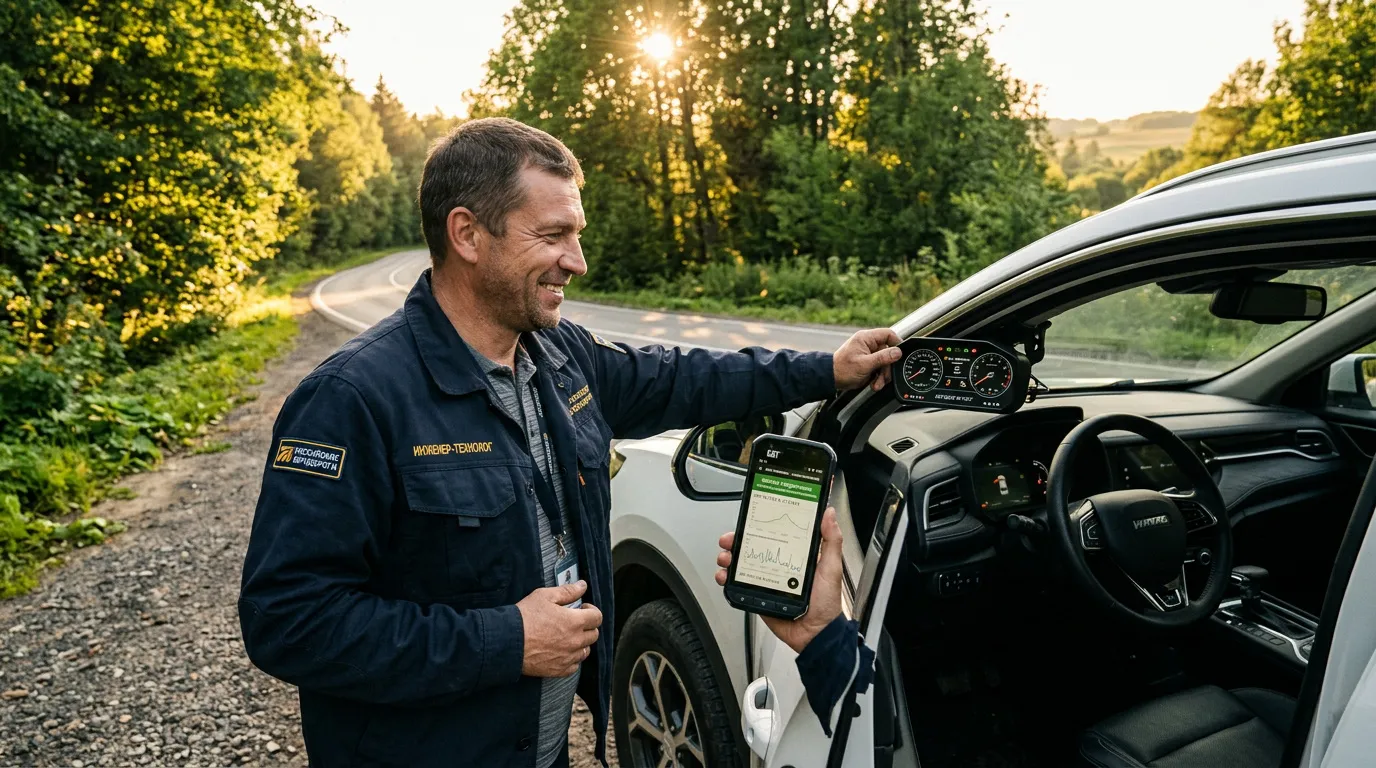
The system measures distance traveled, longitudinal and cross slopes, roadway geometry and profile, curve radii, pavement smoothness using the internationally recognized International Roughness Index (IRI), geolocates surveyed sections and documents roadway infrastructure through video recording. All data are synchronized with GPS/GLONASS positioning, processed using Doroga-PRO software and exported to the Titul-PRO GIS platform. An additional Android application enables field crews to collect information on bridges, access roads, culverts and other transportation assets.
The key innovation lies in the system's portability and mobility. Previously, comparable inspections required dedicated survey vehicles. The project is also significant for Russia's IT sector because it combines domestically developed hardware, geospatial technologies and software into a single integrated road data collection platform.
From Regional Deployment to Export Opportunities
Within Russia, the system is expected to find demand among regional highway agencies, contractors, construction testing laboratories and operators of private road networks. It aligns with the country's broader digital transformation of road infrastructure, as Rosavtodor continues expanding the Federal State Information System for Road Construction, Maintenance and Operation (FGIS SKDF), digital road passports and AI modules for automated defect detection.
One promising direction is the integration of computer vision. Neural networks could automatically identify cracks, potholes and damaged pavement markings. Another scenario involves distributed monitoring, with compact laboratory kits installed on municipal service vehicles and public transit fleets to update the digital profile of the road network more frequently.
The strongest export potential lies in the CIS countries and Central Asia, where road networks are extensive while budgets for specialized inspection vehicles remain limited. SDT has already showcased its technologies in Tashkent and Bishkek. To succeed internationally, however, the company will need to adapt its software to local engineering standards and demonstrate the system's reliability under demanding operating conditions, including severe weather.
The Evolution of Road Diagnostics
The new platform builds on experience gained through earlier projects. In 2021, SDT introduced the Trassa (Highway) mobile laboratory based on the Lada Largus, featuring panoramic video surveying. Two years later, the company released the larger Trassa-2 system, built on the Sobol light commercial van and equipped with GPS positioning and expanded road asset data collection capabilities.
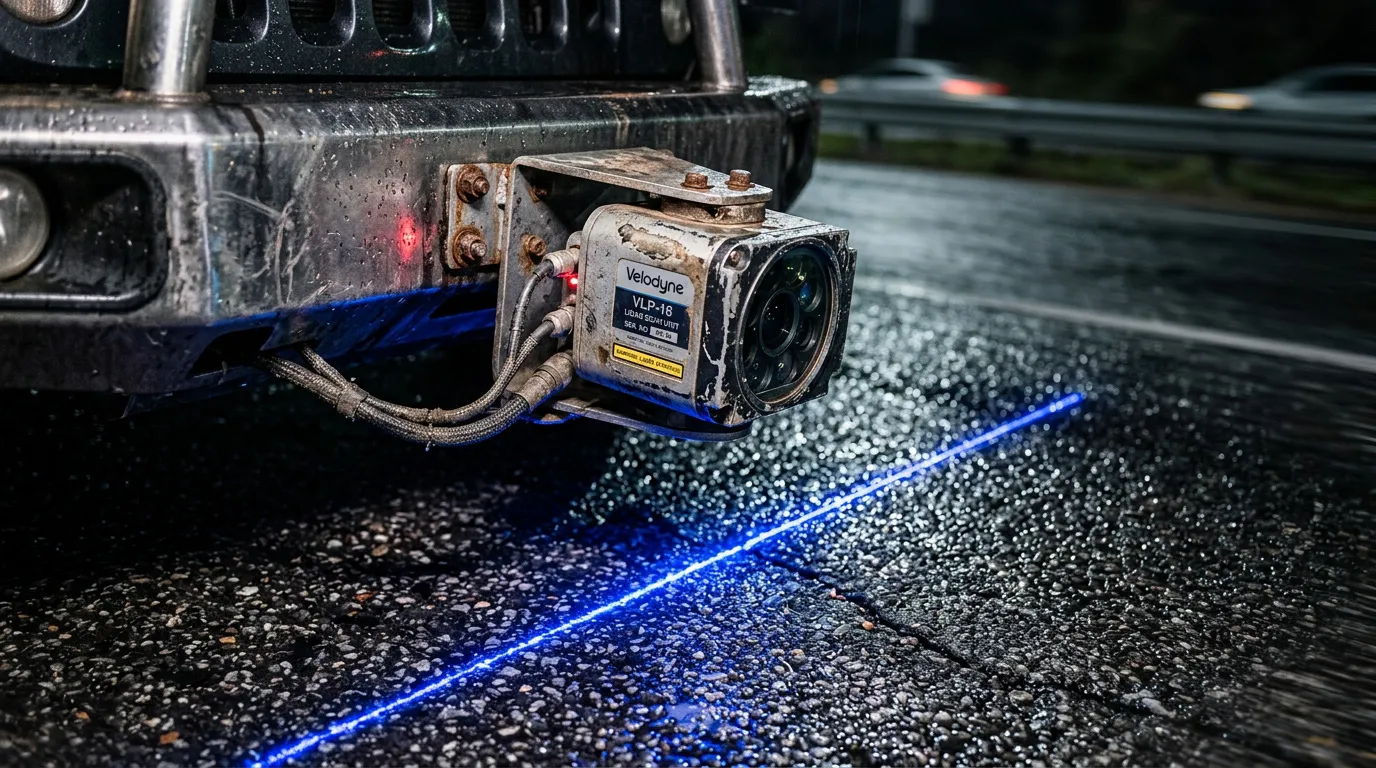
In 2024, a mobile laboratory developed in Moscow used a laser module to generate three-dimensional pavement models while measuring rutting and surface irregularities. In 2025, Avtodor tested an AI system on the M-11 highway capable of detecting defects in noise barriers with 80-90% accuracy. During the same year, Cherepovets State University presented a prototype road pothole scanner mounted directly to a vehicle bumper.
Kazakhstan has also demonstrated rapid progress. In 2023, the country launched the AI-powered SRDS system for automated pavement defect detection. By 2026, it had deployed a network of 16 mobile road laboratories equipped with AI components to support road construction and maintenance quality control.

Another Step Toward Digital Roads
SDT's solution is not a technological revolution, yet it is an important step toward making digital road diagnostics both simpler and more affordable. Its greatest advantage is the ability to transform an ordinary passenger vehicle into a temporary road inspection laboratory without requiring major capital investment. That capability is particularly valuable for municipalities and regional authorities seeking objective assessments of road conditions without purchasing specialized equipment.
Over the next several years, development is likely to follow three main directions: wider adoption of AI for automated defect recognition, direct transmission of survey data into FGIS SKDF and the creation of continuously updated digital road passports. Internationally, commercial success will depend on competitive pricing, compliance with local engineering standards and proven performance under real-world operating conditions. If those requirements are met, the compact road scanner could become a standard diagnostic tool not only across Russia but in international markets as well.