Digital Ruble Loans: Russia Looks to Expand the Capabilities of Its Third Form of Currency
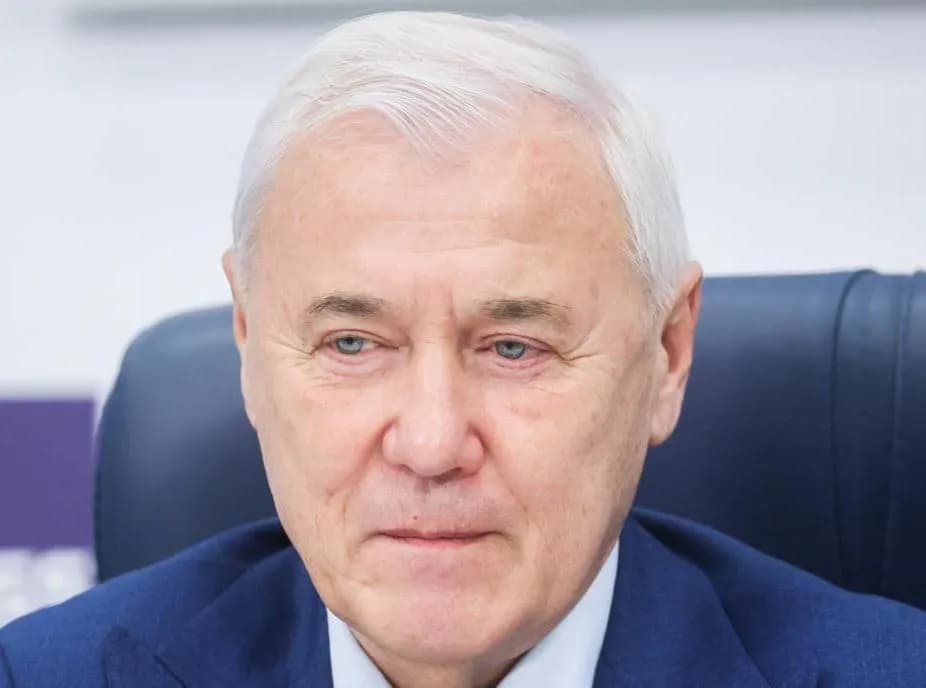
Anatoly Aksakov, chairman of the State Duma Committee on the Financial Market, has proposed launching pilot lending in digital rubles beginning September 1, 2026. That is also the date by which Russia's largest banks and the retail companies they serve with annual revenue above 120 million rubles (about $1.5 million) must be able to accept payments in digital rubles.

The initiative remains under discussion, and Aksakov noted that negotiations are ongoing. At the same time, he expressed hope that the project could enter a pilot phase this fall. Some experts doubt that the necessary infrastructure and regulatory framework can be completed within three months, but they generally view an expansion of the digital-ruble platform's functionality as highly likely.
Transparency in Spending
Expanding the digital ruble's capabilities to include lending products could significantly increase interest in the platform among businesses and banks. Faster loan issuance could attract entrepreneurs, while greater transparency in how borrowed funds are spent could appeal to financial institutions.
Banks would gain the ability to test lending scenarios with predefined rules governing how funds may be used, similar to smart-contract mechanisms.
"What makes smart contracts, and the digital ruble more broadly, so valuable is that every contractor, subcontractor, and participant in the chain becomes visible. You can see how work is progressing toward fulfilling the general contractor's order, and the money cannot simply disappear into unrelated channels," said Anatoly Aksakov, who also chairs the Association of Russian Banks.

The Mechanism Has Already Been Tested Through Subsidies
Digital-ruble loans could become a tool for targeted financing with automated oversight of how funds are used. A similar mechanism has already been tested through subsidy programs. In June 2025, digital rubles were piloted in St. Petersburg to distribute meal reimbursements for younger students studying from home. Later that autumn, the new form of Russian currency was used to provide subsidies to farmers in Chuvashia. No disruptions were reported.
Over time, the banking sector could gain access to an entirely new category of lending products that would be difficult or impossible to implement through traditional credit mechanisms.

Stages of Deployment
The Bank of Russia, which issues the digital ruble, began testing real-world transactions in 2023. The initial pilot involved 13 banks, 600 individuals, and 30 retail locations. By 2024, the project had expanded to 1,200 companies and added dynamic QR-code payments and business-to-business transfers. By May 2025, more than 63,000 transfers and 13,000 payments had been completed on the platform, while 17,000 smart contracts had been executed. The same year, lawmakers approved legislation providing for the phased nationwide rollout of the digital ruble beginning September 1, 2026, and established a list of budget expenditures eligible for digital-ruble settlement. Since January of this year, the third form of Russian currency has also been used in the federal budget process.

Interest Depends on Practical Benefits
A two-year transition period has been allocated for the digital ruble's entry into broad circulation, largely because existing infrastructure must be adapted to support the new form of currency. Yet discussions are already underway about expanding its functionality. Initially, the platform was designed primarily for payments and transfers.
The government has a clear interest in the greater transparency of both public-sector and commercial transactions that the digital ruble can provide. At the same time, officials continue to describe adoption as voluntary. If citizens and businesses see clear practical advantages, they are likely to begin using the digital ruble on their own.
"The digital ruble will have its own advantages: free transfers for individuals, minimal fees for businesses, and convenient services. But if someone does not need it, they simply will not open a digital-ruble account," Central Bank Governor Elvira Nabiullina explained.