How MSU Scientists Found a Way to Sort Plastic Without Errors
Researchers at the Faculty of Physics of Lomonosov Moscow State University have developed an algorithm that speeds up plastic sorting by analyzing spectral signatures.
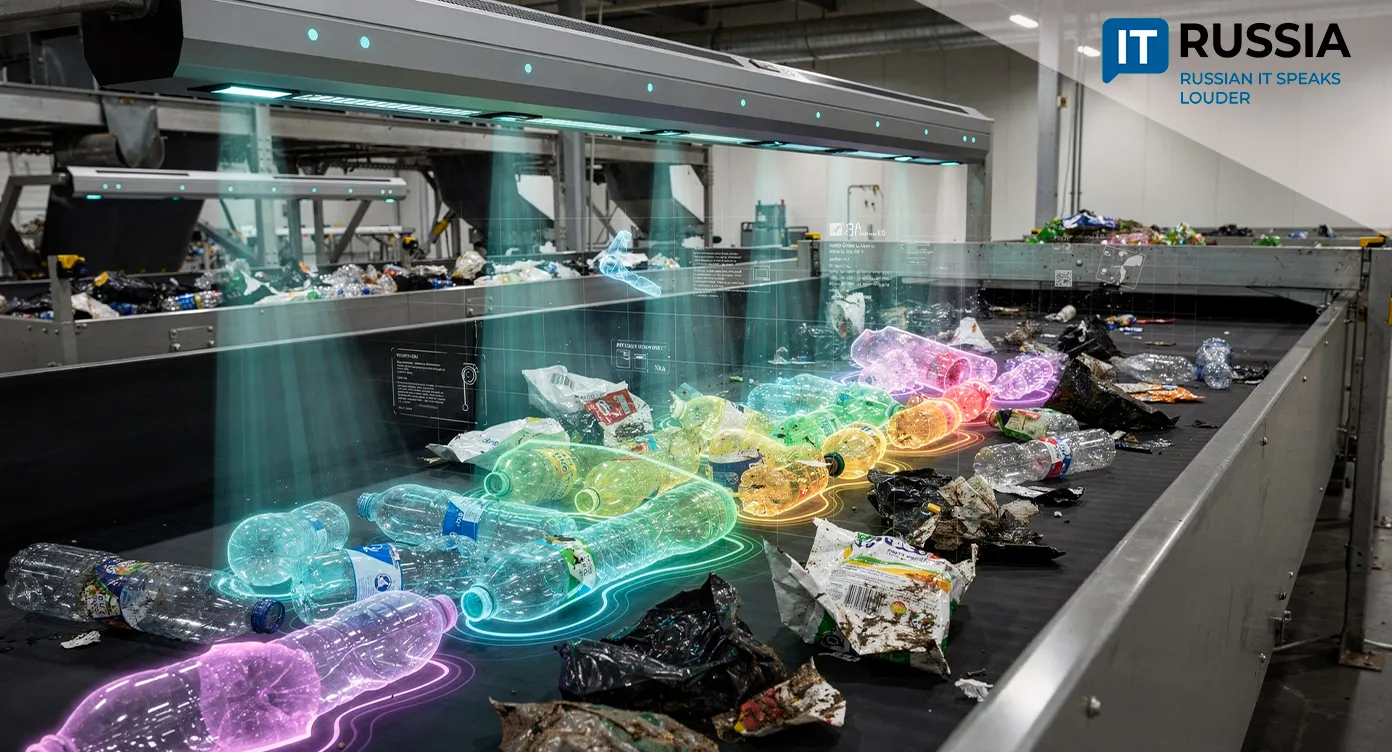
Every year, humanity produces more than 400 million tons of plastic. About 79% ends up in landfills or leaks into oceans and soil. Less than one-tenth of the total volume gets a second life through recycling. But before waste can be recycled, it has to be sorted. And that is where the problem begins. In many cases, it is almost impossible to quickly and accurately identify the type of bottle moving along a conveyor line. Factory labels are often damaged or missing altogether, while the human eye or low-cost sensors confuse PET with polypropylene.
Looking Through Waste
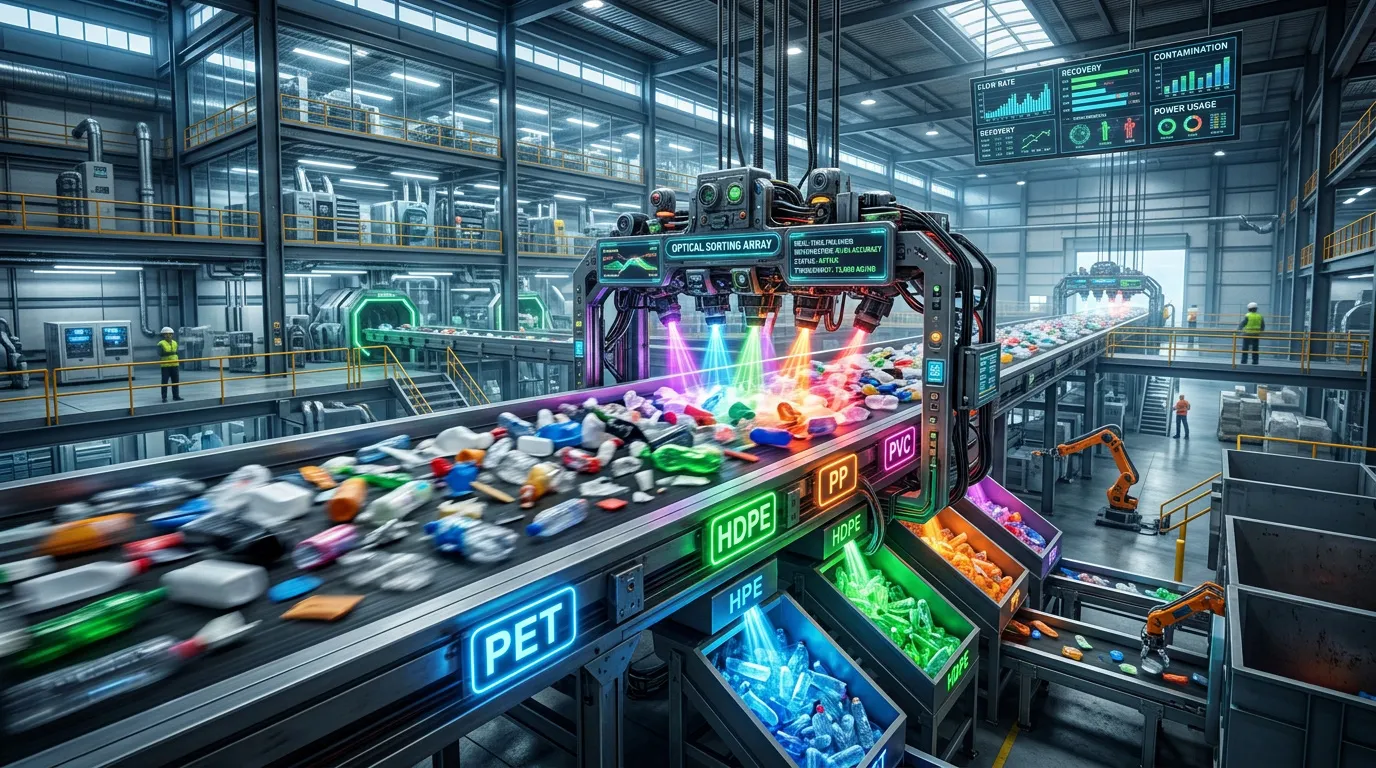
Researchers at Lomonosov Moscow State University developed a solution precisely for that problem. The scientists effectively found a way to “look inside” waste. Their method is based not on visible light, but on reflection in the near-infrared range. The algorithm reads the unique spectral “fingerprints” of polymers while ignoring color, thickness, and surface curvature. The development is especially relevant in the context of the goals set by Russia’s national Environmental Well-Being project. By 2030, Russia aims to sort 100% of waste and recycle 25% of it.
A Conveyor Belt of Ideas
Russia is actively rolling out “smart” systems for household waste sorting. One example is the EcoPoint recyclable collection station, which runs on artificial intelligence. Its neural network identifies waste types including PET bottles, aluminum cans, and paper, while also assessing quality and quantity. The system recognizes object shapes with 97% accuracy.
A robot operating at the Tyumen waste-sorting plant separates plastic containers by color and type. Equipped with neural networks, machine vision, and a vacuum gripper, the device identifies and sorts blue, transparent, white, green, and brown PET plastics, as well as bottles and containers, with up to 95% accuracy. A similar assistant is already operating at a waste-sorting facility in Moscow. There, an optical robotic separator selects aluminum cans. Unlike conventional separators, it ignores color and contamination levels and redirects aluminum cans into a separate storage bin for valuable recyclable material.
Meanwhile, a student from the St. Petersburg State University of Aerospace Instrumentation (SPbGUAP) developed a neural network capable of detecting and localizing plastic waste within garbage streams with 92% accuracy. Using sensors and cameras, the algorithm identifies PET bottles, photographs them, and builds 3D maps of landfill sites.
Turning Waste Into Revenue
The MSU system relies on fixed wavelengths and inexpensive optical filters. Identifying the type of plastic takes only a few “clicks” in the near-infrared range. That simplicity could fundamentally change the economics of recycling, which has often struggled with profitability.
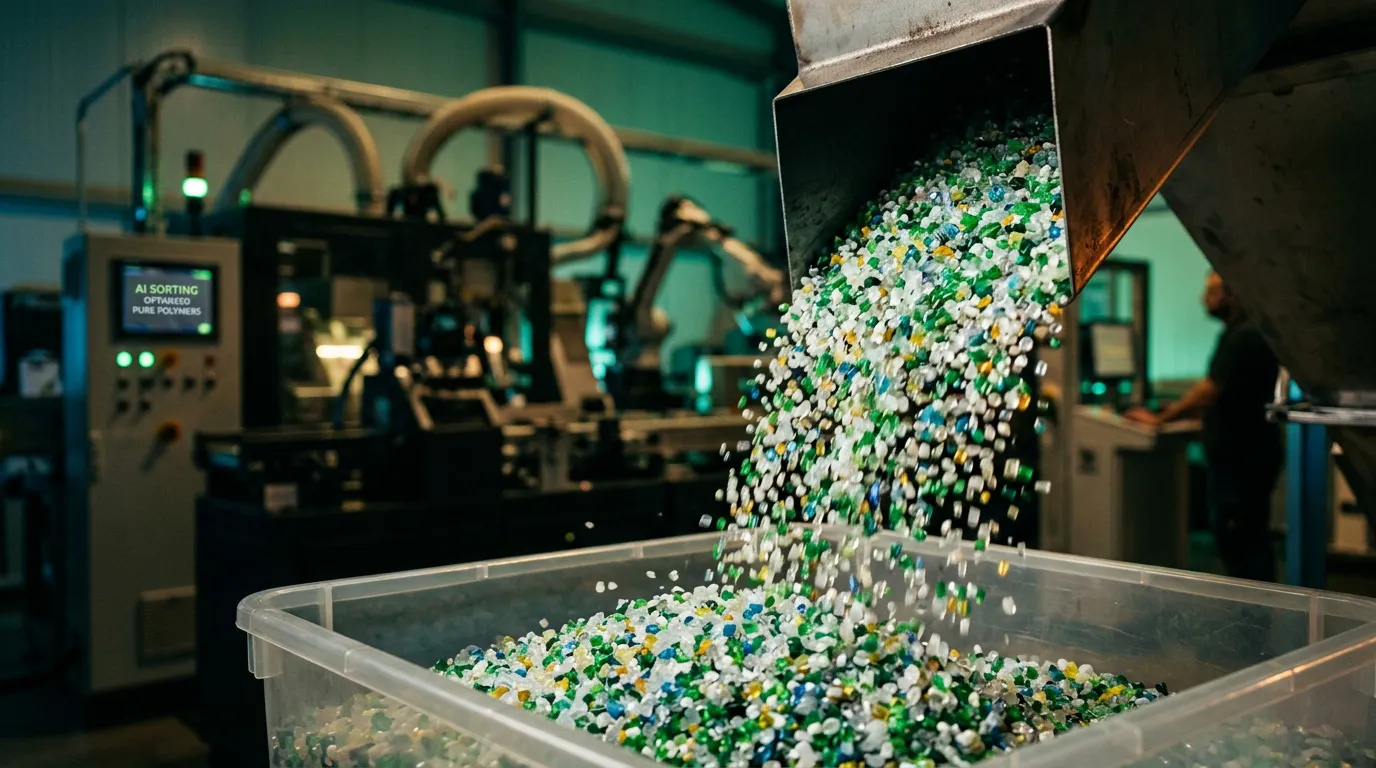
For Russia, which is building hundreds of municipal solid waste management facilities and launching high-tech recycling lines, the implications are significant. One example is the Russian Environmental Operator project in the Chelyabinsk region, designed to produce 13,800 tons of clean PET flakes annually. Today’s sorting robots already achieve up to 95% accuracy, but they still struggle with black plastic and mixed fractions. The infrared method could become a reliable verification layer.
The real challenge is not building more incineration plants, but learning how to identify recyclable material cheaply and accurately. With the new method, a plastic bottle thrown into a green recycling container is less likely to end up in a landfill because of a sorting error. MSU’s “physics-based vision” could become a foundational tool for the circular economy, where waste is transformed into economic value.