Russian 4K Sensors Enter Mass Production
The new CMOS sensor demonstrates how Russian microelectronics technologies begin competing with foreign products in the industrial optics segment.

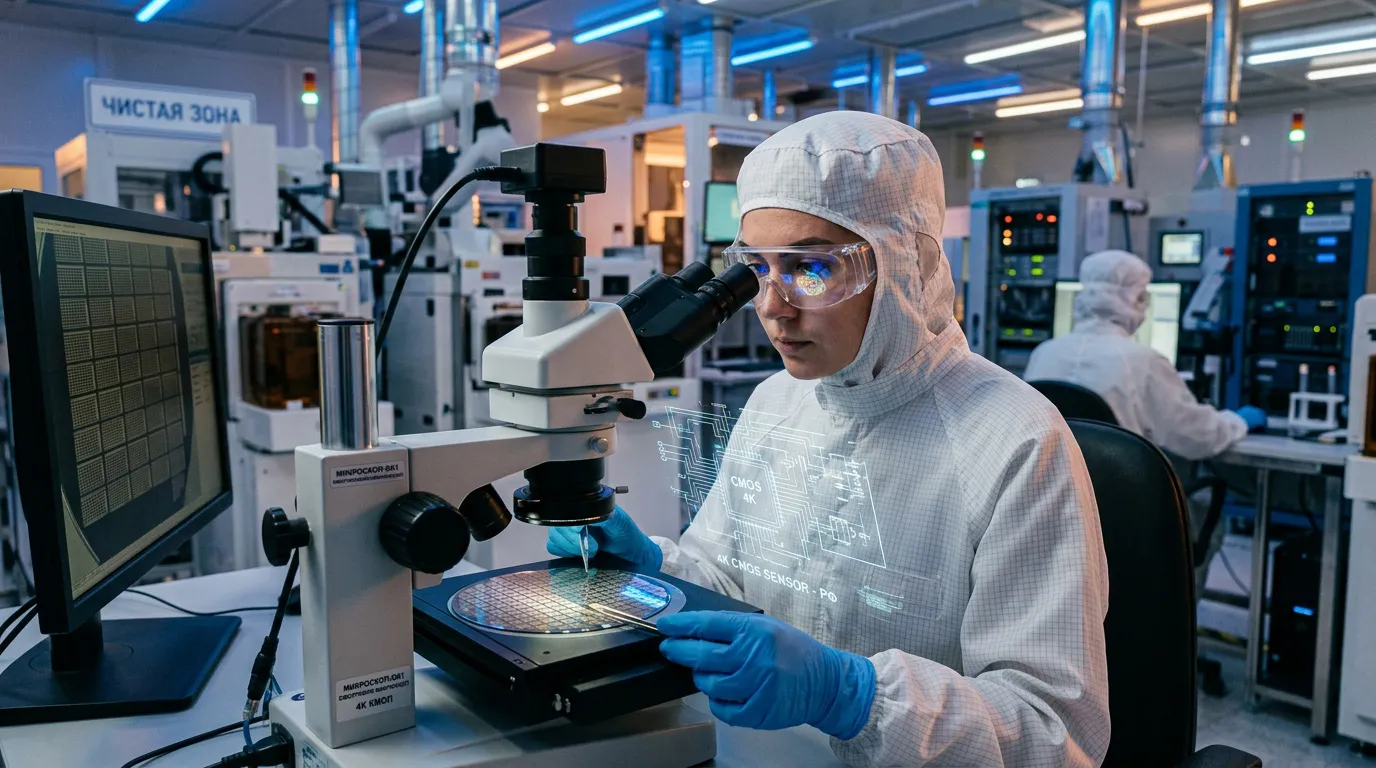
Ruselectronics, a holding company within state-owned conglomerate Rostec, has launched serial production of a new version of Russian-made 4K photosensitive CMOS sensors. The technology was developed by specialists at Tsentralny nauchno-issledovatelsky institut Elektron (Central Research Institute Elektron), which is also part of Ruselectronics, and is positioned alongside leading international counterparts, including Sony’s Pregius and IMX sensor families, as well as products from Onsemi, OmniVision and Teledyne e2v.
Stability Under Extreme Conditions
A defining feature of the Russian design is its combination of miniaturization, energy efficiency and an analog interface. The sensor is built using a Russian 180 nm CMOS process that integrates not only the sensing element itself, but also the entire image processing module onto a single chip. That architecture reduces interference and improves operational stability. Power consumption remains below 1 watt, while an operating range from -60 to +50 degrees Celsius allows the device to function in systems with severe power constraints. The monochrome sensor includes a 12-bit ADC and supports spectral sensitivity from 400 to 900 nm, enabling accurate machine vision even in harsh operating environments.
Because the sensor supports the analog LVDS interface, manufacturers can integrate it into existing systems and controllers without extensive hardware redesign. In practice, that matters for industrial producers already relying on Russian electronic component platforms.
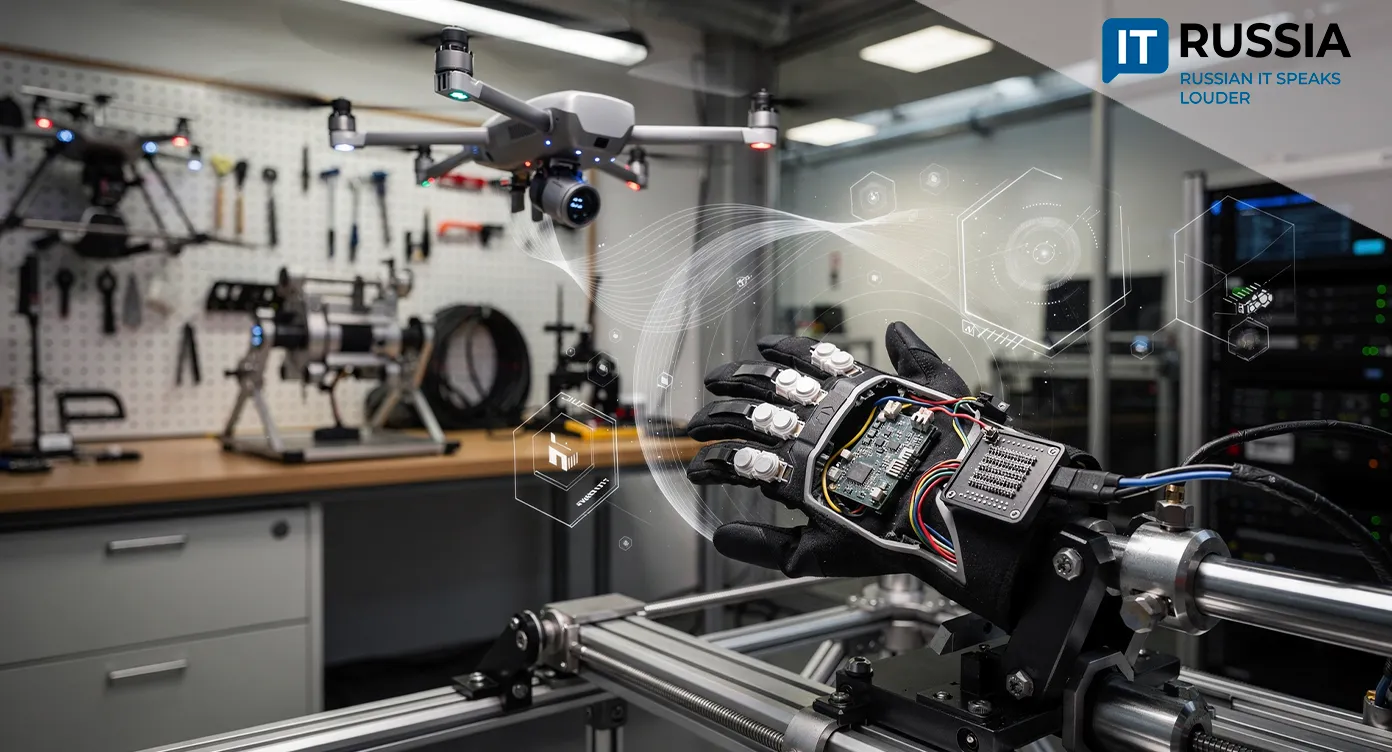
The sensors are being integrated into unmanned platforms, machine vision systems, video surveillance equipment and industrial automation products. Test samples are already being used in prototype autonomous transport systems and robotic manipulators.

From Crop Fields to Mineral Exploration
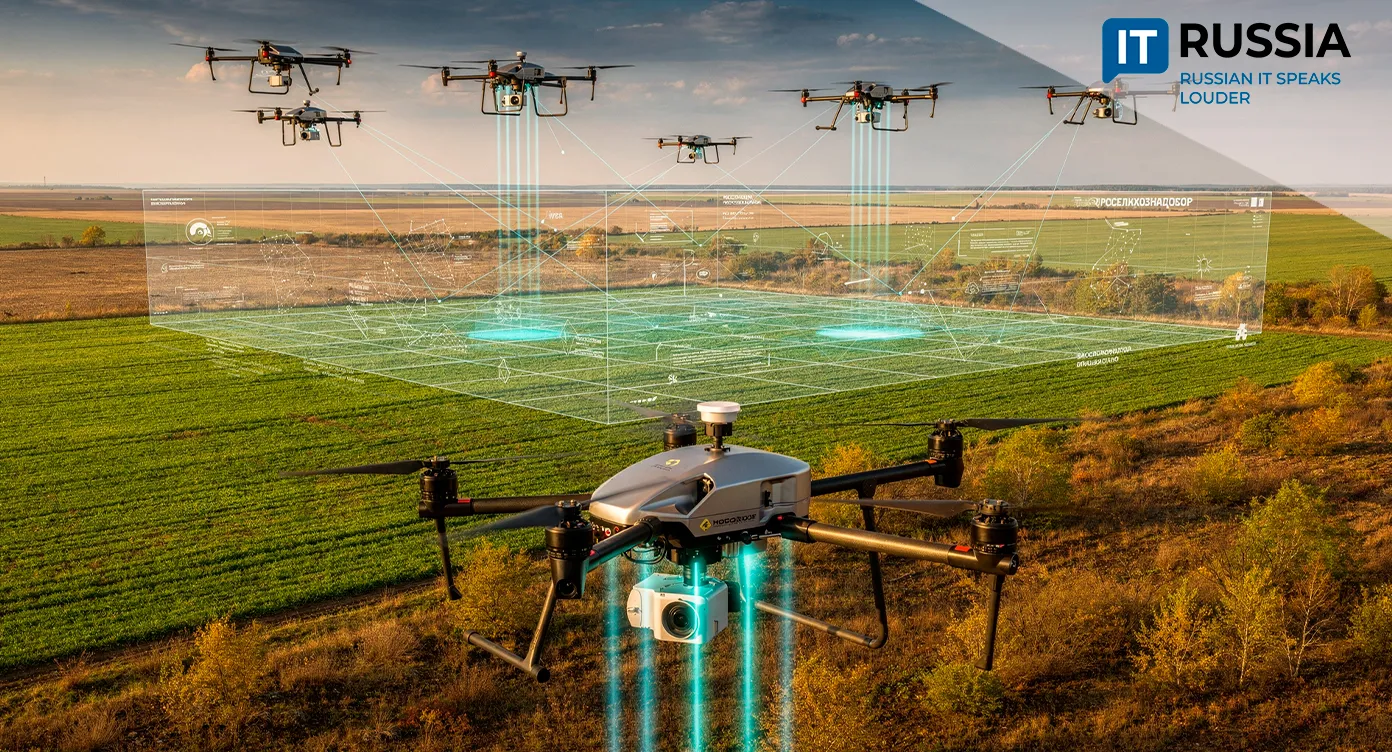
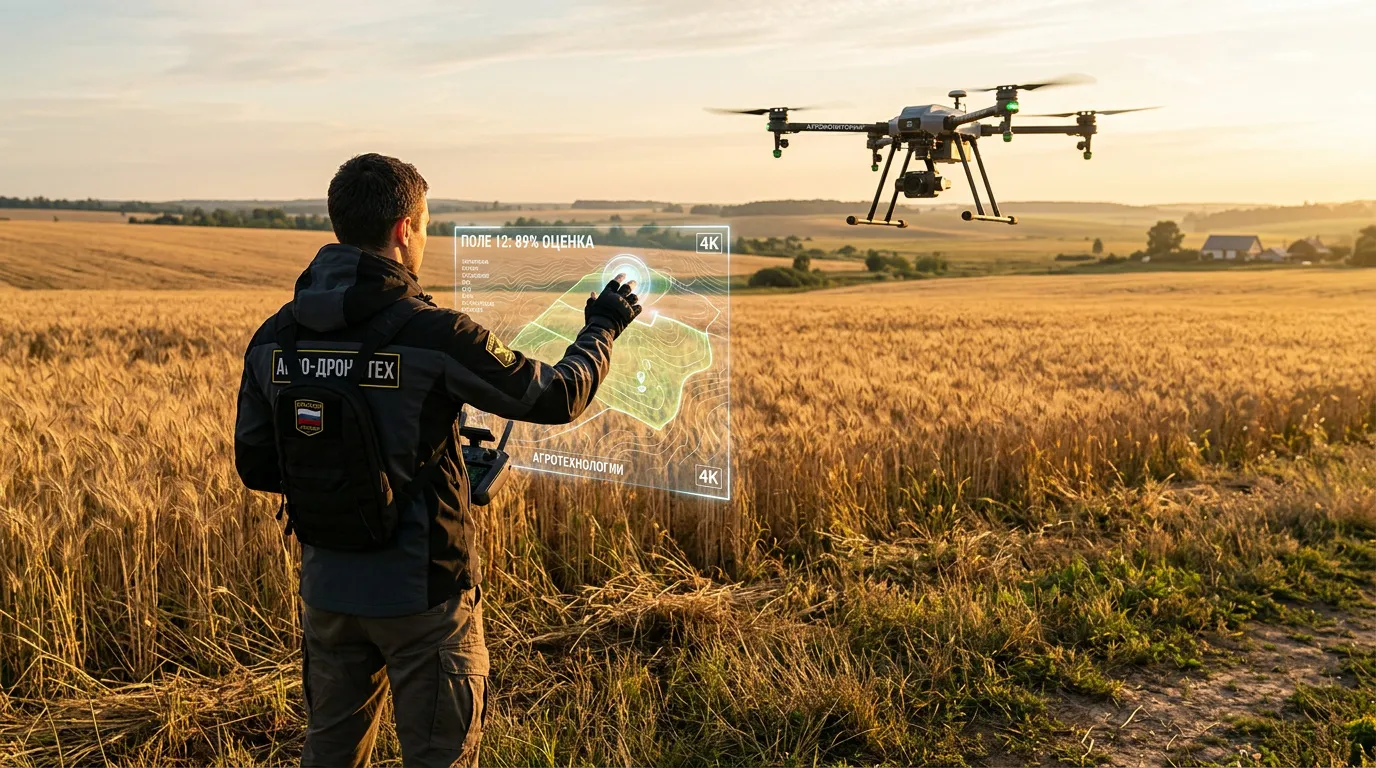
The developers are placing particular emphasis on agricultural drones. Backed by government support through the Bespilotnye aviatsionnye sistemy (Unmanned Aircraft Systems national project), the agricultural sector is expected to become one of the fastest-growing markets for the technology. By 2030, Russia’s fleet of agricultural drones is projected to reach 25,000 units, while farmland serviced with drone technologies is expected to expand to 30 million hectares, or roughly 25% of the country’s arable land. Analysts also expect the Russian agricultural drone market to grow to between 120 billion and 150 billion rubles ($1.5 billion - $1.9 billion).
Agricultural drones can reduce the use of crop protection chemicals by 15% to 25%, cut fuel costs by a factor of eight to 10 and, in some cases, eliminate the need for ground equipment in hard-to-reach areas. At the same time, airborne imaging systems must continue operating reliably during flight under wind loads, vibration, humidity and dust exposure to capture field imagery suitable for analysis. That data can then be used to monitor crop conditions more precisely and optimize fertilizer application schedules. The new CMOS sensors were designed and tested specifically for those operating conditions from the earliest stages of development.
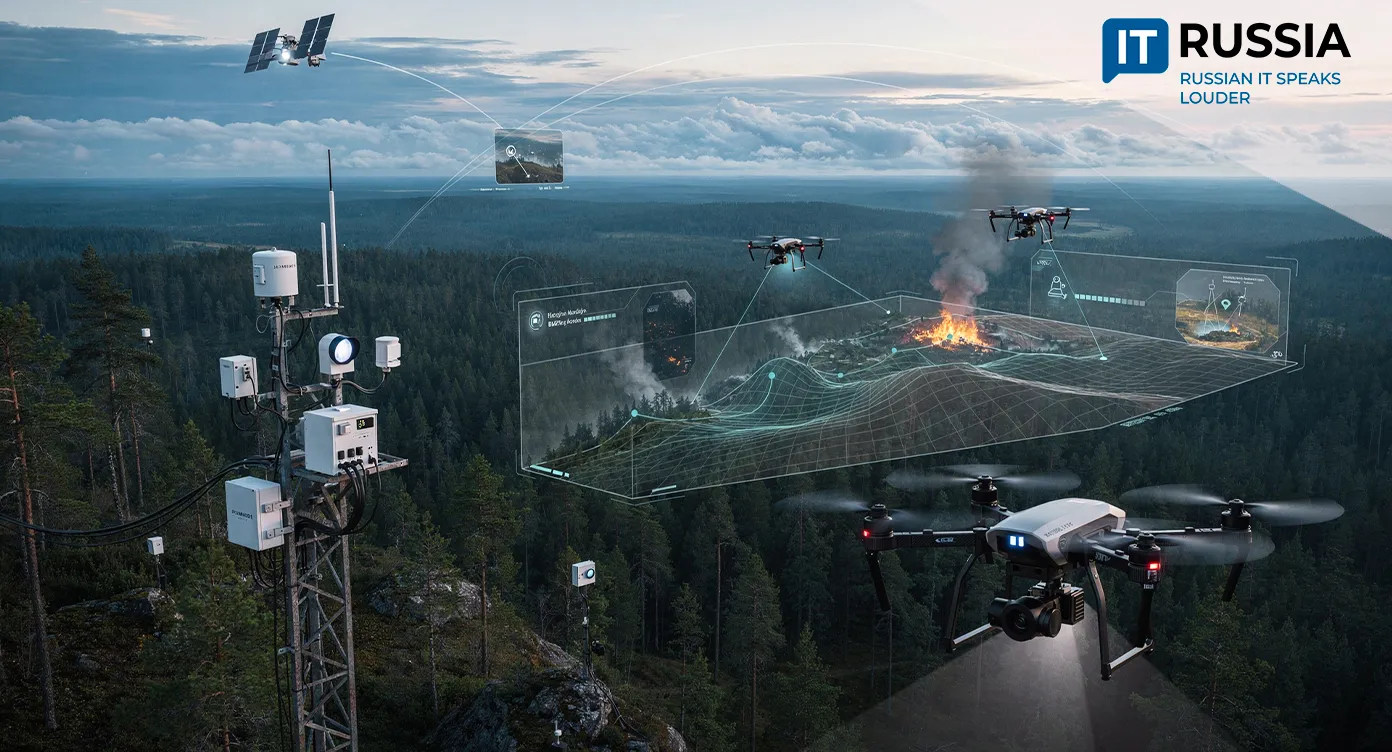
Beyond agriculture, unmanned aviation is expected to expand into a broad range of industries. In 2023, the Russian government approved a strategy for developing unmanned aviation through 2030 with a longer-term horizon extending to 2035. The initiative aims to establish an entirely new economic segment and launch large-scale production of civilian drones. According to government projections, the market could reach 1 million units by 2035, with 80% to 85% of those systems manufactured domestically.
Import Substitution in Industrial Optics
In addition to its 4K CMOS sensors, Tsentralny nauchno-issledovatelsky institut Elektron has developed a broad portfolio of photoelectronics technologies. The institute has already established serial production of photodetectors with 2048×2048-pixel arrays, a 5.3×5.3-micron pixel size, a 400 - 900 nm spectral range and frame rates of up to 50 Hz. In December 2025, the institute also announced development of a new compact high-speed CMOS sensor capable of shooting at up to 450 frames per second. That makes it particularly suitable for autonomous vehicles, where minimizing image acquisition latency is critical.
Since 2020, the institute has also been developing a fifth-generation elektronno-optichesky preobrazovatel (electro-optical converter). The hybrid vacuum sensor uses a photocathode to register electrons rather than photons, dramatically increasing sensitivity. Developers expect the platform to become a universal tool for ultra-precise tasks across science, industry and agriculture.
Institute engineers are also developing specialized fotoelektronnye umnozhiteli (photomultiplier tubes) for geological exploration systems that could allow operators to analyze the composition of oil, gas and ore formations in real time. The first prototypes, designed to withstand high pressure and temperatures of up to 160 degrees Celsius, were manufactured in November 2025. Following testing scheduled for December 2026, the institute plans to begin preparations for serial production. That would provide Russia’s geological exploration industry with advanced fully domestic sensors designed to compete with leading international products.
Taken together, the institute’s projects are forming an integrated ecosystem of photodetector technologies in which each product addresses a specific industrial niche while supporting a broader strategy of import substitution and technological resilience. The goal is to provide Russian industries with a stable domestic component base capable of operating in extreme conditions.