Russian Technology Is Bringing Movie Theaters and Creative Economy Growth to Remote Regions
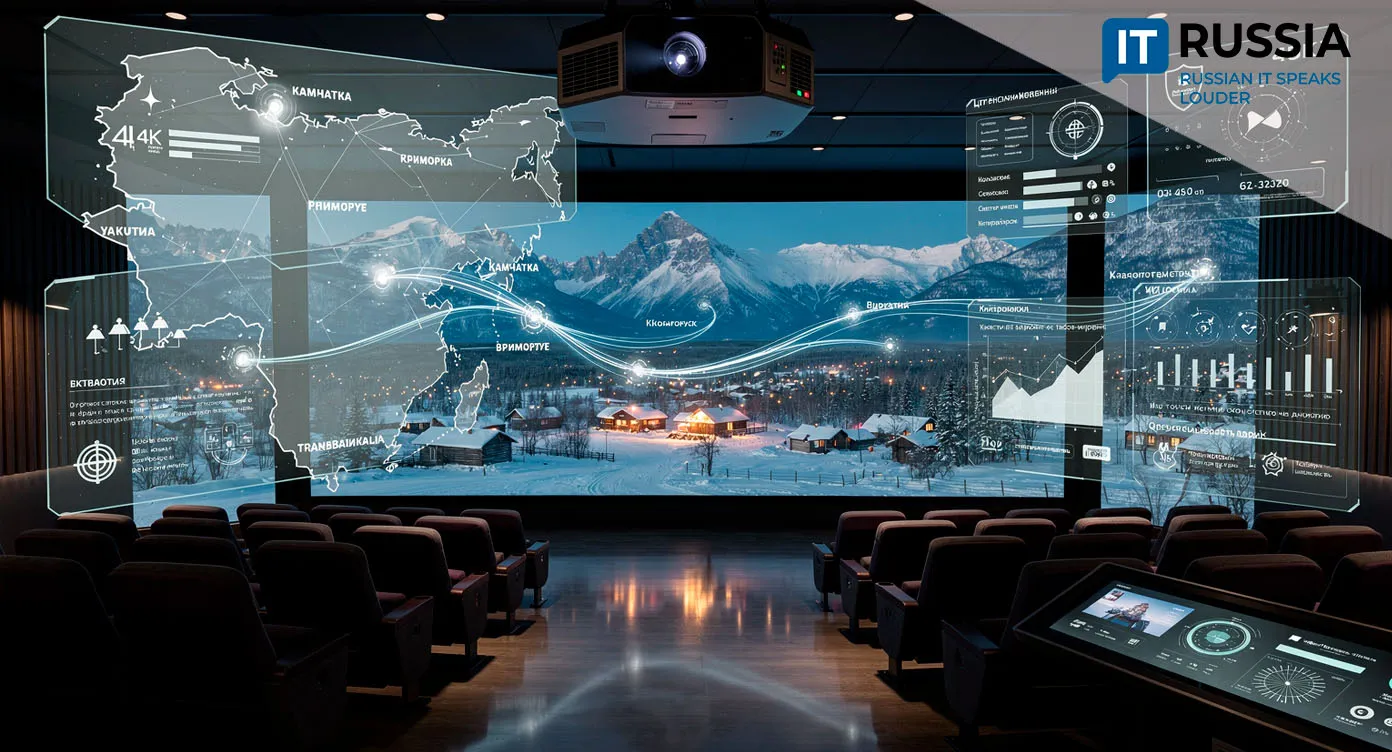
Yakutian company Extra Cinema has announced plans to launch 13 new movie theaters across seven regions of Russia’s Far East. The venues are expected to open in Zabaykalsky Krai, Kamchatka Krai, Primorsky Krai, Khabarovsk Krai, the Jewish Autonomous Region, Buryatia, and Yakutia. The announcement was made at the “Created in the Far East” creative industries forum in Ulan-Ude.
In Russia’s large cities, watching a high-quality movie on a big screen is rarely a problem. Audiences have access to the latest releases and, at times, restored classics in modern cinemas. But in remote territories, seeing films in high resolution with professional sound was, until recently, far more complicated. According to the industry outlet Promyshlennost Rossii, that situation began to change several years ago with the arrival of the Extra Cinema technology platform.
Cinema for Everyone
The innovative system developed in Yakutia makes it possible to organize high-quality film screenings in remote settlements. According to Pyotr Chiryayev, CEO of Extra Cinema LLC, the project’s main goal is to make cinema accessible to residents across all Russian regions. The technology allows people in rural communities to watch new film releases without delays despite logistical and internet connectivity challenges.
Hasan Gasanbalayev, executive director for social development at the Corporation for the Development of the Far East and Arctic, said technologies like Extra Cinema could turn regional film distribution into a growth point for creative industries in remote territories.

What Is the Extra Cinema System?
The Extra Cinema software-and-hardware platform is Russia’s first fully integrated digital cinema ecosystem. It includes a high-tech projector with a built-in media server supporting 4K UHD, a software platform with a protected digital content distribution system, rights-management tools, screening schedule and ticket sales services, and real-time attendance analytics.
Specialized software helps operators manage content and screenings. The system automatically tracks audience numbers and handles transparent settlements with rights holders. It also prevents piracy and helps enforce copyright protection.

Ninety-Three Movie Theaters in Hard-to-Reach Settlements
The project to equip rural cultural centers with these systems began in Yakutia in 2022. Today, the republic already operates 80 theaters within the network, including in Arctic districts.
Extra Cinema recently received a 10 million ruble grant (about $132,000) under the TechnoVostok 2030 program. The funding will support the launch of 13 additional movie theaters across Russia’s Far Eastern regions using the Extra Cinema platform.
The experience of Extra Cinema LLC shows that Russian regional companies are capable of creating infrastructure-scale technology solutions. The platform operates independently of foreign technologies and contributes to Russia’s technological sovereignty in the niche of digital film distribution.
The project supports the development of Russia’s domestic film market, potentially creating an additional distribution channel for Russian films while also generating demand for local content. For Yakutia, the initiative also promotes its own technological and creative school: the region, already known for its strong national cinema industry, is now offering the country infrastructure for film distribution as well.

Expansion Into International Markets
The technology has strong prospects for deployment across other Russian regions. Today, it is no longer a pilot project, but a fully operational film distribution system adapted for remote territories with relatively small audiences. The platform also carries significant export potential. In 2025, reports indicated that Extra Cinema planned to launch 50 theaters in India using its own projection technology. Last summer, the company began installing equipment in its first theater in the city of Tezpur in India’s Assam state. The project is aimed primarily at smaller Indian cities where collective movie-viewing infrastructure remains limited.
That is how a Yakutian IT development evolved from a regional cultural initiative into an international-scale platform.