Not Child’s Play: Moscow Graduates Its First Cohort of Young Drone Engineers
Students in the program didn’t just study theory. They soldered circuit boards, configured autopilots and launched drones at a real DOSAAF training ground. The course culminated in full-fledged UAV project defenses.
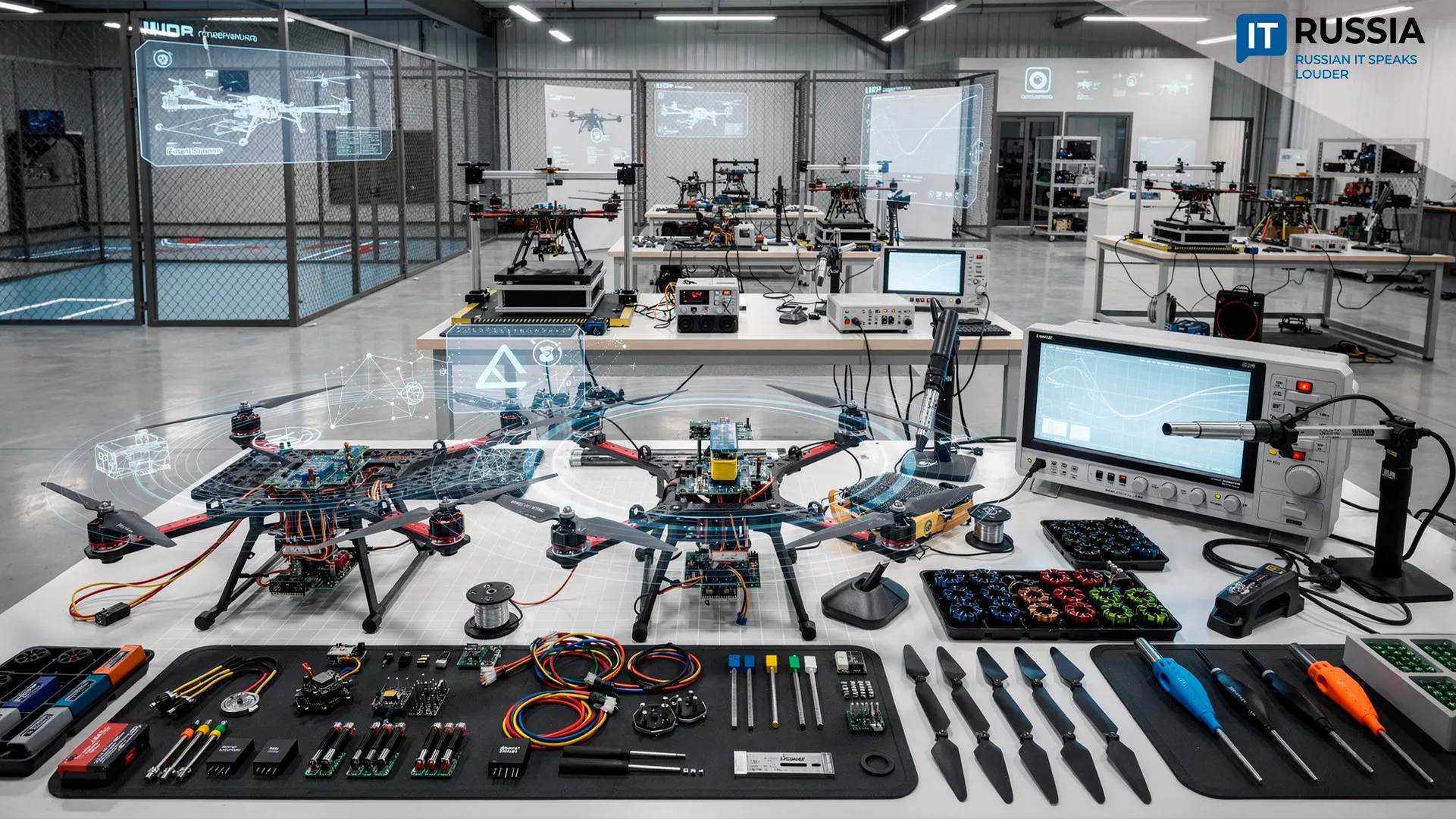
At the end of winter, Moscow hosted an unusual milestone in STEM education. In one of the city’s labs, 13 children aged 9 to 12 and 12 older teenagers presented what looked like professional-grade engineering projects. A course in designing, building and piloting real unmanned aerial vehicles ended not with a test, but with a showcase of working prototypes.
The program was intensive. Students did not just attend lectures on how drones work. They followed the full path of developers. Classes took place across four locations, from the NAUKA LAB showroom to a real training ground at the Tsentralny dom aviatsii i kosmonavtiki DOSAAF Rossii (Central House of Aviation and Cosmonautics of DOSAAF Russia). The IThub College of Information Technology partnered on the program.
The most hands-on part began when students picked up soldering irons. They worked with Russian design tools, assembled drones and configured them for flight. Instead of practicing in simulators, students learned to control real UAVs in live conditions.
“Flying a real UAV is much more realistic and far more challenging than playing on a simulator,” said a 12-year-old participant. “After these classes, I’ve decided to apply to MAI.” Even that single shift in career interest highlights the impact of the program.
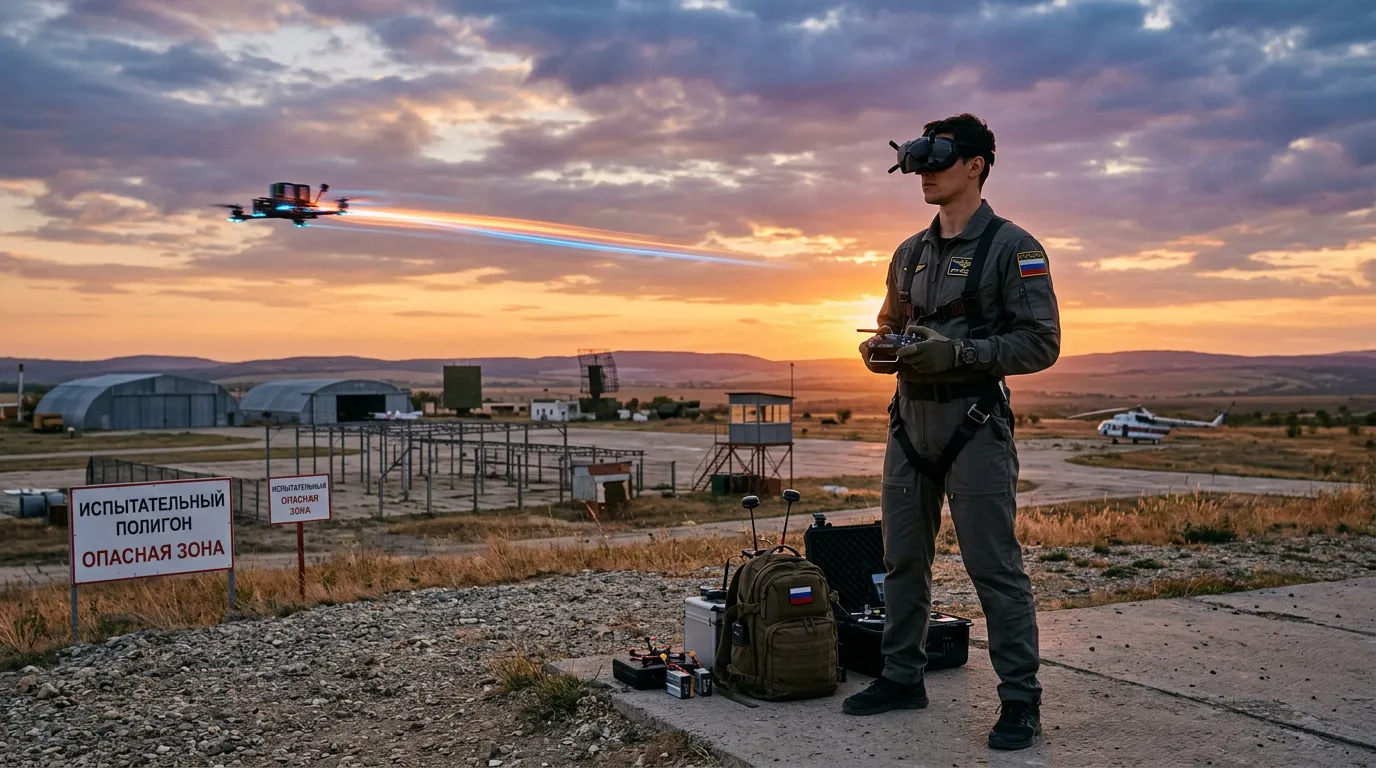
Motors Meet Machine Learning
The organizers challenged students with a design sprint. Teams were tasked with developing a unique UAV concept that could deliver real-world value and demonstrate economic feasibility.
One team designed a delivery drone for remote regions. Another developed a search-and-rescue UAV for MChS (Ministry of Emergency Situations). A third proposed a security drone.
Older students went further, presenting a concept for a self-learning UAV. Their design included a hardware and software stack powered by artificial intelligence.
Engineers from leading universities mentored the teams. At the final review, judges assessed not only flight performance but also market relevance, production cost and payback timelines. This was less a classroom exercise and more a startup-style engineering pitch.
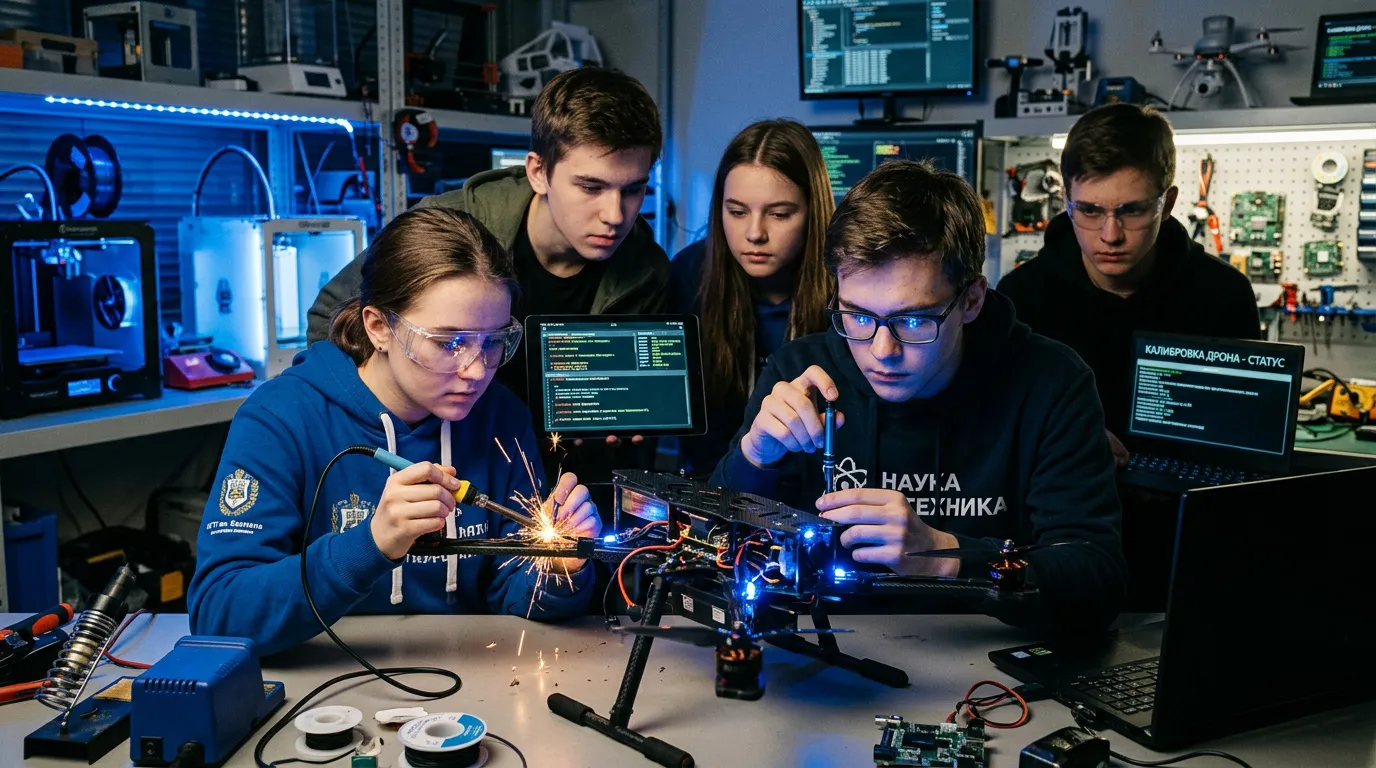
The hum of propellers and the smell of rosin
Russia’s technical education system is entering a new phase, with unmanned systems taking a central role. Minister of Science and Higher Education Valery Falkov recently announced that 17 leading universities are transitioning to updated programs. These include full-degree tracks focused on the design and operation of unmanned mobile systems.
Drone training is scaling to a national level. Universitet 2035 (University 2035) and Moskovsky aviatsionny institut (Moscow Aviation Institute) have already graduated their first instructors for UAV operator training. Participants ranged from 20 to 58 years old and came from across the country, from Yamal to Moscow. The program included nearly 150 hours of training, most of it hands-on at an airfield.
In Primorye, an entire training network is now in place. More than 500 students across eight colleges are studying UAV technologies this year. Instructors completed specialized training and now serve as mentors. The first 200 educators have already received certification.
Even in Chukotka, a remote Arctic region, a local college will launch a UAV operator program in the upcoming academic year. Over nearly four years, students will learn piloting, maintenance and payload operations.
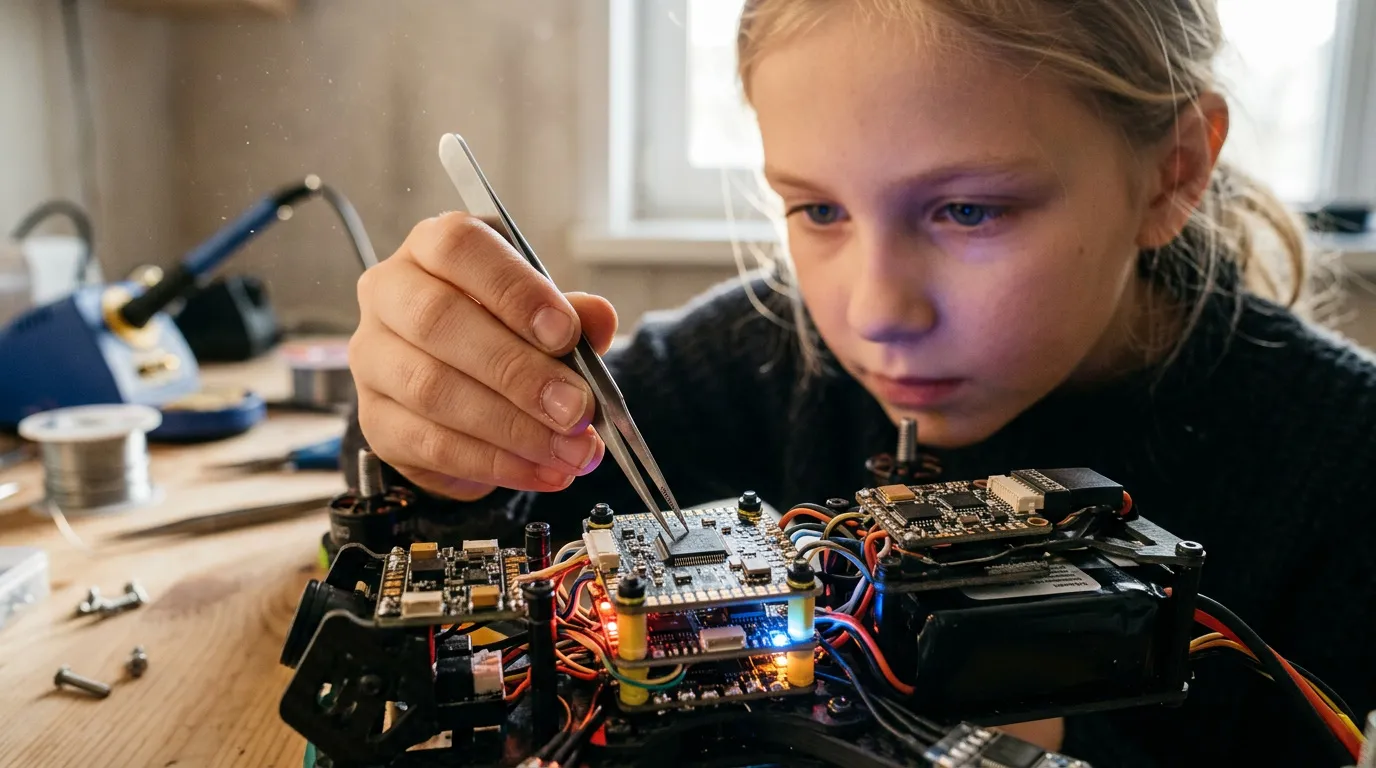
A Pipeline for Future Talent
“It was remarkable to see 10- and 11-year-old students and their older peers engage so deeply, with genuine enthusiasm, in discussions and hands-on exercises assembling and piloting their own drones,” said course curator Alexander Khodinov.
In Russia, drone technology is no longer a niche hobby. It is becoming part of mainstream education, moving beyond defense-focused universities into colleges and even schools.
A clear example comes from Ural Federal University. Students in its Tsifrovaya kafedra (Digital Department) do more than study. They develop new drone features for industry partners in real time, with top performers moving directly into jobs. The model points to a seamless pathway from school to university to employment.