

Novosibirsk Region Emerges as One of Russia’s Leaders in AI-Powered Missing-Person Searches
In 2025, AI systems in the region identified 60% more wanted individuals than a year earlier.

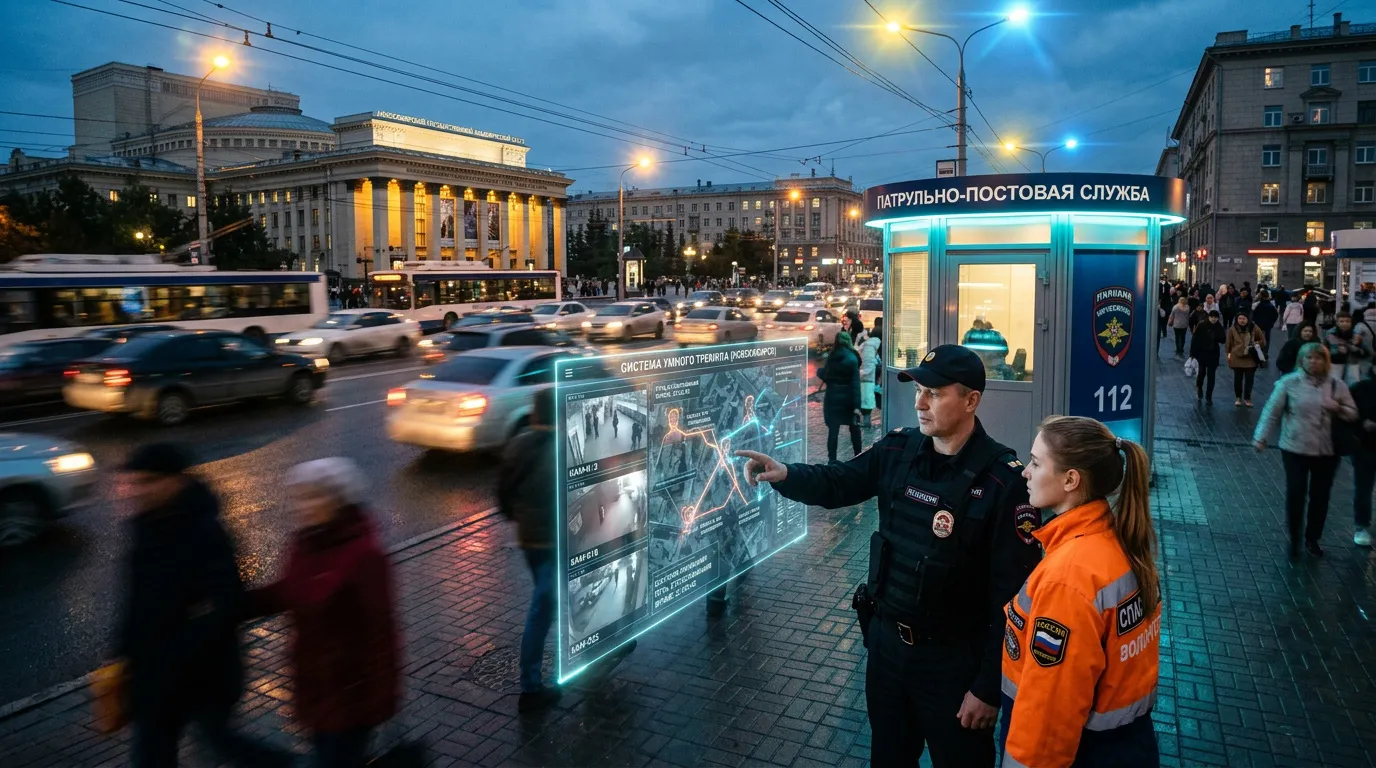
Authorities in the Novosibirsk Region reported significant results from deploying AI-powered video analytics within the regional APK Bezopasny gorod (Safe City hardware and software platform). According to Governor Andrey Travnikov, the region identified 2,800 wanted individuals in 2025, up 60% from 2024. The system now operates through more than 5,000 cameras, and a photograph of a missing child can be uploaded into the biometric video-analytics network within 10 minutes after a report is filed through emergency services 112 or police hotline 102.
AI Instead of Volunteer Search Teams
The Novosibirsk Region has become one of the first Russian regions to use AI video analytics as an operational tool for locating people, including minors. The rollout provides a practical example of how domestically developed AI systems are being integrated into public-safety and smart-city infrastructure. The region uses the Russian-built FindFaceMulti video analytics platform from NtechLab. The system helps authorities not only identify missing individuals, but do so during the first hours after disappearance, when the chances of locating them safely are highest. Automated video-stream analysis also reduces pressure on volunteer search groups and police personnel.
Cameras Will Also Monitor City Services
The Novosibirsk Region is building what could become a broader model for “smart” search operations that may later spread to other parts of the country. The FindFaceMulti platform is already deployed in many major Russian cities, including metropolitan areas in Krasnodar Territory, the Samara and Novosibirsk regions, Yamalo-Nenets Autonomous Okrug and Stavropol Territory. Moreover, integration between AI systems, emergency services, police departments and the regional APK Bezopasny gorod platform could eventually become an exportable case study, although much will depend on the legal frameworks of customer countries.
According to Rostekh, 1,400 cameras in the region are already connected to biometric video analytics, and authorities plan to expand that number to 2,200 in 2026. That expansion is expected to improve system performance because effectiveness depends not only on algorithms, but also on camera density, communications infrastructure, image-transfer speeds and police operating procedures. Public trust will also remain critical, requiring reliable data storage, cybersecurity protections and tightly controlled access to the system. Russia’s federal law No. 572 already provides a legal framework for those safeguards. Over time, the same video analytics infrastructure could also support other tasks, including detection of abandoned objects, silhouette recognition, crowd monitoring, public-transit oversight, sanitation management and urban maintenance.

Criminals Have Fewer Places to Hide
Between October 2023 and August 2024, the facial-recognition system deployed in the Novosibirsk Region helped authorities identify 721 offenders and 66 missing individuals. In 2024, the region and NtechLab agreed to expand the capabilities of the Bezopasny gorod platform. The following year, the region became the first federal subject in Russia to launch an AI-powered missing-child search system after testing the service with the regional Interior Ministry and operators of the 112 and 102 emergency lines.
A similar service, the Sfera video analytics system, already operates in Moscow’s public transportation network. Authorities say it has helped locate more than 1,800 missing people in the capital, including 379 children. Since 2020, the system has also helped identify more than 15,000 criminal suspects. According to 2024 data, Russian cities collectively operate more than 1 million surveillance cameras. Nearly one-third are already connected to facial-recognition systems, and by 2030 the total number of cameras could rise to 5 million, all equipped with AI capabilities.

Bezopasny gorod Will Search for Missing Children
AI analytics is now moving beyond the stage of technology demonstrations and becoming a routine operational tool for police departments, emergency services and municipal management. As a result, over the next two to three years such systems are likely to spread more actively across regions with mature Bezopasny gorod infrastructure.
The most in-demand area for biometric video analytics is expected to become the search for missing children. At the same time, broader deployment will increase requirements for access controls, data retention procedures, operator activity logging and independent oversight.