Severstal Launches a New Wave of Welding Shop Automation
From robot development to factory deployment, Russia is building a full-scale industrial robotics ecosystem.
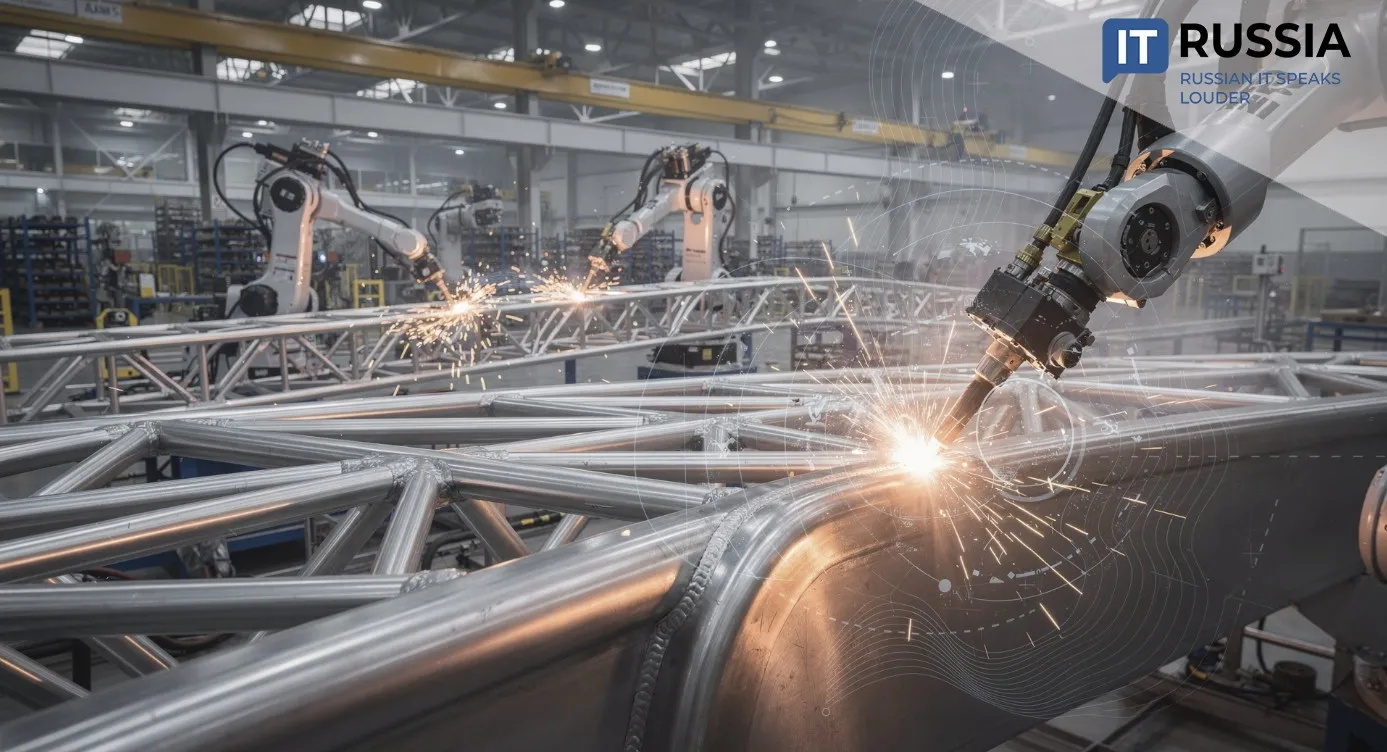
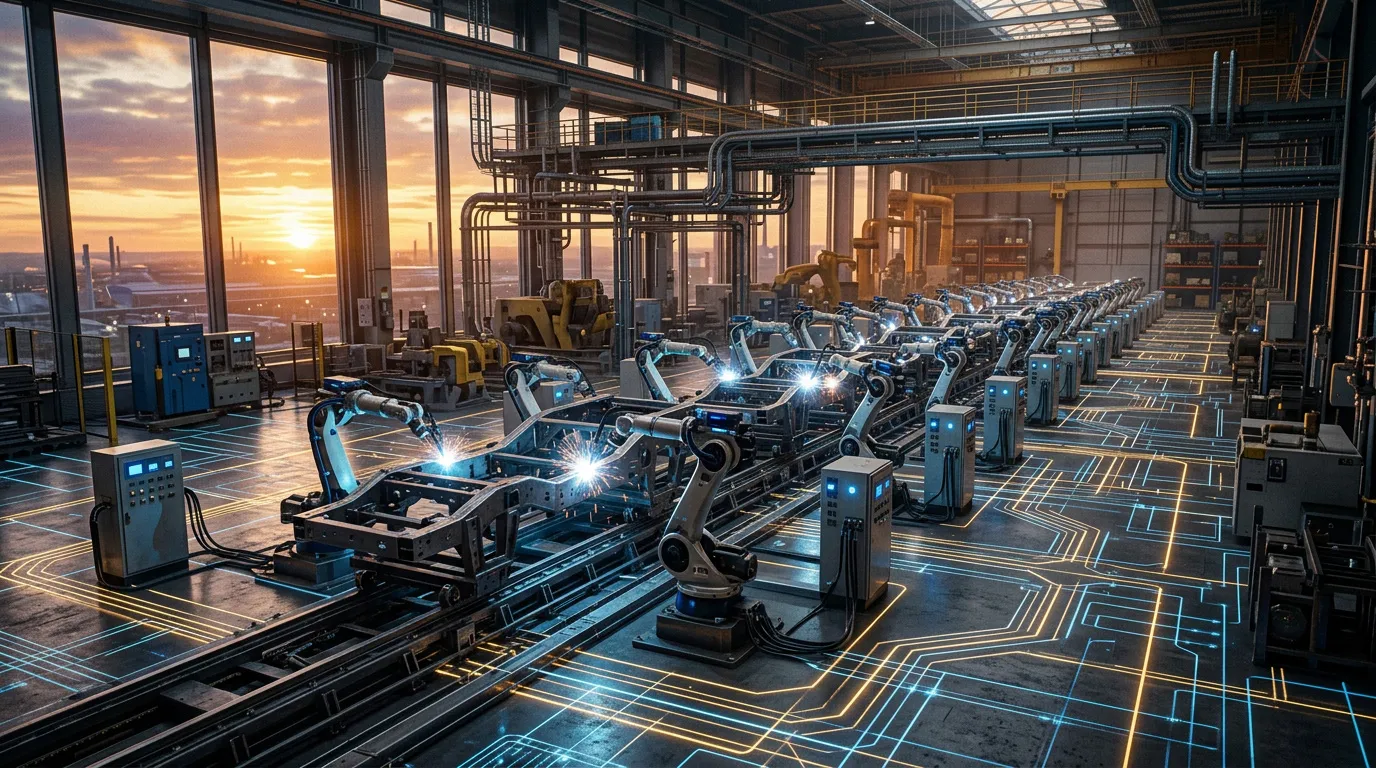
Severstal Steel Solutions has commissioned new robotic welding systems at the Obninsk Steel Structures Plant in the Kaluga Region.
The project targets the structural steel segment, where automation has traditionally ranked among manufacturing's toughest challenges because every fabricated component differs in size, geometry and weld configuration.
Powered by machine vision, the robots identify individual parts on their own, adjust to each component's dimensions and complete welds with high precision. That helps raise both productivity and product quality while addressing skilled labor shortages. In August, two more robotic welding systems will begin operating at the company's plant in the Tula Region, followed by two additional systems each at facilities in Oryol and Cherepovets in 2027. Over the next year, the company plans to automate 90% of its welding operations. Looking further ahead, it is also evaluating robotic systems for applying corrosion-resistant and fire-protective coatings to steel structures.
Severstal Steel Solutions and the Kaluga Region have built a long-standing partnership. The company has completed several projects in the region, including structural steel for Kaluga's Palace of Sports and the Olimp Sports Center in Obninsk. Meanwhile, alongside production modernization, the partners continue expanding cooperation in workforce training.
From Robotic Farms to Humanoid Robots
The Kaluga Region ranks among Russia's top five regions for industrial robot density, with more than 100 robots for every 10,000 manufacturing workers. By comparison, Russia's national robot density stood at 40 robots per 10,000 workers in 2025, and the country aims to reach 145 robots per 10,000 industrial employees by 2030.
Robotics deployment now spans virtually every major manufacturing sector across the region. Automotive production, pharmaceuticals, wood processing, railway equipment manufacturing and dairy farming lead the way. As early as 2012, the region launched its "100 Robotized Farms" program, which was later replicated in more than 40 Russian regions. One of the clearest examples of Kaluga's technological leadership is Aynet, a humanoid robot built by AGR Holding that became one of the standout exhibits at SPIEF 2026. Running on Russian-developed software, Aynet serves as a full-scale industrial assistant capable of recognizing objects, moving materials and conducting workplace safety briefings.
Investing in the Future
The region has introduced a broad package of incentives and tax benefits to support manufacturers deploying robots and automation systems. In 2025, the regional Industrial Development Fund backed projects worth nearly 318 million rubles (about $4.3 million). Russia's federal Industrial Development Fund financed 36 major projects totaling more than 21.7 billion rubles (about $295 million). Companies developing their own robotics and sensing technologies can also receive grants of up to 20 million rubles (about $272,000) from the Foundation for Assistance to Innovations. Through the national Kadry (Workforce) project, the Kaluga Vocational Education Technopark trains specialists under both standard curricula and customized programs tailored to the needs of individual manufacturers.
A New Industrial Reality
Kaluga's experience reflects a broader nationwide trend. In 2021, KAMAZ began pilot deployment of a robotic welding system at its Press and Frame Plant using the Russian-built A12-1450 six-axis robotic manipulator developed by the Kazan-based company Eidos Robototekhnika. The robot was added to Russia's Ministry of Industry and Trade registry in 2023. The results have been significant: welds are completed in one minute, producing smooth, durable joints that require no additional finishing. Equipped with a rotary positioner and an integrated safety system, the A12-PVHH-600 robotic welding cell can replace up to four welders while performing MIG/MAG arc welding. By 2030, KAMAZ plans to deploy as many as 120 robots, primarily for welding and painting operations.
In 2025, the Bryansk Machine-Building Plant, part of Transmashholding, commissioned a robotic hybrid laser-arc welding system. The technology combines conventional arc welding with high-energy laser radiation, bringing together the advantages of both processes. As a result, weld quality has improved significantly while processing speeds have increased by a factor of nine to ten. Investment in the project exceeded 110 million rubles (about $1.5 million).
From Code to the Production Line
Russia is now actively building a nationwide network of industrial robotics centers. The first opened in 2024 at Innopolis University in Tatarstan, and seven additional centers followed in 2025. Strong robotics competency centers are already operating in the Moscow Region, Perm Krai and several other parts of the country.
The industry is also becoming increasingly specialized. In 2025, KAMAZ, Korporatsiya Robotov (Robots Corporation) of Element Group and Eidos Robototekhnika agreed to establish a dedicated Automotive Robotics Development Center. The center will focus on developing next-generation technologies while promoting Russian-made industrial robots in both domestic and international markets.
By 2030, Russia plans to establish more than 30 robotics centers with a combined budget exceeding 15 billion rubles (about $204 million). Together, these initiatives are creating a complete robotics ecosystem that spans robot design, domestically developed software and large-scale industrial integration.