Teaching the ChatGPT Generation: How MPGU Is Preparing Educators for a New Era
Moscow Pedagogical State University is opening enrollment for new programs focused on AI, media linguistics, and digital design.

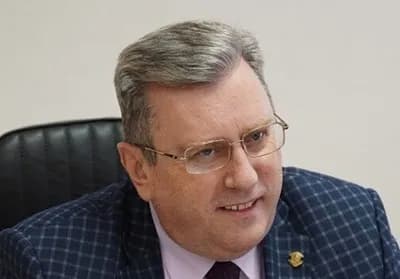
For the first time, the university will offer degree tracks including Foreign Language and Intelligent Technologies in Education; Mathematics, Computer Science, and Media Education; and Computer Science and the Development of Digital Educational Products. Additional programs include Media Linguistics and Media Journalism with English, Digital Intercultural Communication (Chinese Language) and Multimedia Design, as well as Pedagogy and Media Support for Children's and Youth Movements. Rector Alexey Lubkov says the teaching profession is becoming more prestigious, and expectations are rising along with it. Today's teachers must be comfortable using modern technologies and designing learning environments that help students grow.

Pedagogy for the 21st Century
First, the numbers. Lubkov pointed to a striking trend: enrollment in teacher-training programs for subject specialists, psychologists, and special-education professionals has been growing by 20-25% annually over the past three years. History and social studies, Russian language and literature, foreign languages, and natural sciences have proven especially popular, meaning the number of future physics and biology teachers is also increasing. At the same time, admitted students maintain an average Unified State Exam score of around 80, suggesting that many of those entering teacher education were strong students themselves.
Why is this happening now rather than five years ago? Because the architecture of higher education itself is changing. MPGU is not simply a university; it is a participant in the presidential pilot project reshaping Russia's educational-degree structure. The country is moving away from the Bologna bachelor's and master's model and introducing a system built around basic and specialized higher education. MPGU is among the institutions leading that transition.
The reform offers greater flexibility. Program lengths can vary, and curricula are being designed around labor-market needs. Other institutions are moving in the same direction. Moscow City University, for example, plans to launch pilot AI-focused programs of its own. University leaders explicitly describe their goal as the technologization of education, including the use of AI-powered simulation platforms.

Instructional Designers Who Can Code the Lesson
These changes are a response to needs emerging directly from schools and communities. In Moscow, career-focused secondary education has advanced to the point where 145 schools have opened more than 130 automated media studios. These facilities are used by students pursuing journalism and communications in depth. Today, 6,100 high-school students are already producing video stories and podcasts and, after earning an initial photography credential through college-level coursework, graduate from high school with professional portfolios.
But who will teach these students when they move on to higher education? Teachers who have no experience with video editing or multimedia design are unlikely to meet that demand. That is one reason MPGU is launching Media Pedagogy and Educational Development. Its six-year Mathematics, Computer Science, and Media Education program was designed specifically to support media-focused classrooms. The emerging model is a teacher who can deliver advanced mathematics while also teaching students how to film science-communication videos.
In recent years, Russia has devoted considerable attention to the question of whether students can use ChatGPT to complete assignments. To establish guidelines, the Ministry of Education and the Agency for Strategic Initiatives convened discussions with major technology companies including Yandex and Sber. The resulting recommendations are intended to legitimize AI assistants while preventing them from replacing actual learning. That is where MPGU's new Artificial Intelligence Technologies in Education program becomes relevant. Graduates receive qualifications as instructional designers and curriculum methodologists. This is no longer the traditional image of a classroom teacher. It is a professional who architects learning experiences using data-driven tools.

Three Roles in One Profession
Within a few years, a new generation of educators - today's applicants choosing AI-focused programs - will be working with the next generation of students. They will teach children how to distinguish facts from misinformation on social media, demonstrate how AI can support learning, and spark interest in subjects such as physics through projects like creating science-explainer videos.
MPGU's admissions campaign begins on June 20. Applications can be submitted through Gosuslugi (State Services Portal). One important change has also been introduced: graduates of vocational colleges may now use internal entrance examinations only when applying to programs aligned with their previous specialization. Those seeking to switch fields will need to take the Unified State Exam. In addition, widows and widowers of participants in the Special Military Operation have been granted the same admissions benefits as service members themselves through a dedicated quota system. Targeted enrollment places are now tied to specific sponsoring organizations.
Moscow City University says its goal is to help build a unified foundational core for teacher education across the country. That means lessons learned by pioneering institutions could eventually spread throughout Russia's regions. There is, of course, a risk of overloading educators. After all, they are increasingly expected to be curriculum specialists, designers, and technology professionals at the same time. Yet judging by the degree to which employers are already involved in shaping these programs, the market is not looking for a Universal soldier. It is looking for professionals who can communicate with students in the language they already speak - the language of technology.