How AI Is Helping Reconstruct the Faces of Soldiers Killed During World War II
Official search operations have entered a new era: AI can now help reconstruct what fallen soldiers looked like, making identification easier and helping preserve historical memory.
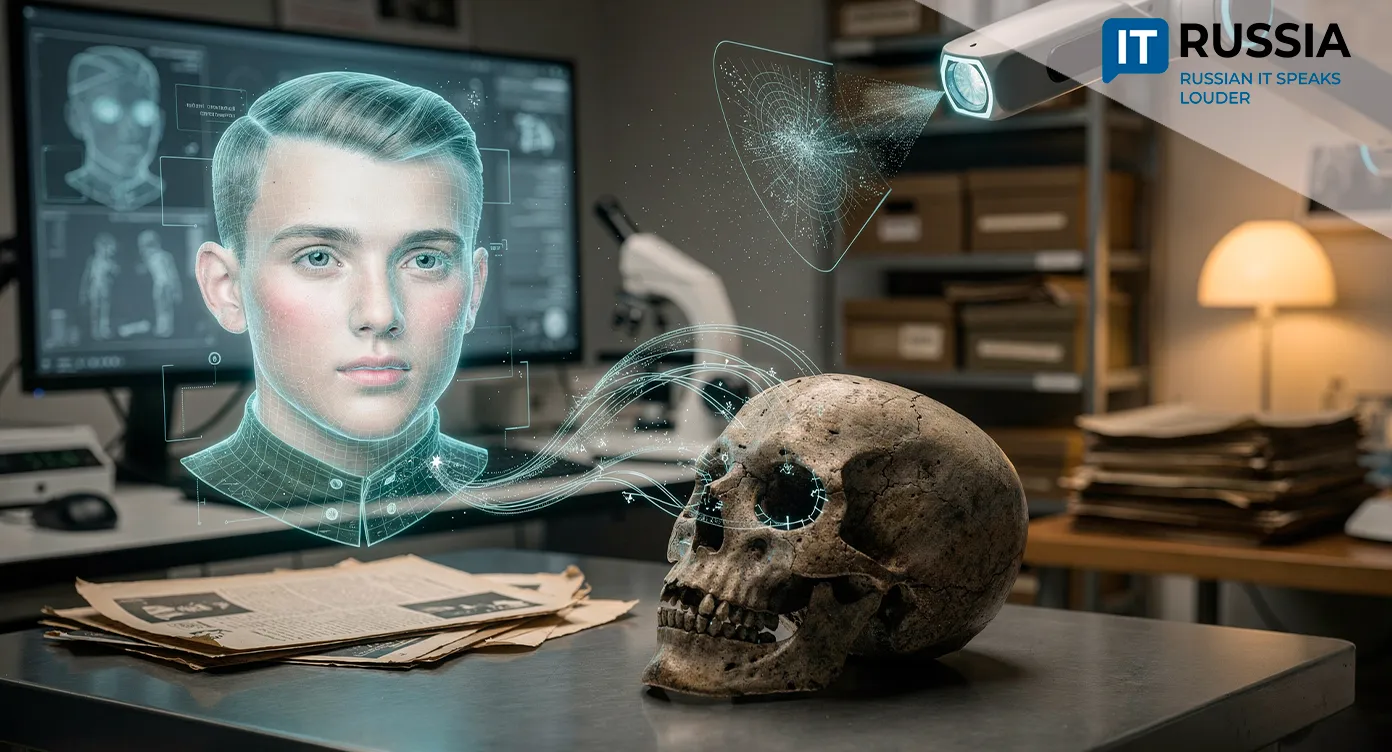
Decades after the end of World War II, Russian search teams continue their mission. They search for fallen soldiers, restore their names, and return personal belongings to surviving relatives. Thanks to advances in technology, the process has become far more effective. Search groups in the Moscow region are increasingly using artificial intelligence and 3D scanning to identify soldiers and locate their families.
The entire process follows the principles of military archaeology: meticulous documentation of discoveries, anthropology, and even genetics. Specialists can reconstruct a soldier’s appearance from the skull. After that, automated searches for relatives begin through social networks.
A Breakthrough in Archaeology
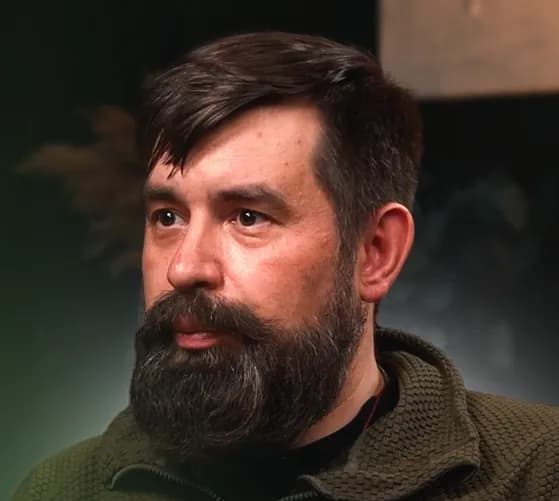
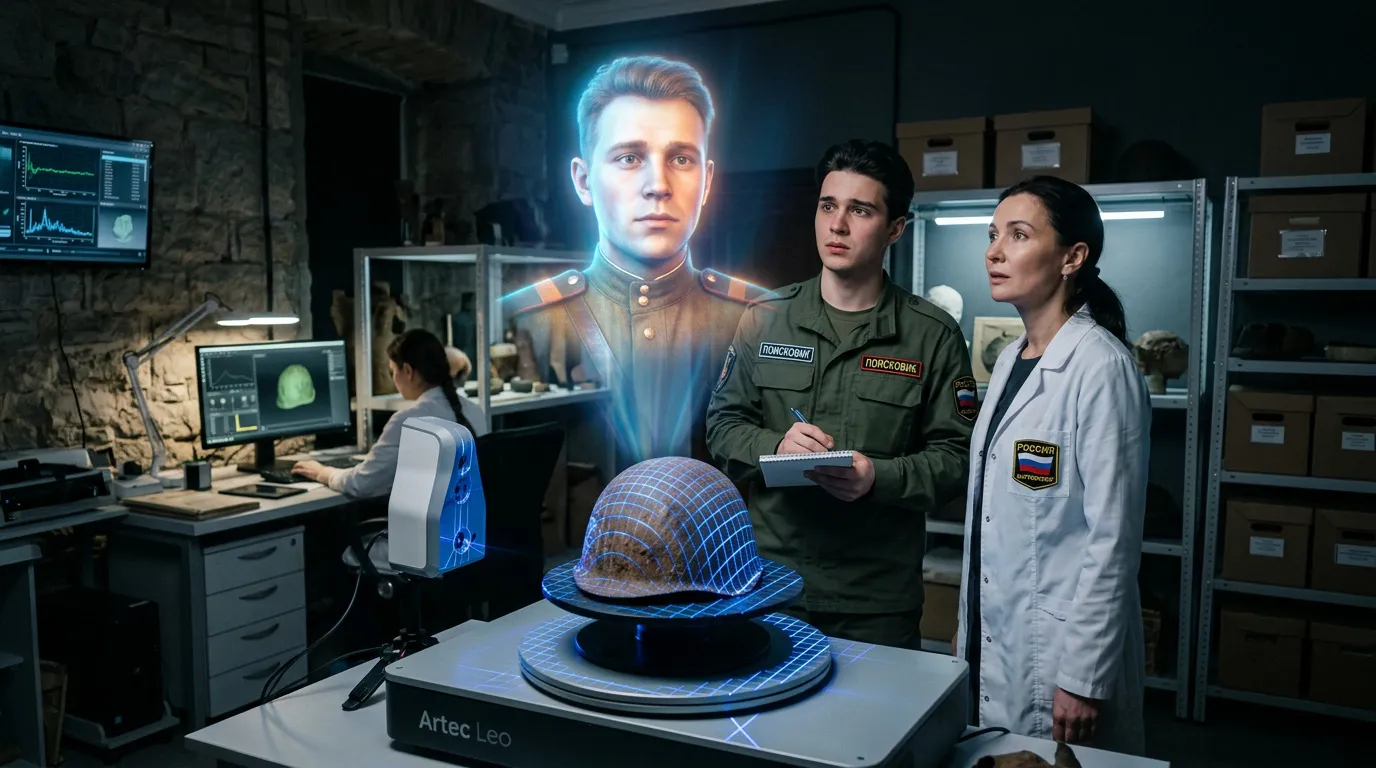
“The search movement has its own genetics laboratory in Kazan. We are also testing 3D skull scanning. Previously, anthropologists reconstructed facial appearance manually. Now software shells and artificial intelligence do the work. We can see what the soldier looked like during his lifetime,” said Anton Kuznetsov, chairman of the Regional Council of Search Teams of the Moscow Region.
AI provides high accuracy for the method, while social networks increase the chances of finding relatives who care about family history and their own heroes. Experts believe the field will continue to develop.
“The time is not far off when a restored facial image will allow social networks to compare a recovered soldier with his descendants using open databases where relatives upload photographs – projects like Doroga Pamyati [Memory Road - ed. note] and Bessmertny Polk [Immortal Regiment - ed. note] – and establish a connection to their great-grandfather,” Anton Kuznetsov said.
Based on the Gerasimov Method
The method of reconstructing a person’s appearance from skull remains was developed in the 1940s by anthropologist Mikhail Gerasimov. Thanks to his work, humanity was able to see the faces of distant ancestors. Today, the Gerasimov method is used in forensics, in identifying the remains of historical figures, in physical anthropology, and in museum studies. But the method is extremely labor-intensive. It includes skull restoration with wax-resin compounds, craniometry, graphic reconstruction based on skull contours, and plastic reconstruction using sculptural clay.
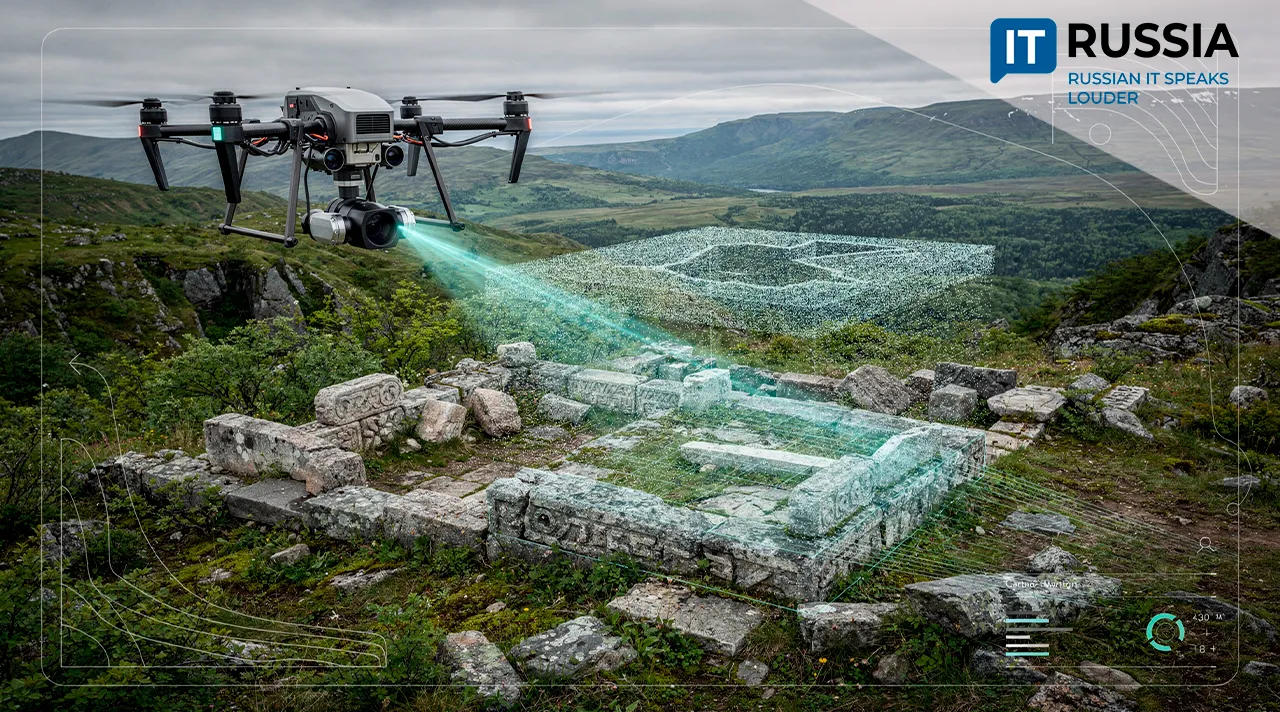
Everything changed with the arrival of 3D scanning. It moved every stage of facial reconstruction into a virtual environment. Just as importantly, it made the process contactless, allowing specialists to work with extremely fragile remains without risking damage.
In 2019, the Institute of Ethnology and Anthropology of the Russian Academy of Sciences was equipped with several 3D scanners. Their primary use is scanning skull remains for highly accurate facial reconstruction.
The use of 3D scanning in search operations marks a technological transition to a new level: from classical archaeology and manual anthropological reconstruction to digital modeling, DNA analysis, and automated matching systems.
Not for Profit
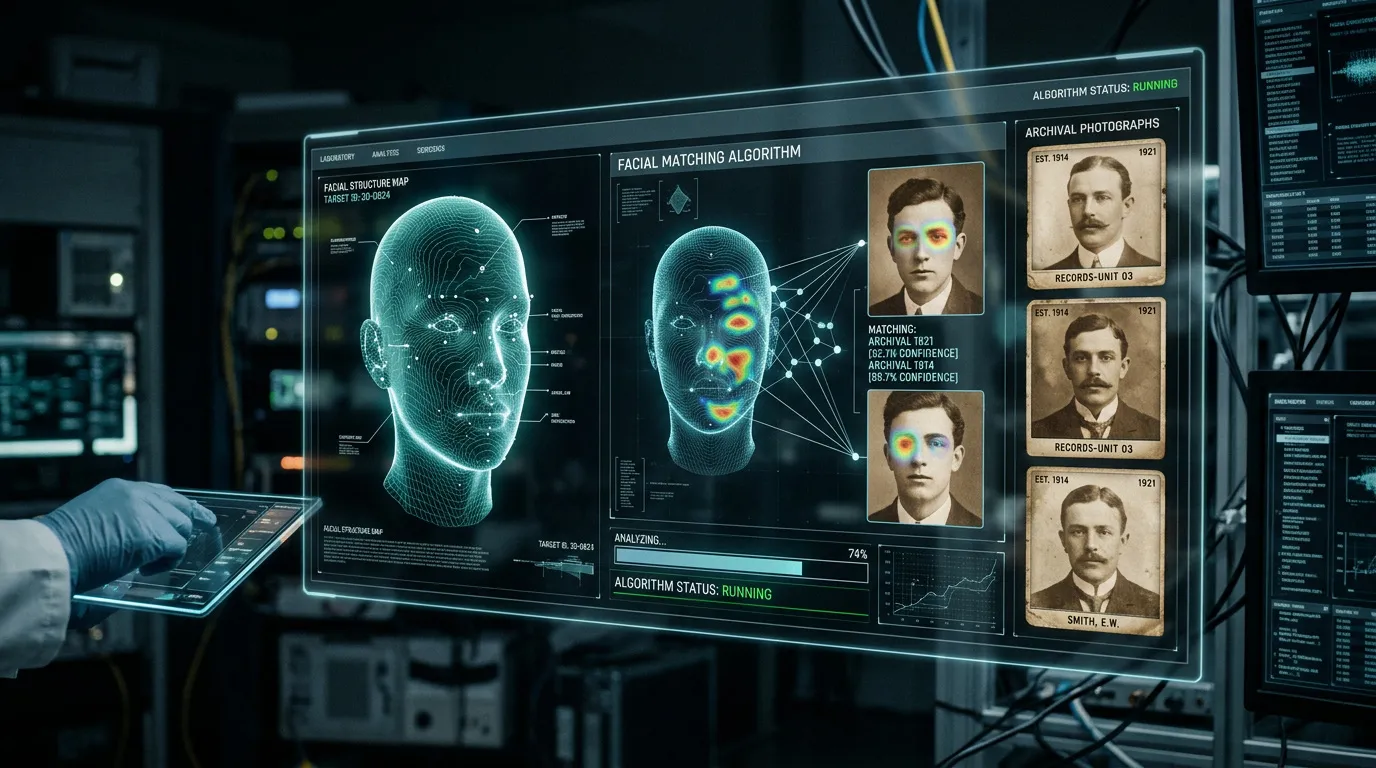
Neural-network algorithms trained on archival photographs help reconstruct facial features with high precision. The Search Movement of Russia already uses photographic documentation, anthropological analysis, DNA testing, and 3D skull scanning. Digital models are preserved in databases for future research.
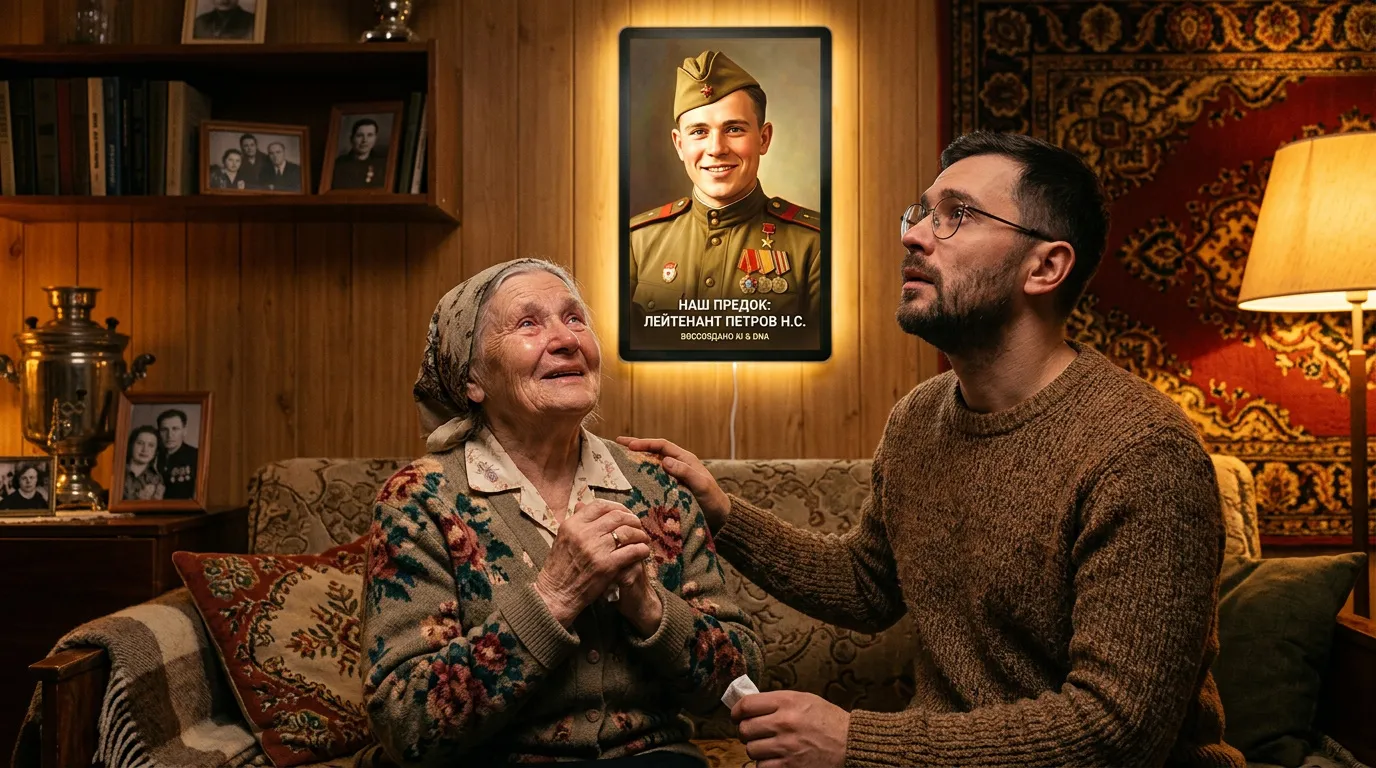
This is an important example of AI being applied to humanitarian projects and historical memory preservation. Russia already operates large-scale digital archives dedicated to World War II. The Pamyat Naroda portal allows users to search documents about war participants, military awards, burial sites, and combat operations. Families gain another opportunity to learn the fate of missing relatives, locate burial sites, and compare family photographs with reconstructed images.
Search operations are becoming an interdisciplinary process that brings together archaeologists, anthropologists, IT specialists, historians, and social-media experts.
In the future, the number of projects using 3D scanners to reconstruct remains will continue to grow. The most promising idea is an integrated platform where AI ranks likely matches while anthropologists, geneticists, archivists, and relatives make the final decision. With sufficient funding, a unified technological ecosystem could emerge: a standardized database of 3D scans, genetic profiles, archival records, photographs, and reconstructions. That would accelerate the identification of unknown soldiers and make search operations far more effective.