Artificial Intelligence Will Help Restore the Far East's Film Archives
The creators of the documentary The Far East, Up Close plan to use artificial intelligence to restore archival film footage and photographs. Producer Filipp Kudryashov said neural networks will help improve the quality of historical materials by removing damage without altering the original content.

The documentary The Far East, Up Close is currently being filmed across Russia's Far East to mark the centennial of the region's establishment and the anniversary of the Far Eastern Newsreel Studio. The film is scheduled to premiere on the Kultura TV channel in December 2026. It will explore the origins of the region, its natural landscapes and geography, and the lives of the people who came to call the Russian Far East home.
Traveling 100 Years Into the Past
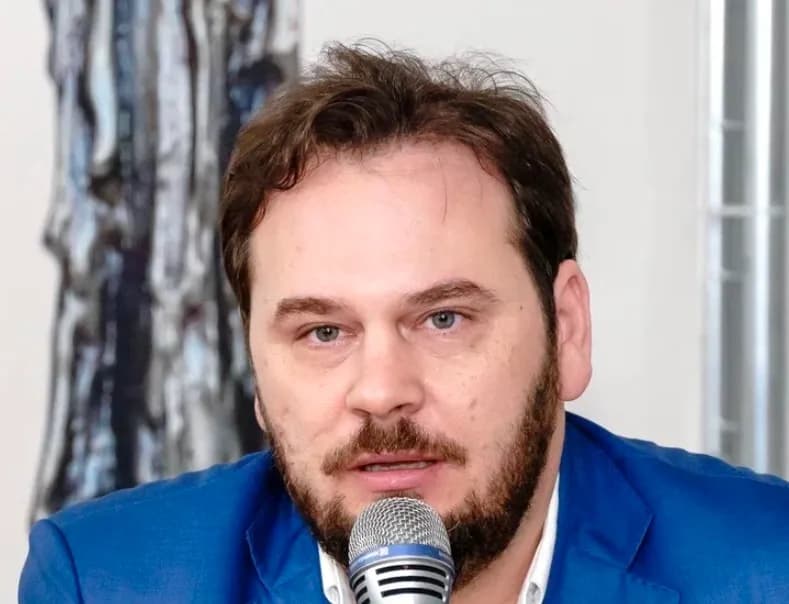
Producer Filipp Kudryashov, president of the Guild of Producers and Film Production Organizers of the Russian Filmmakers Union, said the documentary will combine newly filmed footage with restored archival materials. Artificial intelligence technologies are to be used to carefully restore historical film reels and photographs.
The filmmakers are taking a measured approach to AI. Kudryashov said artificial intelligence can be either a creator's ally or its adversary, depending on how it is used. AI is well suited to carefully restoring historical footage, but using it for colorization may introduce historically inaccurate details into the original material. Heavy reliance on AI in archival restoration can sometimes distort the creators' original intent, and, he said, that is precisely what professionals should avoid.
"I believe we should only be talking about restoring archival footage because, frankly, I am opposed to colorizing historical materials. Once you start adding color to old photographs, unexpected problems can arise," Kudryashov said.

How Can Neural Networks Help Film Historians?
Across Russia, AI is playing a growing role in documentary filmmaking and the preservation of audiovisual heritage, including film archives. In April 2026, Gosfilmofond of Russia, working together with the Russian Academy of Sciences, announced plans to introduce AI into film restoration workflows. The goal is to simplify the technical aspects of restoration while leaving expert judgment in human hands.
AI algorithms can remove scratches, stains and blur, improve sharpness, stabilize footage, restore contrast and recover fine image details. The technology makes documentary footage clearer, brings previously unwatchable archival films back into circulation, and allows audiences to experience history in a format better suited to modern displays.
Yet, experts stress the importance of maintaining the right balance between automation and human expertise. Automated restoration should remain under the supervision of archivists and film historians because neural networks can inadvertently compromise historical authenticity.
Russia holds one of the world's largest audiovisual archives. In 2022 alone, Gosfilmofond digitized roughly 5,000 archival items representing 2,662 feature films, while 22 films underwent full digital restoration of both image and sound. As more archival collections are digitized, the pool of material available for automated restoration continues to grow. AI is becoming indispensable because it dramatically accelerates the restoration process.

Specialized IT Solutions for Archive Preservation
The Far East, Up Close illustrates how artificial intelligence can be applied to preserve historical heritage. Over the coming years, AI is expected to serve primarily as an assistive technology for restoration, handling tasks such as frame cleanup, image stabilization, resolution enhancement, audio restoration and defect detection. Notably, AI is being adopted not only by national archival institutions but also by regional film studios. The growing use of these technologies underscores the need for specialized Russian IT solutions designed specifically for digital cultural preservation, using restoration methods that protect original materials while avoiding significant alterations.