AI Deployed at Bystrinsky Mining Complex
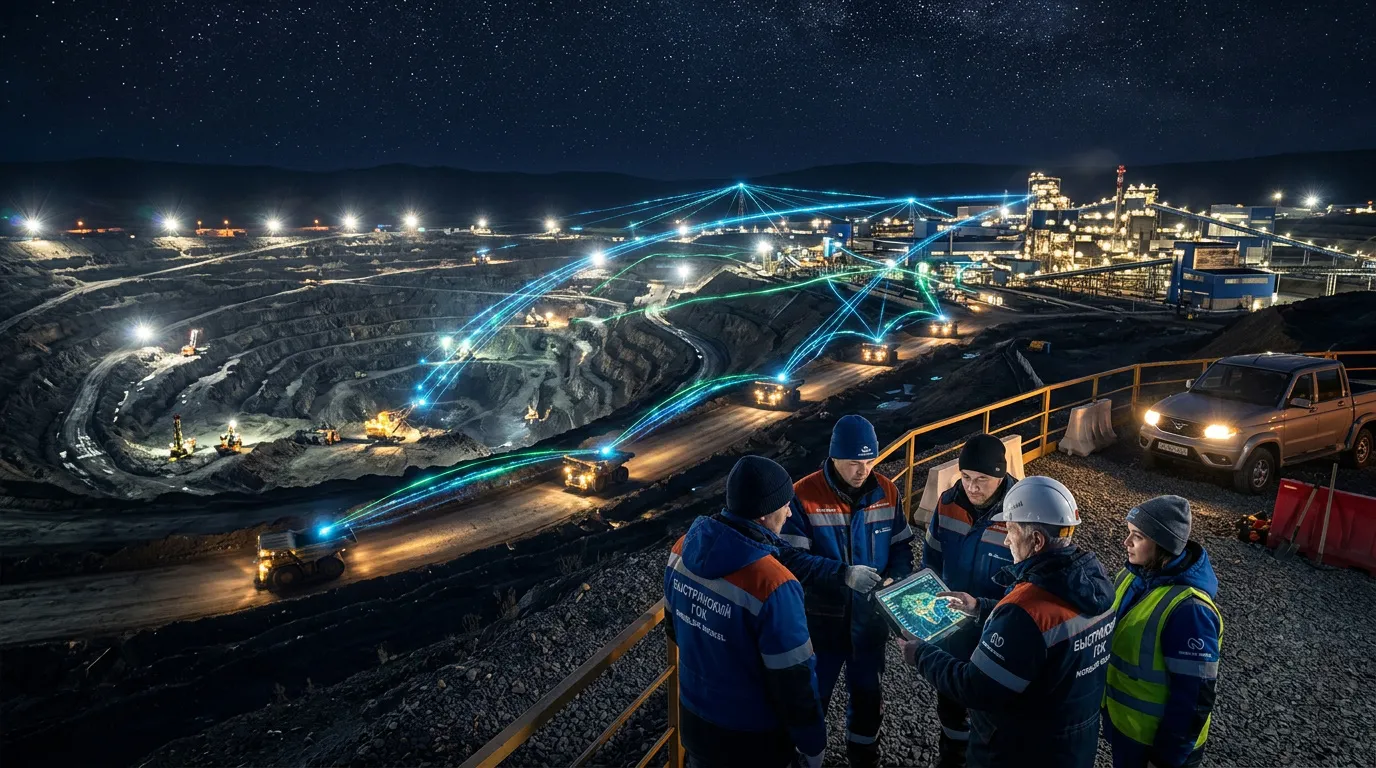
At the Bystrinsky mining and processing plant (a project of Nornickel), AI is integrated into several core operational and auxiliary workflows. A system of end-to-end optimization builds predictive models using historical and real-time data and generates recommendations for production management.
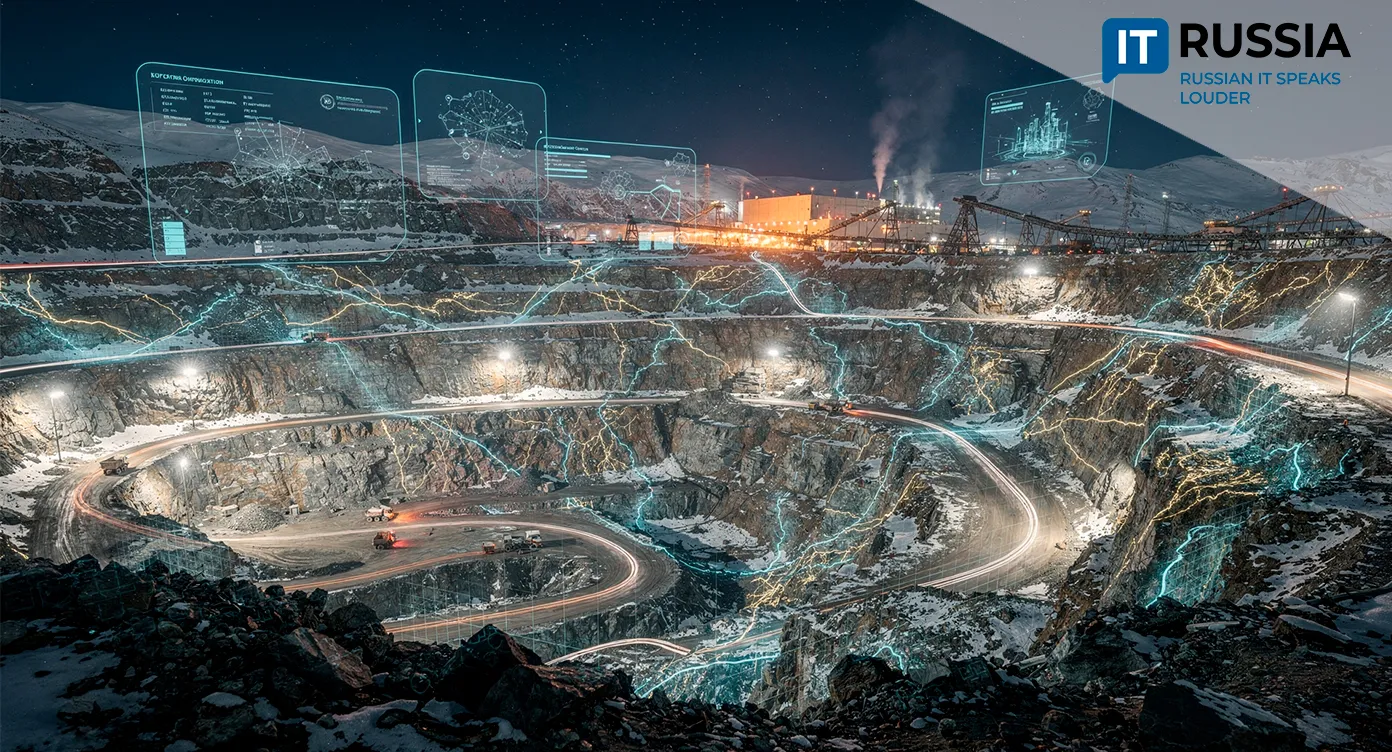
The plant is developing the Bystrinskoye polymetallic deposit, one of the largest in Russia. The operation includes multiple facilities: four open-pit mines, two of which are currently active, a processing plant, maintenance workshops, substations, a fire station, storage facilities, and railway infrastructure for transporting output.
Located in the remote conditions of Transbaikalia, approximately 500km from Chita, the facility positions itself as a leader in digital technology adoption. In 2025, the project Skvoznaya sistema optimizatsii proizvodstva (End-to-End Production Optimization System) took first place at the Transformation competition during IN’HUB-2025 Innovation Week.
From Exploration to Industrial Scale
The deposit itself was first identified in the 19th century. The earliest documented reference dates back to 1916, when a mining engineer reported copper ore occurrences near the Bystrinskoye settlement. In the 1930s, scheelite, a tungsten-bearing mineral, was discovered and mined for eight years, including during World War II. In the 1950s and 1960s, the deposit was evaluated for copper but deemed economically unviable at the time.
The situation changed in 2005 when Nornickel acquired a license for the deposit and began geological exploration. Construction of the plant started in 2013, followed by the development of a dedicated railway branch in 2014. The first production stage was commissioned in 2017, and by 2021 the plant reached its design capacity of 10 million tons of ore processing per year. By 2030, two additional open pits – Medny chainik and Yuzhno-Rodstvenny – are expected to be commissioned, while processing capacity is set to increase to 20.8 million tons annually.
AI in Operational Control
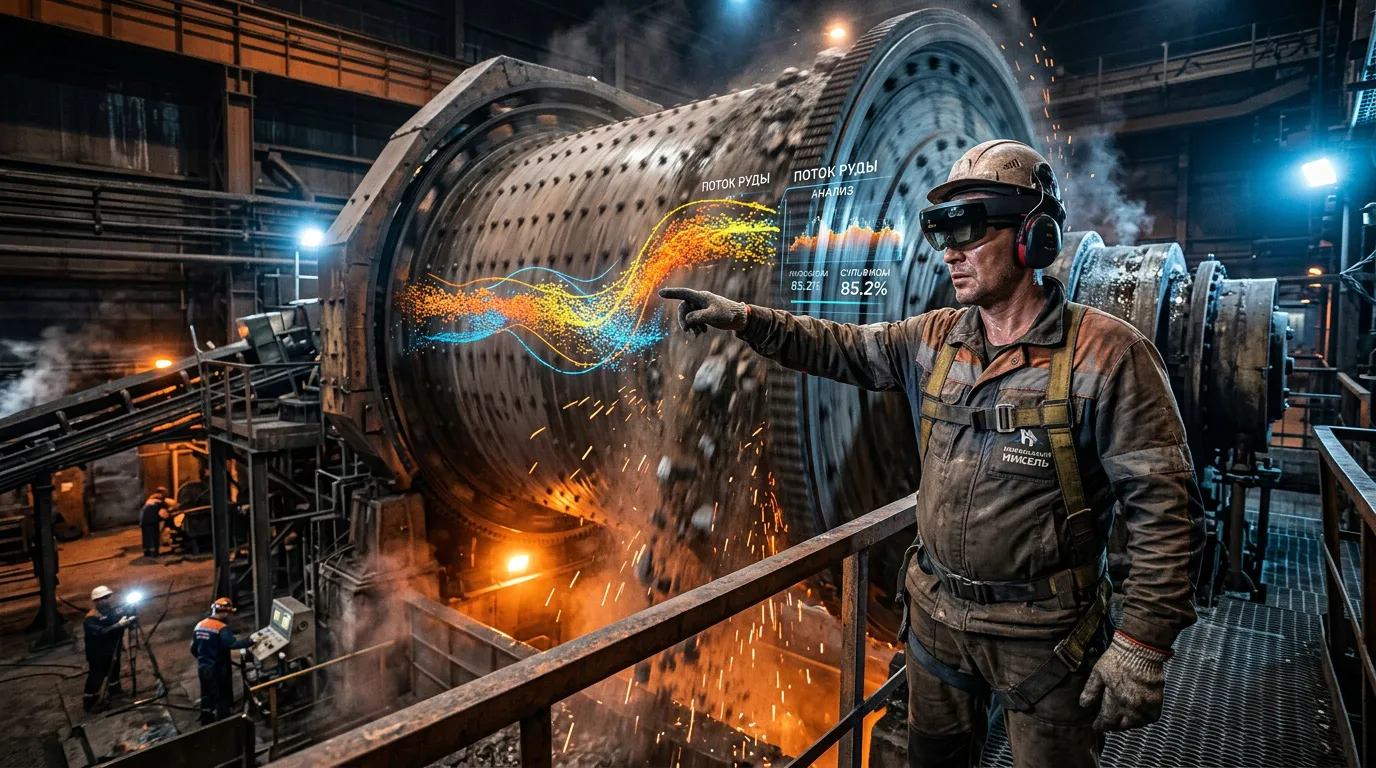
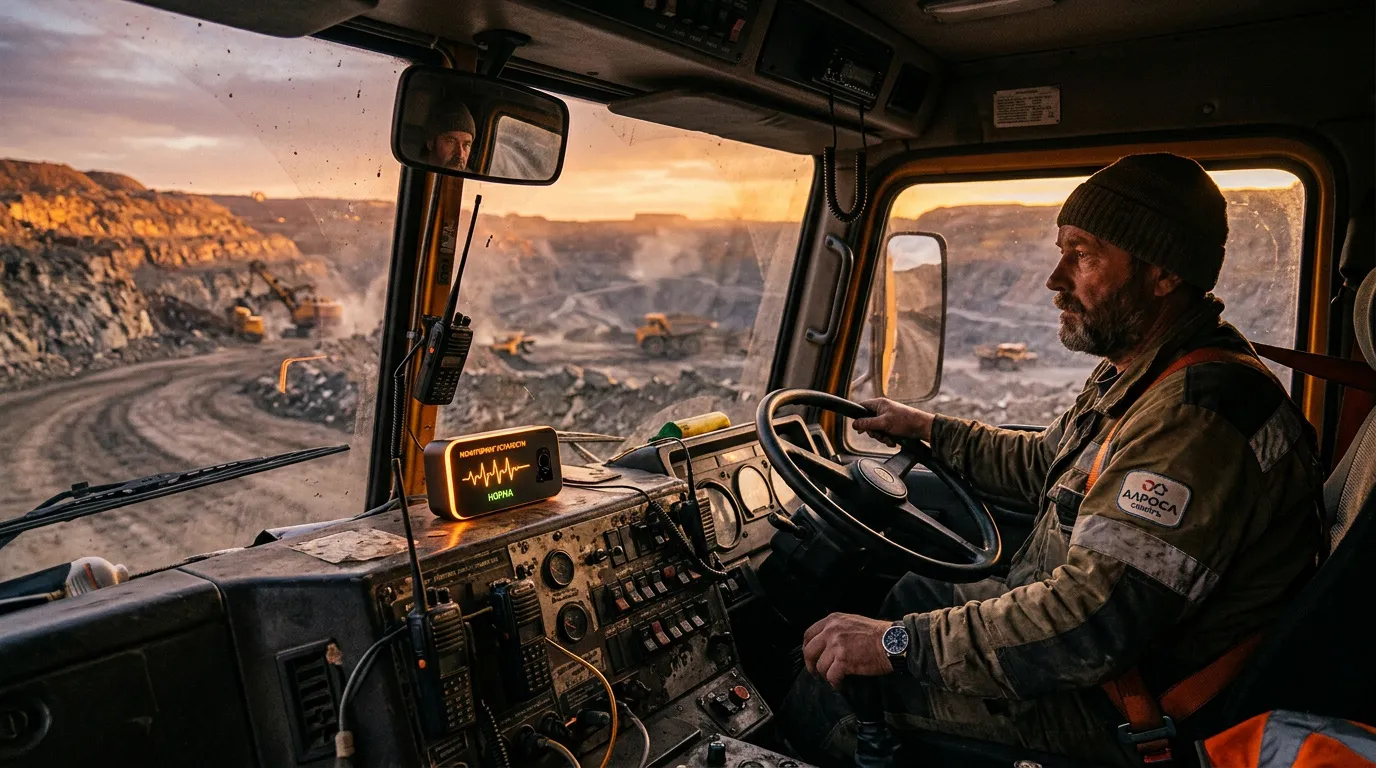
Today, AI systems monitor driver fatigue in mining vehicles, optimize semi-autogenous grinding mill settings, detect foreign objects on conveyor belts, control ore contamination levels, and support flotation process video analytics. AI is also used to verify the use of personal protective equipment and monitor hazardous zones during crane operations.
The system can detect distraction, fatigue, and microsleep in drivers. Alerts are sent both to the operator and to dispatchers, helping prevent industrial accidents before they occur.
Following AI deployment at the processing plant, productivity of semi-autogenous grinding mills has increased, while the number of emergency conveyor shutdowns caused by large or metallic objects has declined. An automated ore contamination control system has significantly reduced downtime caused by blockages at transfer points.
A video analytics system evaluates the size and number of bubbles in flotation cells. The algorithm supports process optimization by analyzing more than 280 input parameters and over 45 outputs. Meanwhile, the end-to-end optimization system continues to generate predictive models and operational recommendations.
Scaling AI Across Mining Operations
Digital transformation at the plant is ongoing. One of the most technologically advanced facilities in the sector is preparing to extend automation and AI deployment across all stages of production.
Nornickel is steadily building a portfolio of industrial AI solutions, and the Bystrinsky case represents a logical step in that strategy. In its 2024 annual report, the company noted the use of digital technologies across the entire production chain, from exploration to smelting. Investments in these initiatives reached 9.9 billion rubles (approximately $130 million).
Other industrial operators are also adopting AI to address production challenges. For example, Metalloinvest reported in 2026 the use of AI to manage a metallization unit at the Oskol Metallurgical Plant. This reflects a broader trend: AI in mining and metallurgy is becoming part of the operational standard alongside automation, digital twins, computer vision, and predictive control. Russia is developing its own applied solutions, shaping a new phase of industrial digitalization.