No More Surprise Calls: Russians Can Now Block International Calls Entirely
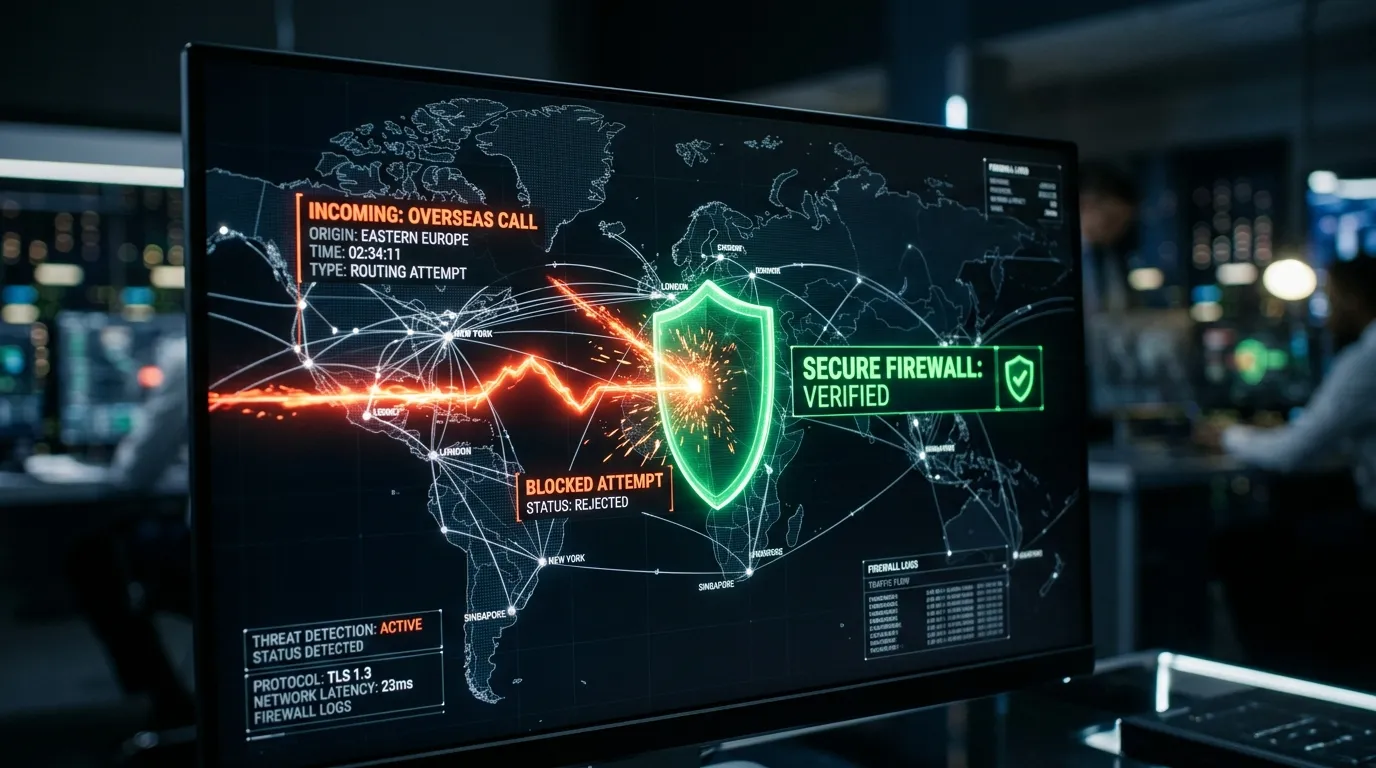
Russia has introduced a new security option that allows citizens to block all incoming international phone calls. The measure is part of a broader anti-fraud law designed to curb telephone scams.

Cyber-enabled fraud has become one of the most significant public safety challenges in recent years. Criminals continue to adopt increasingly sophisticated methods to trick people into transferring money. At this stage, addressing the problem effectively requires coordinated government action.
Cutting Off the Main Source of Fraud
It is widely recognized that most fraudulent calls targeting Russian citizens originate from abroad. Russians can now strengthen their personal cybersecurity by voluntarily blocking incoming international calls. The corresponding law has already been signed by Russian President Vladimir Putin.
Under the legislation, citizens can activate the self-imposed restriction in two ways. They can enable the option through their personal Gosuslugi (State Services) mobile application or website, or they can submit a request at a Multifunctional Center (MFC). Once activated, all incoming international calls are automatically blocked.
Disabling the protection, however, requires a personal visit to an MFC. That additional safeguard is designed to prevent unauthorized parties from removing the restriction. The law also requires telecommunications operators to label all incoming international calls before they reach subscribers. The Russian government will establish the specific labeling rules and technical format.
Strengthening Personal Cybersecurity
The voluntary block on incoming international calls is only one element of a broader legislative package informally known as "Antifraud 2.0." The package contains roughly two dozen measures aimed at improving security across the digital environment. It followed an extended public and legislative discussion. Early proposals called for a nationwide government-level ban on all incoming international calls. Lawmakers ultimately rejected that more sweeping approach in favor of giving individuals the ability to choose.
Another new capability is also on the way. Gosuslugi will soon introduce a "red button" that citizens can press if they believe they are being targeted by fraud. The alert will immediately be sent to the individual's bank, telecommunications provider and law enforcement agencies.
"That action will trigger a cooling-off period for all significant operations involving the person's accounts, bank accounts and related services," explained Sergei Boyarsky, Chairman of the State Duma Committee on Information Policy.

The Foundation Was Laid Last Year
Russia's state anti-fraud platform, GIS Antifraud (State Information System "Antifraud"), was launched in April 2025 to strengthen coordination among government agencies, banks and telecommunications operators in combating fraud. The initial legislative package established the legal framework for the initiative. Among other measures, it tightened oversight of SIM card issuance, strengthened regulation of caller ID spoofing to make fraudulent call centers more difficult to operate technically, introduced additional controls over ATM cash withdrawals when transactions appear to be made under coercion, and implemented several other protective mechanisms.
Legislation adopted in 2025 also expanded data sharing between banks and telecommunications operators. Information about phone numbers associated with fraudsters began feeding directly into bank anti-fraud systems to identify accounts potentially used to launder stolen funds. According to the Bank of Russia, the pilot program helped suspend suspicious transactions totaling more than RUB 100 million (approximately US$1.3 million).

What Comes Next?
A voluntary block on international calls will not eliminate telephone fraud entirely. Criminals continue to broaden their tactics and increasingly target victims through messaging platforms rather than traditional voice calls. Even so, the new mechanism could become an important component of Russia's broader national cybersecurity architecture. It can be integrated into a framework that combines communications restrictions with banking anti-fraud systems, subscriber behavior analytics, mandatory call labeling and real-time cross-sector data sharing to create a more comprehensive approach to protecting citizens.