MTUCI Rector Sergey Erokhin: How Do You Build a Next-Generation University? MTUCI’s Digital Transformation
Today, a university is no longer just about lectures and exams. It is a digital environment where speed, convenience and technology matter. How is the role of secondary vocational education changing? How does IT infrastructure become an indispensable management tool for a major university? Why is artificial intelligence becoming a core competency?
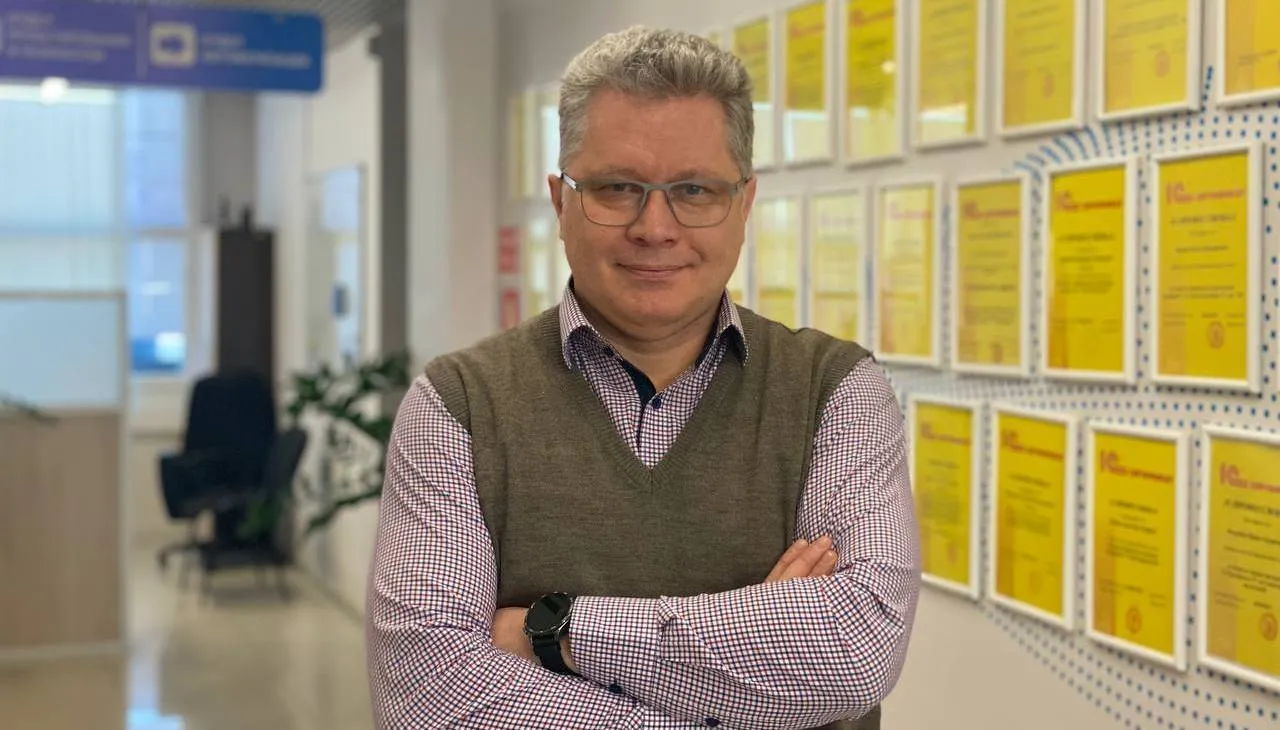
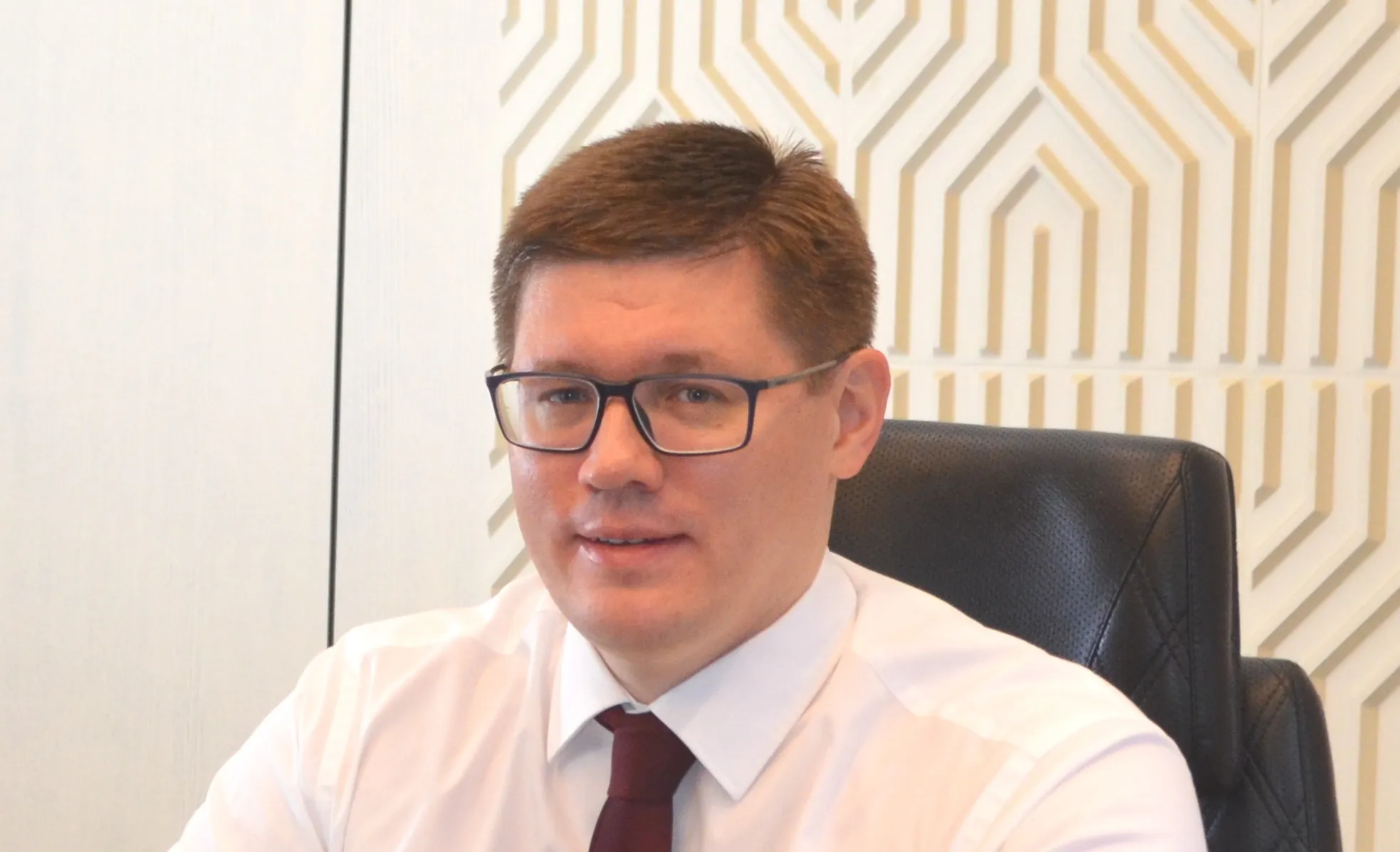
Sergey Erokhin, rector of the Moscow Technical University of Communications and Informatics (MTUCI), answers these and many other questions in an interview with the Russian magazine Upravlenie Predpriyatiem (Enterprise Management). In the first part of the interview, we focus on trends in modern education, the evolution of the University’s IT landscape and the implementation of the 1C:ERP Enterprise Management system. The editors of ITRussia could hardly pass up such a fascinating conversation on some of today’s most pressing topics.
Part 1. Education Trends and Building the IT Landscape
– Let’s start by talking about MTUCI’s position in Russia’s higher education landscape.
– The Moscow Technical University of Communications and Informatics is the leading university under Russia’s Ministry of Digital Development and one of the country’s oldest specialized technical universities. Its history dates back to 1921, and for more than a century, the University has evolved alongside the communications industry, educating professionals to tackle its most important challenges. Today, the industry itself is undergoing a sweeping transformation. Traditional telecommunications are becoming increasingly intertwined with digital technologies, and the University’s role is changing along with them. MTUCI is evolving into a university that supports the growth of the digital economy, educating professionals across a wide range of fields – from radio engineering and space systems to software engineering, quantum technologies and artificial intelligence. At the same time, the digital economy needs more than technical professionals alone. The University’s Faculty of Digital Economy and Mass Communications is also successfully educating students in digital economics, media communications, advertising and management.
Regardless of the field of study, however, all of our educational programs are designed around the real needs of industry. Employers today are no longer looking simply for an economist, a programmer or a manager. They increasingly need professionals who understand how digital environments work and can confidently use modern technological tools in their day-to-day work. Looking at how labor-market expectations have evolved makes this shift particularly clear.
In the mid-2000s, being proficient with office software was considered a significant advantage. Later, knowledge of specialized information systems, including solutions built on the 1C platform, became a standard requirement. Today, the ability to use artificial intelligence technologies effectively is becoming one of the key professional skills. That is why AI already plays an important role in the University’s educational process. Just a few years ago, our primary focus was on developing IT competencies. Today, we are talking about combining digital skills with expertise in artificial intelligence. It is precisely this combination of knowledge that makes our graduates competitive both in communications and telecommunications and across the broader labor market.
– What key trends are you seeing in higher education today?
– Russia’s higher education system is going through a period of significant change. It is gradually moving away from the traditional bachelor’s-to-master’s model toward a system of specialized higher education. At the same time, secondary vocational education is becoming increasingly important, and this trend can be seen across the country.
According to Russia’s Ministry of Education, about 47% of students completing ninth grade now choose to continue their education at vocational and technical schools. More and more school students see secondary vocational education as an educational path in its own right rather than an intermediate step before entering a university. What’s more, this trend has grown noticeably stronger in recent years and continues to gain momentum.
Universities are, of course, responding to these changes. That is why many universities are actively developing their own vocational and technical schools. MTUCI also has its own Telecommunications School, which has been growing successfully, with enrollment roughly tripling over the past five years.
– What do you think is driving this growing interest in secondary vocational education?
– I would point to two key factors. The first is a shift in how society views secondary vocational education itself. Today, attending a vocational or technical school is no longer seen as a fallback for students who could not get into a university. It has become a full-fledged educational path that allows students to acquire an in-demand profession and confidently begin their careers. We are seeing steady growth in interest in secondary vocational education among applicants themselves.
The second factor is changing labor-market demand. Employers increasingly need professionals with specific, practical skills. In many fields, including information technology, a strong secondary vocational education can be enough to successfully enter the profession and handle a wide range of practical tasks.
Expectations among younger people are changing as well. Many want to become financially independent and enter the workforce as early as possible. In that sense, vocational or technical school is seen as a shorter, more hands-on path to establishing themselves professionally.

– Can we say that the perception of vocational and technical schools as a less prestigious educational option is gradually becoming a thing of the past?
– I think so. In recent years, vocational and technical schools themselves have significantly strengthened their position. The quality of professional training has improved considerably, ties with employers have expanded, and modern educational programs and equipment have become available.
At the same time, approaches to university admissions have changed as well. The Unified State Exam, or EGE, has become a more transparent and objective tool for assessing knowledge, prompting many families to take a closer look at different educational paths. For many of them, vocational or technical school offers a clear and rational strategy: first acquire a profession and practical skills, and then decide whether to continue their education at a university.
In my view, the growing popularity of secondary vocational education can already be considered a sustained trend. Still, it is important to understand that changes in education happen gradually. Their results become visible only years later, when today’s applicants complete their studies and enter the workforce.
It is equally important to consider how Russia’s education system itself has evolved. Russia has effectively retained a mixed model of higher education: alongside bachelor’s and master’s degrees, it continues to offer the specialitet, a traditional Russian specialist-degree program. Today, the country is working toward a model of its own, one that will more closely reflect the needs of the national economy and employers.
What matters most, however, is not the name of an educational program but the quality of a graduate’s preparation. It is their knowledge, skills and professional competencies that determine the path their career will take. This is particularly important because today’s education landscape has become considerably more complex. Bachelor’s and master’s degrees, specialitet programs, MBA programs and other forms of education now exist side by side, and employers by no means always base their decisions solely on the type of diploma a candidate holds.
In the past, having a university degree was often a prerequisite for career advancement, but the situation has changed significantly. A diploma in itself is no longer regarded as unquestionable proof of qualification. This is particularly evident among young people. Increasingly, school students are asking a very pragmatic question: If they can acquire the skills they need in other ways and quickly enter the workforce, what additional value does a university education offer?
That is precisely why universities today need to do more than simply award degrees. They need to offer students a distinctive educational environment, up-to-date knowledge and competencies that cannot be acquired outside a full university education.
– Let’s turn to the story behind MTUCI’s information system. Where did the University’s digital transformation begin?
– MTUCI’s digital transformation goes back more than two decades. In a sense, its starting point can be traced to the early 2000s, when University Rector Artem Adzhemov received a Russian Government Prize in Education for developing the foundations of the Federal University Distance Learning Network for higher education institutions. That was when the groundwork was laid for a systematic approach to developing the University’s information environment.
From the outset, solutions built on the 1C platform played a key role in shaping MTUCI’s IT landscape. Today, the University uses a broad range of information systems, but the 1C:ERP Enterprise Management platform remains the central element of its digital infrastructure, with the entire university management ecosystem built around it.
The transformation unfolded in stages. Accounting and HR processes were automated first. Digital tools then began to cover more and more areas of the University’s operations, gradually extending to virtually every aspect of its work.
One of the most significant milestones was the creation of the student portal. Another major step was the launch of the University’s mobile app. Also worth highlighting is the remote exam system with proctoring, which proved its effectiveness during the pandemic.
Today, information technology at MTUCI is no longer a collection of disconnected services but a unified digital environment that brings all University departments together in a shared information space.
This is particularly important because today’s applicants come to us from schools where they are already accustomed to working in a digital learning environment. For them, digital services are not an added benefit but a natural part of the educational experience. The University therefore has to offer a comparable level of digital convenience and capabilities.

– What challenges do you face as the head of a university, and what role does information technology play in addressing them?
– For the leader of a modern university, having access to up-to-date data on key areas of operation is essential. It makes it possible not only to assess the current state of processes but also to identify potential risks early, track trends and make well-informed management decisions.
Each vice rector works with a different set of metrics. The vice rector for finance and digital development analyzes the University’s revenue, expenses and the structure of its financial flows. The vice rector for academic affairs relies on data about the student population, curricula, courses and faculty workloads. For the vice rector for research, information on research projects, contracts, research results and the fulfillment of related obligations is critical.
Modern information systems make all this information available quickly and in a format that is easy to analyze. Data itself has become the foundation of effective university management.
At the same time, the requirements for digital infrastructure are constantly changing. The University has to adapt to new conditions shaped by the government, the labor market and the higher education system as a whole. Developing the IT landscape is therefore a continuous process rather than a one-time project.
The digitalization of the admissions process is a good example of these changes. The introduction of online applications through Gosuslugi, Russia’s government services portal, made the process considerably easier for applicants, but it also presented universities with major technological challenges.
Universities had to integrate their internal information systems with government services, set up the exchange of applicant data, and handle admission preferences, enrollment consents and a large volume of related information.
It was a large-scale, technically complex project. Solutions from 1C and its partners played a significant role in making it work. The first admissions cycles under the new system were challenging for everyone involved, but as the 1C:Universitet PROF (1C:University PROF) system evolved and improved, the necessary mechanisms were fine-tuned. Today, this infrastructure supports a stable and reliable admissions process.
– Why did you choose the 1C:ERP Enterprise Management system as the foundation of your digital infrastructure?
– In my view, any information system should meet two key requirements: it should be functional and easy to use.
In fact, ease of use often matters even more than the range of features. Today’s students and employees expect digital services to be fast and intuitive. Even the most feature-rich system cannot work effectively if people find it difficult to use.
The 1C:ERP Enterprise Management platform has effectively become one of the industry standards for building enterprise information systems in Russia. A large professional ecosystem has grown around it: the company’s partner network includes about 8,000 franchisees, while the number of IT professionals who program in the 1C:Enterprise language and implement its systems has surpassed 300,000.
For us, however, the platform’s widespread adoption was not the only deciding factor. Its track record of implementation at Russian universities was crucial. We could see that similar solutions were already working successfully in education, which meant we could count on their reliability, stability and ability to meet the specific needs of university management.

– How has the University’s IT landscape evolved? Had you used 1C solutions before?
– Individual products built on the 1C:Enterprise platform have been used at MTUCI for quite some time. However, the most intensive phase of the University’s digital transformation has taken place over the past decade. During this period, the University has steadily moved away from disparate information systems in favor of a unified ecosystem built around 1C solutions.
As the project evolved, new functional modules were introduced, automation expanded into more areas, and integration between different systems was improved. The result was a unified digital environment that now supports a significant share of the University’s information infrastructure.
One of the most important stages of the digital transformation came in 2018–2019, when the entire student population was migrated to the 1C:Universitet PROF (1C:University PROF) platform. Before that, the University had used its own information system to manage the educational process. Over time, however, it became clear that further development required a move to an enterprise-grade solution with greater capacity for scaling and support.
– Why didn’t you take the open-source route? After all, that approach can often be less expensive.
– At first glance, it can indeed look like the more economical option. For a large university, however, cost cannot be considered separately from system reliability, support and long-term sustainability.
Simply creating a product that works is not enough. Automating a university of this scale requires an enterprise-grade platform with a clear support model, a reliable development roadmap and clearly defined responsibilities.
Open-source solutions can handle a broad range of tasks, but sooner or later some very practical questions arise: Who will support the system, take responsibility for its information security, maintain and expand its functionality, and make sure it continues to operate reliably as workloads keep growing?
Those same considerations guided us when we migrated the University’s official website to the 1C-Bitrix platform. It was a large-scale and fairly complex project.
Of course, there are solutions on the market that may seem easier to use or more visually appealing from a content editor’s perspective. But when it comes to reliability, performance under heavy loads, compliance with legal requirements for personal data protection, and access control, enterprise-grade platforms remain the most appropriate choice for tasks of this kind.
– How did you select a partner to implement 1C:ERP Enterprise Management? What requirements did you set?
– We selected the contractor through a competitive process. But the traditional criteria – the solution’s functionality, project cost and implementation timeline – were not the only things that mattered to us.
We paid particular attention to experience working specifically with educational institutions. We needed a partner that understood the university environment, industry-specific regulatory requirements and the particular nature of a university’s internal processes. This became especially important when implementing solutions for the admissions process. The contractor needed hands-on experience integrating with Gosuslugi, Russia’s government services portal, an understanding of how university admissions offices operate, and a solid grasp of education law.
MTUCI has worked with two specialized partners for many years. One is responsible for financial and accounting solutions, while the other specializes in developing the 1C:Universitet PROF (1C:University PROF) system.
This approach allows us to effectively combine outside expertise with the capabilities of the University’s own IT team. As a result, technical issues can be resolved quickly without significantly disrupting users’ work.

– In your view, can the University’s unified information environment already be considered fully established?
– A university’s digital environment is never a finished project. The IT landscape is constantly evolving: major technology upgrades take place roughly every five years, while individual services are improved almost continuously. New versions of the mobile app are released regularly, the functionality of student and employee portals continues to expand, and new digital services are introduced.
Best practices in user experience are an important benchmark for us. Gosuslugi, Russia’s government services portal, for example, has long been a familiar digital ecosystem for millions of people. In school education, the Moscow Electronic School plays a similar role.
Today’s applicants arrive at the University already accustomed to convenient, transparent digital services. Naturally, they expect the same level of convenience and service throughout their university education. Our task, therefore, goes beyond automating internal processes and administrative recordkeeping. It is equally important to give students fast and convenient access to all educational services through a unified digital environment.
***
In Part 2 of our interview with Sergey Erokhin, rector of the Moscow Technical University of Communications and Informatics, we will discuss the results MTUCI’s digital transformation has delivered, the lessons learned from the projects already implemented, and the challenges that lie ahead.







![Astra AI [Code] vs. Open Source: Why Deploying an Open Model in a Secure Environment Is Costly and Risky](https://storage.yandexcloud.net/itrussia/uploads/c3b5b6da-1bf7-49cb-817e-0bab1cea8cff.webp)