Schools in Russia’s Murmansk Region Replace Windows With Astra Linux
Schools and standardized testing centers across Russia’s Murmansk region are set to replace Western operating systems with the domestic Astra Linux platform before the start of the new academic year.

The Ministry of Education and Science of the Murmansk Region has signed a strategic agreement with Astra Akademiya (Astra Academy Autonomous Nonprofit Organization). The initiative involves a full-scale operating system transition for thousands of machines. By the beginning of the next school year, classrooms across the region are expected to run Astra Linux, a domestic operating system positioned as both secure and reliable. The platform will serve as the foundation for specialized technology coursework and for developing students’ technical skills.
Teaching Russian Software From First Grade
This is not a routine upgrade or a pilot limited to a handful of schools. For students, the shift means early exposure to a Russian IT stack that is already widely used across business and government organizations.
Meanwhile, migrating to a new operating system is only the beginning of a much larger process. Most teachers have spent years working with foreign operating systems. If educators are left alone with an unfamiliar interface, the reform could stall. That is why the agreement focuses less on software deployment and more on training. Seminars, roundtables, conferences, joint academic and research events, and curriculum development are expected to play a decisive role in the success of the transition.
Installing an operating system may take a day, but helping a computer science teacher who has spent 20 years working with Windows become comfortable with Linux is a far more complex task. Support will come not only from Astra Akademiya, but also from Russian systems integrator TetaLayn. The company specializes in end-to-end IT projects of varying complexity.
Ruslan Kharlashin, CEO of TetaLayn, says the agreement “will open new opportunities for the Murmansk region’s education system and become a foundation for strengthening Russia’s domestic technological capabilities.”

“Na Severe – Zhit'!” in a New Format
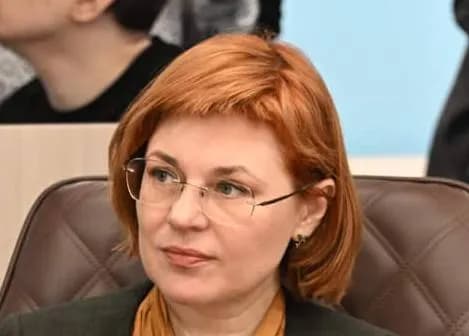
The software migration is not being framed as a standalone IT project, but as part of a broader regional development strategy. That is why Murmansk Region Education and Science Minister Diana Kuznetsova describes one of the initiative’s key goals as creating a secure and independent digital environment.
“For us, it is essential that alongside infrastructure modernization, educators receive all the knowledge and support they need to work comfortably with new technologies. Today, Russian solutions make it possible not only to ensure reliability and data protection, but also to create additional opportunities for developing digital competencies among both students and teachers,” she said.
The project is directly tied to the region’s broader effort to expand engineering and technology education through the Narodnaya programma “Na Severe – zhit'!” (Living in the North) initiative.

Regions Rewrite the Playbook
By the time Murmansk announced the launch of the agreement, Gruppa Astra already had extensive experience replacing Windows-based infrastructure across different parts of the country. The company has built a large ecosystem that includes roughly 600 Russian universities, giving it experience working with some of the country’s most demanding users in higher education and research environments.
The biggest acceleration came in 2022. At the time, analysts at CNews reported that deployments of Russian operating systems in schools and universities had increased sixfold. Early adopters included major institutions such as MIREA, MFTI, MIFI, MAI and RANKhiGS.
In 2024 and 2025, the rollout also reached the Amur region. There, officials used a phased approach, beginning with 6,000 automated workstations under the Tsifrovaya obrazovatelnaya sreda (Digital Educational Environment) project. That represented roughly one-quarter of all school computers in the region. Schools in the Chelyabinsk region also moved away from Microsoft and switched to Astra Linux. The scale of the transition was significant: 30,000 workstations and 1,200 classrooms.
Then, in January of this year, Rosobrnadzor announced plans to migrate the Unified State Exam system to a domestic Linux platform. In that context, the Murmansk rollout is increasingly being viewed as a large-scale rehearsal for future nationwide adoption.

The Murmansk Testing Ground
Murmansk, Chelyabinsk and the Amur region are already creating a practical roadmap for other regions to follow. Meanwhile, the involvement of a company like TetaLayn gives the project the kind of professional technical support without which large-scale reforms often lose momentum.
Students in Murmansk who are solving tasks on Astra Linux today could, within five to seven years, join the companies developing the platform itself. In practice, the Murmansk region is becoming a testing ground for the future of Russian education.