AI System From Krasnoyarsk Researchers Aims to Protect Homes and Save Lives
Scientists and students at the Reshetnev Siberian State University of Science and Technology have developed intelligent systems capable of predicting floods and wildfires, two of the most destructive natural risks in Russia’s vast northern regions.

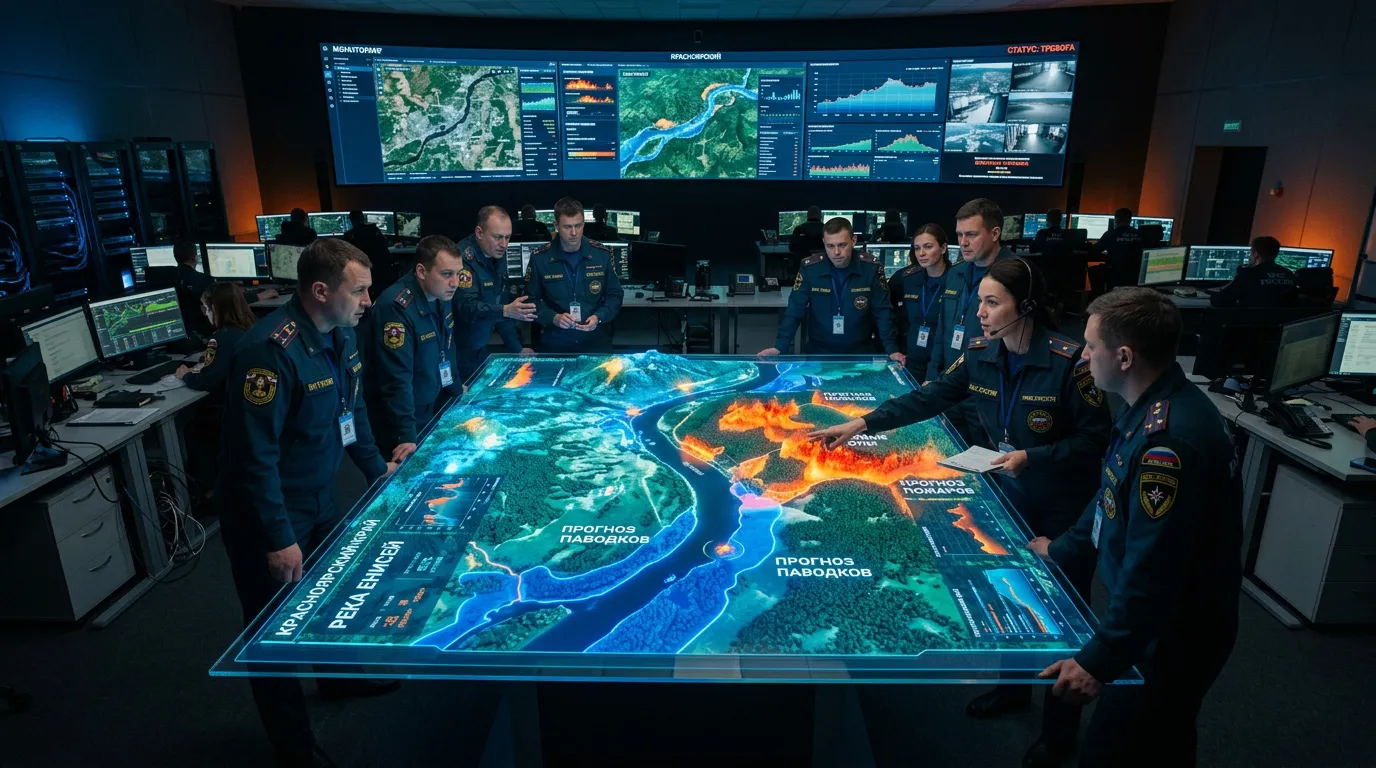
Researchers in Krasnoyarsk have effectively created a digital decision-support tool for emergency responders and transport operators, helping them anticipate when disasters may occur and how to minimize their impact.
Strengthening Safety Through Predictive Systems
These types of civil protection technologies are emerging in response to growing government demand. In 2026 alone, federal funding to combat wildfires increased by 7 billion rubles (approximately $75 million USD), while Russia’s emergency services identify floods and fires as the country’s primary seasonal threats. Krasnoyarsk Krai, currently under heightened alert due to spring flooding, has become a key testing ground for deploying such solutions.
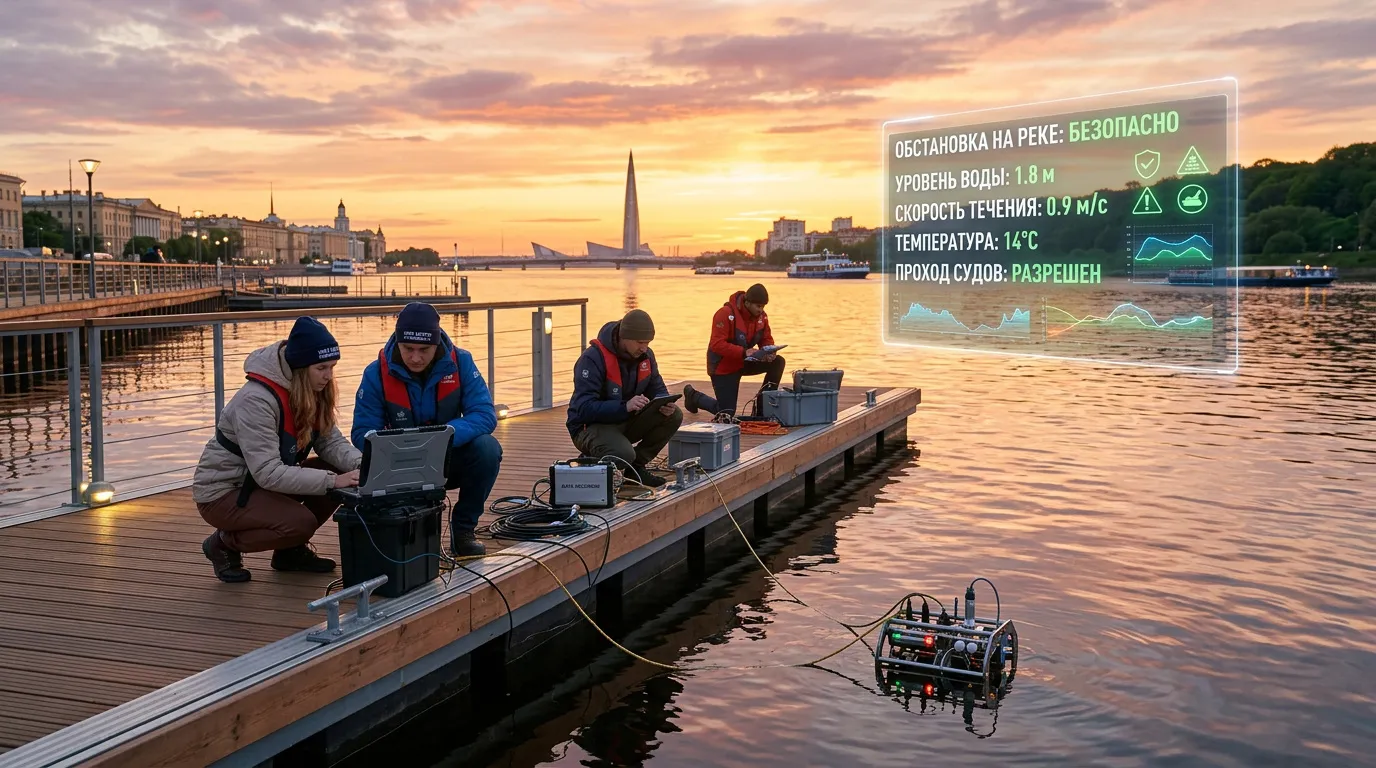
The system does more than estimate flood risks. It also calculates safe and optimal timelines for launching river navigation. In Siberia and the Arctic, where rivers often serve as the only transportation routes, this capability directly affects not only economic efficiency but also the protection of lives and critical infrastructure.
AI Supporting Environmental Resilience
Emergency services, forestry agencies and hydrometeorological organizations have a growing need for high-quality predictive analytics. Russia experiences up to 80 major floods annually, affecting as much as 600,000 square kilometers, including agricultural land. Wildfires occur on an even larger scale. In the past year alone, 6,800 forest fires burned across 4.3 million hectares.
The new system could serve as the foundation for a national digital risk assessment service. It is specifically adapted to Russian conditions, focusing on northern and remote regions, permafrost environments, complex river logistics and limited observational data. The Krasnoyarsk Scientific Center of the Siberian Branch of the Russian Academy of Sciences has already introduced wildfire behavior forecasting tools developed at the Sukachev Institute of Forest. Meanwhile, Penza State Technological University is developing a neural network to monitor flood risks around railway bridge supports. Unlike traditional hydrological stations that only measure current water levels, the Penza system is designed to predict future conditions.
From Prediction to Prevention
Once the Krasnoyarsk system demonstrates reliable forecasting accuracy and measurable damage reduction in real-world deployments, it is expected to scale to other regions across Russia. It could also become part of a unified national emergency monitoring platform integrating satellite data, geospatial systems and AI-driven analytics.
In addition, the solution may find demand among large industrial companies, energy operators and transportation providers whose assets are located in high-risk zones. Systems like this help protect homes, save lives and strengthen the resilience of large territories by enabling earlier, data-driven decisions.