AI to Decode the Subsurface
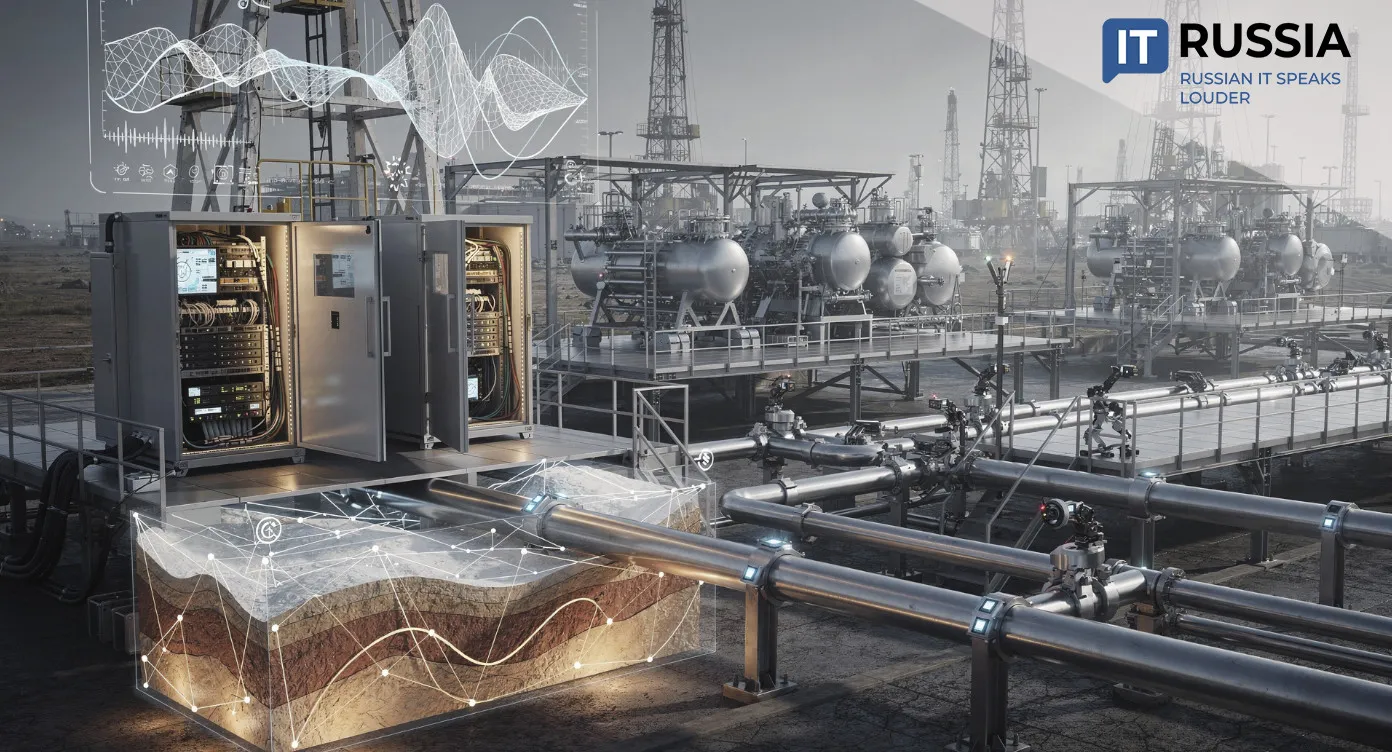
Russian scientists have developed an AI- and machine learning-based methodology that enables rapid and accurate identification of the mineral composition of complex and unconventional oil-bearing formations, including the Bazhenov Formation in Western Siberia.
Algorithms That Cut Costs
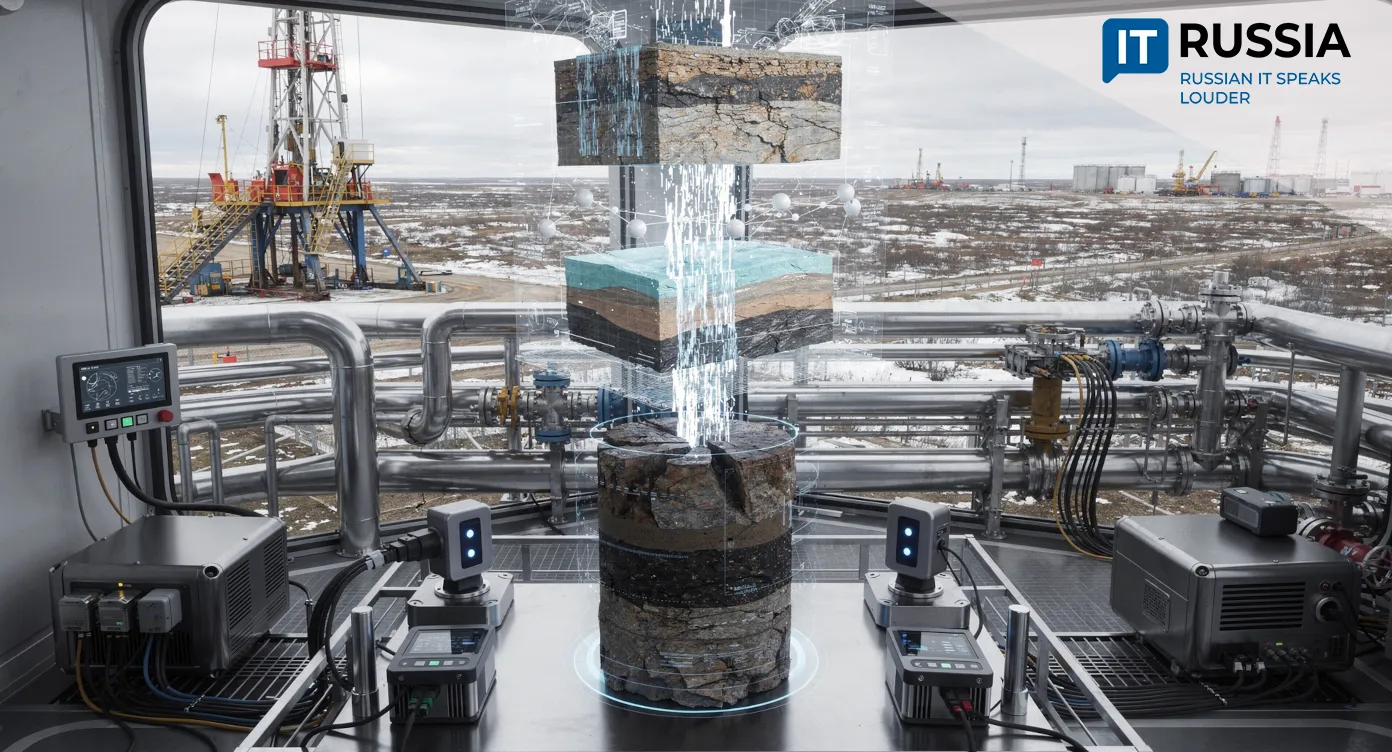
At its core, the development is an algorithmic model and a suite of AI tools designed for mineralogical analysis during drilling and exploration. Traditional mineral identification relies on multiple laboratory tests – expensive, time-consuming and labor-intensive. The new approach delivers compositional data continuously along the wellbore and reduces costs several-fold.
The algorithm for analyzing complex hydrocarbon-bearing formations can be deployed for rapid interpretation of data directly during drilling operations. Because similar AI-driven techniques are in demand across the global oil and gas industry as well as in mining exploration, experts expect strong market interest in the solution. Over time, the technology could be exported or adapted by international operators.
New Horizons for Oil Production
The system was developed at Skoltech, a non-state international university within the VEB.RF group.
According to the developers, the integrated approach can be used to accelerate real-time drilling data interpretation, identify prospective intervals in structurally complex reservoirs and optimize enhanced oil recovery methods.


Its implementation is expected to directly affect field economics. In today’s upstream environment, easily recoverable oil reserves are largely depleted, while a substantial share of remaining resources is locked in shale and other geologically complex formations. These reservoirs are heterogeneous in composition and require tailored development strategies. Machine learning has enabled the systematization of large datasets on mineralogical properties. By eliminating the conventional laboratory pathway, the method is positioned for broad commercial uptake.
A Broader Digital Shift in Subsurface Analysis
In recent years, Russia has produced several examples of AI-driven solutions for extractive industries. In 2025, researchers at the St. Petersburg Institute of Fine Mechanics and Optics developed a tool to streamline mineral processing. The system can process up to 600 images per hour. This open-source solution is designed to measure particle size and distribution – granulometry – in precious and non-ferrous metal mining, as well as in applications involving granular materials and crystals in the food and agricultural industries, and in oil refining.
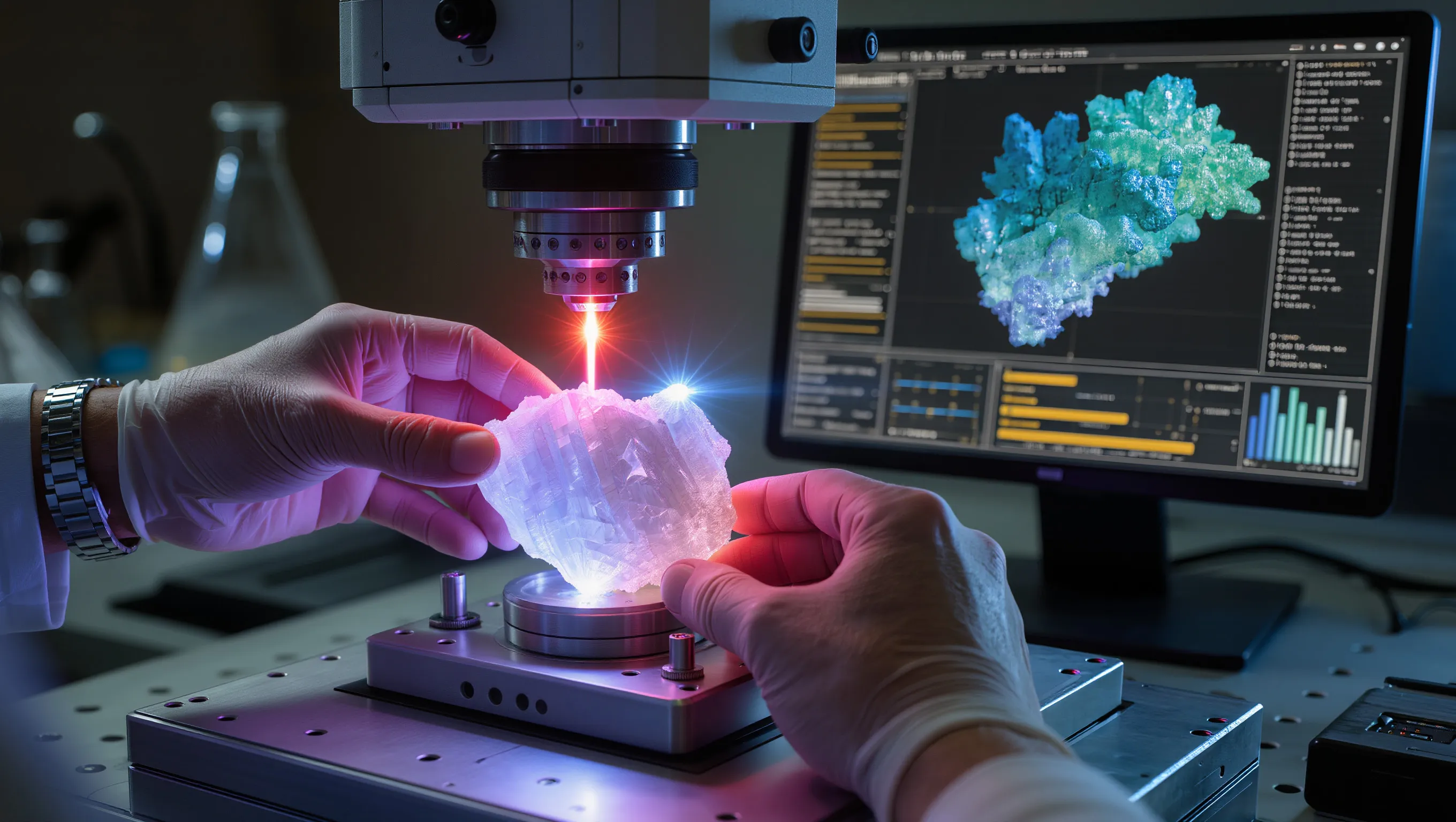
Last year, Russian laboratories also introduced a web-based tool for analyzing spectra of mineral microcrystals, simplifying compositional diagnostics through spectroscopy. The service can assess mineral composition both on Earth and in space. The web application deciphers the composition of micro-inclusions within minerals and reduces interpretation time from several months to just minutes. The innovation was developed at the V.S. Sobolev Institute of Geology and Mineralogy of the Siberian Branch of the Russian Academy of Sciences. Diagnosing rock formations composed of multiple minerals is a critical task for geologists. Based on composition and crystalline structure, specialists can determine the origin of mineral assemblages, as well as formation depth and temperature. However, identifying microminerals – only a few microns in size – is challenging because they are often embedded within larger crystals. The new service resolves that task in minutes. Its analytical outputs can support forecasting of new copper, lead, lithium and gold deposits.
It is also known that in 2023, Sber and its partners created large mineral training datasets to improve AI segmentation and analytical performance.
The new AI-driven mineralogical analysis methodology developed at Skoltech represents a significant technological advance in digital geology, with clear potential to reduce costs and accelerate exploration workflows.