All Educational Institutions in Tatarstan Move to the MAX Messenger
All schools, colleges, and universities in Russia’s Republic of Tatarstan have completed a transition to the national MAX messenger, marking a large-scale shift of educational communications to a domestic digital platform.
Simple and Convenient
Educational institutions across Russia continue to migrate to the national MAX messenger. The platform is positioned as both easy to use and secure, while ensuring continuous communication for educators, students, and parents.
In Tatarstan, the transition has now been completed across all educational institutions. The announcement was made by Ildus Khadiullin, the republic’s Minister of Education and Science. The total number of MAX users in the region’s education sector has exceeded 500,000, with reported user activity reaching 100 percent.
“The transition proved simple and convenient for teachers, pupils, students, and parents. All that was required was installing the app, while a dedicated bot automatically transferred existing chats,” Khadiullin said.

New Features for Education
The minister noted that by December, users had gained access to a range of new services within MAX. These include official school channels, kindergarten fee payments, a digital student ID, and digital verification of large-family status through a unified digital ID.
The transition of Tatarstan’s educational institutions to MAX began on September 1. The republic was among six regions where the process was organized on a centralized basis. Alongside Tatarstan, the first-wave regions included Vladimir Region, the Altai Republic, the Mari El Republic, Tver Region, and the Khanty-Mansi Autonomous Area – Yugra.
According to the approved roadmap, the transition unfolded over two months. During the first phase, employees of the republic’s Ministry of Education and Science and local education authorities moved to the national messenger. The second phase covered administrators and staff of schools, kindergartens, and secondary vocational institutions. The third phase involved parents and students of schools and vocational institutions, as well as parents of children enrolled in preschool organizations.
Scaling the Model Nationwide
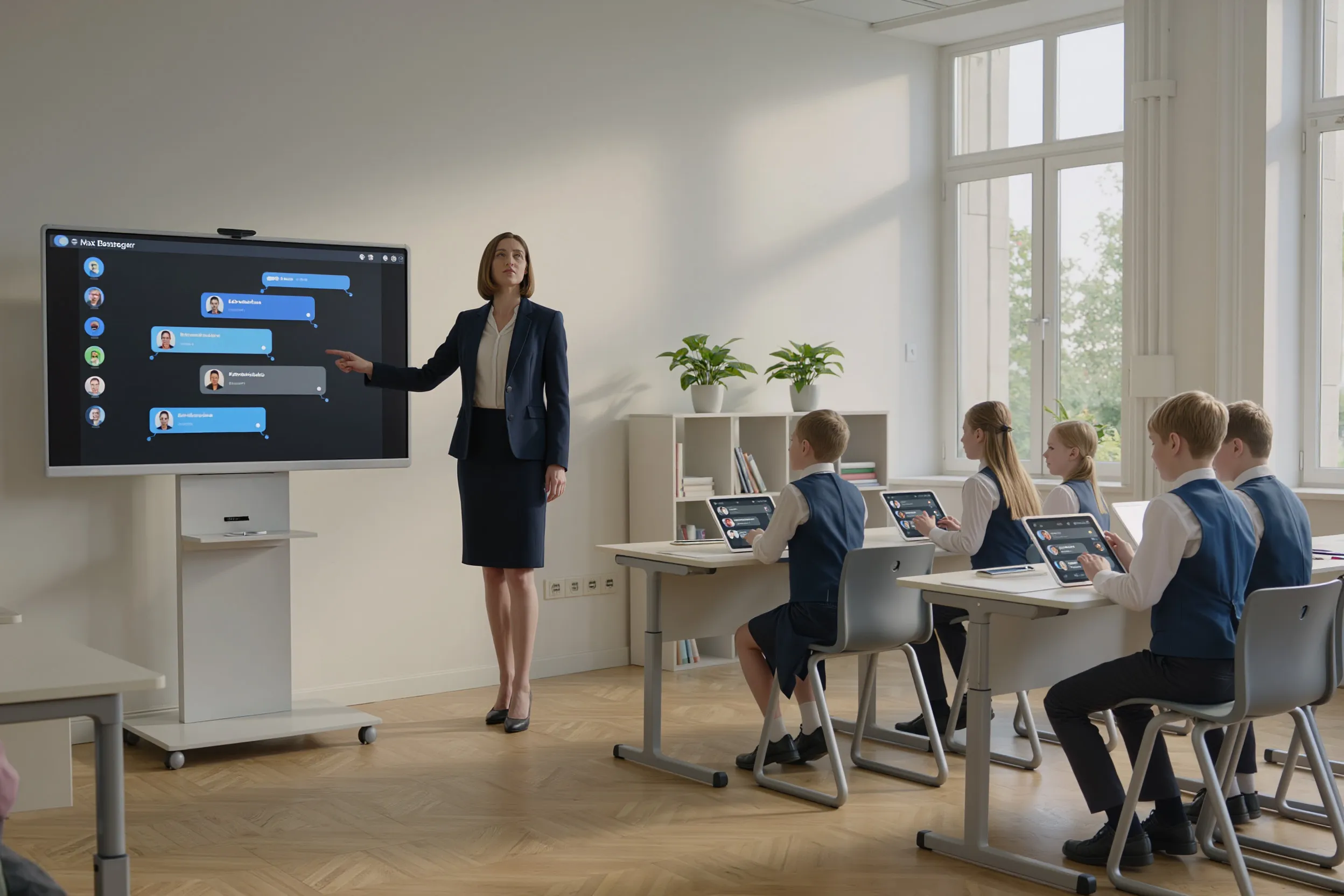
The move represents another milestone in the digital transformation of Russia’s education system. One of its core objectives is to shift communications to domestic platforms. This approach is intended to strengthen data security and reduce risks associated with potential actions by foreign digital platform owners. The successful experience in Tatarstan can now be replicated in other regions.
To make the transition as seamless as possible, familiar services from the Sferum education platform are being integrated into MAX. These include the Pushkin Card, Awards, and Peremenka services.

Accelerated Platform Growth
MAX was launched in March last year. As of mid-January, the messenger’s user base had exceeded 85 million. Daily reach has surpassed 55 million active users. Since launch, users have sent more than 18 billion messages and made over 2.5 billion calls. They have also recorded more than 200 million video messages and shared over 1 billion stickers.
One of MAX’s key advantages over other messengers is its inclusion in a so-called “whitelist” of digital resources compiled by Russia’s Ministry of Digital Development. This status allows the platform to continue operating even during periods of restricted mobile internet access, such as during drone-related security incidents.

MAX is positioned not merely as a messaging service. Through close integration with the national Gosuslugi public services platform, it is rapidly evolving into a tool for everyday tasks. Among the features already deployed is the ability to book medical appointments. The digital ID function also enables age verification for purchases and is currently accepted in more than 40,000 retail outlets nationwide.
It is expected that throughout 2026, the use of the national messenger within Russia’s education sector will continue to expand. A key driver will be further growth of user functionality comparable to features available in foreign messengers such as Telegram. This is likely to accelerate account growth, particularly among younger users.