Russian Drones Set to Harvest Fruit
Russia’s Federal Scientific Agroengineering Center VIM has developed a quadcopter capable of locating, assessing the quality of, and harvesting fruit directly from trees.
A Flying Gardener
Drones that experts see as the future of agriculture are poised to radically change orchard farming. In the near future, they could begin harvesting fruit from trees instead of people.
The Federal Scientific Agroengineering Center VIM has patented a UAV model designed specifically for fruit harvesting. The inventors – agroengineering researchers Leonid Marchenko, Andrei Izmailov, and Aleksei Kutyrev – argue that using unmanned aerial vehicles for harvesting fruit trees can significantly improve efficiency and fruit quality while reducing damage to the lowest technically acceptable levels.
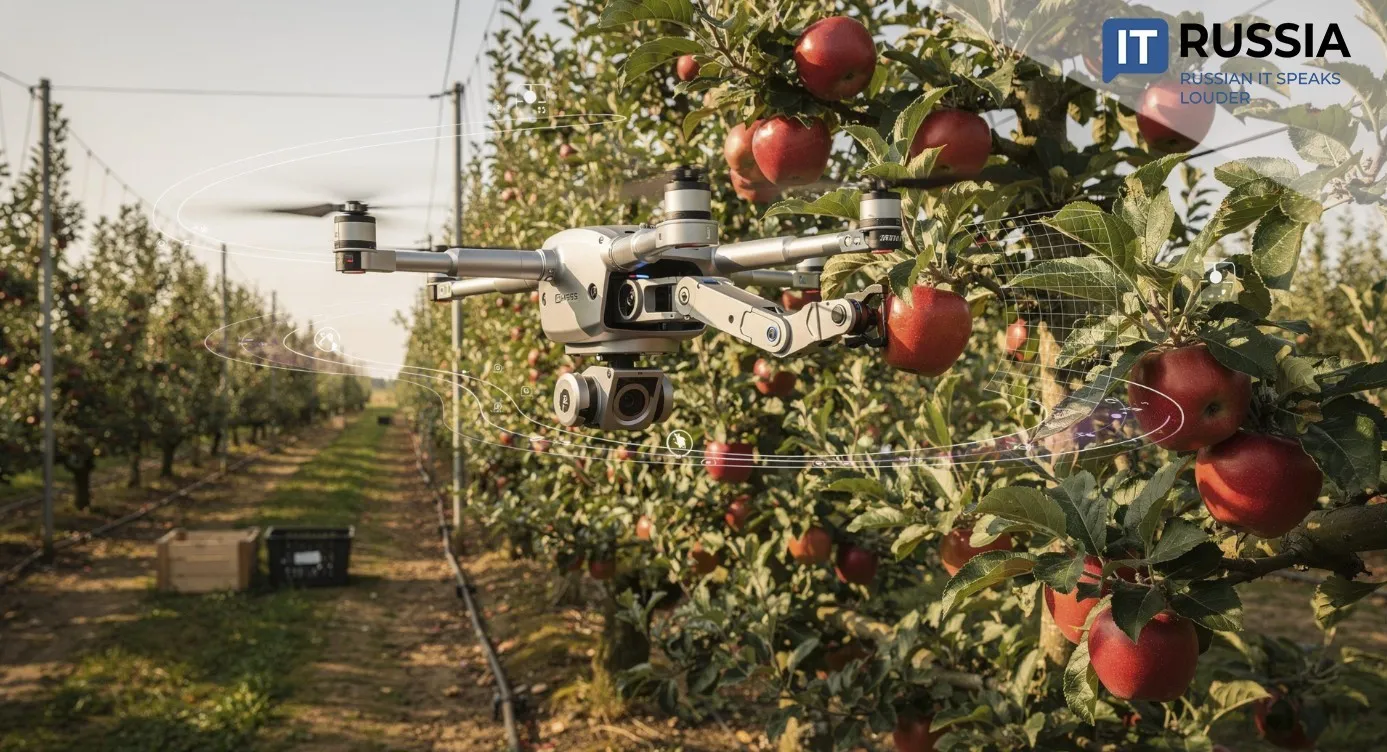
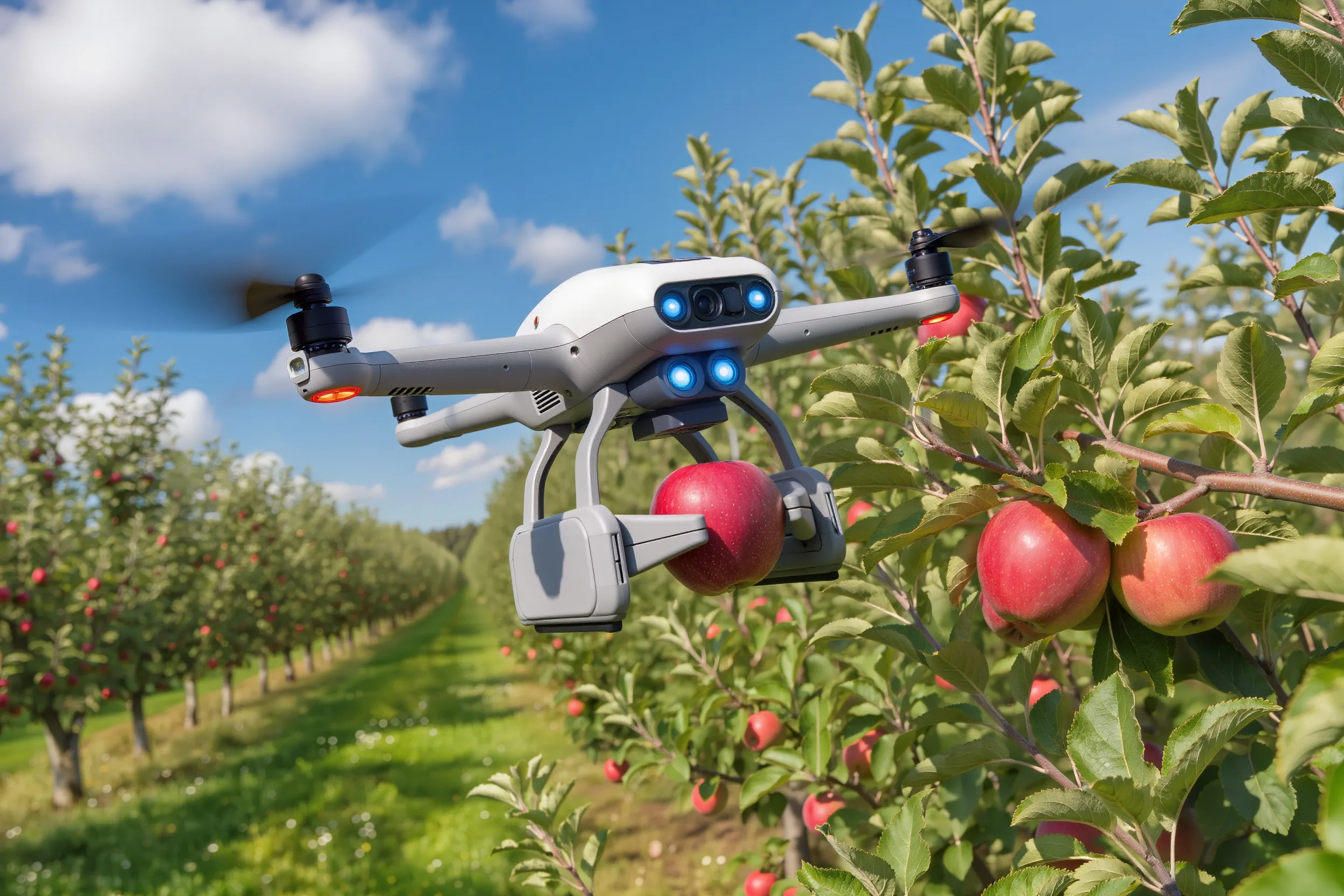
The UAV is equipped with everything required for autonomous work. It carries 3D cameras for visual fruit detection and a navigation system based on GLONASS, allowing it to orient itself independently in the field. Harvesting is performed with a high degree of precision and care.
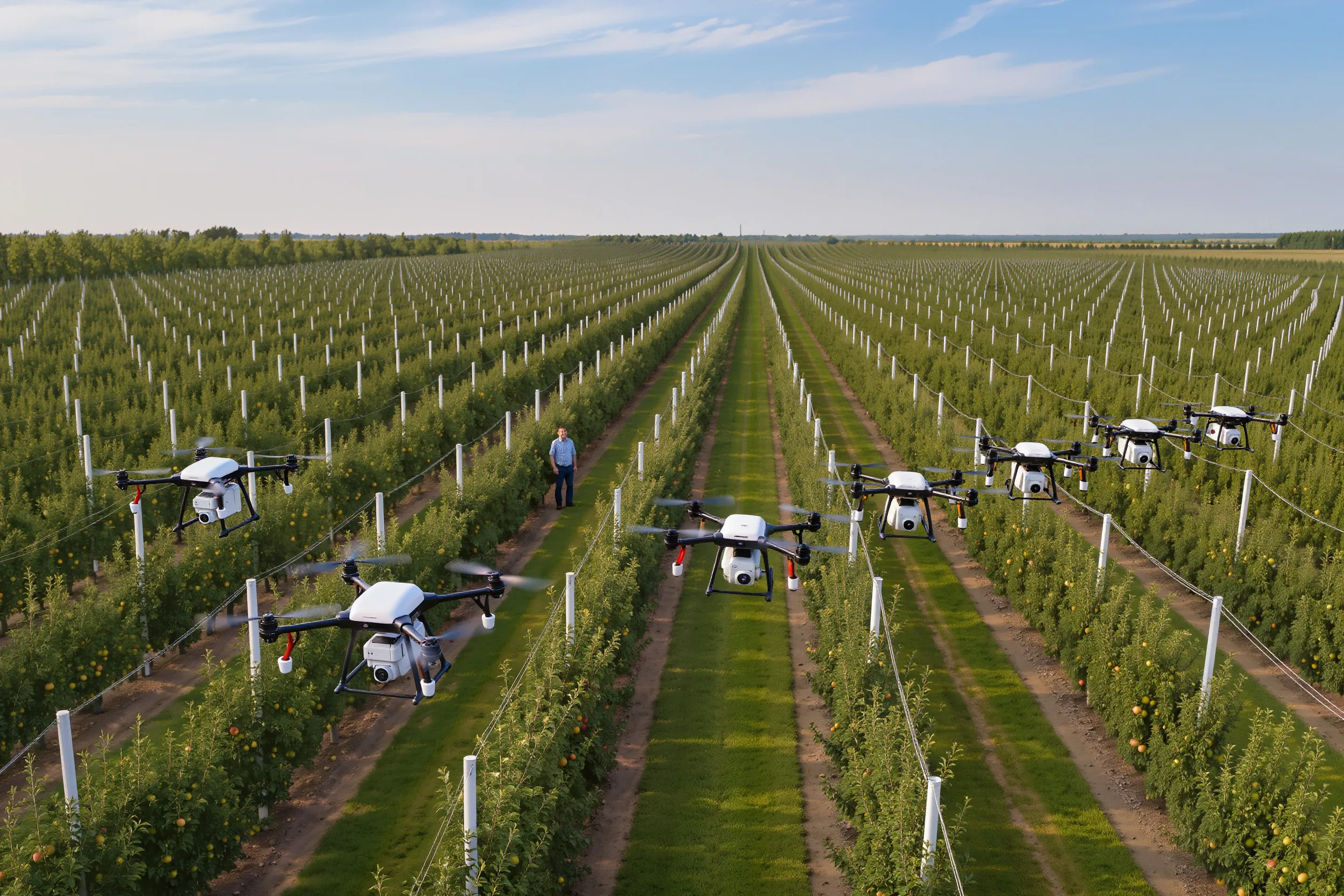
Before a mission begins, a flight task is uploaded to the drone’s controller – a digital map of the orchard that includes the coordinates of each tree, canopy height, and an exact route. Stereo cameras determine canopy geometry and density, distances between trees, and recognize and assess individual fruits, calculating their coordinates and transmitting this data to the onboard control system. The UAV then flies around the trees as the 3D cameras scan the canopies and select targets. The GLONASS receiver precisely tracks the drone’s position, while the machine-vision system computes the spatial coordinates of each fruit and evaluates it. A manipulator arm then extends, grips the fruit, twists the stem, and gently detaches it from the branch. All of this happens without human involvement. The key advantage is full autonomy combined with a level of precision that is exceptional by agricultural standards.

Outperforming Foreign Systems
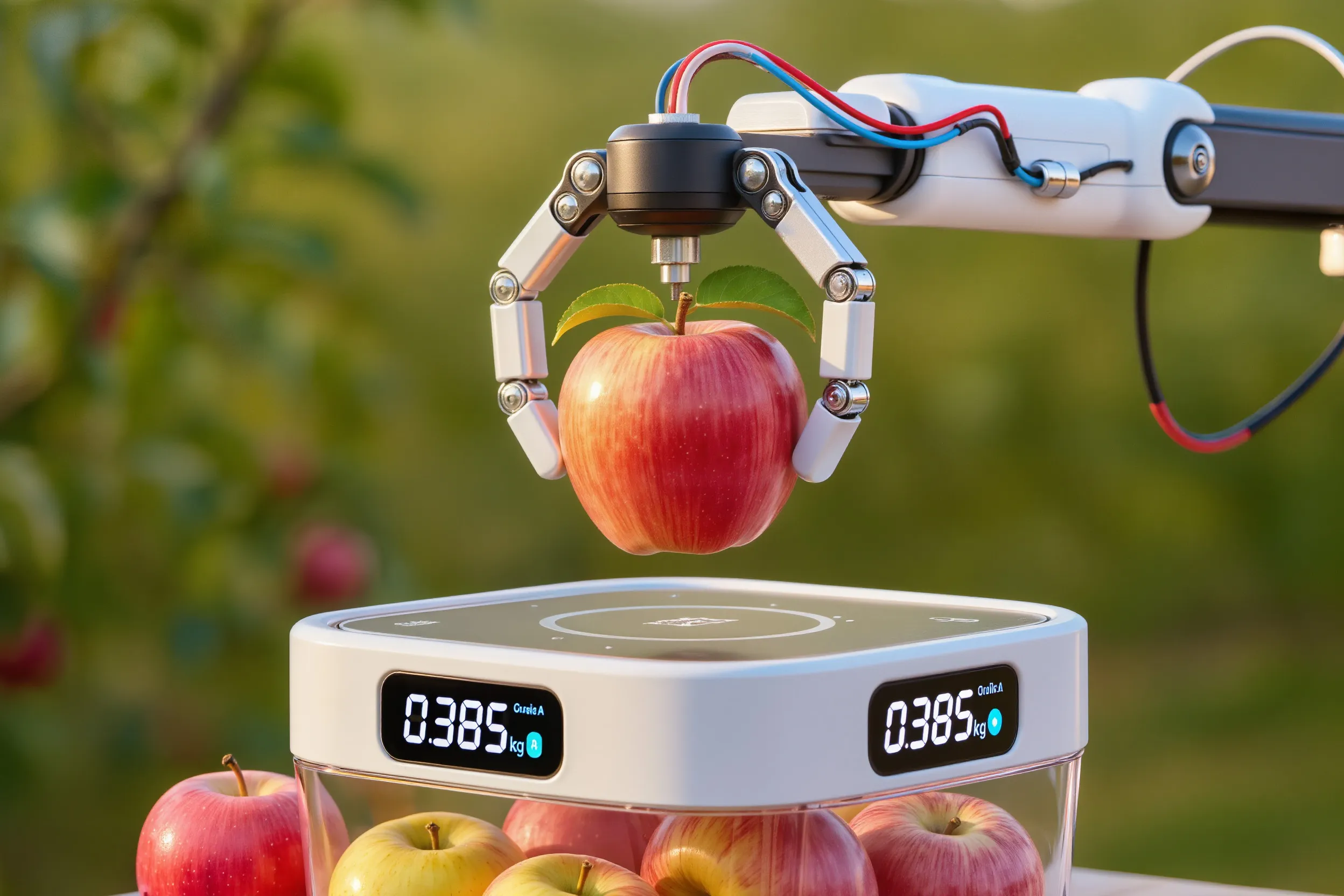
The UAV is designed to handle complex fruit-harvesting tasks. It carefully places fruit into a basket, preventing damage. Once the onboard container is full, the robot transfers the fruit into a larger ground-based transport container using a non-impact method.
Delicacy is the core advantage of the Russian design. Comparable systems developed in China, South Korea, and the United States have proven less refined – many operate in a single plane, which can damage both the canopy and the fruit. In addition, those systems often rely on toothed saws or cutting tools, which can injure fruit during harvesting and disrupt the UAV’s balance as containers are filled unevenly. They also require remote operation, meaning an on-site human operator is needed. This reduces productivity and limits overall harvesting quality.
The patented drone developed by the Federal Scientific Agroengineering Center VIM will undoubtedly require further refinement. What matters, however, is that it is already a working model that demonstrates a clear technological direction. The system not only performs aerial monitoring and orchard analysis but also carries out direct physical manipulation without human involvement – the most complex tier of robotics. The technology is suitable for a wide range of fruit trees, from apples and pears to varieties with taller canopies.
Demand for Agri-Drones Will Only Grow
Zakhar Zavyalov, founder and CEO of GeosAero LLC, a company that uses UAVs for agricultural monitoring, believes the prospects for such technologies are closely tied to labor shortages.
According to expert assessments, demand for drones in Russia’s agricultural sector continues to grow steadily. In the updated draft of the Ministry of Industry and Trade’s Strategy for the Development of Unmanned Aviation through 2030, with a horizon to 2035, agriculture is identified as one of the primary customers for unmanned aerial systems. The reason is straightforward – Russia’s agricultural land area reaches approximately 380 million hectares.
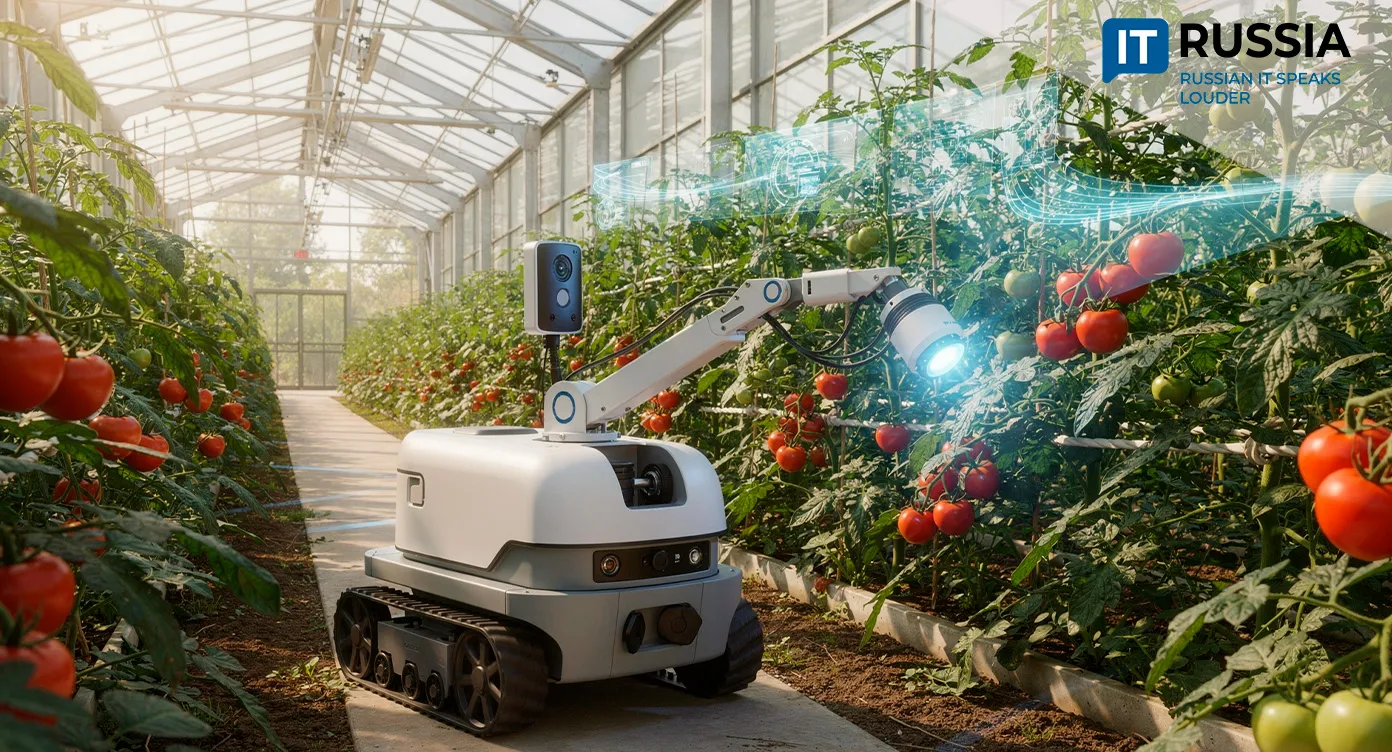
The new development can be integrated with other precision-farming systems, including crop monitoring and ripeness assessment. This marks another step toward smart crop production and full agricultural automation. The technology is especially promising for greenhouse operations, where one set of robots can monitor plant health and treat diseases while others handle harvesting. This represents the next stage in the evolution of automated greenhouses.
In the longer term, the Russian solution could find demand in countries with high labor costs, including the European Union, Iran, and the United States – both as a standalone product and as part of larger smart-farming ecosystems.