Code Fused Into Metal
Digital Trace on Red-Hot Metal: Russia Patents and Prepares for Deployment a “Hot” Marking Technology.
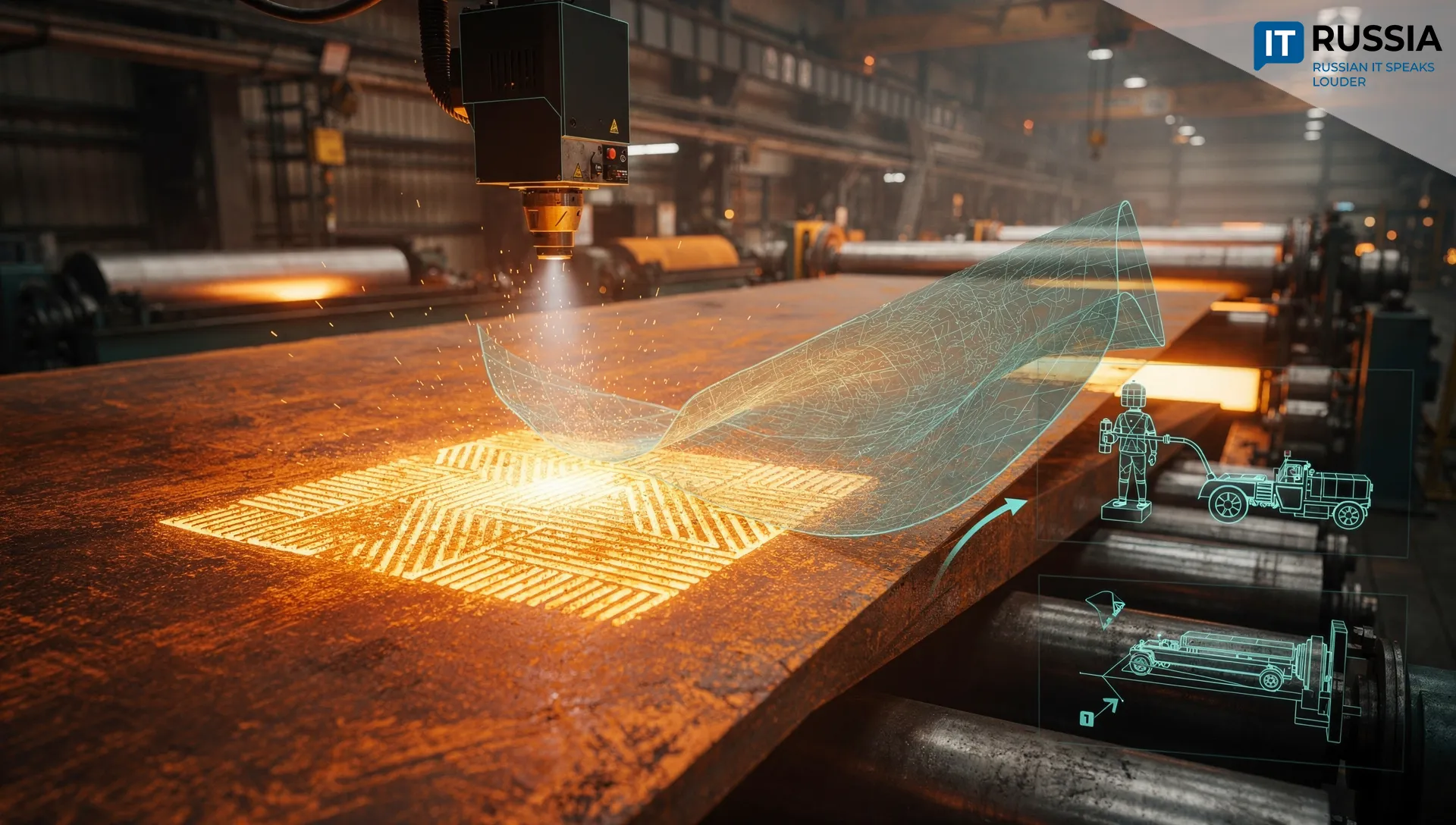
VPG LaserONE (VPG LaserOne LLC), part of the SF Tekh (SF Tech) cluster of Softline Group (Softline PJSC), has unveiled a patented technology for “hot” laser marking. It allows manufacturers to apply machine-readable codes to red-hot metal directly during the production cycle, without stopping the equipment. The approach ensures full traceability of metal structures, addressing the urgent need among metallurgy and mechanical engineering companies for reliable identification of workpieces and improved quality control.
Laser vs. Red-Hot Metal
Until recently, ensuring end-to-end traceability of metal products during hot processing remained a challenging engineering task. Conventional approaches, including impact-mechanical stamping and the application of heat-resistant paints, required the conveyor to be stopped, parts to be cooled locally, and personnel to manually read the markings. The high risk of damage to such markings led to lengthy downtime and accounting errors. The new laser systems eliminate all of these drawbacks and take the identification process to a fundamentally different level.
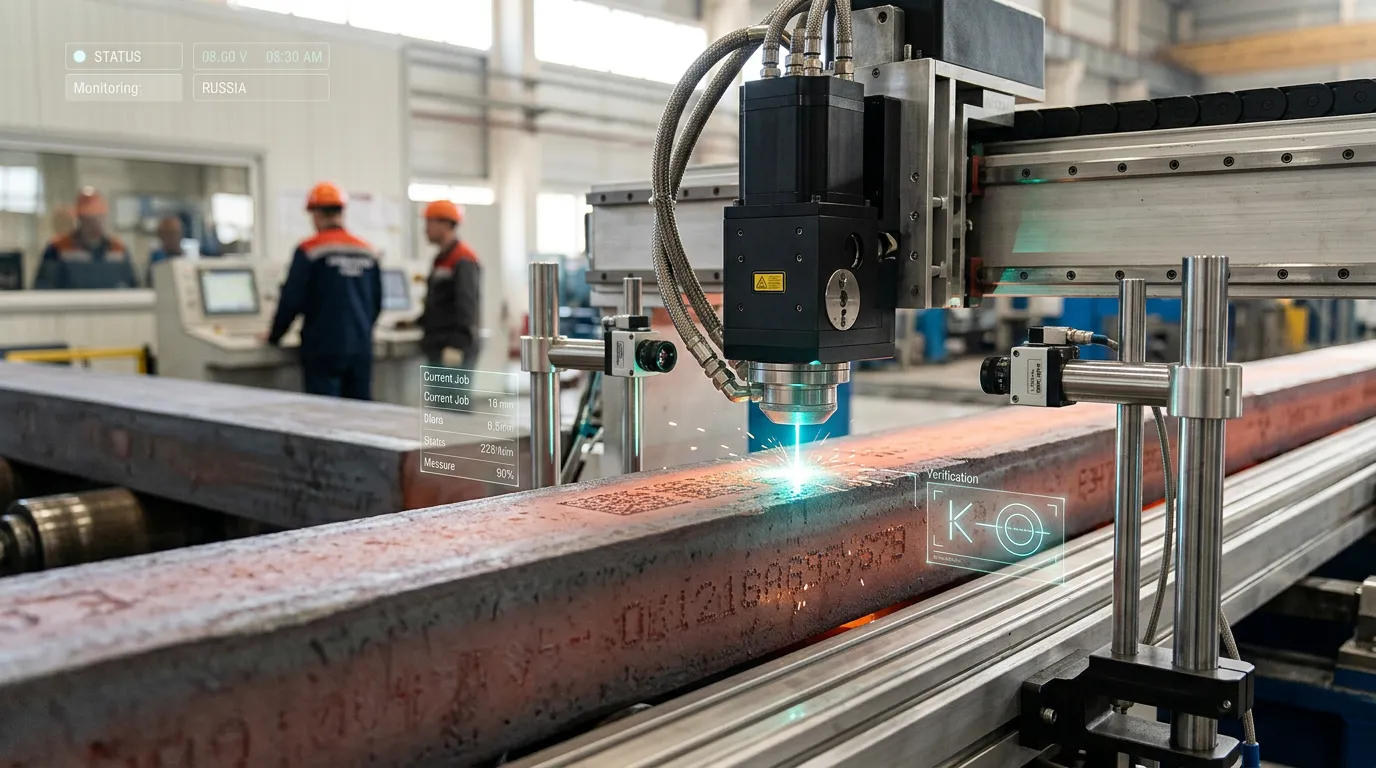
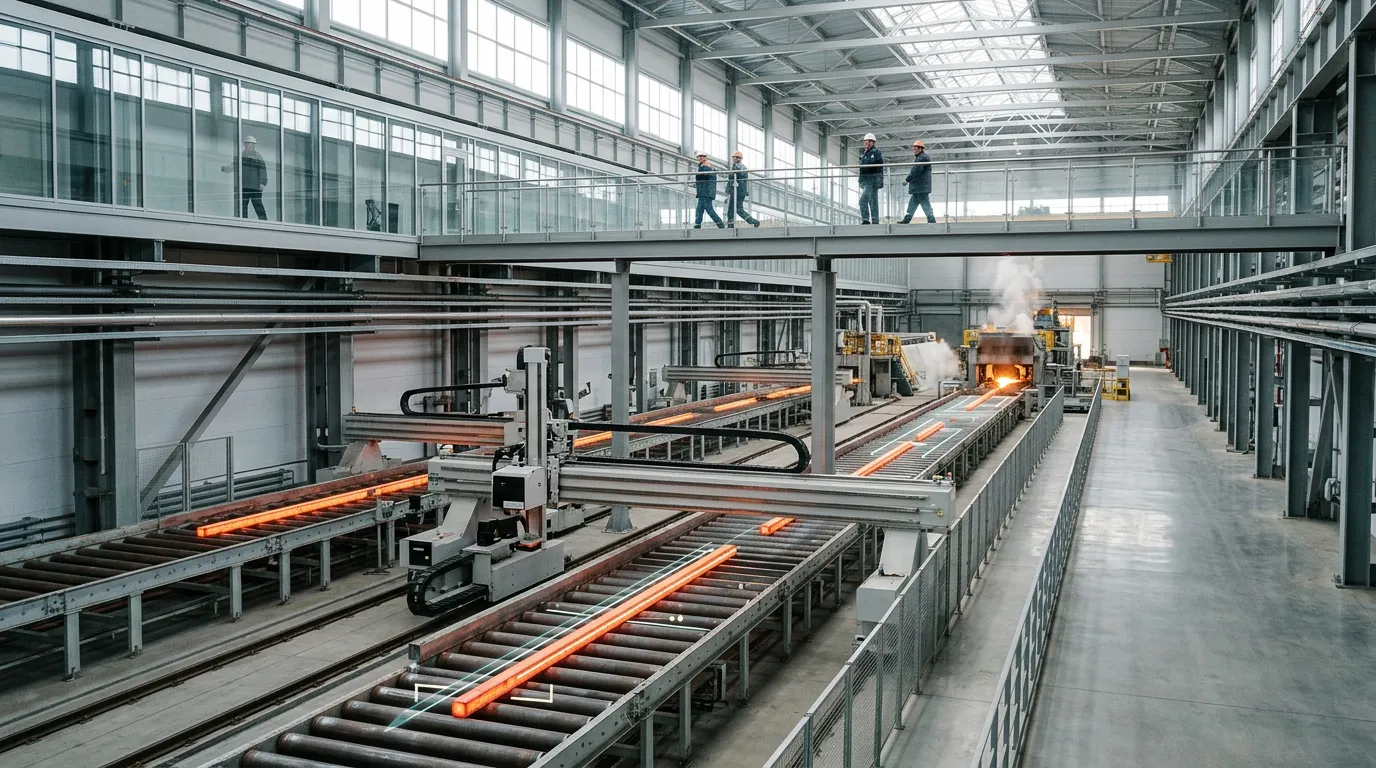
The VPG LaserONE solution is based on a nanosecond fiber laser with an average power of 5 kW or more and high pulse energy. An optical scanning system creates durable QR or DataMatrix codes measuring up to 75 × 75 mm on the surface of workpieces heated to 800–950°C. Local evaporation of the metal creates grooves several hundred micrometers deep. As a result, the mark becomes an integral physical part of the product: it cannot be peeled off, washed away, or accidentally damaged during further processing. The engraving process takes no more than 60 seconds and does not require the production line to stop. The equipment is compact and uses minimal consumables, while the workpiece can also be cleaned on the same system if necessary.
From Counterfeit Protection to Management Analytics
The new marking technology follows industrial Internet of Things principles and is ready for large-scale deployment at metallurgy, pipe-manufacturing and mechanical engineering companies, including heavy-equipment manufacturers. The innovation can reduce costs and automate product quality control. This allows personnel to move away from routine operations and reduces reliance on visual inspection.
The development is also benefiting from the expansion of the list of goods subject to mandatory marking, which the Russian Ministry of Industry and Trade introduced in 2023. These measures not only reduced the share of counterfeit products but also created extensive datasets for business analytics and government regulators. As a result, identification has evolved from being merely a tool for counterfeit protection into a source of management information.
The solution could also find demand abroad, primarily in countries with developed industrial sectors, including China, India, Turkey and countries in the Middle East. VPG LaserONE’s expansion into these markets is supported by the international experience of its parent company, Softline Group, which has offices in the United Arab Emirates, Vietnam, Indonesia, Kazakhstan and Uzbekistan. Its main competitive advantages include adaptation to production processes, service support and the ability to integrate with local management systems.
The End of Manual Marking
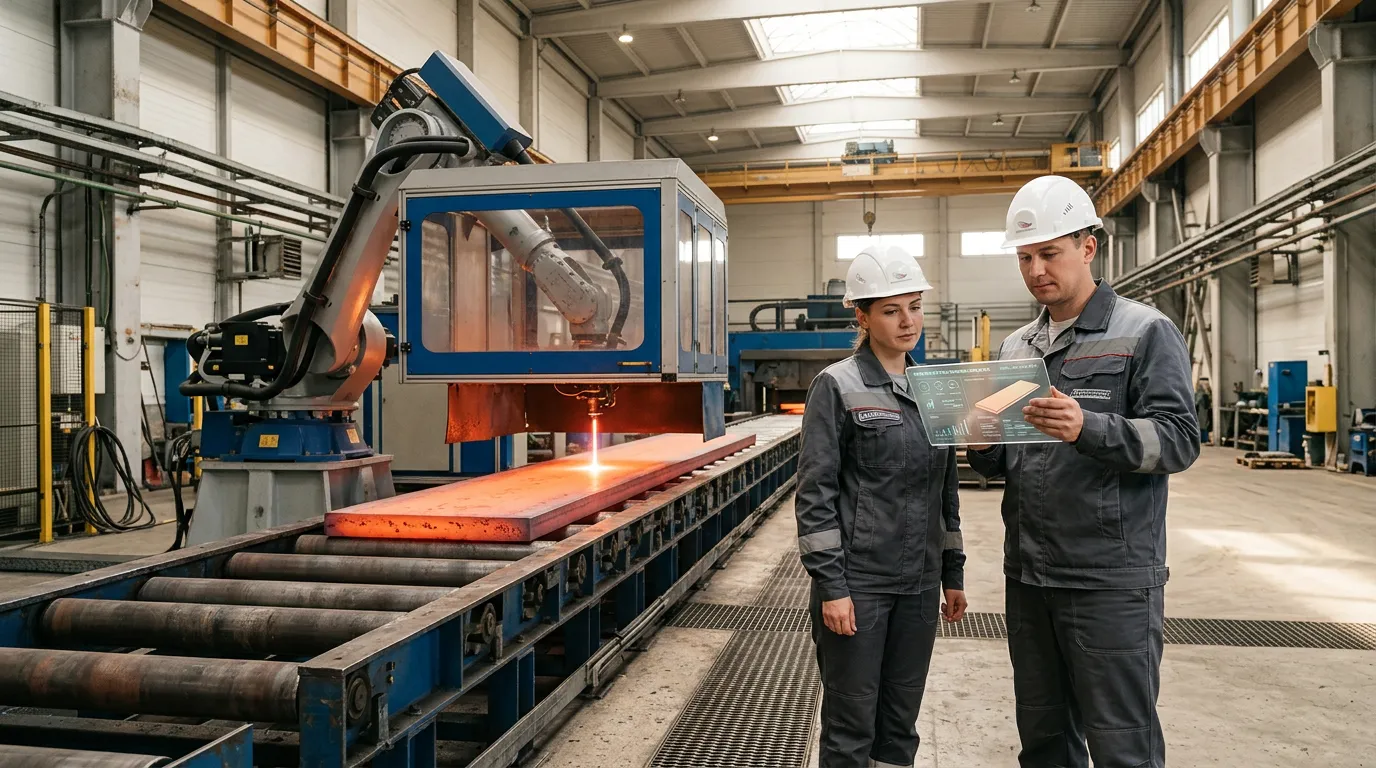
Russian companies are rapidly adopting industrial analytics technologies, making this segment highly promising. In 2021–2022, Severstal Steel Solutions automated the tracking of metal structures using QR codes, making it possible to monitor the status of operations in real time. In 2022, KAMAZ PJSC’s Press and Frame Plant introduced machine vision to identify parts that lose their visual markings after heat treatment. Pipe Metallurgical Company PJSC went a step further: its facilities introduced robotic systems, while neural networks learned to reconstruct damaged symbols. In 2025, the Seversky Pipe Plant launched a system for automatically reading markings directly on the conveyor. The new equipment increased the speed of marking and integrated the process with the production line.
From Melting to Shipment – One Data Chain
The VPG LaserONE technology naturally continues this broader trend by moving code application to the earliest possible stage – the processing of red-hot metal. In the future, laser engraving could be integrated with MES and ERP systems, creating a digital passport for each product from melting to shipment.
Industrial marking is no longer just a supporting operation; it is becoming the foundation of a company’s information infrastructure. Over time, solutions like these could enable end-to-end management in which every part receives a unique identifier and becomes a fully traceable link in the production cycle.