Neural Network vs. Viruses: Russian Scientists Use AI to Search for Unknown Pathogens
Scientists at Russia’s Vector center in Novosibirsk are using artificial intelligence to analyze the genetic properties of newly discovered viruses. Using AI, they have already obtained information about three previously unknown pathogens. In the future, the approach could speed the development of test-system prototypes and help prevent epidemics.
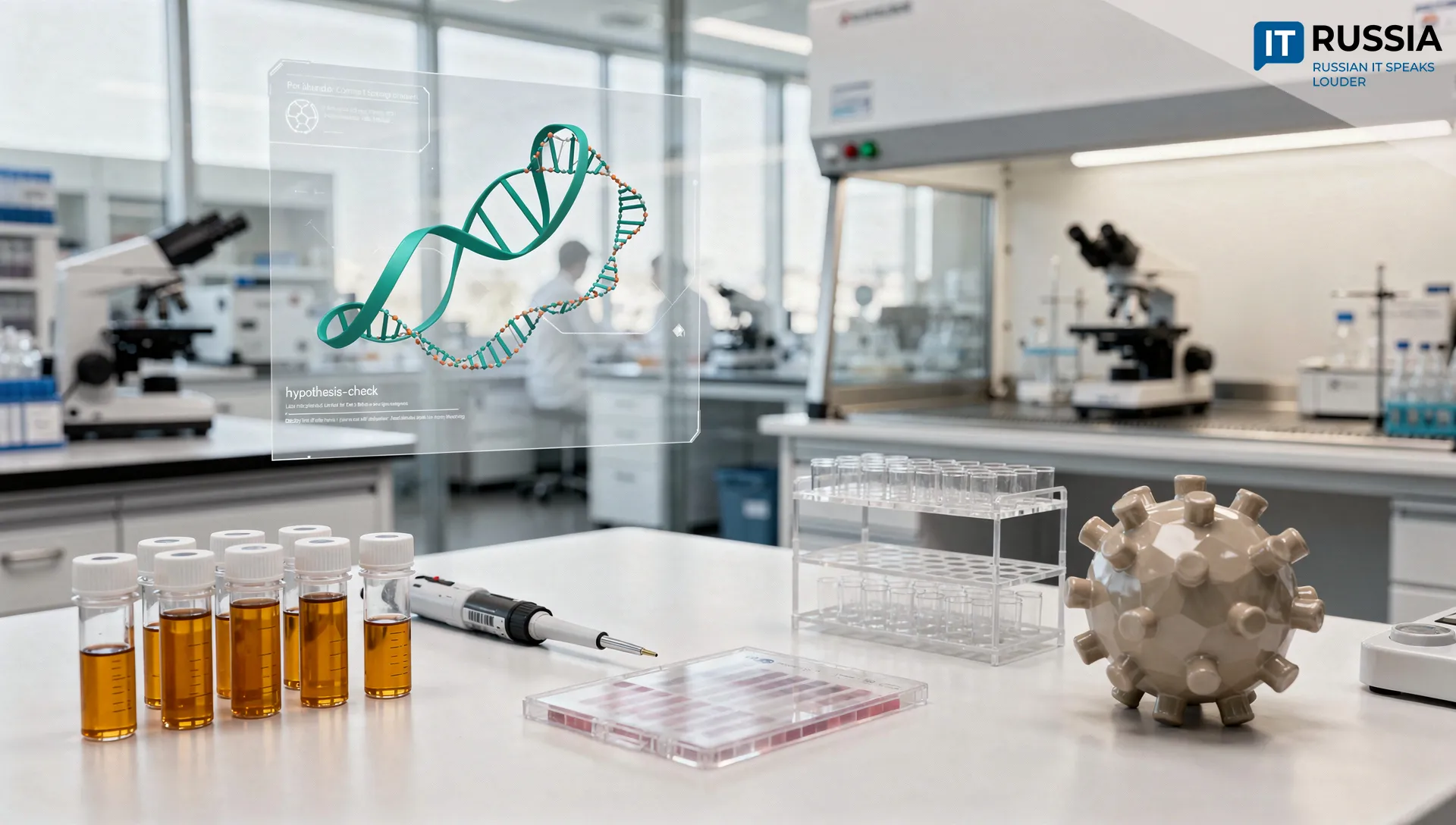
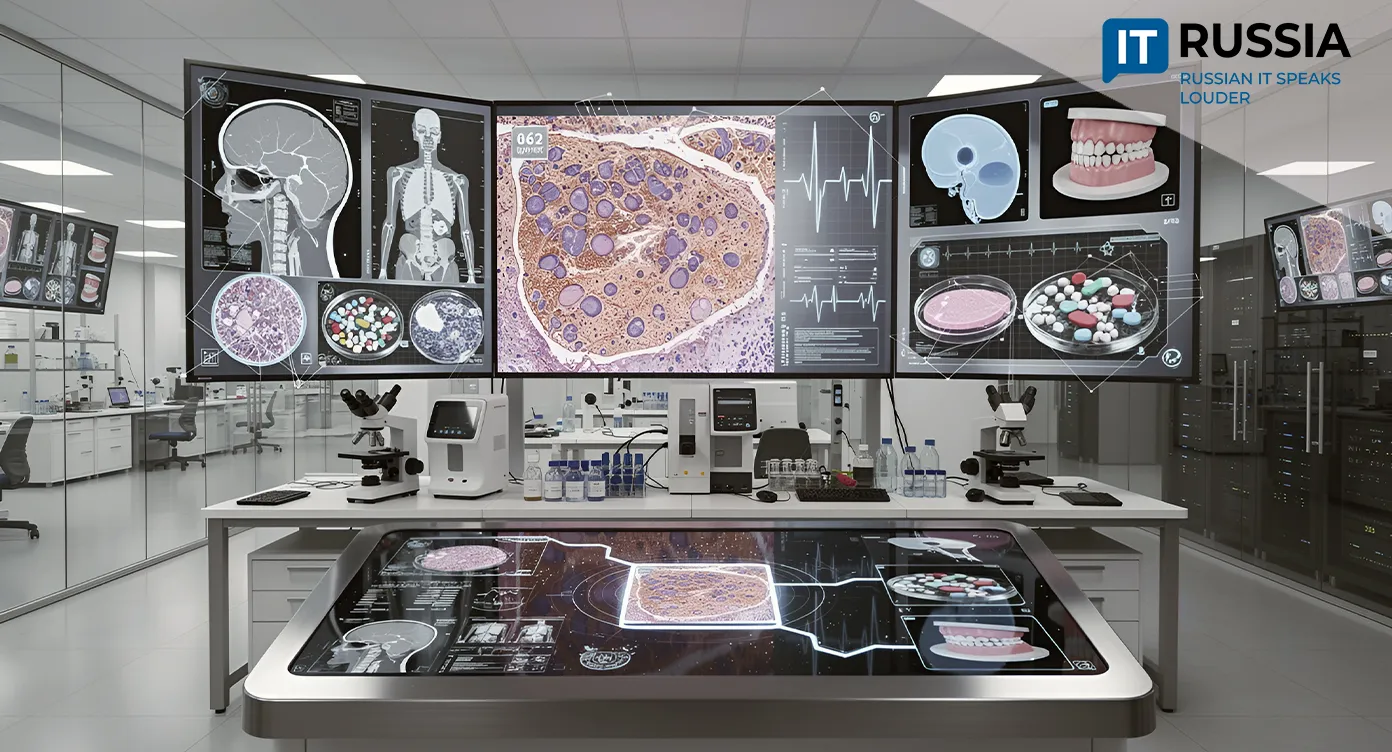
The COVID-19 pandemic showed the world how important it is to identify dangerous viruses quickly. The sooner scientists understand which pathogen they are dealing with, the sooner tests, vaccines and medicines can be developed. That is why the Vector center in Novosibirsk, one of Russia’s largest research centers for virology and biotechnology, is making extensive use of artificial intelligence. The technology helps researchers analyze genetic data, predict the structures of viral proteins and identify possible functions of genes in previously unknown pathogens.
The results of the AI work were presented at the 13th Russian Biotechnology Forum OpenBio-2026. Using the new method, scientists have already obtained information about at least three new viruses.
How AI Searches the Genome
Vector studies highly dangerous infections. Its facilities, for example, house the state collection of smallpox virus strains. The center also conducts research on viruses including Marburg, Ebola, Zika and SARS-CoV-2, as well as infections of major public-health concern such as HIV, hepatitis and measles.
The scientists rely on a basic principle: if proteins have similar functions, or biological roles, their structures are likely to be similar as well. And if the structure of a protein can be determined, researchers can infer what it does. The main analytical tool is machine-learning-based modeling. There is, however, an important caveat. As the researchers themselves acknowledge, AI models often produce structures that are not entirely accurate. So even when a result looks reliable, it is still verified experimentally in the laboratory.
AI Sees, the Laboratory Confirms
To obtain results that are as accurate as possible, the scientists use a combined approach. First, they take the genome sequence of a new virus, reconstruct it and use recombinant technologies – in which a gene from one organism is introduced into another – to produce the proteins they need. They then determine the proteins’ structures experimentally using synchrotron methods. Only after this verification can the results be considered confirmed.
The process sounds complicated, but the principle is simple: first, a computer generates a hypothesis, and then scientists test it in the laboratory.
Viruses Under Investigation
The first and particularly interesting example of this work was the Haseki virus, an infectious disease transmitted by ticks. Vector researchers first identified it while studying serum samples collected from patients who sought medical care after tick bites in Vladivostok.
The clinical symptoms resembled those of an ordinary respiratory viral infection, but the scientists detected RNA from a new virus in the serum samples. For a long time, they knew almost nothing about it. Its genetic code was radically different from those of known viruses, and researchers were unable to grow it in the laboratory. AI finally helped the scientists identify key enzymes in the virus’s genome. Enzymes are the molecular tools a virus uses to reproduce and “hack” a cell’s defenses. Understanding how these tools are structured can make it possible to block them and, in turn, stop the virus itself. This opens a path toward developing tests and medicines.
The scientists also used several viruses from the Nairoviridae family as test cases. They were discovered over the past five years in Japan, China and Russia. These viruses cause fever in humans. Using AI-generated information about the viruses, the researchers developed prototypes of diagnostic test systems. Those test systems have already been used to detect antibodies to the viruses in people living in regions of Russia bordering China.
A Barrier Against Disease
The virologists conducting this work emphasize that studying new viruses is not only a scientific task but also an issue of importance to humanity as a whole. Russia’s Strategy for Scientific and Technological Development, approved in 2024, identifies biological threats as one of the major challenges facing society, the state and science.
This is therefore by no means a problem confined to a single country. New pathogens do not recognize borders, as humanity learned from COVID-19. An unknown virus may be detected in one region today and appear on the other side of the planet tomorrow. The faster scientists learn to recognize and characterize new threats, the longer and more safely people can live. Russian science has already shown that it can be among the pioneers in this field.