Digital Transformation, the Russian Version: From Pilots to Scale
Russia’s state digital policy over the past several years shows that the government is not only encouraging businesses to actively adopt artificial intelligence solutions, but is also deploying AI directly in public administration. The result is a transition from isolated pilot projects to scalable, system-level implementations that reshape how the public sector operates.

AI Accelerates Routine Government and Business Processes
Virtual assistants are easing workloads across a wide range of sectors, handling tasks that range from budget planning to optimizing rail transportation. Supporting and developing Russia’s IT sector remains a priority under the national “Data Economy” project.
According to experts from the Big Data Association, Russia’s big data and artificial intelligence market was valued at approximately 320 billion rubles in 2024 (about $3.8 billion), a figure comparable to the country’s largest IT industry segments.
At the same time, the government has a direct interest in expanding AI-based IT products. Russia has developed its own large language models, hosts dozens of AI-focused development companies, and relies on a strong, initiative-driven IT community. Across 35 industry competence centers – collaborative communities focused on replacing foreign software and digital solutions with domestic alternatives – roughly 200 projects are currently underway, with 26 of them directly tied to AI.

AI-driven digital solutions are already improving everyday life and increasing comfort for citizens, which is why the Russian government continues to invest in developer support. Under the “Data Economy” national project, creators of IT solutions can apply for financial backing to build new technologies. The most illustrative AI use cases in public administration highlight how this strategy translates into practice.
A Digital Assistant for Budget Planning
In the summer of 2025, Russia’s Ministry of Finance and Sber signed an agreement to cooperate on artificial intelligence for improving the federal budget process. Based on the Russian large language model GigaChat, an AI agent was created to help Ministry of Finance specialists independently adapt AI tools and apply large language model capabilities when restructuring government program budgets.
According to the ministry, the new digital solution accelerated budget approvals by automating data preparation and verification. Finance Minister Anton Siluanov said the model reduced staff workloads during peak budget cycles by as much as 70% in some cases. Routine tasks are increasingly delegated to AI, allowing highly qualified specialists to focus on complex, high-value decisions.
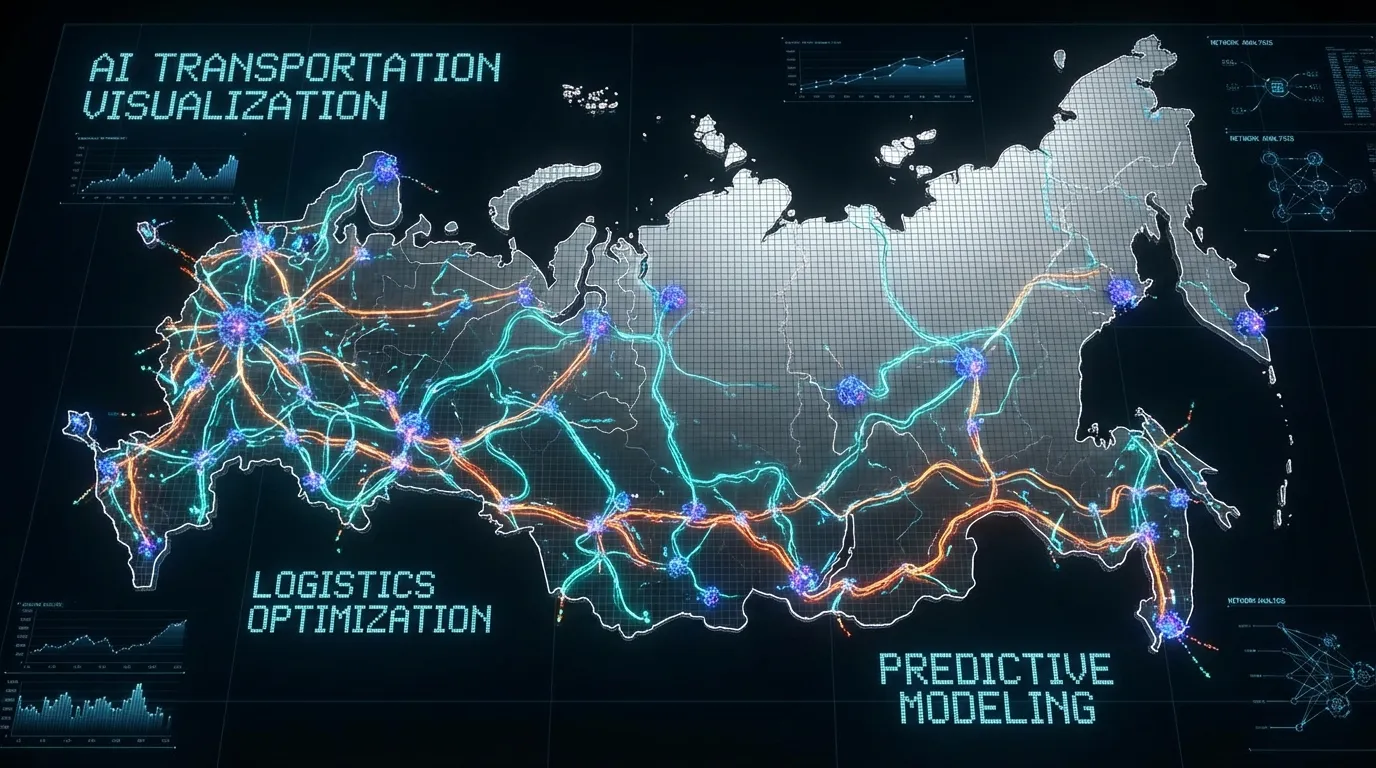
Artificial Intelligence Manages Rail Passenger Flows
A software system for modeling and forecasting passenger flows using AI has been implemented at Russian Railways. The project is aimed at import substitution while improving transportation planning accuracy.


In 2024 alone, nearly 1.3 billion passengers traveled across the Russian Railways network. The AI system analyzes a broad range of data – from regional socio-economic indicators and infrastructure capacity to population figures and the launch of new routes – using anonymized mobile operator data. Tasks that once took months are now completed within a single day, reducing costs and congestion risks.

Toward a Fully Digital State
Gradually, the Russian government is evolving into a fully digitized system. AI is already used to match citizens with public services, support identity verification, and manage payment systems. Automation lowers bureaucratic pressure and shortens the time required to access government services.
Neural networks can be applied across virtually all sectors of government, from building talent pipelines to managing urban services. The adoption of AI is accelerating the development of Russia’s public sector, supporting the domestic software market and reducing reliance on foreign digital solutions. For citizens, automating routine processes brings tangible benefits – lowering administrative burdens and making public services faster and easier to access.
While the export potential of Russian AI solutions remains limited for now, the possibility of offering domestic AI platforms internationally remains open in the long term.