In Russia, Quantum Processors Reach 70–72 Qubits as Compact Squeezed-Light Source Debuts
Under a national quantum computing roadmap, Russian laboratories have unveiled several quantum processor prototypes and a key optical component. Together, these advances strengthen the foundation for next-generation quantum computers and ultra-sensitive sensors.
What Scientists Have Demonstrated
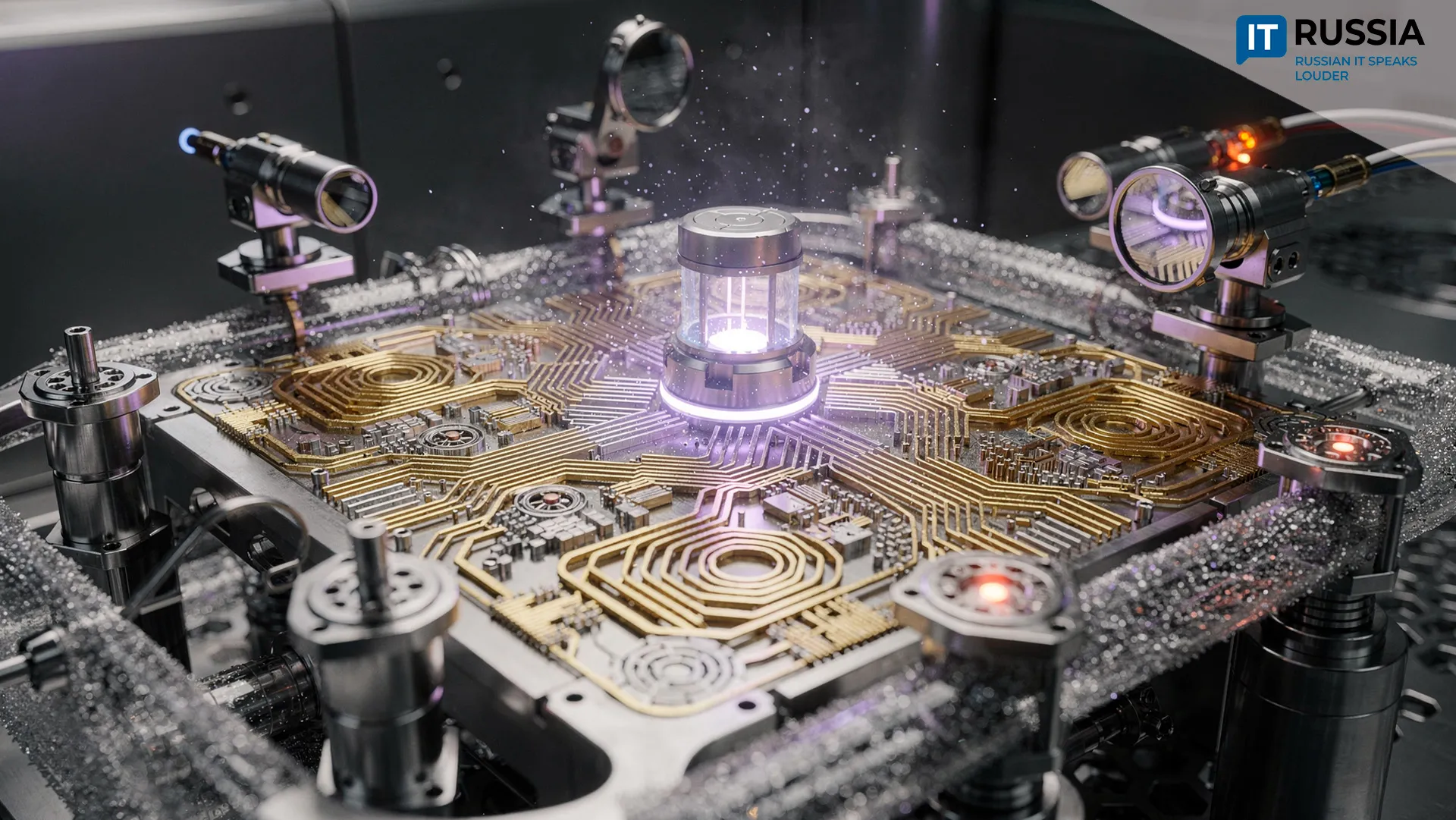
Russian research teams have presented several prototype quantum processors. Some platforms are based on trapped ions, while others rely on neutral atoms. Across different implementations, register sizes have reached 70–72 qubits. This marks a new stage in scaling the hardware base for quantum computing.
At the same time, researchers have developed Russia’s first compact, integrated source of quantum squeezed light. Such a source produces optical signals with reduced quantum noise, making it suitable for ultra-sensitive measurements and for use in photonic quantum circuits.
How It Works, in Plain Terms
A qubit is the quantum analogue of a classical bit. Depending on the platform, qubits can be implemented as ions held in traps, neutral atoms arranged in optical lattices, or photonic states in optical systems. Controlling dozens of qubits simultaneously requires precise laser systems, highly stable traps, and careful suppression of environmental noise.
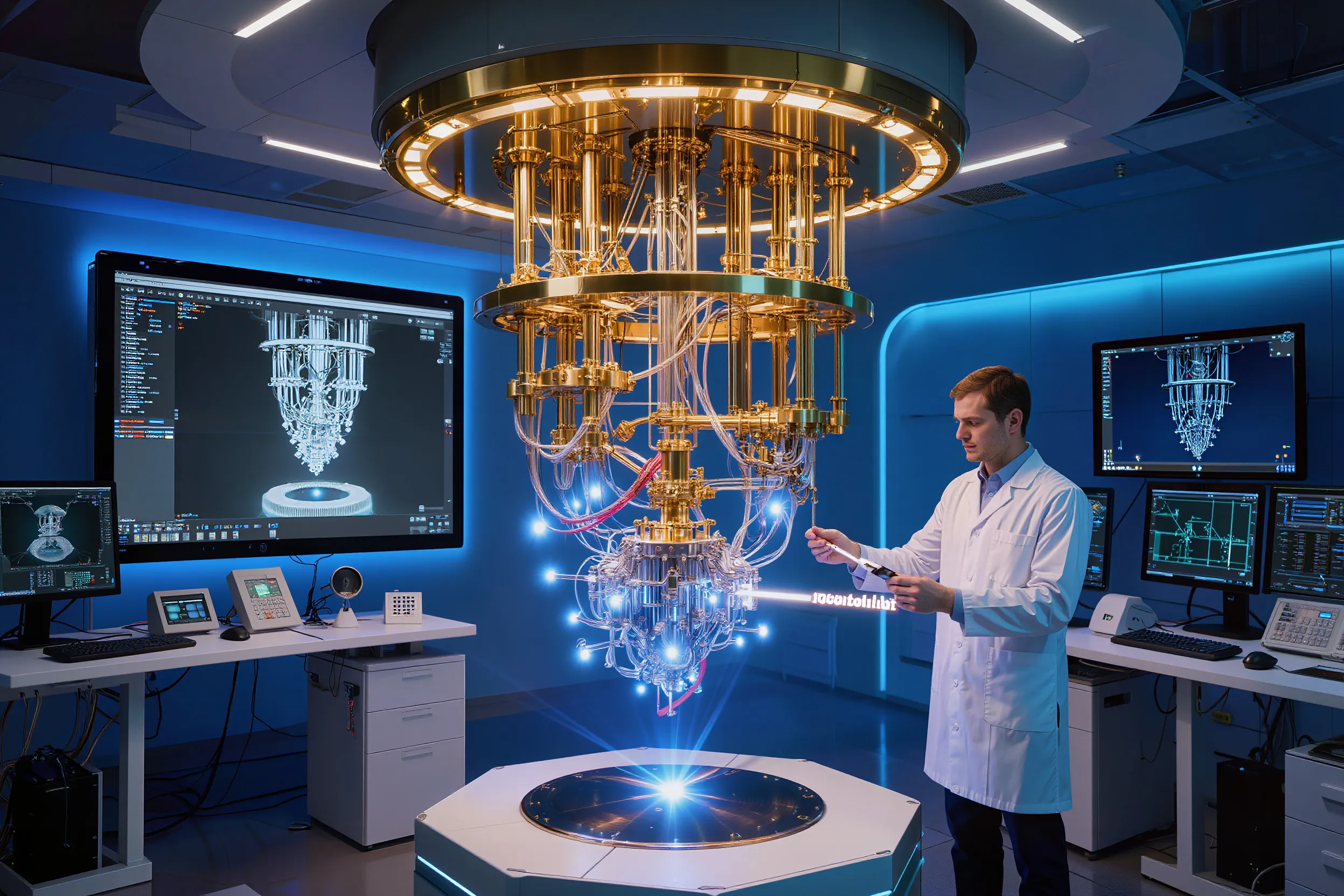
A squeezed-light source creates a quantum state in which one parameter of the optical field is “quieter” than ordinary laser noise. In practice, this boosts sensor sensitivity and reduces errors in optical operations inside quantum devices. A compact, integrated design makes such sources more mobile and closer to industrial deployment.


Operation Fidelity Milestones
Testing has demonstrated strong performance in terms of operational accuracy. For single-qubit operations, reported values are close to ideal, reaching up to 99.9% in some experiments. For two-qubit operations, control runs have achieved accuracy levels of up to 99.4%, a record for Russian setups. These figures indicate that errors in elementary quantum operations are becoming significantly less frequent.
High fidelity is critical. The lower the gate error rate, the easier it is to implement error-correction schemes and to move from laboratory experiments toward applied quantum computing. The number of qubits matters, but the combination of register size and operation quality is even more important.

Impact on Science and Industry
The availability of multiple platforms with 70-plus qubits gives researchers flexibility to explore different algorithms and architectures. This accelerates testing of applied problems in chemistry, materials science, and optimization, where quantum accelerators may offer an advantage. Having domestic hardware platforms also simplifies workforce training and reduces reliance on foreign suppliers.
The compact squeezed-light source opens the door to a new class of quantum sensors. These devices can outperform classical counterparts and are well suited for navigation, geophysics, and materials diagnostics. Taken together, these results strengthen the national component base for the quantum technology sector.
Where the Next Steps Lead
The roadmap calls for further gains in reliability and increases in qubit counts between 2026 and 2030. Plans include refining error-correction protocols and assembling pilot hybrid systems in which classical and quantum modules work together on specific tasks. In parallel, component supply chains will expand, and the export potential of quantum photonics and sensing technologies will be developed.
The industry is set to gain new tools for accelerating scientific calculations and creating ultra-sensitive sensors. This is a long journey, but the current results show that the foundation for such a transition is already taking shape.