Gold Nanoparticles and Infrared Light: Russian Scientists Develop a Way to Attack Tumors Without Chemotherapy
Researchers in Russia say they have developed a new approach to treating malignant tumors. Scientists at National Research Nuclear University MEPhI, working with an international team, have created a technology designed to destroy cancer cells using light and specially engineered nanoparticles.
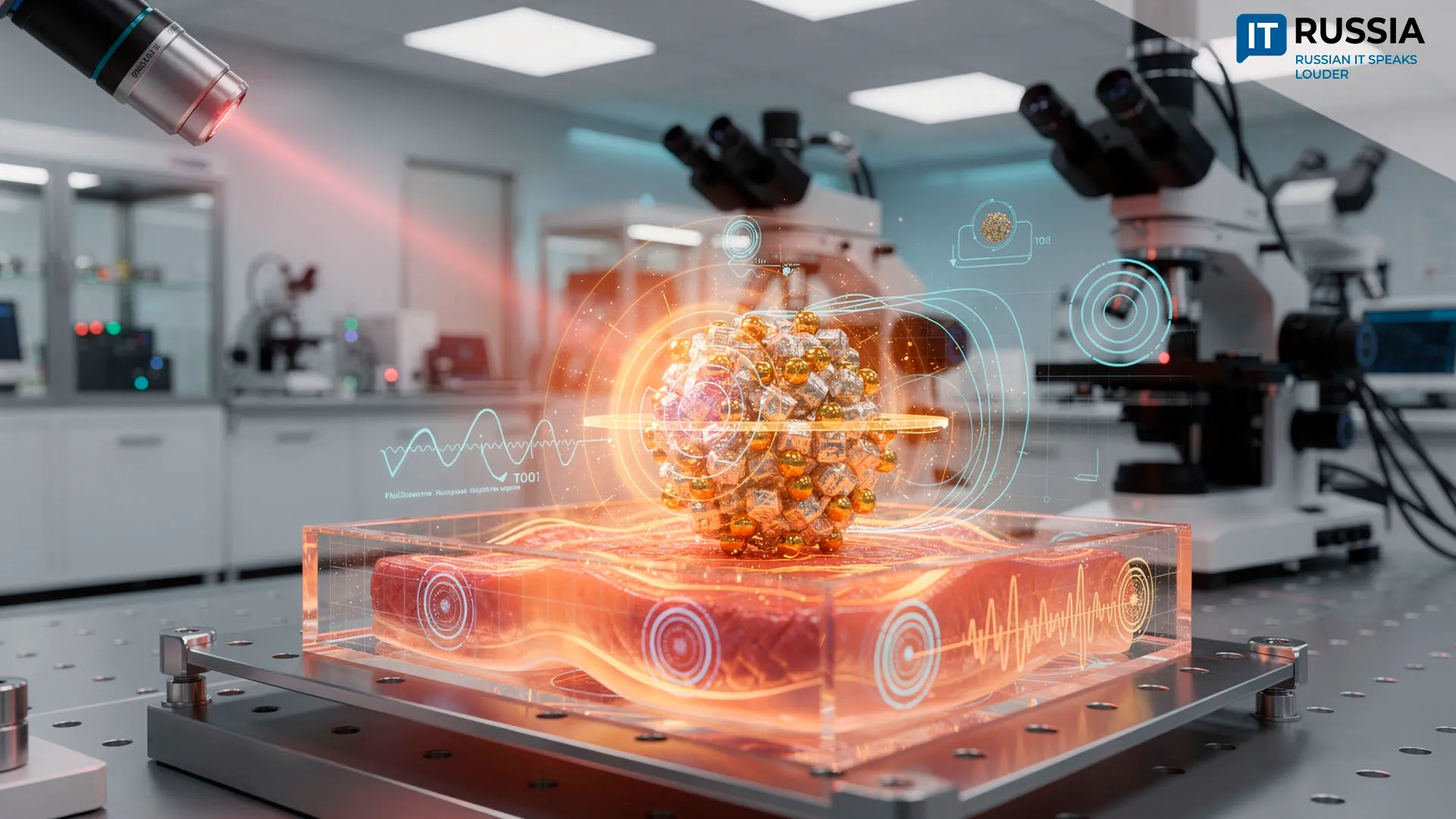
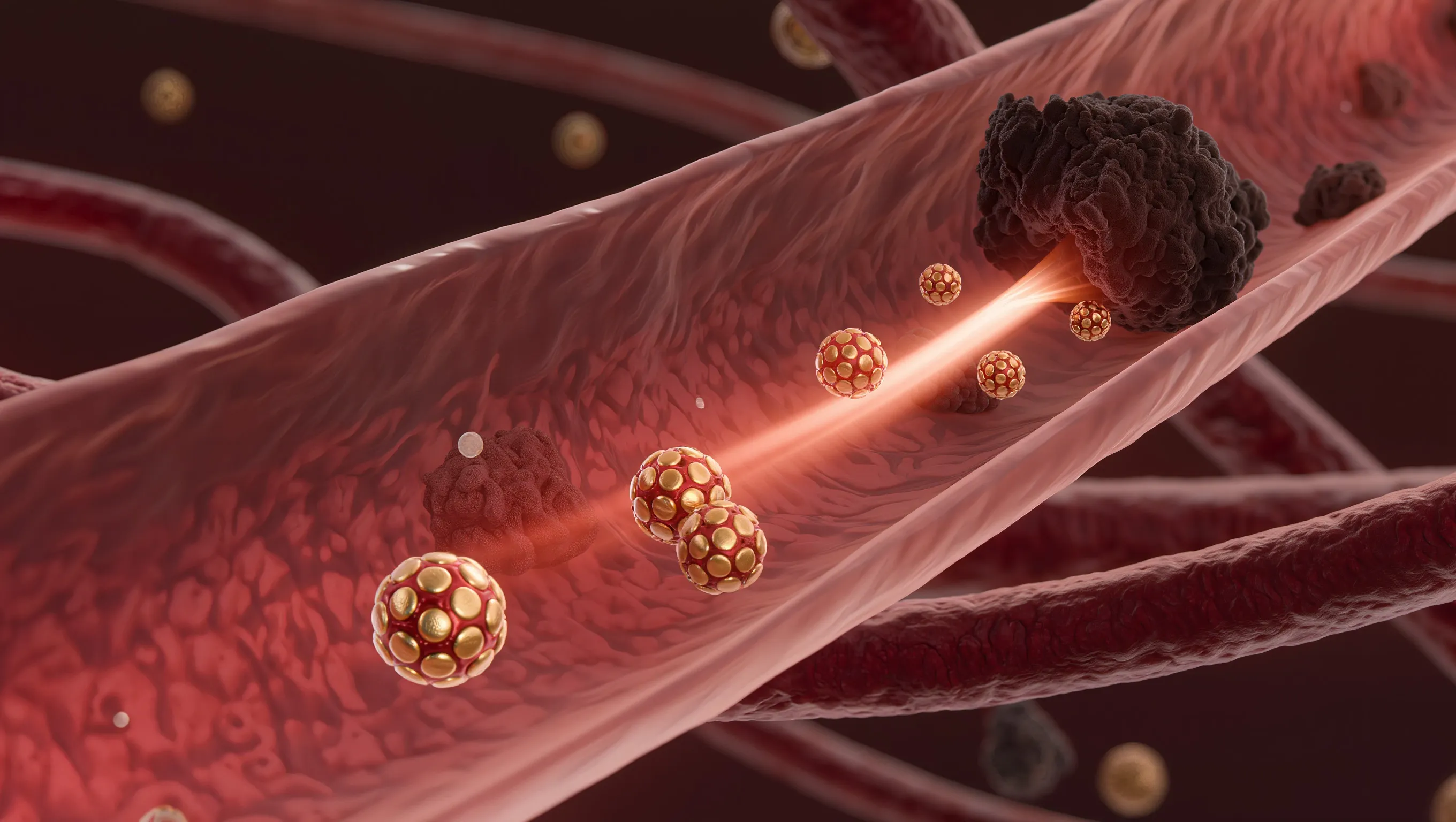
The principle behind the method is conceptually simple. Researchers inject microscopic particles composed of silicon and gold directly into tumor tissue. Each particle measures roughly 120 – 160 nanometers in size, thousands of times smaller than the thickness of a human hair. Once the particles accumulate in tumor tissue, the region is illuminated with infrared light.
When infrared radiation hits the particles, they begin to heat up. The heating effect is highly localized – occurring precisely where the nanoparticles are concentrated. As a result, nearby cancer cells experience a thermal shock and gradually break down, while surrounding healthy tissues remain largely unaffected.
The study found that composite particles made from silicon and gold perform particularly well. These particles heat up more efficiently than particles composed of silicon alone. This property could allow doctors to deliver more precise treatment. The research results were published in the international scientific journal Nanoscale.
Why Infrared Light Is Used
For their experiments, the researchers selected radiation with a wavelength of about 800 nanometers. This range falls within the red and near-infrared spectrum. For human tissue, this region of light is relatively “transparent.” Radiation can penetrate skin and soft tissue to a significant depth while causing only minimal heating of the tissue itself.

Physicists explain the effect through a phenomenon known as Mie scattering. It occurs when light interacts with extremely small particles. Inside such a particle a standing electromagnetic wave forms, effectively turning the nanoparticle into a miniature resonator that converts incoming light energy into heat.
Blocking Oxygen Supply to the Tumor
Heating is not the only mechanism that could help suppress tumor growth. Larger nanoparticles can also obstruct the tiny blood vessels that supply the tumor with nutrients. When particles accumulate within tumor tissue, they may partially block blood flow.


As a result, cancer cells begin to experience a shortage of oxygen and nutrients. For a tumor this creates extremely unfavorable conditions and may slow its growth. In essence, researchers are exploring a method that attacks tumors from two directions at once – localized heating and restricted nutrient supply.

Why Scientists Are Searching for New Therapies
Today the most widely used cancer treatments remain chemotherapy and radiation therapy. Both methods can destroy tumor cells but they also damage healthy tissue. This is why patients often experience severe side effects and a significant decline in well-being during treatment.
Photothermal therapy, the category to which this approach belongs, works differently from conventional treatments. It targets the tumor itself and aims to minimize impact on the rest of the body. If technologies like this reach clinical use, treatment could become more precise and far less traumatic for patients. In practice, that would represent a major shift in how certain cancers are treated.
Implications for Russian Biomedical Research
The work highlights how Russian research centers are participating in the development of advanced medical technologies at the intersection of physics, medicine and nanomaterials.
Projects of this kind require a substantial scientific foundation. They combine expertise from multiple disciplines – from optics and light physics to biology and clinical medicine. Such collaborations help create entirely new research directions and lay the groundwork for technologies that could eventually be used in next-generation medical centers.
Potential Impact on Global Medicine
Photothermal cancer therapy is currently being studied in laboratories around the world. Scientists are searching for materials and technologies capable of targeting tumors precisely while minimizing harm to healthy tissue.
The method proposed by the Russian team using silicon-gold nanoparticles could become one such approach. Interest in these kinds of solutions remains high.
Researchers are now studying how the particles behave inside biological tissues and what mechanisms could remove them from the body. This step is critical because the accumulation of foreign materials could pose health risks. Nevertheless, the research is continuing, and the work already provides a foundation for future developments that could lead to new cancer treatment methods.