MAI Develops Technology for a New Generation of Drones
Engineers at Moskovskiy aviatsionnyy institut (Moscow Aviation Institute) have developed a breakthrough approach to designing and manufacturing structural elements for unmanned aerial vehicles. The technology could make drone structures 20–30% lighter while maintaining the strength required for demanding aviation applications.
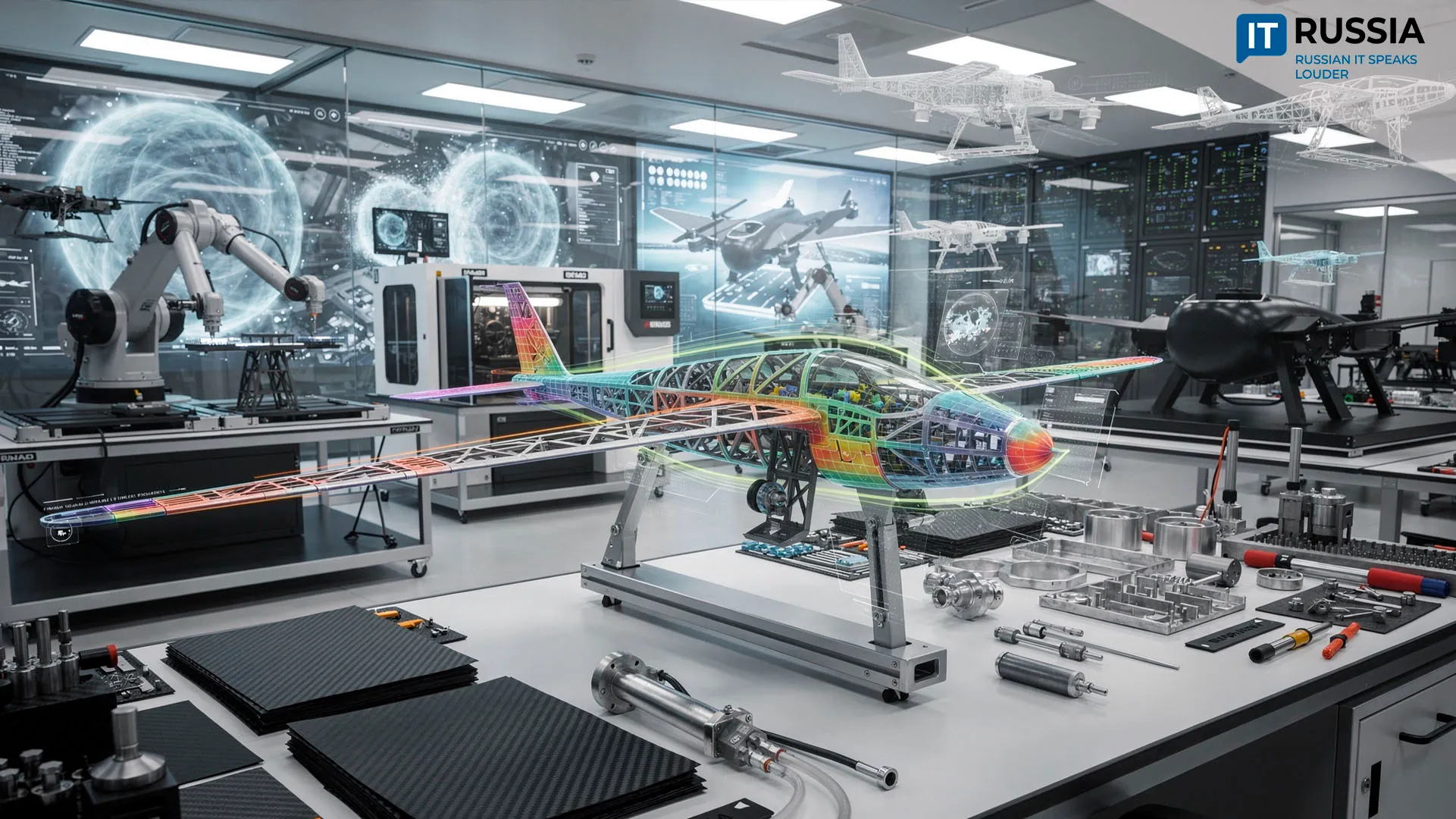
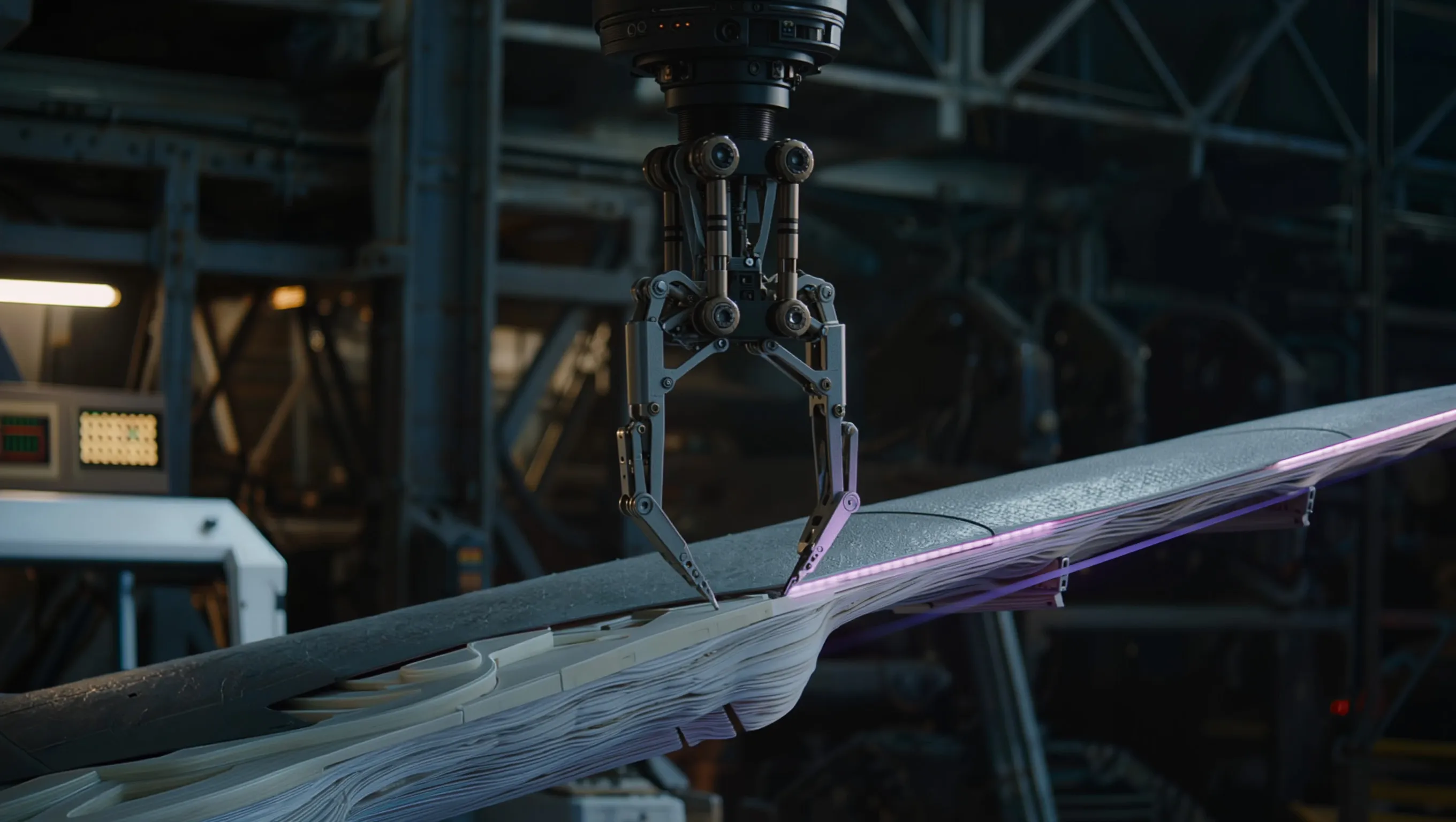
Engineers at Moskovskiy aviatsionnyy institut have developed a new technology for designing and manufacturing UAV skin panels, control surfaces and fuselage components. The core innovation lies in new approaches to designing composite structures: engineers optimized both the geometry and internal structure of composite elements. As a result, the overall weight of the structure can be reduced by 20–30% while preserving the stiffness and structural integrity required for flight.
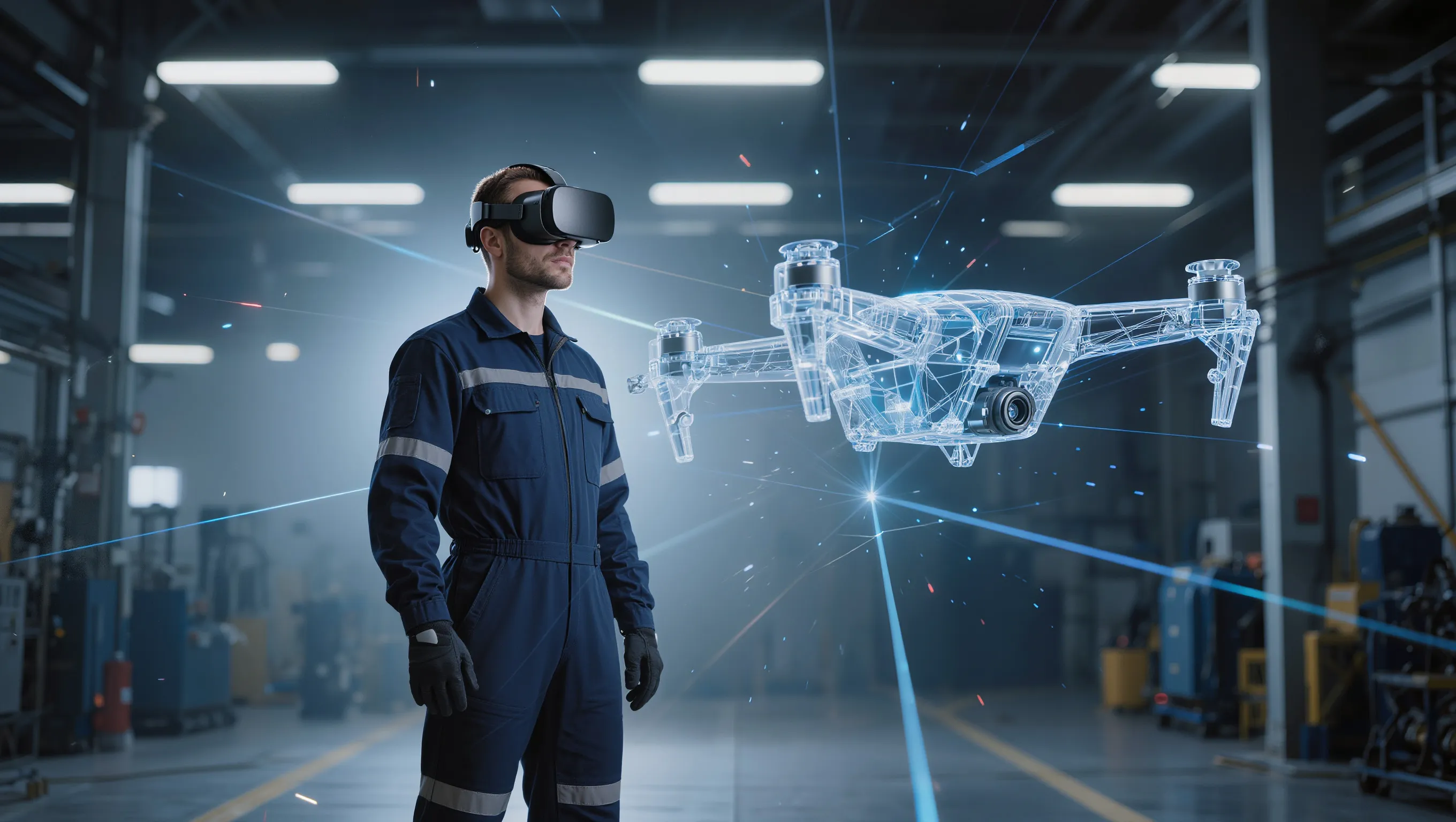
This is not simply an improvement to individual components. The technology affects the entire lifecycle of aircraft component development and is closely tied to digital engineering methods such as modeling and digital twins. Its adoption could strengthen Russia’s technological independence in aircraft materials and design while accelerating the development of unmanned aircraft – an increasingly important sector for both defense and civilian applications.
Where the Technology Could Be Used
Reducing structural weight is one of the most important factors affecting drone efficiency. Lighter UAVs can fly longer distances, consume less energy and carry heavier payloads. This combination of capabilities could make such drones especially valuable in logistics, agriculture, environmental monitoring and search-and-rescue operations.
The technology also shows promise for civil aviation. The same design principles could be used to develop lighter and more efficient aircraft, where lower structural mass translates directly into reduced fuel consumption.
The development also carries export potential. If the technology enters serial production, Russia could offer international partners engineering methodologies for designing composite structures, manufacturing technologies for aircraft components and digital modeling software systems. The global market for unmanned aviation systems is expanding rapidly, and demand for lightweight, durable and energy-efficient structures continues to grow.


Building on Previous Advances
In recent years Moskovskiy aviatsionnyy institut has already demonstrated progress in composite technologies. In 2025 the institute introduced a methodology for designing composite elements for next-generation aircraft including MS-21 and SJ-100. The approach aims to accelerate aircraft development while lowering the cost of manufacturing structural components.

At the same time aircraft manufacturers worldwide are increasingly adopting thermoplastic composites that can reduce aircraft weight by 15–20%. The global aerospace industry is steadily moving toward lighter airframe structures because reduced weight improves range and overall flight efficiency. Research in this field is underway both in academic laboratories and in aerospace and defense companies, underscoring the strategic importance of advanced composite technologies.
The Future of Composite Aviation Structures
The development at Moskovskiy aviatsionnyy institut represents more than a localized technical advance. It reflects a broader industry shift toward lighter and stronger aerospace structures. The technology has clear scaling potential and could be applied not only to UAVs but also to civil aircraft, space systems and defense platforms.
Over the next five to ten years similar solutions are likely to appear in serial Russian drones and next-generation aviation projects. The expansion of these technologies will also drive improvements in digital modeling systems, engineering software and digital twin technologies.
If successfully commercialized and integrated into industrial production, the technology could strengthen Russia’s position in the domestic aerospace sector while also becoming part of export-oriented aviation technologies in the growing global drone market.