Livestock Farmers in Komi Turn to Robotics
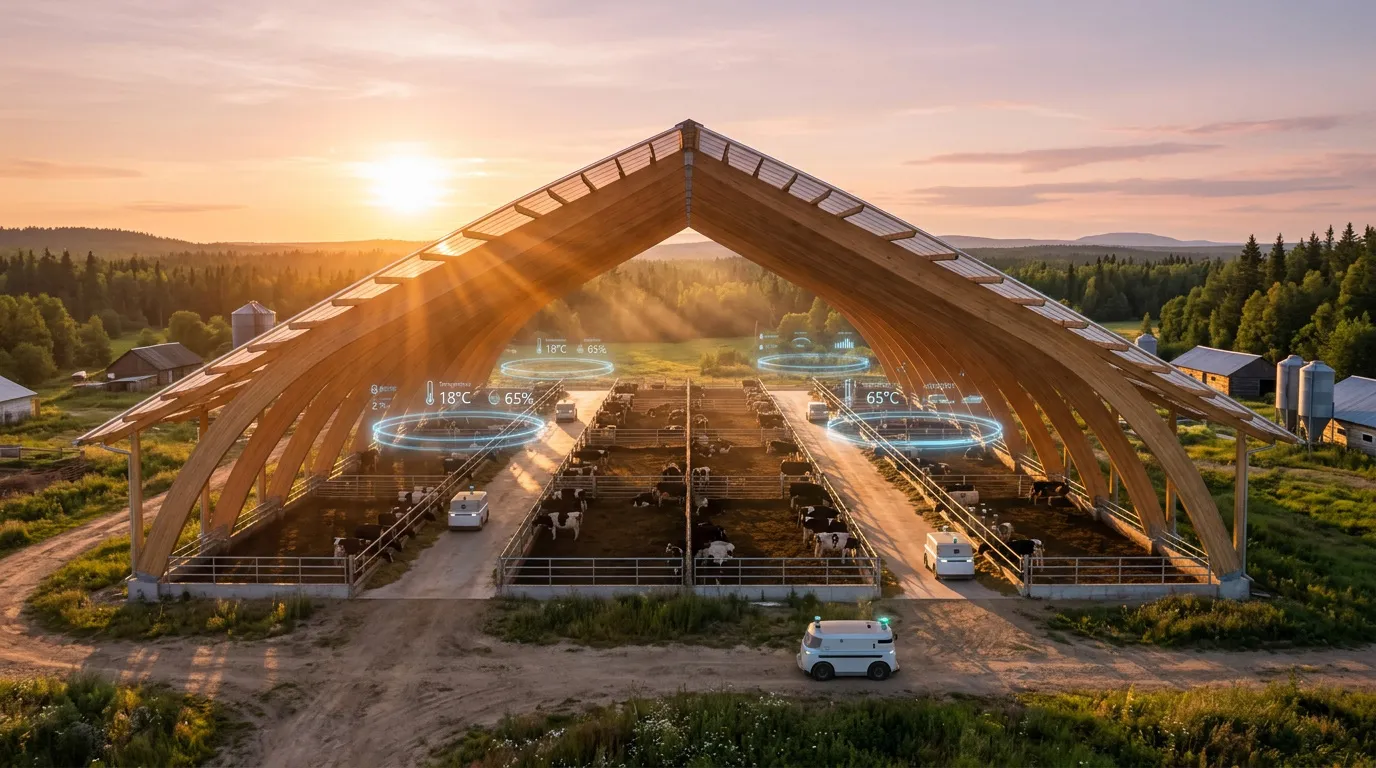
An intelligent dairy farm is under construction in the village of Shoshka in the Komi Republic’s Syktyvdinsky District. The project is scheduled to begin operations in August 2026.
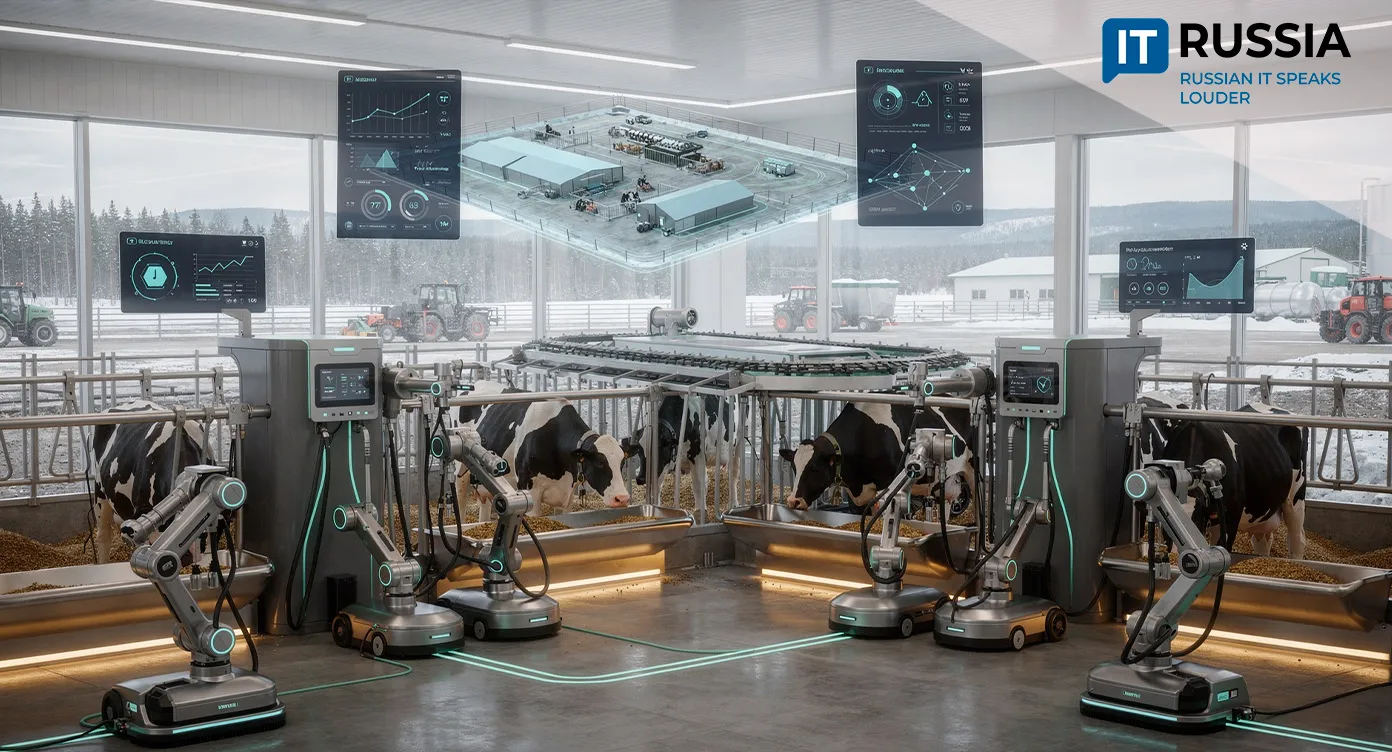
Labour intensity has long been one of livestock farming’s core challenges. Feeding, cleaning, animal care, and milking all require substantial labour input. The answer is comprehensive automation of production processes through the use of robots and autonomous farm-management systems. Smart farms not only reduce the need for physical labour but also help eliminate operational errors.
Robots Arrive in Komi’s Dairy Sector
To reduce workloads for employees and improve production efficiency, OOO Syktyvdinskoye is building a smart dairy farm in the Syktyvdinsky District of the Komi Republic. The project began with the development of a feed base, including the purchase of high-performance field equipment such as a pickup platform and a forage harvester. Construction of the new production complex proceeded in parallel.
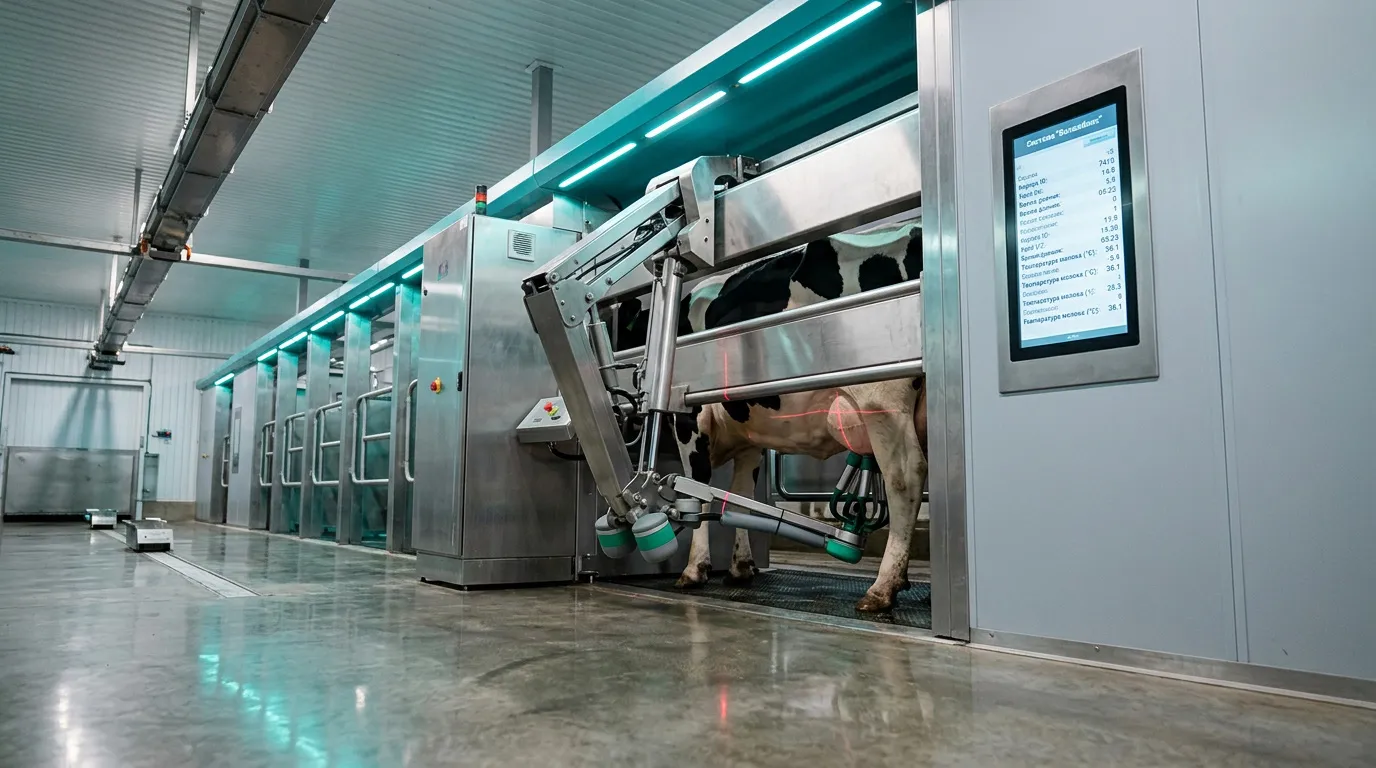
The next stage of the Kompleksnaya modernizatsiya proizvodstva moloka na baze robotizirovannykh tekhnologiy (Comprehensive Modernization of Milk Production Using Robotic Technologies) project involved the purchase of two robotic milking systems. Installation is set to begin shortly. Once commissioning and calibration are complete, the automated farm is expected to enter operation in August 2026.
The new facility forms part of a broader strategy to expand automated milk production. Investment in this stage of the project totals nearly RUB 57 million (approximately USD 730,000). The producer also received a subsidy of RUB 18.12 million (approximately USD 230,000) from the regional budget under a programme that reimburses part of the costs of technical and technological modernization.
Digitalization at Scale
It is important to note that OOO Syktyvdinskoye is part of a regional agricultural holding company built by OOO Syktyvkarsky Molochny Zavod. The company is the Komi Republic’s largest dairy producer and operates a fully integrated business model. It maintains a cattle herd of more than 3,500 animals, grows feed on its own fields, processes milk internally, and sells finished products through its own retail outlets.
Digitalization of milk production has become a systematic process across the group. In 2021, a robotic free-stall dairy farm for 150 head of cattle opened in the village of Chukhlem in the Sysolsky District. The operator, OOO Agroresurs, is also part of the business network built around OOO Syktyvkarsky Molochny Zavod. In turn, OOO Syktyvkarsky Molochny Zavod is controlled by AO Komi Kholdingovaya Kompaniya, which integrates six major enterprises, including a breeding farm and a consumer cooperative.
Taken together, these developments show that livestock digitalization in the region is being driven by large-scale agricultural businesses, closely aligning with broader federal priorities for modernizing Russia’s agricultural sector.
Lower Production Costs
Russian agricultural producers began experimenting with highly automated milk and meat production roughly 20 years ago. Robotic milking systems are now installed at hundreds of farms across virtually every region of the country. Domestic manufacturing capacity has also emerged. One example is the Volshebnik robotic milker, produced by OOO Promtekhnika-Privolzhye in the Nizhny Novgorod Region.
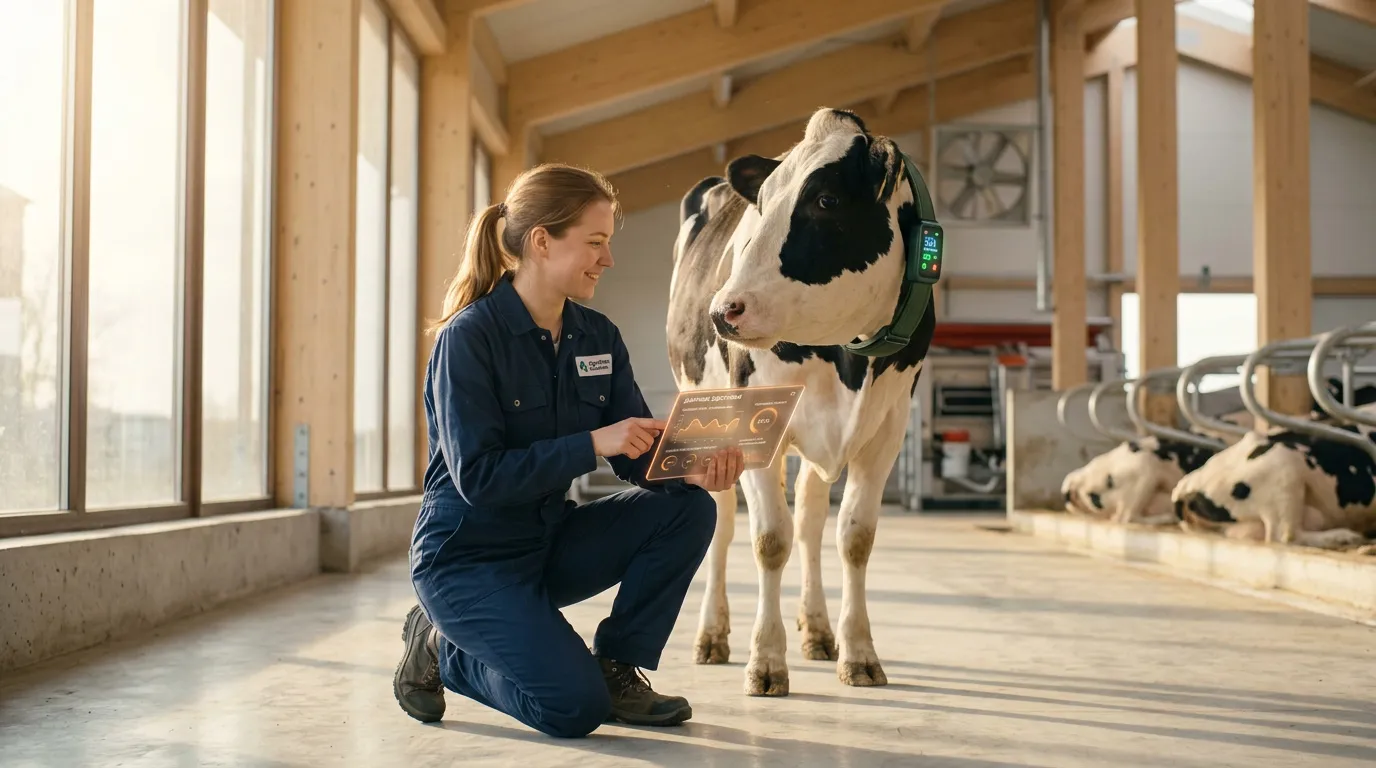
The next logical step has been the deployment of robots that automate cattle feeding operations. Robotics significantly improves the efficiency of farms adopting smart livestock systems. Reduced dependence on the human factor, data collection for each animal, herd health monitoring, improved milk quality, and more effective use of labour all contribute to higher productivity and stronger business profitability.
“Right now, agricultural enterprises have clearly split into two groups: those that are keeping pace with technological progress and are already seeing returns on investments in digitalization, and those that continue to rely on traditional farming methods. Smart cameras in livestock production help solve the cost challenge. They make it possible to identify sick and weak animals in time, preventing companies from spending resources on animals that are unlikely to be productive,” says Yekaterina Kosareva, Managing Partner at VMT Consult analytical agency.
Lower livestock production costs help support stable food prices for consumers. Within the next five years, the use of robots on farms is expected to become standard practice, increasing production volumes and strengthening the competitiveness of Russia’s agricultural sector in global markets.