MAI Students Build AI Assistant for Russia’s National Data Center
With their AI assistant project, the MAI team “MMM” won the hackathon at the Sixth Spring School on Information Technology and Artificial Intelligence.
Imagine working with 100,000 databases containing social statistics, economic indicators, and operational metrics from thousands of organizations. Finding the right number often requires either an experienced data scientist or days of manual work. But Maksim Turevich, a first-year student at MAI’s Institute No. 8 for Computer Science and Applied Mathematics, decided to approach the problem differently together with his MMM team. The students – Maksim Turevich, Artyom Timoshenko, and Konstantin Varenik – won the challenge organized by the National Center for Socio-Economic Data.
Inside the Ocean of Data
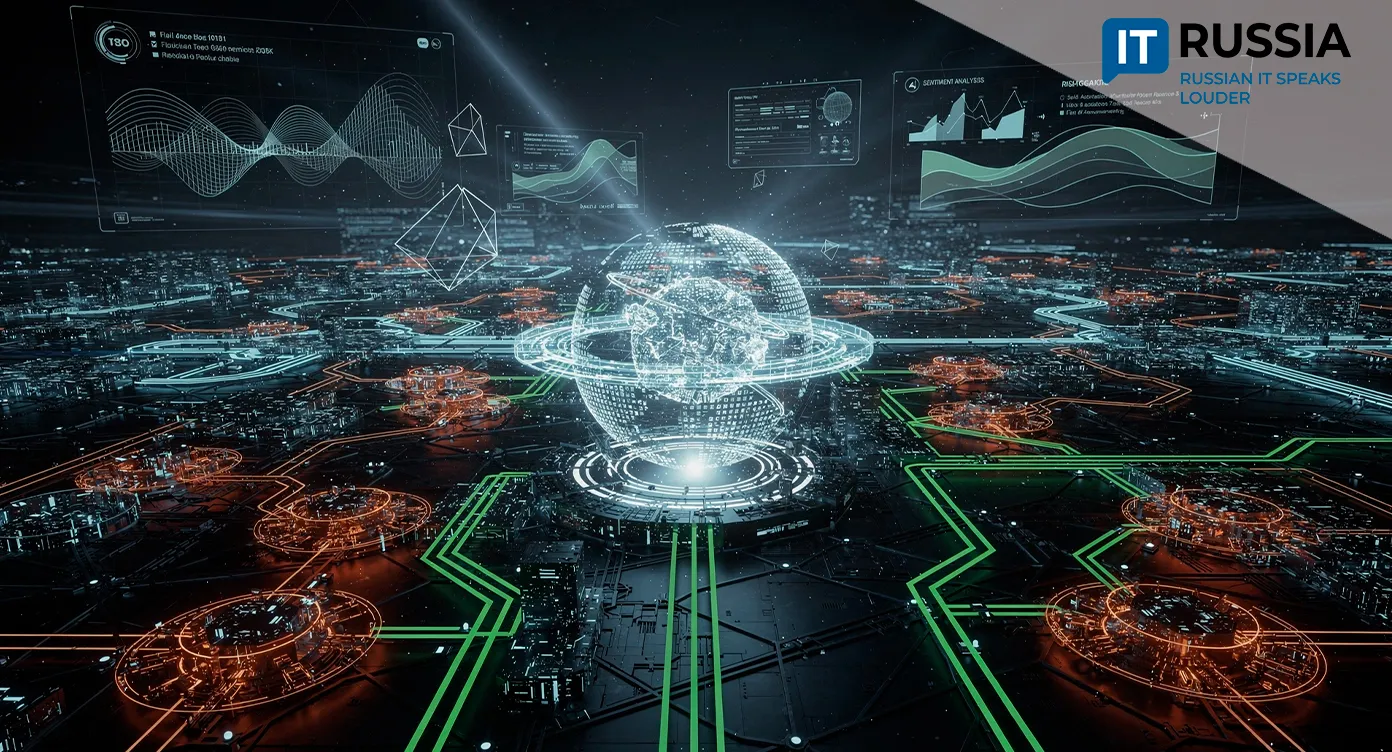
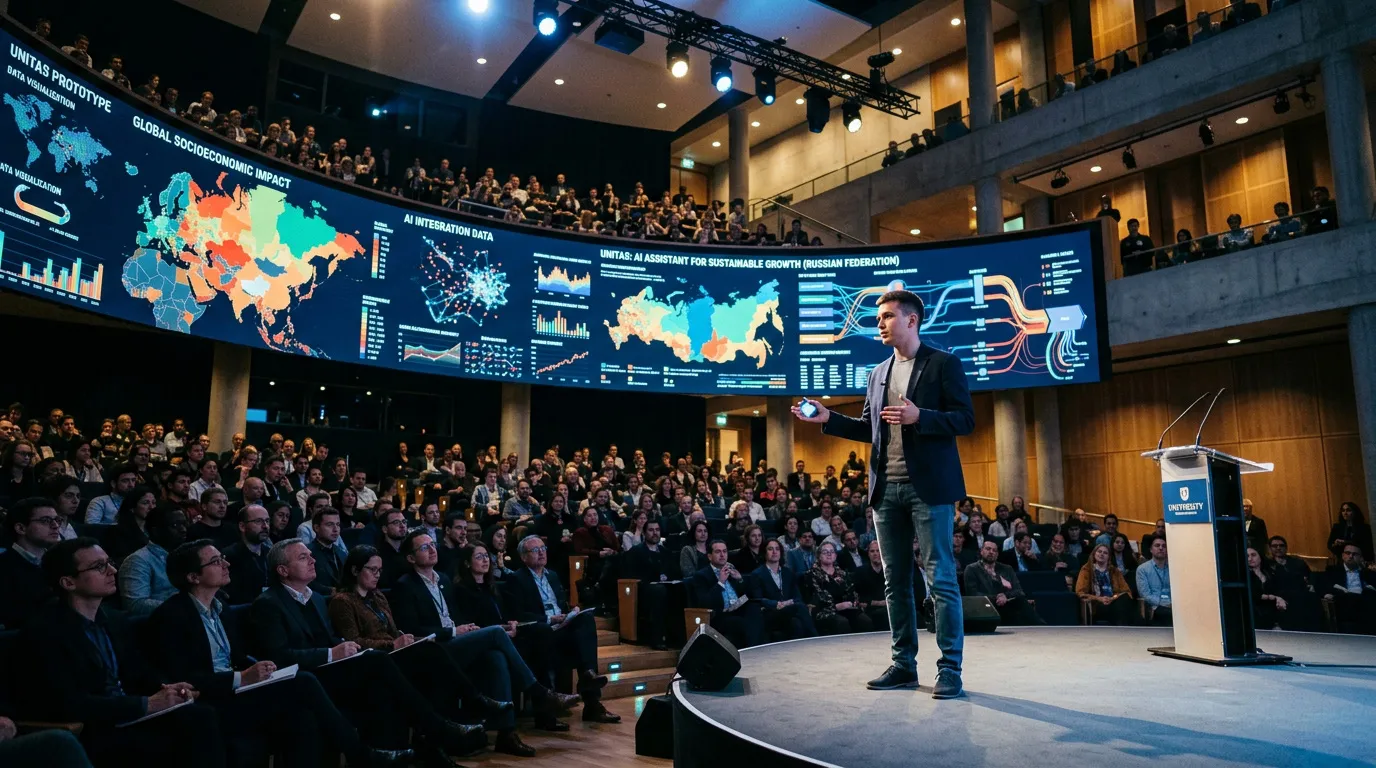
The team’s name reflects a straightforward engineering mindset: MMM stands for three MAI students. Their slogan is equally ambitious: “Dream, Model, Materialize!” The group developed a prototype AI assistant for economists and sociologists. The system works like an intelligent guide. Users can submit a text query, and the assistant independently searches through massive datasets, identifies relevant sources, produces a structured table of references, and even visualizes hypotheses. The customer desperately needed a tool like this. Searching manually through thousands of databases requires both time and specialized skills that ordinary analysts often do not have.
For Maksim, this was not the first time he had used AI to solve infrastructure-scale problems. While still in school, he created a service designed to identify violations involving rented electric scooters. The project reached the finals of the nationwide Bolshiye vyzovy (Big Challenges competition). At the time, the system could automatically determine the time, geolocation, and identity of a violator from photos and video. Now the scale of the challenge has grown to the level of state statistical systems.
Until the Final Second
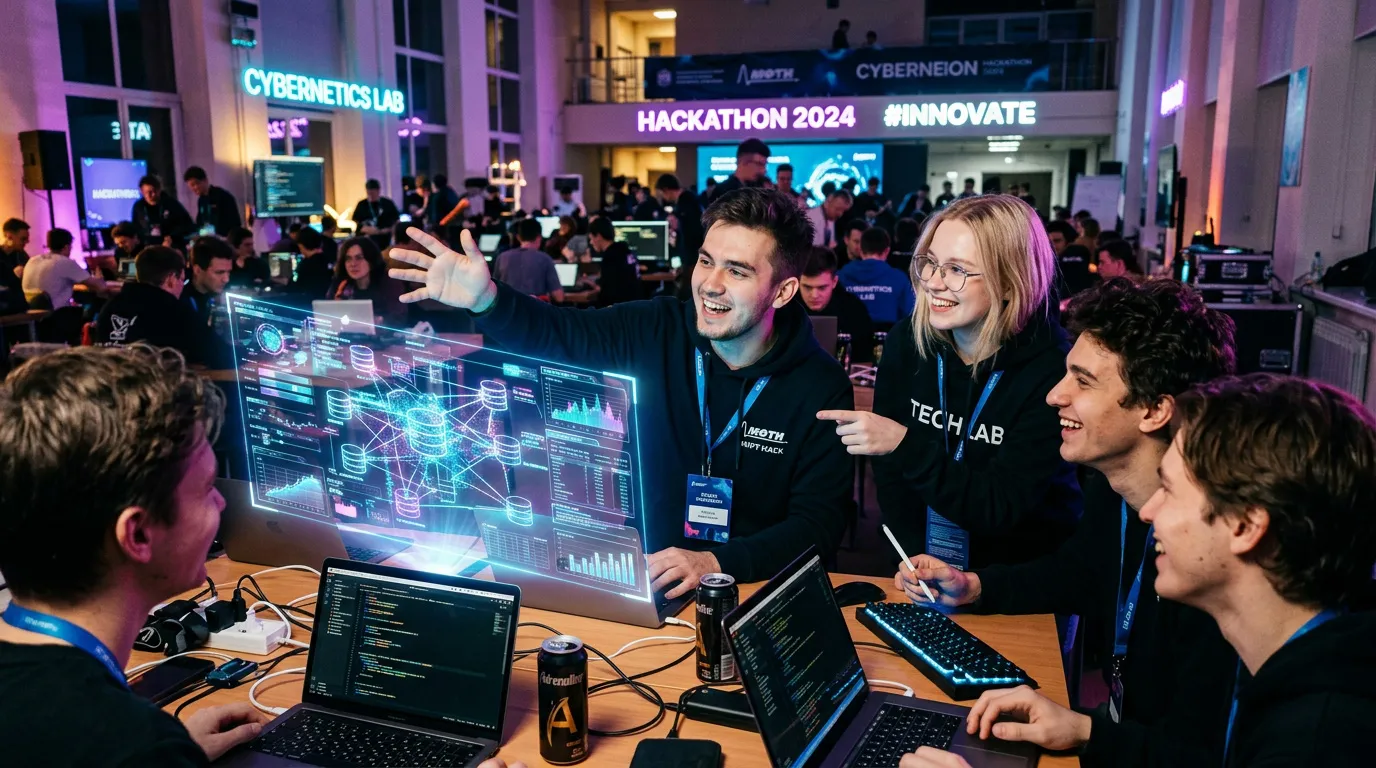
The hackathon itself turned into an intense marathon for the MMM team. Five teams competed in the group, and for four straight days the MAI students remained in second place. The leaders had built a significant advantage. Still, the students refused to give up. They even slept in shifts: while one person rested, the other two kept programming. At times they worked on code until 7:30 in the morning, with mandatory morning exercises beginning just half an hour later. Attendance at physical training sessions brought teams additional points in the overall ranking, so nobody skipped them.
On the final night, with only hours remaining before the deadline, MMM decided on a complete refactoring of the project. The students fixed bugs, improved the visualization layer, and fine-tuned the AI agent itself. They kept programming until the very last second before code submissions closed permanently. In the end, they overtook the leaders by two points and won the competition.
From Mass Lectures to AI Judges
Russia experienced a major wave of AI hackathons between 2021 and 2024. During that period, organizers held 116 AI-focused hackathons, including 85 regional events, 24 district-level competitions, and seven international events, alongside 85 lecture programs. The movement later received stronger government backing after officials updated Russia’s National AI Development Strategy through 2030. In 2025, the Digital Solutions forum introduced a specific target: training more than 10,000 AI professionals by 2030.
Now, in 2026, the focus has shifted toward mature applied projects. In March, the Higher School of Business at HSE University and Axenix organized a hackathon where students from leading universities developed presentation-generation services powered by large language models. The competition attracted 221 applications and selected 15 finalists. In April, Sirius University hosted the Ctrl+Vibe hackathon, where an AI agent itself served on the judging panel.
Today, Russia is moving toward AI agents designed to support real-world work processes – searching for information, preparing reports, and testing hypotheses. That is why MAI’s 2026 spring school concentrated on applied technologies such as AI, process automation, forecasting systems, and decision-support platforms. MMM’s project fit squarely within those priorities.

Never Give Up
The MMM prototype now has strong development prospects. The winners received an offer to continue refining the solution on the customer’s technical infrastructure during a summer internship. Of course, the system is not yet an industrial-grade product. But over the next several years, tools like this are expected to spread much more widely across Russia – first in research analytics and universities, then in government agencies and corporate data centers. AI assistants for data search and analysis, automated reporting, and multi-agent systems for complex workflows are expected to see especially high demand.
The broader significance lies in the fact that Russian universities are increasingly training AI specialists through real customer-driven projects. That model of workforce development is now being promoted at the federal level. The national project Ekonomika dannykh (Data Economy initiative) places strategic emphasis on IT talent and technological sovereignty. As a result, a first-year student enrolled in the TOP-IT program is already solving problems for a government data center.
By 2028, the number of university-industry AI hackathons is expected to surge further. If the MAI team successfully develops its assistant on the technical foundation of the National Center for Socio-Economic Data, the project could evolve from a student competition victory into a pilot tool capable of changing how organizations work with large-scale datasets. Maksim advises future participants to study AI-agent development and data analytics in advance. Most importantly, he says, students should “never be afraid and never give up, even when it seems impossible to win.”