Delivery Robots Roll Onto Nizhny Novgorod Sidewalks
Fourth-generation delivery robots have begun operating on the streets of Nizhny Novgorod, allowing groceries and everyday consumer goods from Yandex Lavka to be delivered without human couriers.
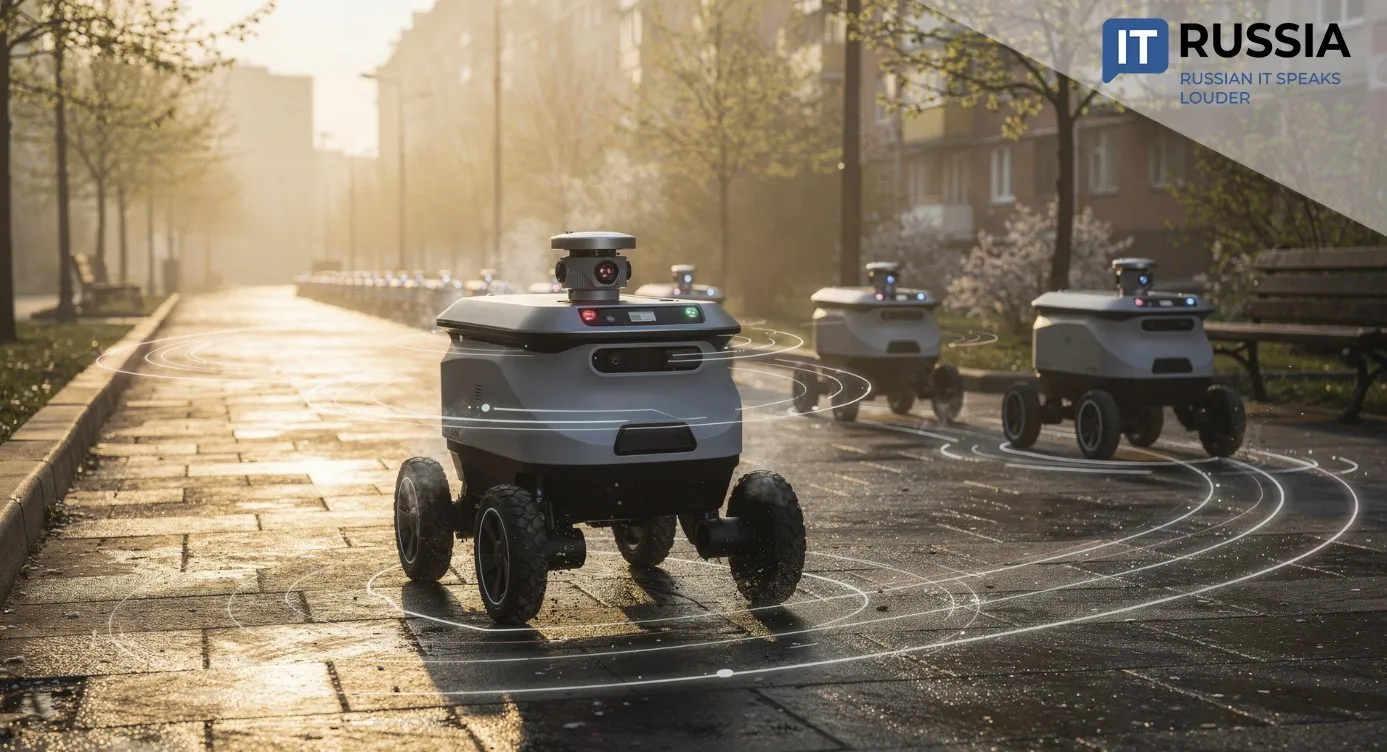
Yandex recently launched robotic delivery services in three districts of Nizhny Novgorod – Sormovsky, Kanavinsky and Moskovsky. Users can select robot delivery through the service’s mobile application, where the option is currently offered free of charge. Five dark stores are already operating within the system, while future plans include integration with Yandex Eda and Yandex Dostavka.
The fourth-generation robots used in Nizhny Novgorod are equipped with upgraded lidar systems, high-performance onboard computing, cameras capable of recognizing road signs and traffic lights, ultrasonic sensors and improved suspension systems. In non-standard situations, remote operators can take control. For Russia’s IT industry, the rollout marks an important milestone: the technology is moving beyond Moscow and limited pilot zones into other Russian cities, including a metropolitan area with more than one million residents. According to Yandex, the robots have already completed more than one million deliveries, while the company plans to produce 20,000 fourth-generation units by the end of 2027.
For residents, the service could provide more predictable delivery times for small orders, particularly during peak-demand periods when courier shortages become acute. For Nizhny Novgorod itself, the rollout offers an opportunity to position the city as a testing ground for AI and robotics deployment.
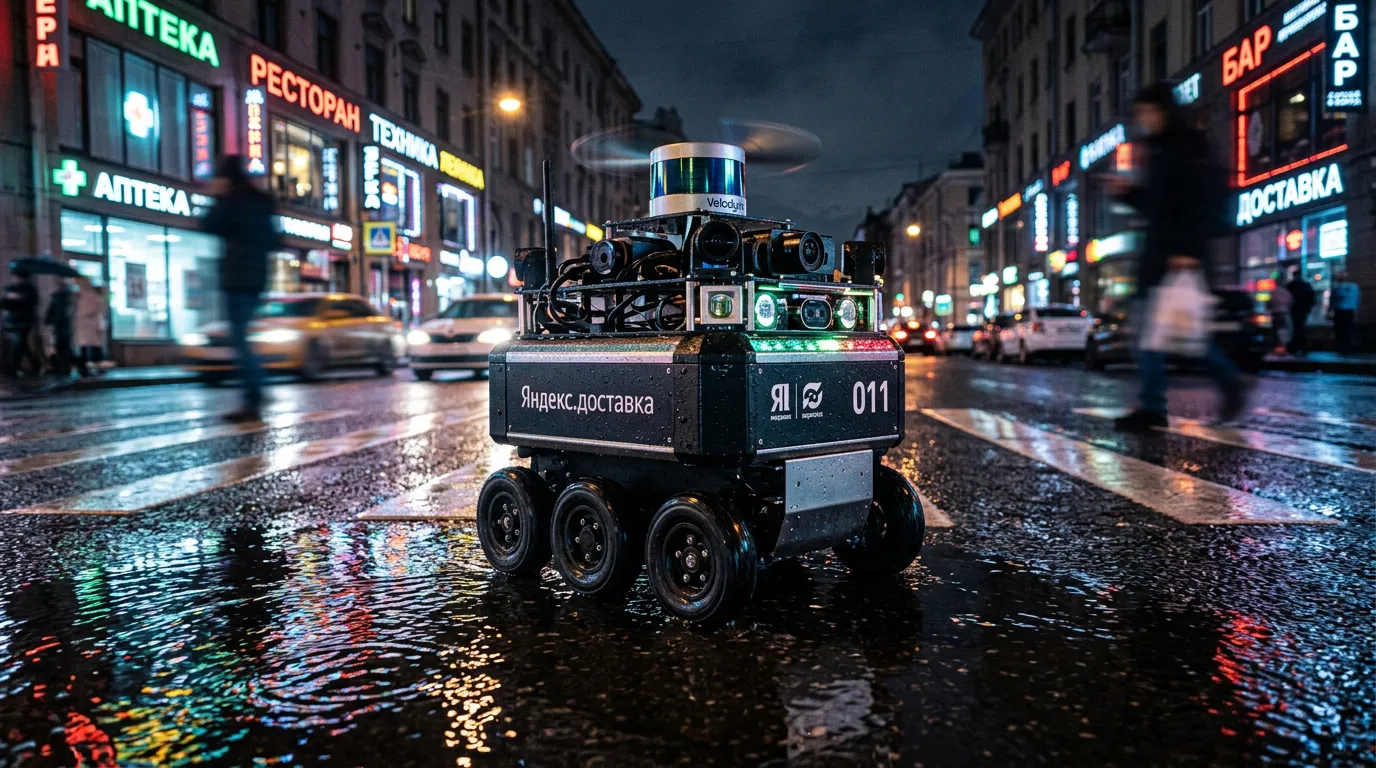
Where Robotic Delivery Is Headed
The main opportunity inside Russia lies in moving from isolated pilot projects to a network-based service across major urban areas. Mass production of robots is expected to accelerate geographic expansion while lowering delivery costs. According to Yandex, the new generation of robots should ultimately operate at lower cost than human courier services.
The central question is whether robotic delivery can truly become more economical than traditional delivery at large scale. Regulation is another major factor. In 2025, Russia’s Ministry of Economic Development prepared an experimental legal framework for the commercial operation of delivery rovers, including speed limits of up to 10 kilometers per hour on sidewalks, mandatory insurance requirements of 500,000 rubles (about $6,400) per rover and procedures governing road incidents.
There is also export potential, although likely over the medium term. One of the main advantages of the Russian system is real-world operational experience in difficult urban environments, including snow, uneven sidewalks and dense city layouts. At the same time, the global market already includes large-scale competitors. Starship Technologies, for example, reported 10 million autonomous deliveries in 2026 and operates a fleet of more than 3,000 robots across eight countries.

From Experiments to Serial Production
Global experience with robotic delivery remains mixed. In 2022, Amazon shut down its Scout project after failing to establish a sustainable business model. Other companies, however, are pursuing hybrid approaches. In 2024, Serve Robotics and Wing combined ground robots with drones, with robots collecting orders from restaurants and drones transporting them further along the delivery chain.
Russia’s development path has also progressed step by step. In 2025, Yandex announced serial production of fourth-generation robots and plans to manufacture up to 1,300 units per month. During the same period, the Ministry of Economic Development began preparing regulations for delivery rovers. In March 2026, the company announced plans to expand robotic delivery services into the Moscow region, Kazan and Nizhny Novgorod – and the technology has now moved onto city streets.

A Future Without Couriers?
Over the next one to two years, Yandex robots are likely to appear in additional districts of major Russian cities and in satellite towns with high order density and established dark-store networks. Nizhny Novgorod may become a large-scale testing ground for rover operations in complex urban infrastructure.
There are also significant risks. The main constraints include the legal status of robots, pedestrian safety on sidewalks and crossings, seasonal operating conditions, vandalism risks and the availability of barrier-free urban environments. Without clear traffic rules and liability standards, large-scale deployment could face public resistance.
Robotic delivery arriving in Nizhny Novgorod is therefore more than a local event. It represents part of a broader transition from experimentation toward scalable urban logistics services. For Russia, it demonstrates that domestic robotics in the urban delivery sector is moving toward industrial-scale deployment. For the global market, it shows Russia pursuing its own model for autonomous delivery in difficult climatic and infrastructure conditions.