Memory That Computes: A New Approach to Building Logic Elements for AI Systems
Researchers at Saint Petersburg State University (SPbGU) have developed a new approach to designing logic elements for modern AI computing architectures.
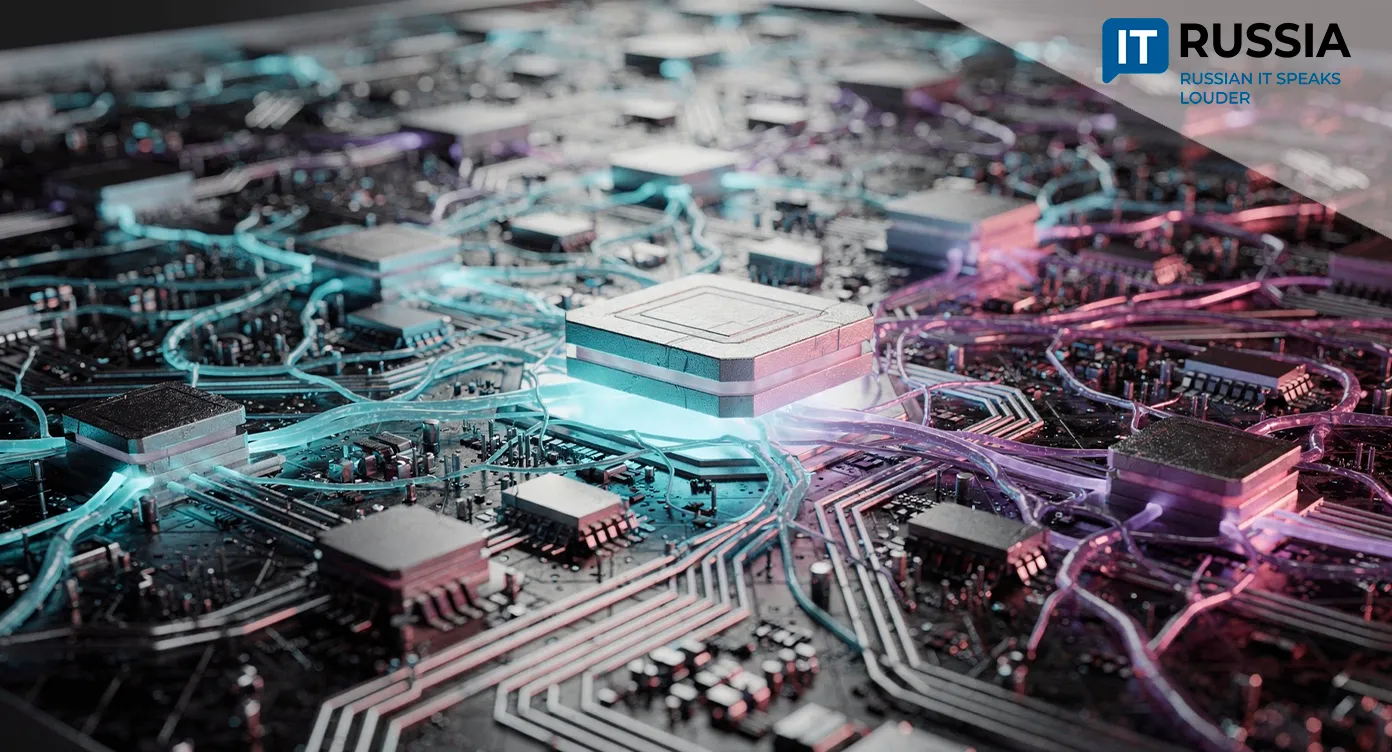
The technology could enable compact, energy-efficient microchips with non-volatile state storage, using memory built on emerging physical principles.
As training neural networks begins to rival large industrial clusters in carbon footprint, the classical von Neumann architecture is increasingly hitting physical limits. Processors and memory remain separate, and constant data transfers between them have become a primary bottleneck for AI development.
Researchers at Saint Petersburg State University have targeted this fundamental gap by proposing a new approach to integrated CMOS-ReRAM elements. This is not yet a production-ready chip, but it represents an architectural step that could reshape domestic microelectronics and accelerate the development of energy-efficient computing.
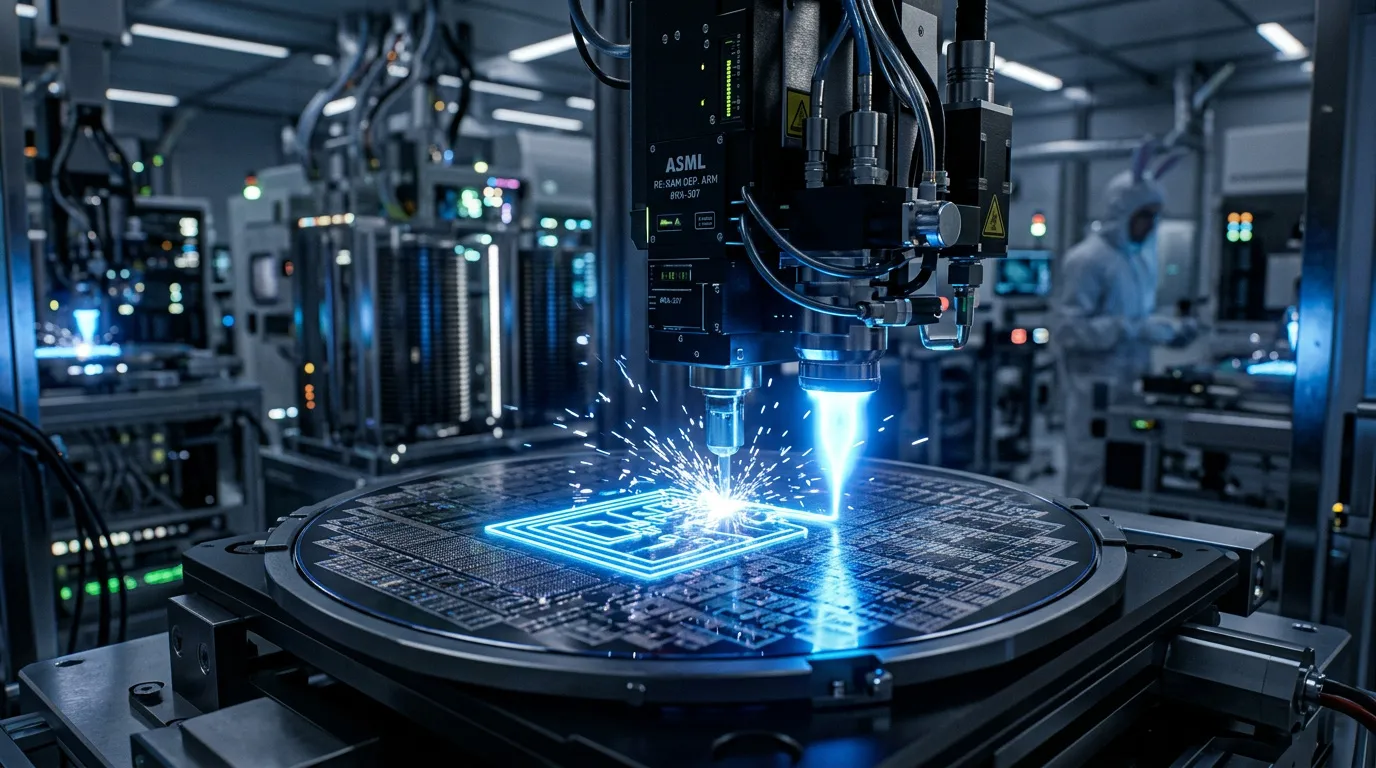
Architecture Without Idle Cycles: Logic Meets Memory
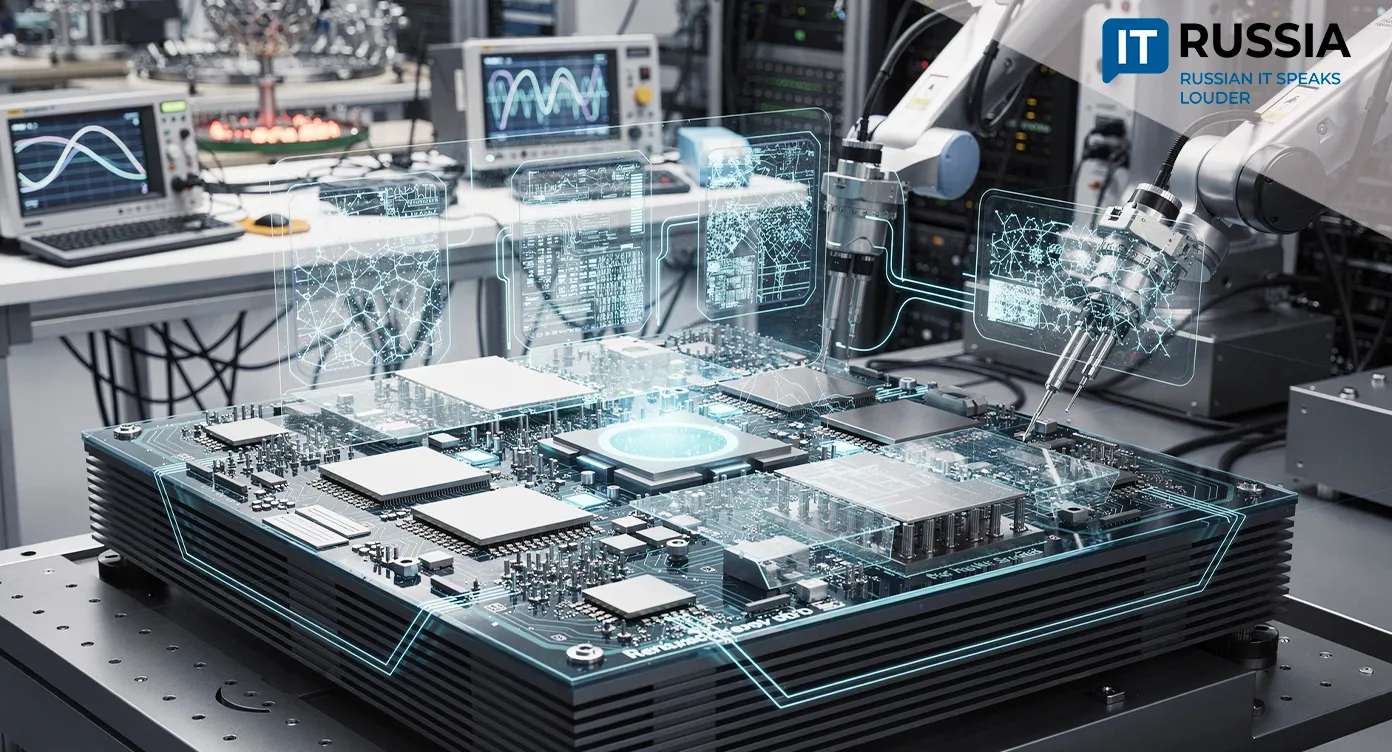
At the core of the SPbGU design is the convergence of two historically separate functions – computation and storage. The element combines a standard logic block with resistive memory (ReRAM) cells, added at the final stage of chip fabrication using molecular layering techniques. This integration allows a logic operation to be executed and its result stored within a single cycle. Asynchronous write operations eliminate the need for additional clock signals, directly reducing energy consumption and heat output.
For neural networks, where model weights require repeated read and write operations, this approach could significantly reduce the von Neumann bottleneck. The technology remains at the circuit design stage, but its compatibility with standard CMOS processes offers a practical path to adoption without requiring a complete overhaul of semiconductor manufacturing.
AI’s Energy Bill and the Global Race
The St. Petersburg development aligns with broader global trends. According to the International Energy Agency, data center energy consumption grew by 17% in 2025, while AI-focused capacity expanded by 50%. By 2030, global electricity demand for computing could approach 950 TWh.
In response, the industry is advancing compute-in-memory and neuromorphic architectures. Samsung has introduced HBM-PIM, Intel has released the neuromorphic Loihi 2, and IBM has demonstrated an analog chip based on phase-change memory. Each of these approaches targets the same issue: reducing the physical distance data must travel between memory and processing units. Russian researchers are contributing a technologically adaptable solution that extends this paradigm, drawing on domestic research traditions and materials science.

Russia’s Trajectory: From Edge AI to Technological Sovereignty
For Russia’s IT sector, the implications extend beyond academic research. With limited access to specialized accelerators, the country faces a growing need for its own hardware base. CMOS-ReRAM elements could underpin chips designed for edge AI – systems that process data locally rather than in the cloud. This capability is critical for autonomous vehicles, industrial IoT, medical diagnostics, robotics, and computer vision, where low latency and energy efficiency often matter more than peak performance.
Over the long term, the technology could support chips resilient to radiation and extreme environments, aligning with the needs of aerospace and defense systems. Its export potential will depend on whether the approach can evolve into a stable platform, including design libraries, test chips, and electronic design automation tools.
Engineering Reality: Why Production Chips Are Still Distant
Commercial viability remains uncertain and depends on parameters that are not yet fully disclosed: cell endurance, long-term resistance stability, scalability, yield rates, and compatibility with specific fabrication processes. Laboratory success marks only the beginning. The coming years will show whether teams can produce pilot batches, conduct stress testing, and demonstrate performance in real machine learning workloads.
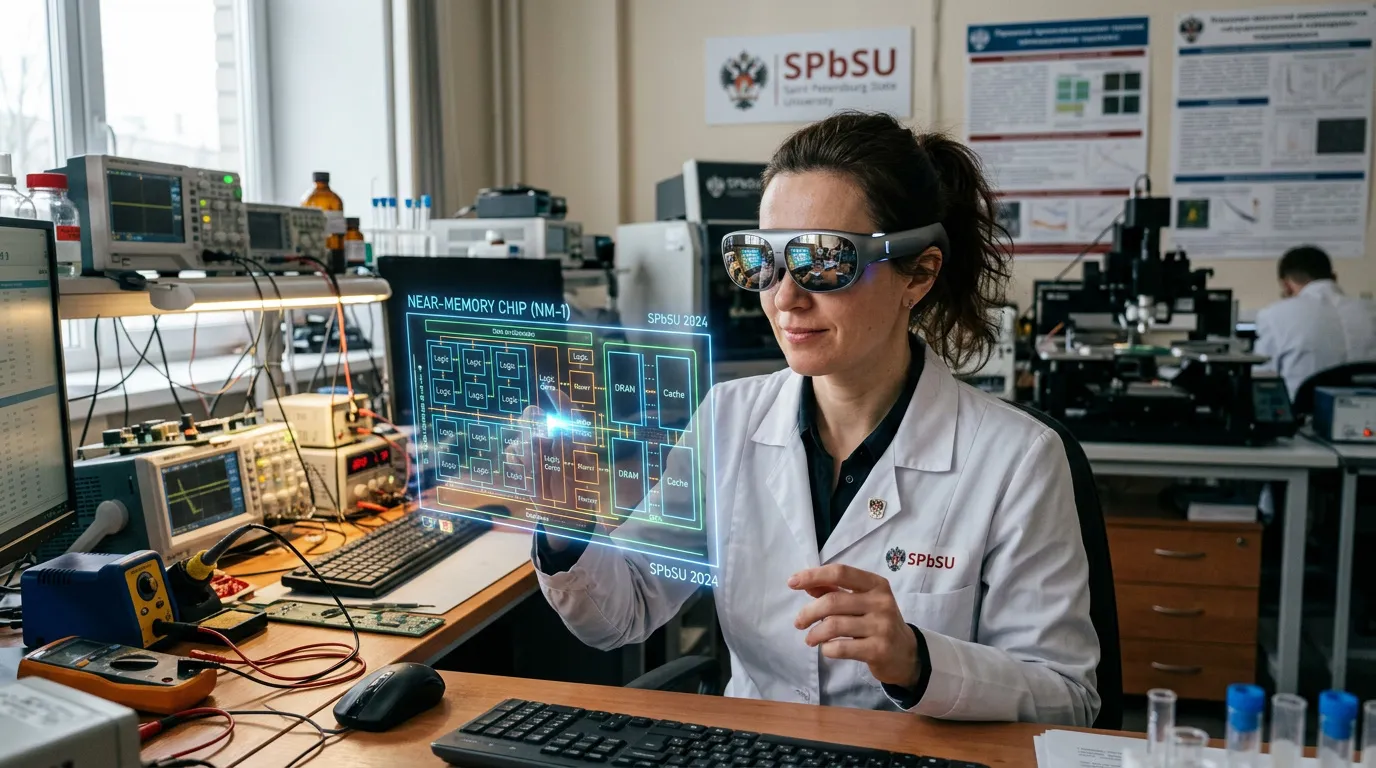
Outlook: A Quiet Shift in Hardware Foundations
The SPbGU development is not a final product but an early signal. If engineering validation confirms the claimed characteristics, CMOS-ReRAM logic could become a foundation for future Russian AI hardware. The field is moving toward devices that process data locally, consume far less energy, and operate without reliance on constant cloud connectivity.
The path from a research paper to deployment in industrial controllers or wearable sensors will take time. Still, advances like this define the trajectory of technological sovereignty. In a world where computing power is constrained by physics and energy economics, progress may hinge on enabling memory not just to store data, but to compute.